In a fascinating new article on my website, Hugh Newman argues that solstice-watching is a tradition far older than the Pre-Pottery Neolithic and reaches deep into the Upper Palaeolithic. Hugh draws together a wide range of evidence, from the illuminated stone head at Karahan Tepe to Göbekli Tepe, Jericho, submerged Atlit Yam, and on to the early sky-watchers of Britain at Warren Field, Stonehenge and a newly announced 2026 discovery near Bulford. From it, an astonishing picture emerges: what we are seeing at these remarkable sites is the work of sophisticated sky-watchers, and the builders of Karahan Tepe were the inheritors of a legacy tens of thousands of years in the making.
https://t.co/LzYuCDdvdE
Mijns inziens is dit een van de beste use cases voor AI-videocontent op dit moment. Een AI-influencer reist terug in de tijd naar 1536 om te vloggen over haar ervaringen in Tudor-Londen.
Astronomers have found the largest and oldest reservoir of water ever discovered in the universe, surrounding a distant quasar called APM 08279+5255. This quasar sits more than twelve billion light-years away and is powered by a supermassive black hole. Around it lies a gigantic cloud containing about one hundred forty trillion times the amount of water found in all of Earth’s oceans combined. The discovery shows that water existed surprisingly early in the universe, forming just under two billion years after the Big Bang.
The quasar’s black hole is feeding on gas and dust, releasing intense energy that heats the surrounding area to extreme temperatures. Even in these violent conditions, water molecules managed to form and survive, circulating within the quasar’s enormous gas cloud. This means that the elements needed for life were already present in significant amounts long before planets like Earth existed.
Finding this much water so early changes how scientists view the young universe. It suggests that complex chemistry developed faster than once thought, and that water—the key ingredient for life—may be far more common across the cosmos than imagined. This discovery expands our understanding of how galaxies and black holes formed, and how the universe built the materials that make life possible.
Research Paper 📄
DOI 10.1088/2041-8205/738/1/L6
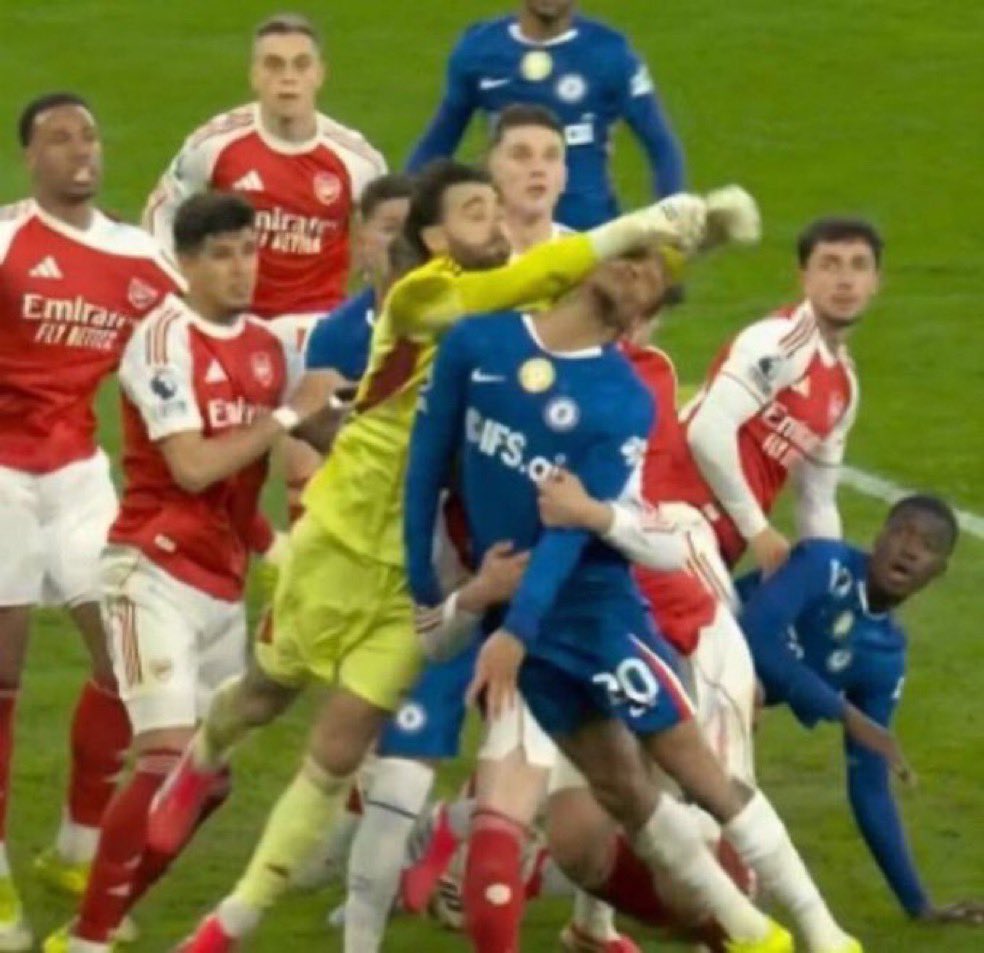
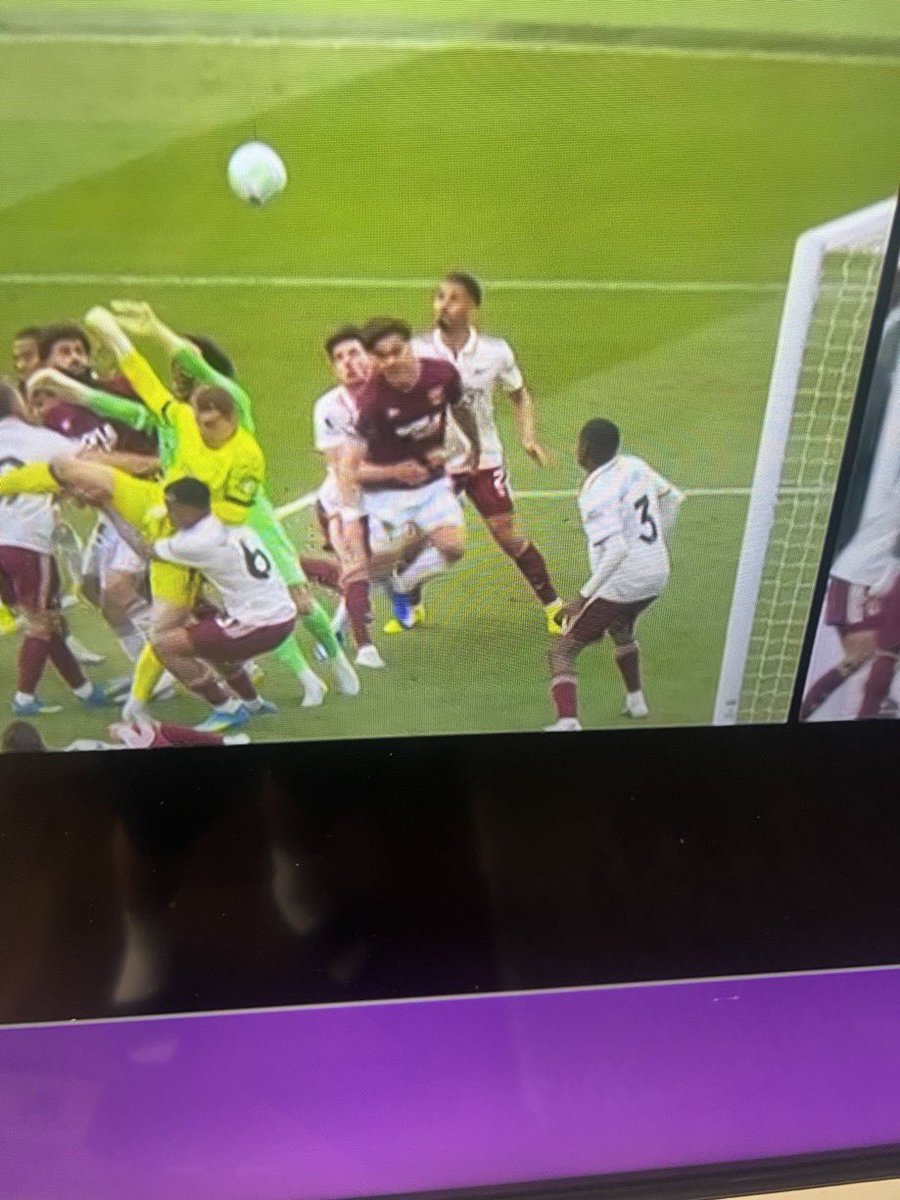
“Arsenal have been blocking the opponent’s goalkeeper all season long, they would NEVER be on top of the league if we disallow these goals!”
Peter Schmeichel thank you for calling them out. have your cheating title VARSENAL. 👏
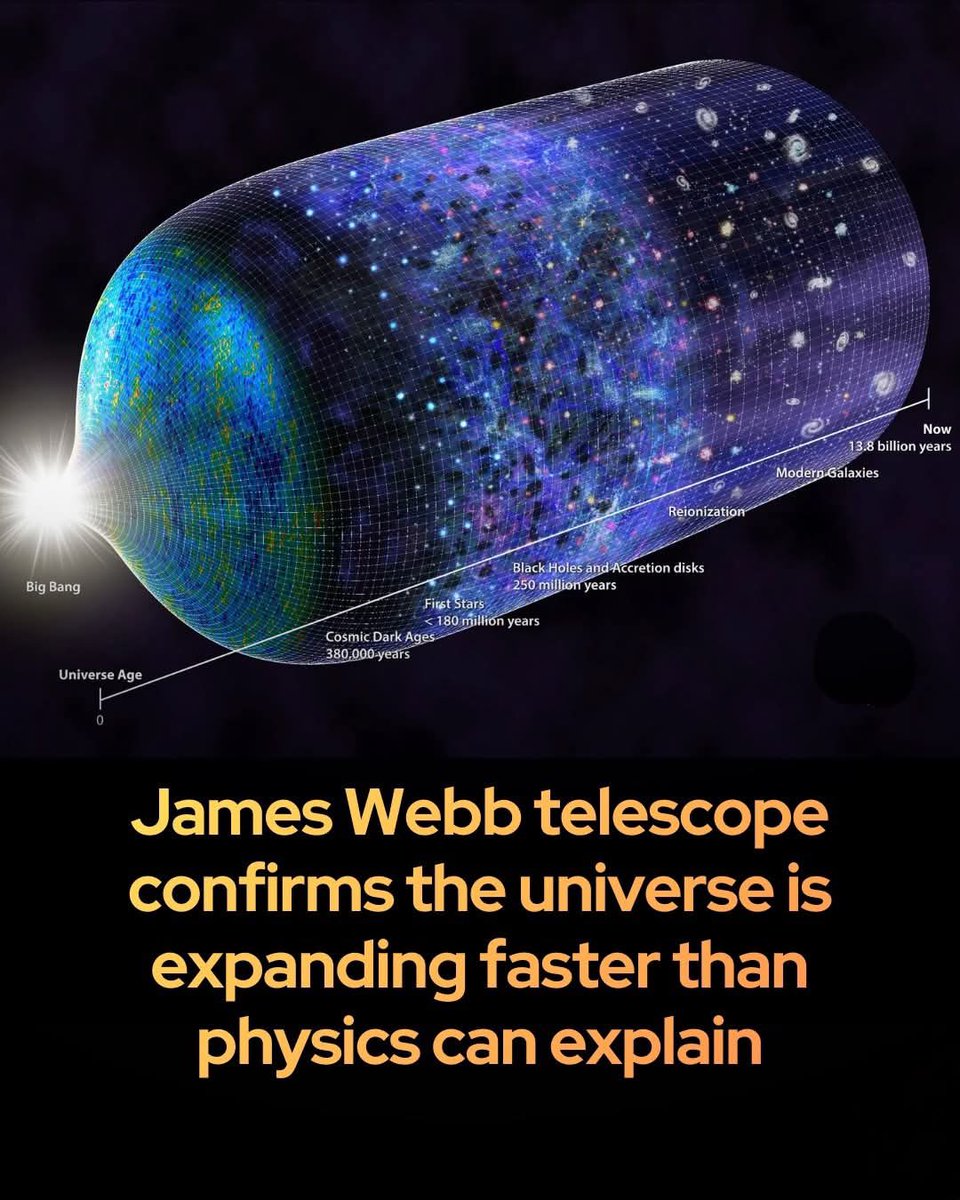
James Webb just uncovered a serious problem with our understanding of the universe.
New data from the James Webb Space Telescope confirms a major discrepancy in the universe's expansion rate, suggesting our current understanding of physics may be fundamentally incomplete.
For years, astronomers have been caught in a tug-of-war over the "Hubble tension," a baffling disagreement between two methods of measuring how fast the universe is growing. While measurements of the early universe suggest one speed, observations of local stars suggest another. Many scientists hoped this gap was simply the result of measurement errors; however, new high-precision observations from the James Webb Space Telescope have now confirmed the discrepancy is undeniably real. By analyzing more than 1,000 pulsating stars across galaxies millions of light-years away, the telescope has validated previous findings and ruled out the possibility of technical glitches.
This confirmation puts modern cosmology at a crossroads. If the math is right but the numbers do not match, it suggests that our standard model of the cosmos is missing a vital ingredient. This could mean the existence of unknown subatomic particles, a new form of dark energy, or a fundamental misunderstanding of how gravity behaves on a universal scale. As we continue to push the boundaries of space exploration, these results prove that the universe still guards secrets that may eventually force us to rewrite the textbooks on how reality itself is structured.
source: Riess, A. G., et al. JWST Observations Reject Unrecognized Crowding of Cepheid Photometry as an Explanation for the Hubble Tension at 8σ Confidence. The Astrophysical Journal Letters.
What If Our Entire Universe Is Inside a Black Hole? 🤯
Imagine discovering that everything you have ever known — Earth, the stars, the galaxies, even time itself — might exist inside a gigantic black hole.
It sounds like science fiction, but some scientists have seriously explored this idea. According to this theory, the Big Bang may not have been the true beginning of everything. Instead, it could have been the moment a massive black hole formed in another universe.
Black holes are already among the most terrifying objects in space. Their gravity is so powerful that not even light can escape. Once something crosses the “event horizon,” it disappears from our view forever. But here’s where the mystery becomes chilling…
What if the inside of a black hole does not end in destruction? What if it creates an entirely new universe?
Some physicists believe the strange conditions inside a black hole could trigger the birth of space and time itself. That means our universe may actually exist inside one right now — and we would never know because nothing can escape to see what lies outside.
Even stranger, every black hole in our universe could possibly contain another universe inside it. A never-ending chain of universes hidden within universes.
And if this theory is true, then somewhere beyond the limits of our reality, another cosmos may exist… with beings looking at their skies and asking the exact same questions we ask today.
The deeper scientists study black holes, the more reality begins to feel less like science… and more like a mystery too big for the human mind to fully understand.
IN 45 DAYS, YOU WILL SEE HALLEY’S COMET.
Not with a telescope.
Not through a screen.
With your eyes, from your backyard.
Halley’s Comet returns every 76 years.
It was last visible in 1986.
It will swing through the inner solar system again in May.
And this time, it will be an easy naked-eye object.
Right now, it is a faint smudge even in telescopes.
But as it falls toward the Sun, it will brighten.
The coma will grow. The tail will stretch.
By mid-May, it will be as bright as the brightest stars.
You will find it low in the western sky after sunset.
A fuzzy star that does not twinkle.
A star that moves noticeably night after night.
Edmond Halley predicted this exact return in 1705.
He saw the same comet three times in his life.
You will see it once.
Maybe twice, if you live long enough.
Start checking the western horizon in early May.
The comet will be waiting.
Are you going to watch for it?
#HalleysComet #Comet #NightSky #Astronomy
#Stargazing #May2026 #SolarSystem #NakedEye
🚨 FALL INTO A BLACK HOLE… AND WATCH THE UNIVERSE END 🤯
If you fell into a black hole, something unbelievable would happen. While you feel like you’re falling normally, the rest of the universe would start racing forward in time. Stars would be born and die, galaxies would fade, and billions of years would pass in just seconds. From your view, you could witness the far future of everything — possibly even the final, dark end of the universe.
But one thing is clear: you would not see the beginning of the universe. Time does not run backward, even near a black hole. It only speeds forward. As you fall deeper, the outside world would look like a fast-forwarded movie of reality.
Before you could reach the center, the gravity would stretch your body apart, atom by atom — a violent fate called spaghettification. You would vanish forever, carrying with you the last moments of the cosmos.
🕳️ A black hole doesn’t just destroy matter… it lets you watch the future before it destroys you.
I am enough of an artist to draw freely upon my imagination. Imagination is more important than knowledge. Knowledge is limited. Imagination encircles the world.
— Albert Einstein
About 300 years ago, there was a man, when the world couldn’t explain how stars move, he didn’t wait for answers—he created an entirely new kind of mathematics: calculus.
Today, we use supercomputers and rockets to explore space. Yet every single one of them still follows the rules he wrote down. No technology, no screens—just ink and pure genius.
And the most astonishing part? We’re still trying to fully understand it.