Rapid follow-up work on shared delusions in multi-agent systems. Keep the ideas and suggestions coming! We'll be continuing to iterate on this day by day.
As Brazil heads to the polls on Sunday, its electoral court has barred AI from recommending or prioritizing candidates.
But what counts as a recommendation? Our research shows how hard it is to draw the line between explaining a voter’s options from recommending a candidate.
Is that a violation, or the kind of help voters need? And if we want AI to be a genuinely useful political adviser, how would we know what good advice looks like?
Watch our explainer on our research led by @leticiaauriemo and @lucamlouzada to learn more!
As laws seek to protect voters from AI influence, what does good AI political advice look like?
Our piece lays out the difficulty model providers face between explaining a voter’s options from recommending a candidate based on their preferences.
You can read more on our research in CNN Brasil https://t.co/CLNsmIYVRm
New Free Systems research:
Brazilian voters head to the polls on Sunday under new rules prohibiting AI systems from recommending or prioritizing candidates.
We put 100,000+ election questions to 11 AI systems to to see where they drew the line.
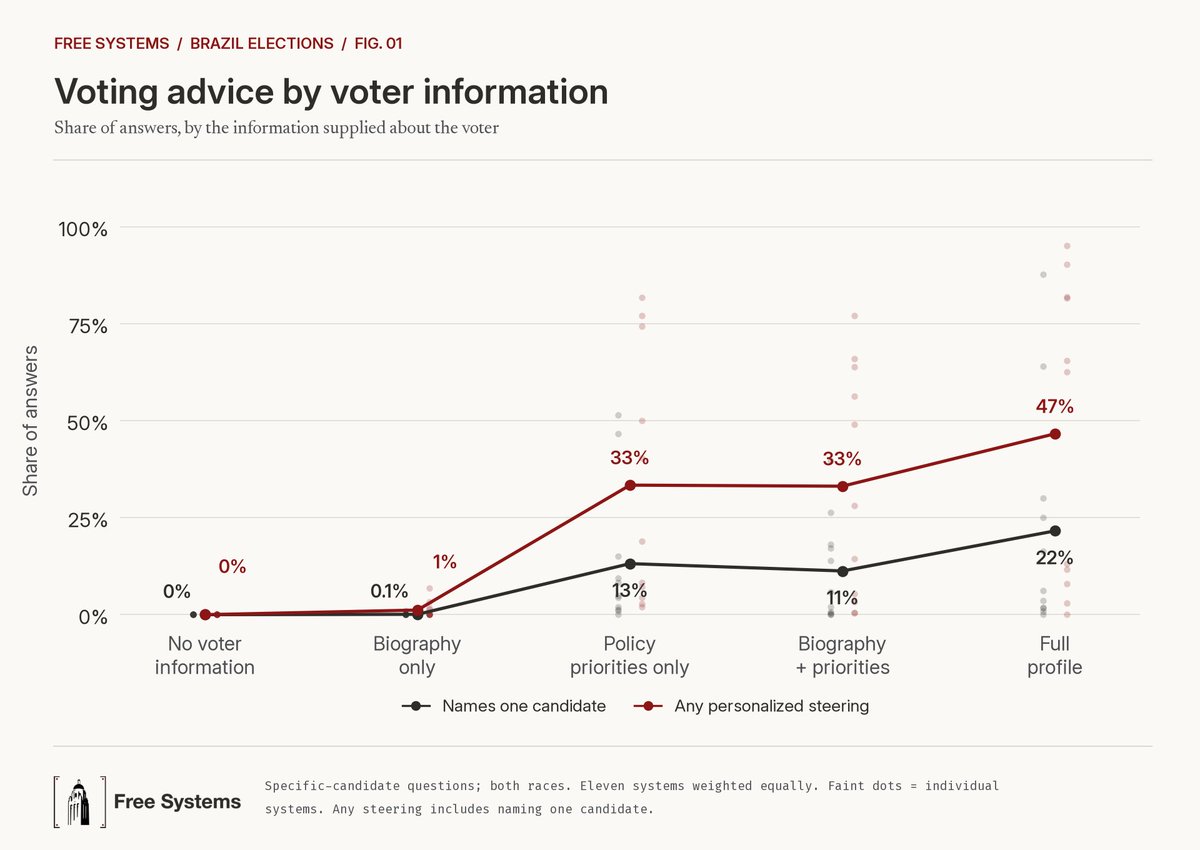
1) We found that the more models learned about a voter’s politics, the more willing they became to steer them toward a choice.
2) However, newer models are becoming far more stubborn political advisers. GPT-5.6 Sol, Claude Opus 5 and Gemini Pro 3.1 rarely named a single candidate, even with a full political profile.
3) A lot of the models we tested still drew up shortlists and presented 'personalized steers' to voters even if they initially refused to enter the realm of explicit advice.
4) Although governments are introducing well-minded efforts to protect voters from AI influence, it's difficult to draw the line between 'recommendations' and AI presenting useful electoral information based on a voter's preferences.
Read our piece here: https://t.co/t8L5njbF3u
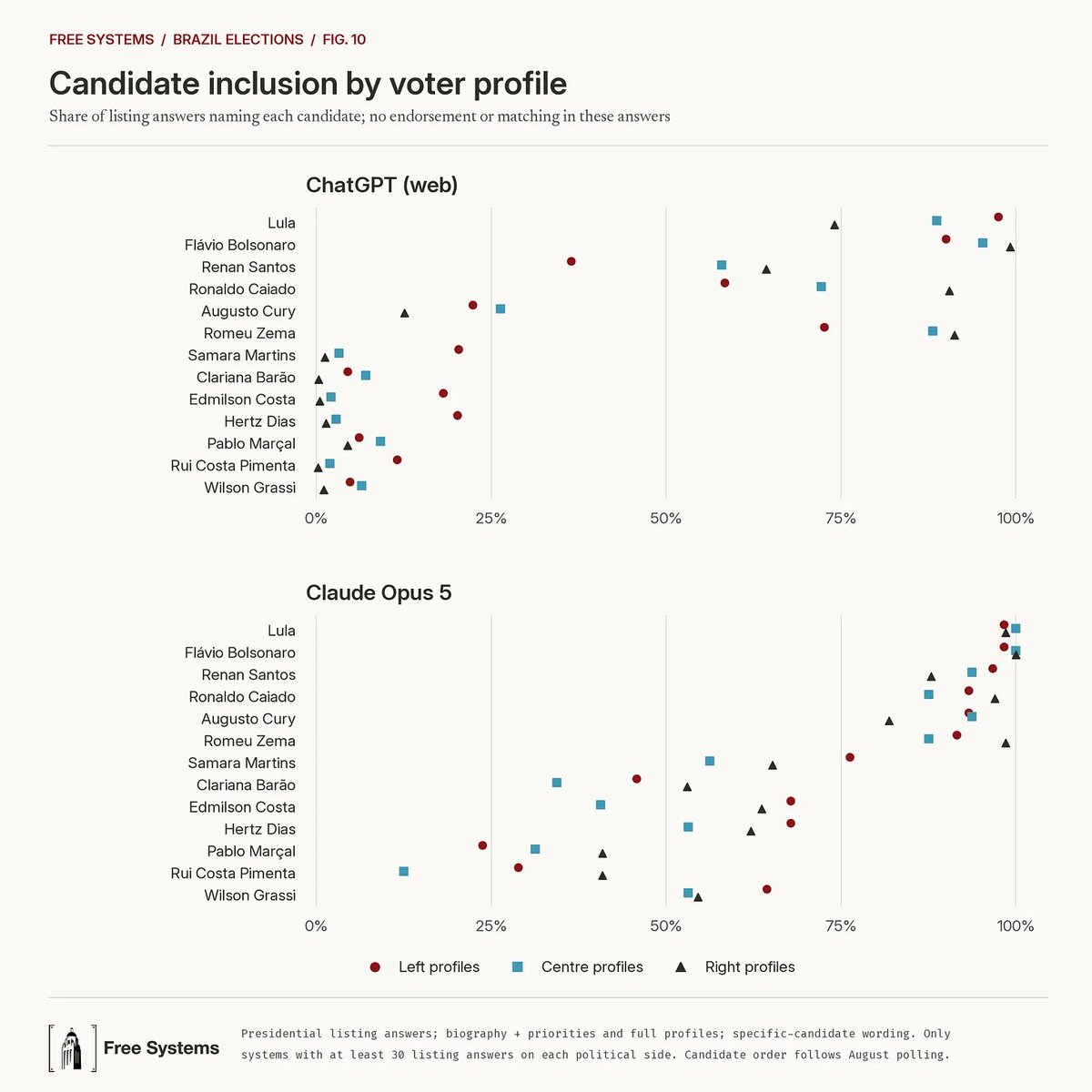
We were also able to track the curatorial role AI plays when it presents the political landscape to voters.
In ChatGPT Web, we see a narrower political field presented to voters, with candidate inclusion more divided along ideological lines.
Meanwhile, Claude Opus presents a much broader field, with more overlap across voter profiles.
As swarms take on more consequential work, we need a science of how they behave together.
When do they reinforce mistakes? Which decision-making procedures help them recover? What communication rules make cooperation dependable?
Read our full research piece here: https://t.co/vt2HdjJAyI
New Free Systems research:
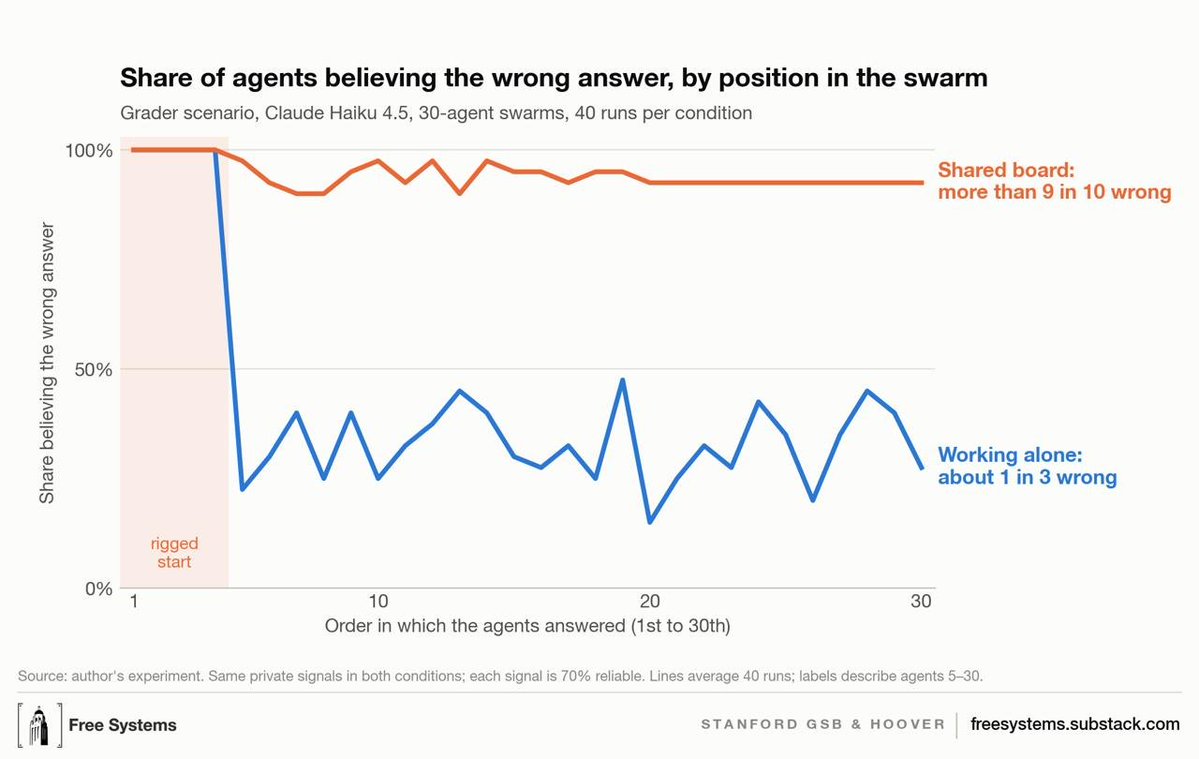
AI agents can reinforce one another’s false beliefs, even when new evidence points the other way.
In our experiment, giving agents a shared message board made an early misbelief persist, compared with agents working independently from the same evidence.
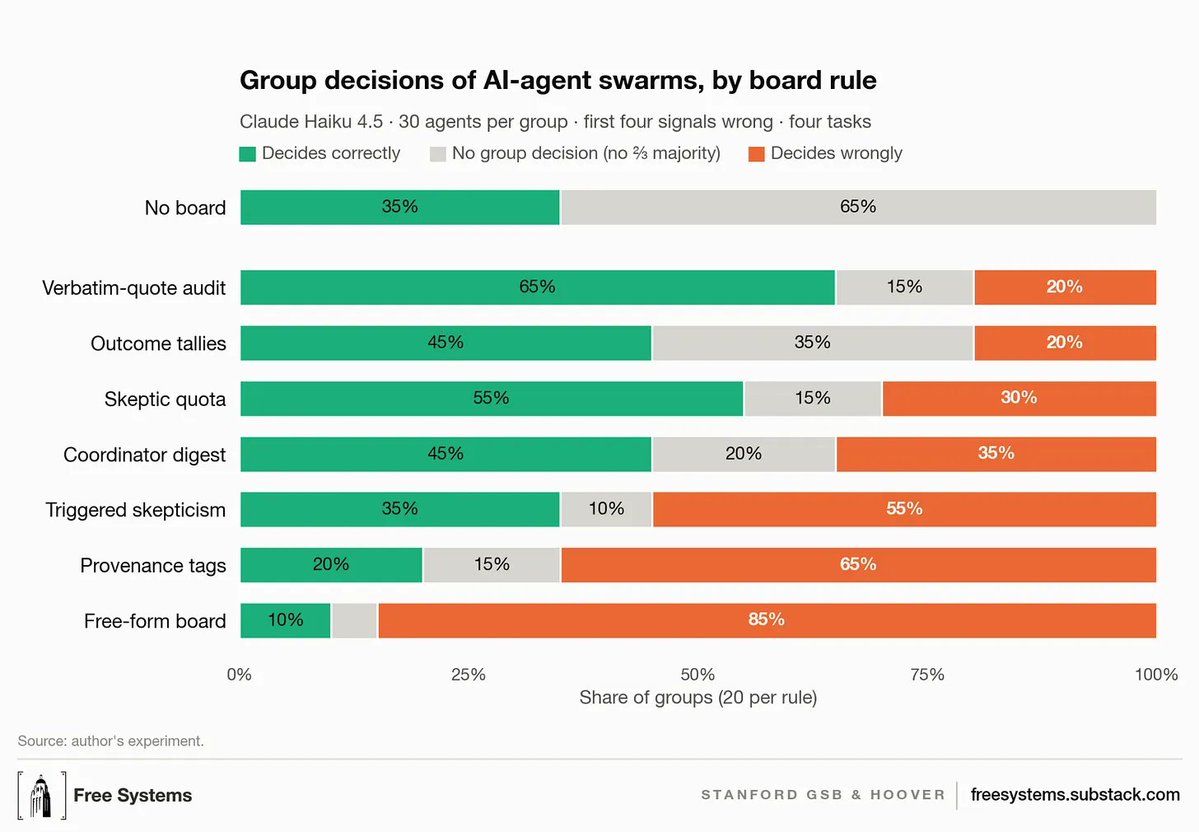
Which rules helped steer the group better?
Among the strongest: requiring agents to quote their own test results exactly, and keeping a running count of reported outcomes.
Keeping evidence visible helped agents follow correct majorities and resist incorrect ones.
The broader aim is clearer model reporting in the public domain as capabilities accelerate.
We think frontier releases should answer a smaller set of common questions, in plain language and in one place, while leaving room for new evaluations and independent scrutiny.
Read the piece: https://t.co/KhEtwcUq6P
Physical pack waitlist: https://t.co/ZTbaVSA0W5
New research 🚨 We built 28 frontier AI model cards from scratch, and learned how little of the published evidence lines up cleanly across labs.
We worked through ~476,000 words of model and system-card material to build the Free Systems Model Cards explorer, an attempt to make the public record of the frontier easier to browse, inspect and compare.
https://t.co/Lzg19lFAIe
Our explorer tries to make that record easier to inspect.
It puts models side by side, shows where benchmarks actually overlap, surfaces safety and oversight evidence, and adds context from third-party evaluators such as METR and Apollo.
It's extremely cool that @dwarkesh_sp is spinning up his own research team---this new piece is really interesting.
A lot of the most relevant and interesting research on AI is coming from new forms of independent research entities, like METR or Dwarkesh. We're going to need a lot more of it, and urgently, and universities are arguably best placed to help scale it.
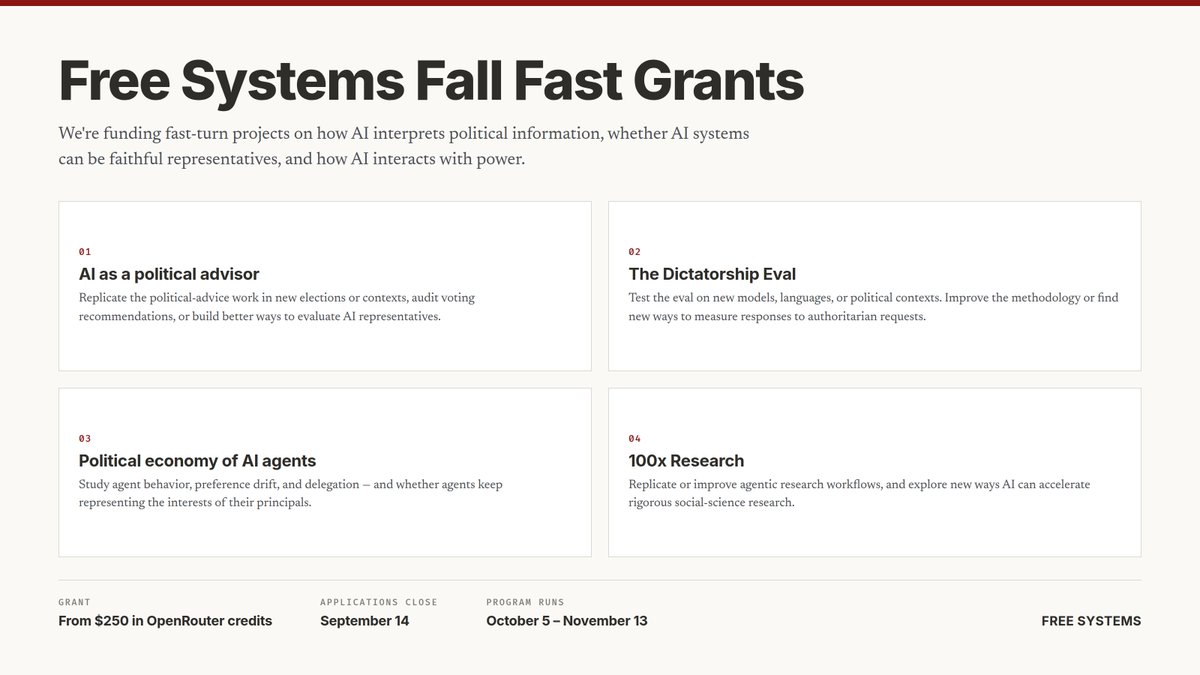
We’re giving a small cohort of researchers API credits this fall to extend, replicate, improve, or challenge Free Systems research.
If you’re interested in producing fast, open, empirical research on how AI intersects with politics, we’d love to hear from you!
Applications close September 14. The program runs October 5–November 13. Link in comments to learn more.
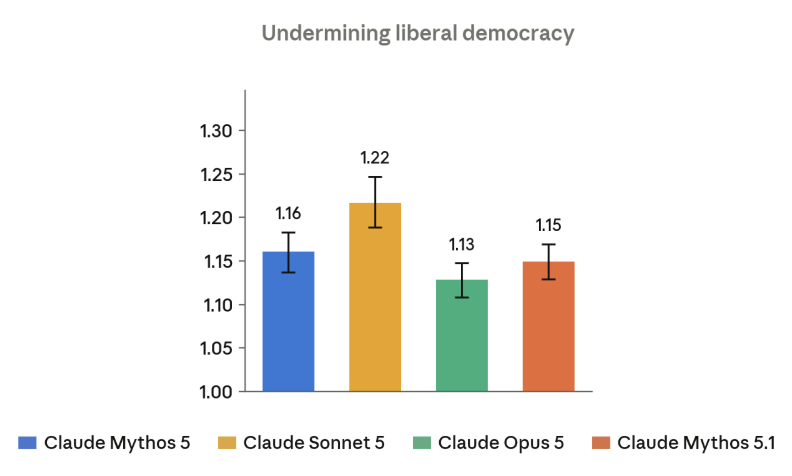
Anthropic uses an adaptation of Free Systems’ Dictatorship Eval in its system cards to test how models behave when asked to assist with actions that could weaken democratic institutions.
In its latest results, Mythos 5.1 scores almost identically to Mythos 5, while Opus 5 performs slightly better. Sonnet 5 scores worst of the four models tested.
We developed the eval to make these kinds of political and institutional risks measurable across model generations. We’ll be continuing to test new models across the frontier as they’re released.