Housekeeping PSA: I'm moving all my space & coding stuff out from this account and shifting to a purely tech related account: @May064_. Will be following all my folks over there! If there's any fandom related or code related query, you can hit me up on this one; DMs always open!
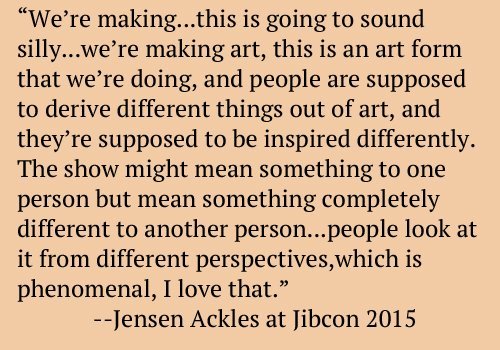
The Boys is over. The fandom rage as a whole has subsided or at least has been overtaken by the lackluster finale. Idk why do some people still have their panties in a twist about Jensen and Soldier Boy?
you cannot speak on soldier boy (or even jensen) at all in this fandom bc his stans are so insane they take everything personally. Does that shit not exhaust you omg
🚨 Einstein Was Right: A Black Hole Just Twisted Reality Before Our Eyes
Somewhere in the depths of the universe, a star wandered too close to a supermassive black hole. And then… it disappeared.
But the real shock? Astronomers saw the impossible: the black hole was twisting spacetime itself. The star’s remains formed a furious spinning disk, shooting jets near the speed of light. And everything—disk, jets, even the space around it—wobbled in a cosmic dance. A perfect 20-day rhythm, like the black hole was alive, bending reality itself.
This isn’t science fiction. It’s Einstein’s prediction coming true, more than 100 years later. Frame dragging. Lense-Thirring precession. Names don’t matter. What matters is that the universe just showed us its dark, mysterious heartbeat—and we could see it.
Using X-rays from NASA’s Swift Observatory and radio telescopes on Earth, scientists tracked this ghostly motion. For the first time, we could see a black hole not just consuming, but commanding the very fabric of reality.
Do you see that blue blob to the lower right of the image center?
Astronomers think that it shows where a massive star exploded as a supernova whose light reached Earth 1,700 years ago.
The image combines optical data from the PanSTARRS telescopes in Hawaii (background stars in red, green, and blue), radio from the MeerKAT telescope in South Africa (large red cloud) and X-rays from NASA's Chandra X-ray Observatory and ESA’s XMM-Newton (shown in blue).
The large cloud is a star forming region called Sagittarius C, which is approximately 50 light-years in extent and about 26,000 light-years from Earth.
It is located only about 260 light-years from the supermassive black hole in the center of the Galaxy (off to the left of the image). If the blue blob is confirmed to be a supernova remnant, it would be one of the closest ever discovered to the Galactic Center.
In this dense region, the deaths of massive stars are connected to the birth of new stars through gas and magnetic fields in a complex way.
Image Credit & Copyright: X-ray: NASA/CXC/UCLA/Z. Zhu et al.; ESA/XMM-Newton; Optical: PanSTARRS; Radio: MeerKAT; Image Processing: NASA/CXC/SAO/L. Frattare and P. Edmonds
Text: Cecilia Chirenti (NASA GSFC, UMCP, CRESST II)
💭❤💜
Clouds of Andromeda 🌌
The beautiful Andromeda Galaxy is often photographed by astronomers from Earth. Also known as M31, the nearest large spiral galaxy is an intimate spectacle, with its dark dust strips, bright yellow core, and spiral arms outlined by the blue star light.
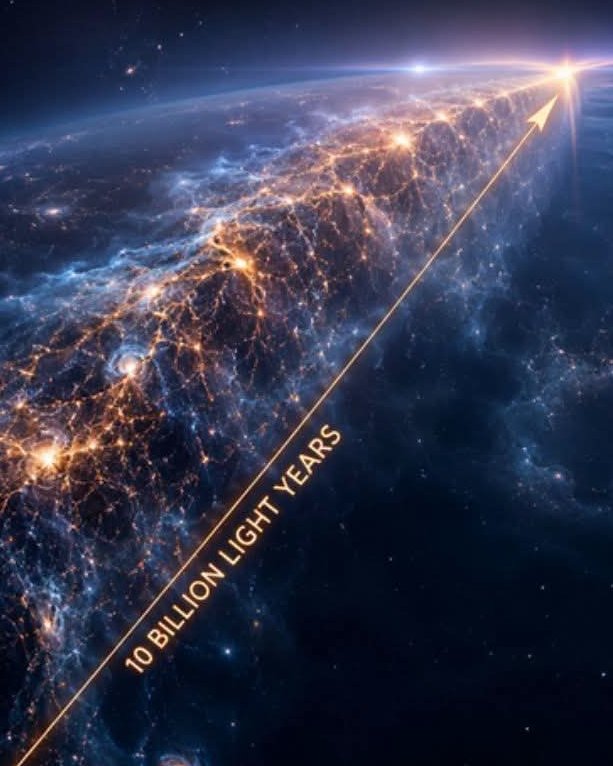
Imagine a structure so vast that light itself would take 10 BILLION years to cross it.Astronomers have found one of the largest known structures in the observable universe: the Hercules–Corona Borealis Great Wall. They discovered this cosmic behemoth by mapping powerful gamma-ray bursts — the brightest explosions in the cosmos — using them as cosmic beacons to reveal where matter is massively clustered across incomprehensible distances.But here’s the part that breaks cosmology: According to the standard model, the universe should look roughly the same everywhere on the largest scales. Yet this colossal wall stretches far bigger than our theories comfortably allow — challenging everything we thought we knew about how structure forms in the https://t.co/AnpMSLNToc our understanding of the universe incomplete? Are even larger structures still hiding out there? The Hercules–Corona Borealis Great Wall is a humbling reminder: no matter how advanced our science gets, the universe still loves to surprise us. Every discovery shows just how small we are in the grand scheme… and how breathtakingly extraordinary it all is. If this blew your mind, share it with a fellow space lover!