@elonmusk Would you consider purchasing @SpiritAirlines?
It’d be nice to have a domestic airline option NOT running under the traditional paradigm & you have a history of shattering those so…
Whaddya think?
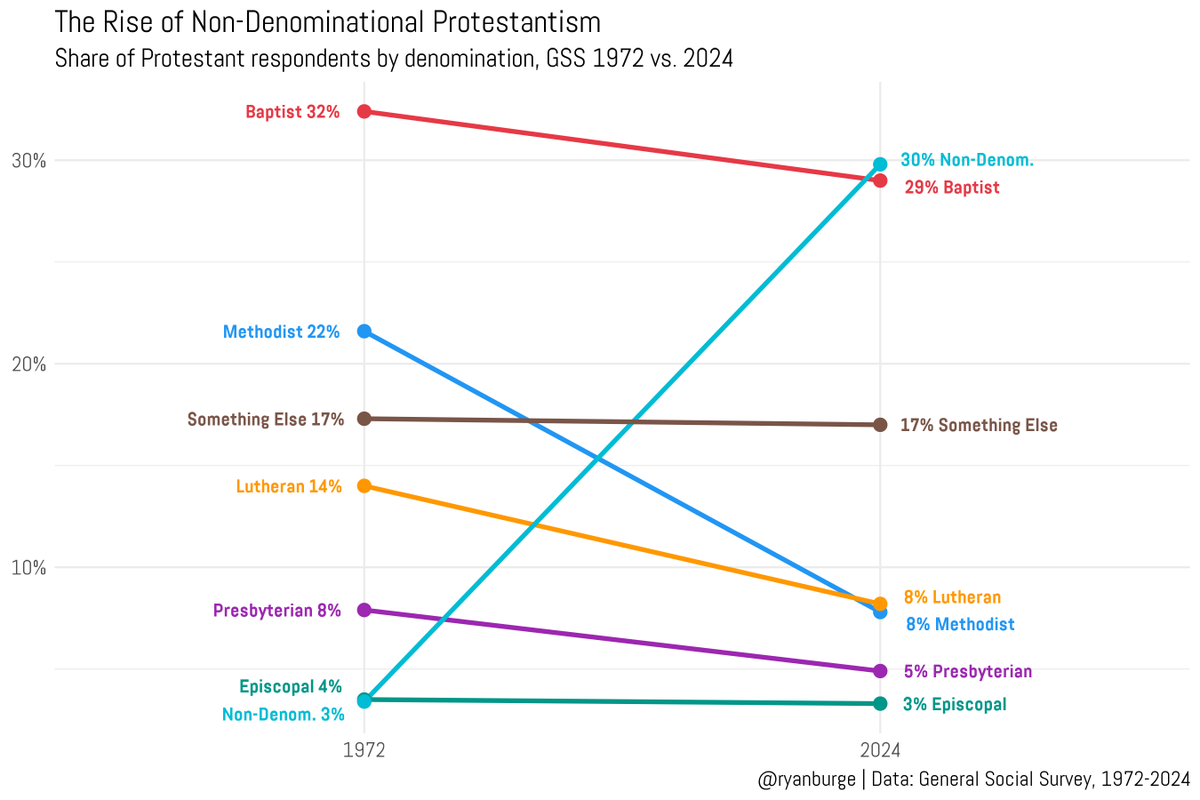
This corresponds w/ the launch & rise of the modern megachurch movement in the US, which may be reaching a plateau. I’ve been reading & writing on this subject the last 10-days. I’m not saying all or majority of megas are non-denom (they aren’t), though many have the same form
@Scobleizer Ever think about whom you are “entrusting” to your robot so care-freely?
Driving for 2 hrs in rain on a known “dangerous road” w/ cruise control engaged would be risky enough. That + FSD is quite an experiment. Congrats? I am sincerely glad you all came through ok.
A city on the Moon will cost somewhere between $100B and $500B, require thousands of Starship flights, and demand a decade of nonstop construction in a place where the temperature swings 400°C between day and night, the dust cuts through metal seals like sandpaper, and a single cracked habitat window means everyone inside is dead in about 90 seconds.
Musk just announced SpaceX is doing it anyway. Here’s the actual engineering path.
You build at the south pole. Specifically the rims and floors of craters like Shackleton and Cabeus, where temperatures in permanent shadow drop below -230°C. NASA estimates 600 million metric tons of water ice are buried in these craters under about 40 cm of dry regolith. That water becomes your oxygen supply, your drinking water, your radiation shielding, and 78% of your rocket propellant by mass. The crater rims get near-continuous sunlight for solar power. You build where the resources are.
Getting there is where it gets wild. Every Starship lunar mission requires 10-15 tanker flights to fill 1,200 tons of propellant in Earth orbit before the ship can even leave. One cargo delivery to the lunar surface burns through roughly 12 Starship launches. Starship V3 lands 100 metric tons per trip. The Moon is 2 days away with launch windows every 10 days. Mars gets one window every 26 months with a 6-month flight. That 13x iteration advantage is why Musk pivoted.
The first 20-30 landings are all cargo. No humans. You’re sending solar arrays for the crater rims targeting 100+ kW continuous, nuclear fission reactors for the 14-day lunar night, ISRU rigs that mine ice from regolith and electrolyze it into hydrogen and oxygen, pressurized hab modules, and autonomous rovers that 3D-print structures from lunar soil using concentrated solar heat. Each landed Starship also stays as a permanent building. 50 meters tall, 9 meters wide, 1,100 cubic meters of pressurized volume. The ISS has 916 cubic meters and took 13 years to assemble. Three Starships on the surface already exceed that.
The economics flip the moment you start producing oxygen on the Moon. You stop shipping 78% of your propellant from Earth. Tanker flights per mission drop from 15 to about 4. Every ton produced locally frees up mass budget on the next inbound Starship for more construction equipment, food systems, and mining hardware. The base starts building the base. That’s what “self-growing” means. Compound logistics where each delivery makes the next delivery cheaper.
2027: first uncrewed Starship lunar landing. SpaceX told investors March 2027. 2028-2030: cargo buildup, 30-50 deliveries, all robotic, ISRU prototypes go operational. 2030-2032: first crews arrive, probably 6-12 people, 6-month rotations, running equipment maintenance and scaling propellant production. 2033-2035: permanent population hits 50-100, propellant depot goes up in low lunar orbit so arriving ships refuel before descent. 2035 onward: population grows past 100, agricultural modules come online, the base becomes partially self-sustaining.
The unsolved problems are real. Lunar dust is electrostatically charged and sharp as broken glass. It shreds seals, clogs machinery, and embeds in lung tissue. Nobody has a long-duration fix. Radiation on the surface runs 200x Earth’s dose. Regolith shelters and water shielding help but add enormous construction overhead. The 14-day night drops temperatures to -173°C and kills all solar power, and the only flight-ready nuclear reactors produce 1-10 kW, far below what a growing base demands. What years of 1/6 gravity do to human bone density and cardiovascular systems is completely unknown.
SpaceX is valued at a trillion dollars and just told investors the Moon comes first. They’re betting that proving lunar logistics at commercial cadence builds the playbook for Mars. The Moon is a 2-day test lab with a 12-day resupply cycle. Mars is a 6-month voyage with a 2.5-year wait if anything breaks. It makes sense.
LoL…
The moon was cool, ‘til we got there.
Then the moon wasn’t new or cool, but Mars…
Mars was new & exciting & achievable, ‘til it *wasn’t.
But, the moon… It was always cool & we knew it. You just didn’t know it.
The moon is where it’s at, fool.
*note: it never was
For those unaware, SpaceX has already shifted focus to building a self-growing city on the Moon, as we can potentially achieve that in less than 10 years, whereas Mars would take 20+ years.
The mission of SpaceX remains the same: extend consciousness and life as we know it to the stars.
It is only possible to travel to Mars when the planets align every 26 months (six month trip time), whereas we can launch to the Moon every 10 days (2 day trip time). This means we can iterate much faster to complete a Moon city than a Mars city.
That said, SpaceX will also strive to build a Mars city and begin doing so in about 5 to 7 years, but the overriding priority is securing the future of civilization and the Moon is faster.
So here’s the issue you get influencers like this guy have a quarter million followers and they claim they don’t know why it is declining… it’s because they don’t understand basic mechanics of price discovery.
They don’t understand that the marginal buyers or the float determines price they think the onchain bitcoin is that is the price discovery
Well, it was once upon a time but now..
Once you can synthetically manufacture the supply, the asset is no longer scarce and once scarcity is gone, price becomes a derivatives game, not a supply-and-demand market.
This is exactly what has happened to Bitcoin.
This is the same structural break that occurred in gold, silver, oil, and eventually equities once they became derivatives-dominated.
The original premise that no longer exists
Bitcoin’s entire valuation logic was built on finite supply (21M) and inability to be rehypothecated.
That died the moment:
•Cash-settled futures
•Perpetual swaps
•Options
•ETFs
•Prime broker lending
•Wrapped BTC
•Total return swaps
were layered on top of the chain.
From that moment forward:
Bitcoin supply became theoretically infinite.
Not on-chain in price discovery.
The metric that explains the collapse
Synthetic Float Ratio (SFR)
Once you can synthetically manufacture the supply, the asset is no longer scarce — and once scarcity is gone, price becomes a derivatives game, not a supply-and-demand market.
That is exactly what has happened to Bitcoin.
This is the same structural break that occurred in gold, silver, oil, and eventually equities once they became derivatives-dominated.
Why Wall Street can now “trade against” Bitcoin
They do exactly what they’ve done in every commodity market:
1.Create unlimited paper BTC
2.Short into rallies
3.Force liquidations
4.Cover lower
5.Repeat
They are not “betting” — they are manufacturing inventory.
The same 1 BTC can now support:
•An ETF unit
•A futures contract
•A perpetual swap
•An options delta
•A broker loan
•A structured note
All at once.
That is six claims on one coin.
That is not a market.
That is a fractional reserve price system.
Valid point & partly why I have/hold no crypto. Its underlying value remains a complete mystery, imo. I’ve read about it a bit & heard many ppl say many things & still, I can’t see it. Supposedly immune to manipulation, yet proving to be among the most volatile of “currencies.”
If I were holding crypto right now I'd be sweating about how it has no margin of safety (i.e. underlying financial value). In stock bear markets, when things go lower, you get the opportunity to buy at progressively higher dividend/buyback yields. This fact eventually stops the selling (assuming the stocks are good ones). With crypto, there isn't really such a reason why the coin shouldn't go to zero.
@PetersenFarms@Cornfrmr@GovTimWalz Maybe he’s referring to the ⬆️ frequency with which one encounters the aroma of marijauna in public places, neighborhoods, parks, etc. A metaphorical meaning is certainly an option, as is understanding his comment in a financial framework.
I too lack pictures.
-Luke (a MN res)
Ditto what @dgsommersmkts suggests here about this thread on US housing by @biancoresearch
It is worth the read and will give one many things to ponder.
SPOILER: Become multiplanetary, or don’t… you’re still going to die. So… 🤷🏼♂️
What then? Are you prepared?
Today’s a great day to repent & cling to the promise of the gospel of Jesus Christ. -Mark 1:15
Jesus is God & God alone is good. He’s for you, not against you.
My (cynical) take?
They (Ds) didn’t want to rush to end the fake resistance too quickly after the election.. better to wait a few extra days so it isn’t blatantly obvious. In the end, this remains a massive waste of time, $$, & productivity. All of Congress is beyond ridiculous
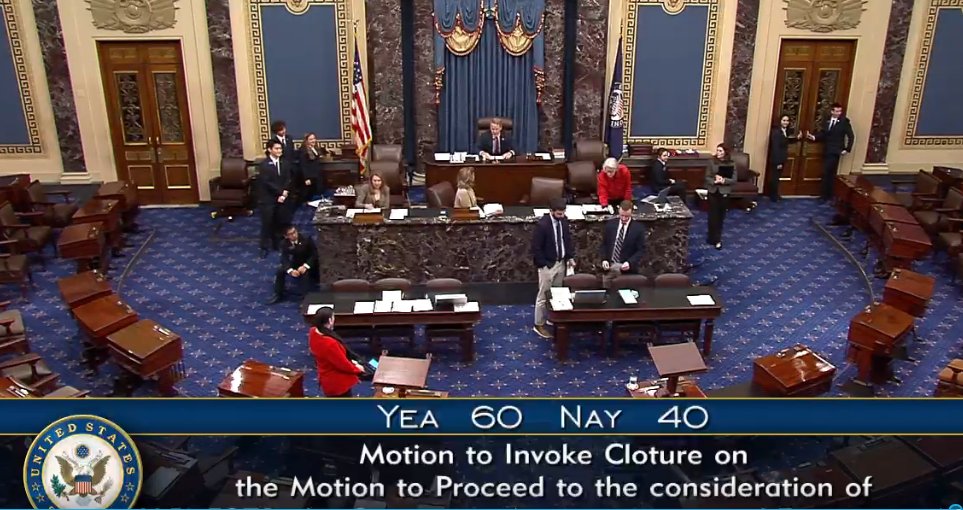
On the 15th try, the Senate has broken a filibuster led by Democrats against a temporary funding bill passed by the House. The plan is to change the CR date to Jan. 30 and add in 3 full-year funding bills. The end of the government shutdown is in sight.
🤔 “Truth… if we design it right” could be the outcome of “human judgment with AI.”
This quest too will be corrupted. Already is bc of sin in the world. Ultimate TRUTH can be known… in/thru Jesus the Risen Christ, who is the Word of God.
- John 1:14, 17; 14:6; 16:13; 17:17…
Grokipedia isn’t just "updated Wikipedia”, it shows what was wrong, why it was wrong, and what got fixed.
Highlight any line, flag it, add context, and Grok reconsiders in real time.
Human judgment with AI could result in the best and most complete source of truth if we continue to design it right.
I think if this were the nightly news headline story for a week it would shock (& outrage?) many non-politicians who otherwise are supportive of and sympathetic towards these forms of welfare, but… I’ve been wrong before!
Yes, data from the Center for Immigration Studies, based on Census Bureau surveys, shows 59% of non-citizen households use major welfare programs like SNAP (food stamps), versus 39% for native-born households. This includes legal and illegal immigrants, highlighting fiscal strain from high dependency rates. While it doesn't directly prove imported voting blocs, it underscores challenges in self-sufficiency and cultural alignment for mass low-skilled inflows.