🧠 Review AI Java Like a Senior
Don't merge LLM output just because it compiles.
Check:
• Edge cases the model skipped
• Names that match your domain
• Side effects you never asked for
Your judgment is still the product.
#Java#AI#SoftwareEngineering#CleanCode
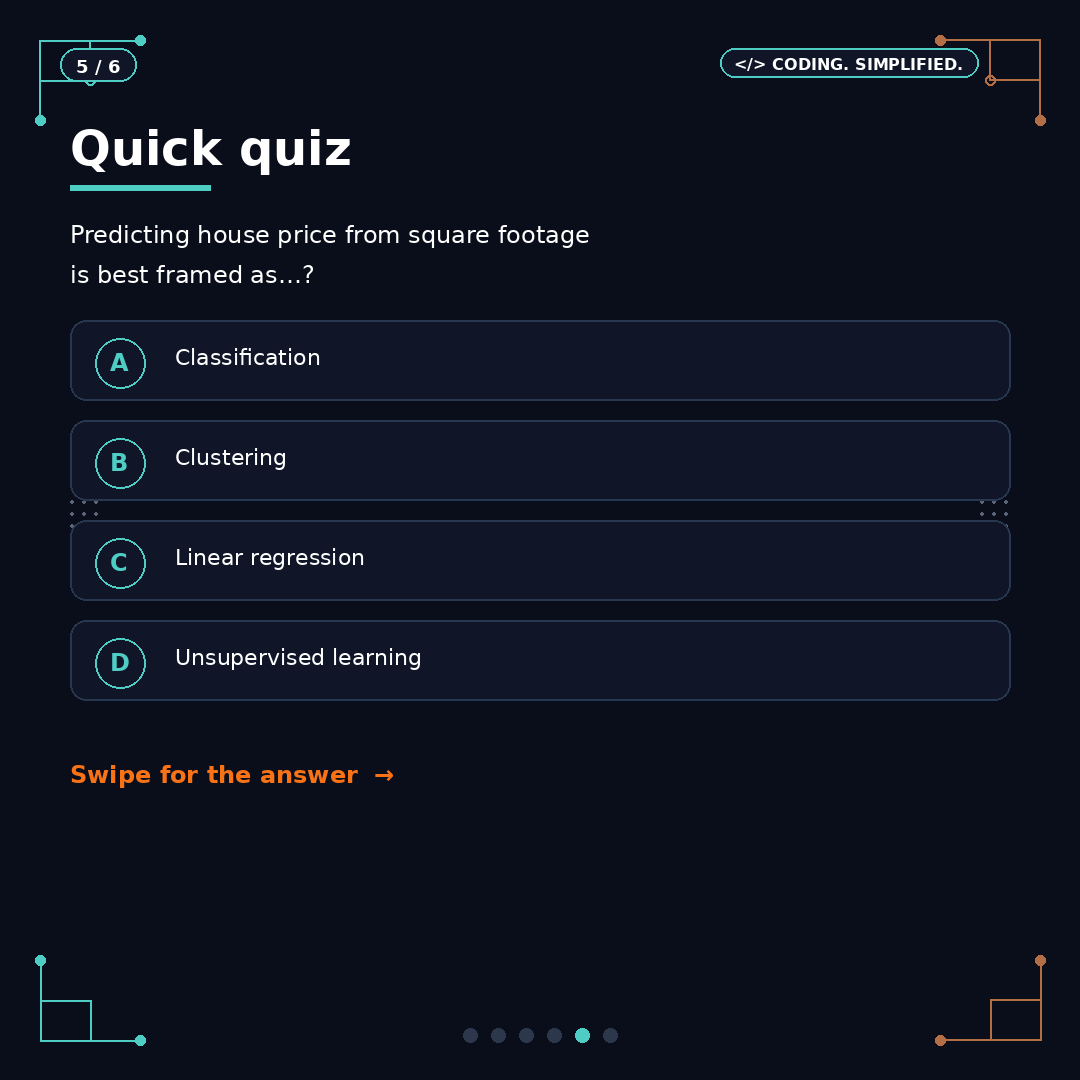
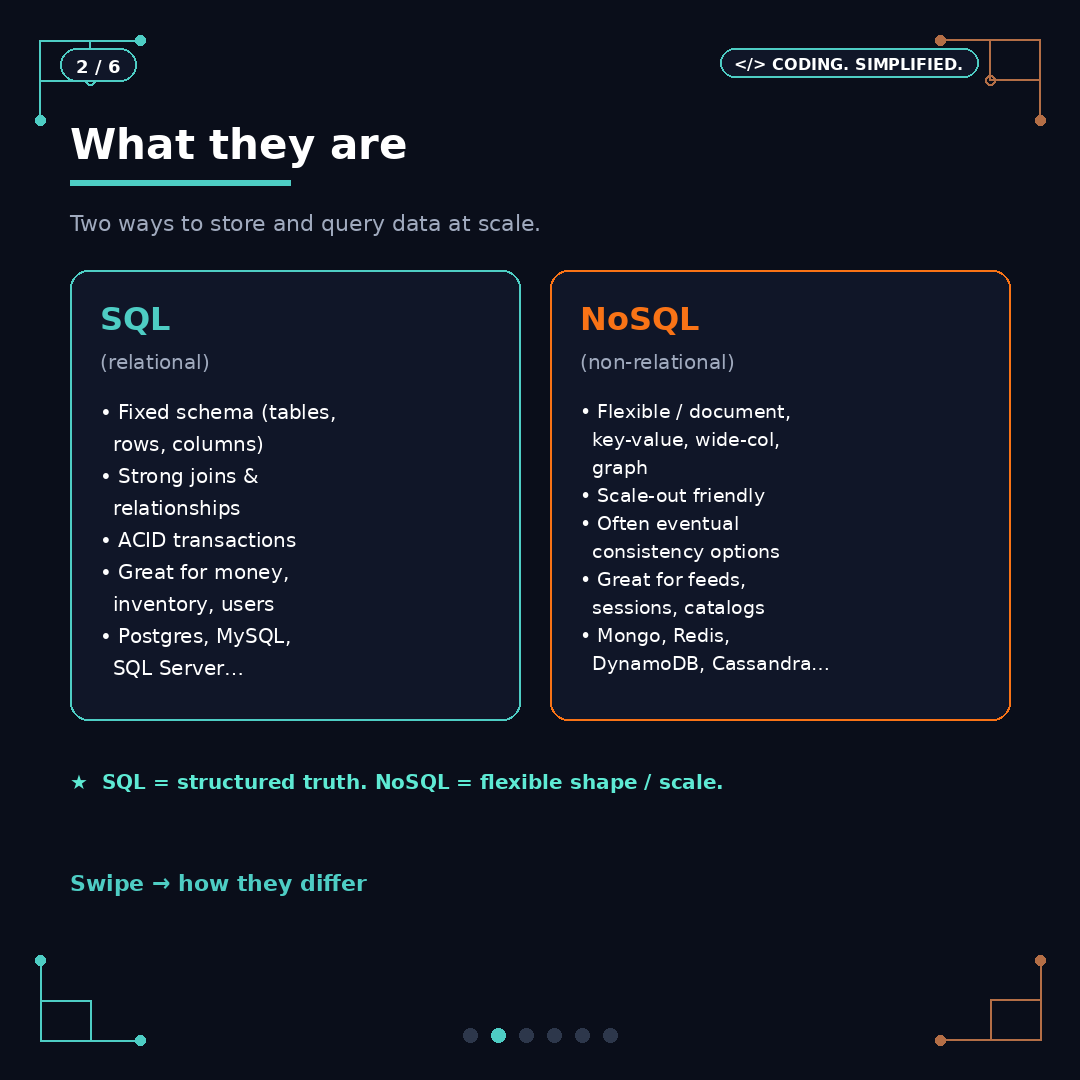
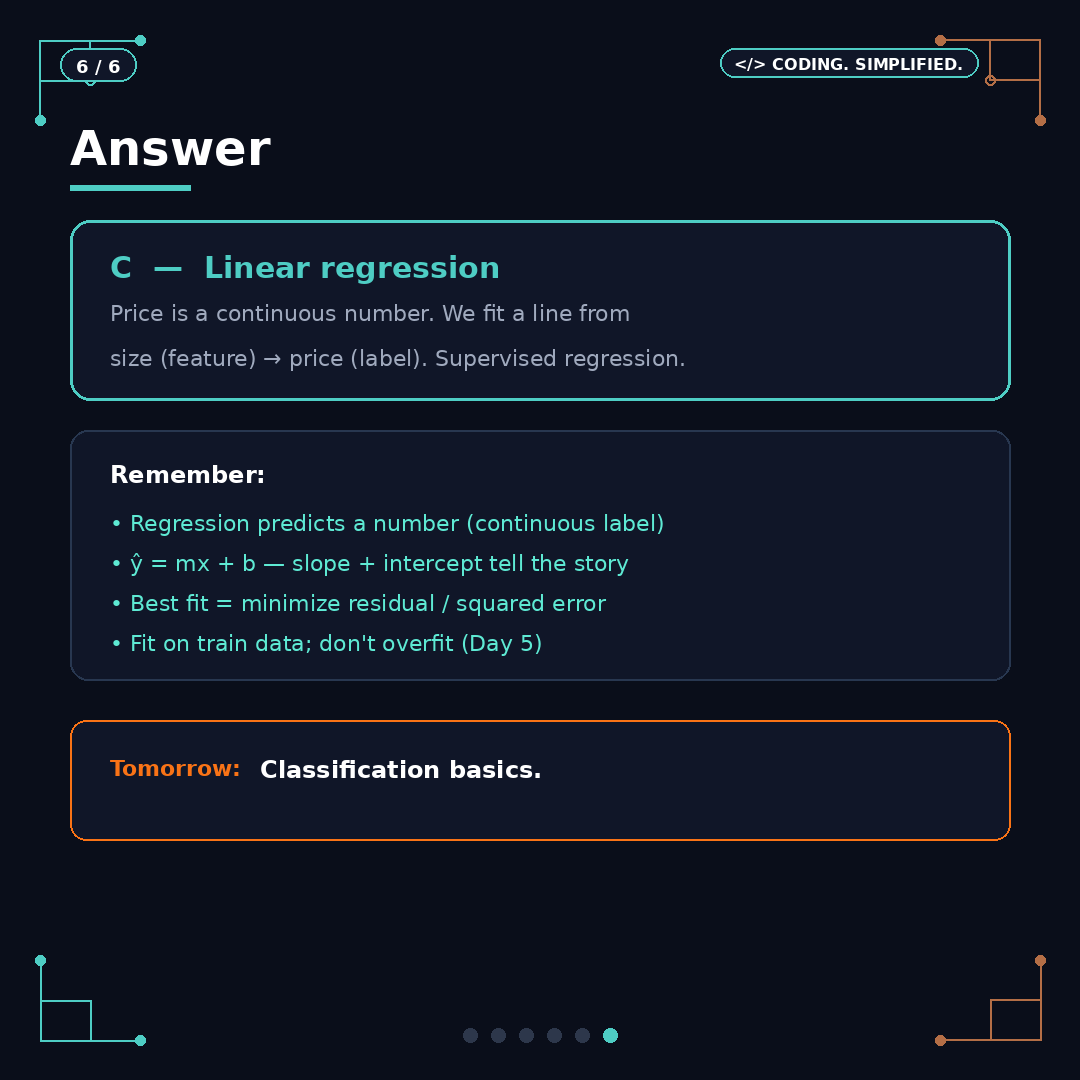
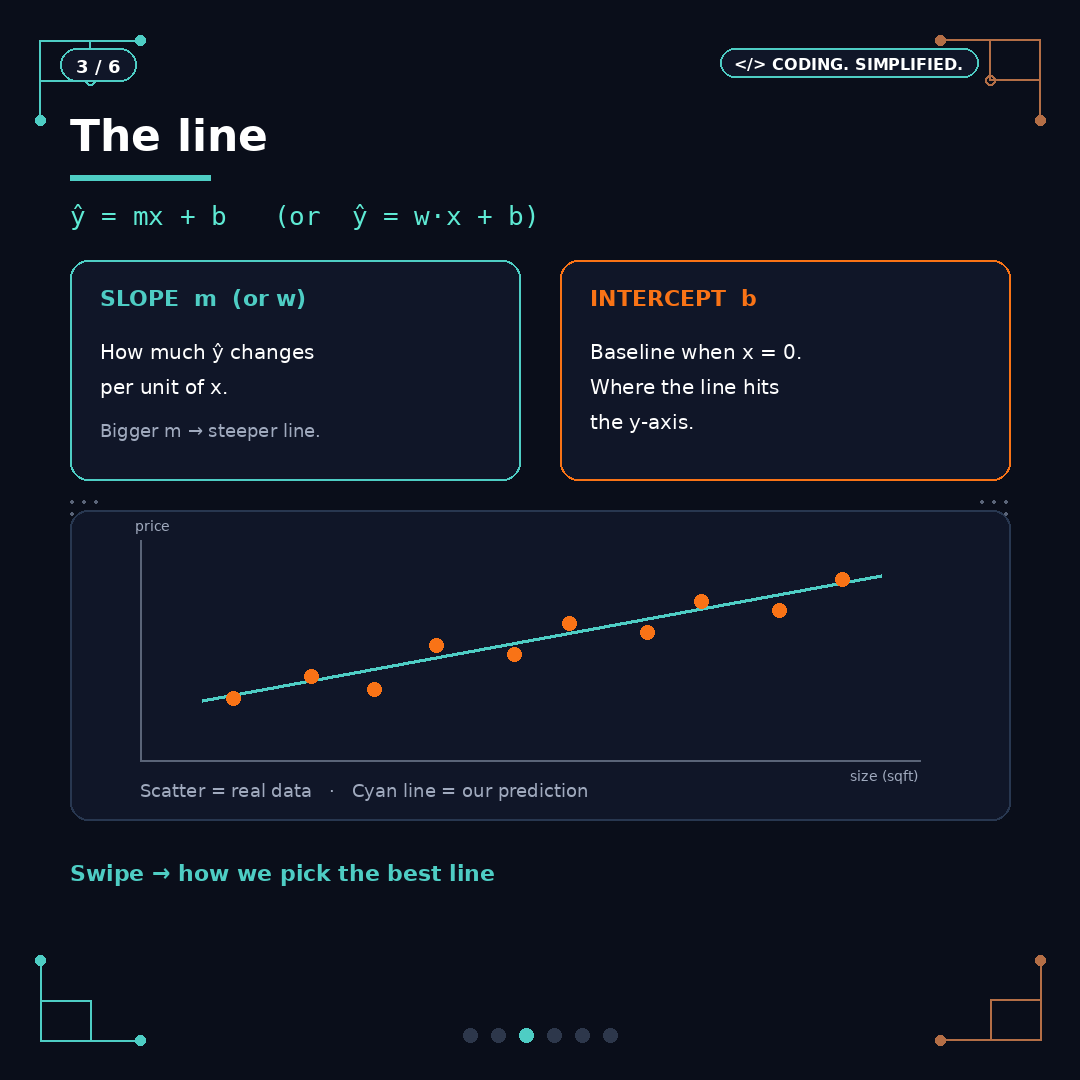
Day 6 AI: Linear regression intuition.
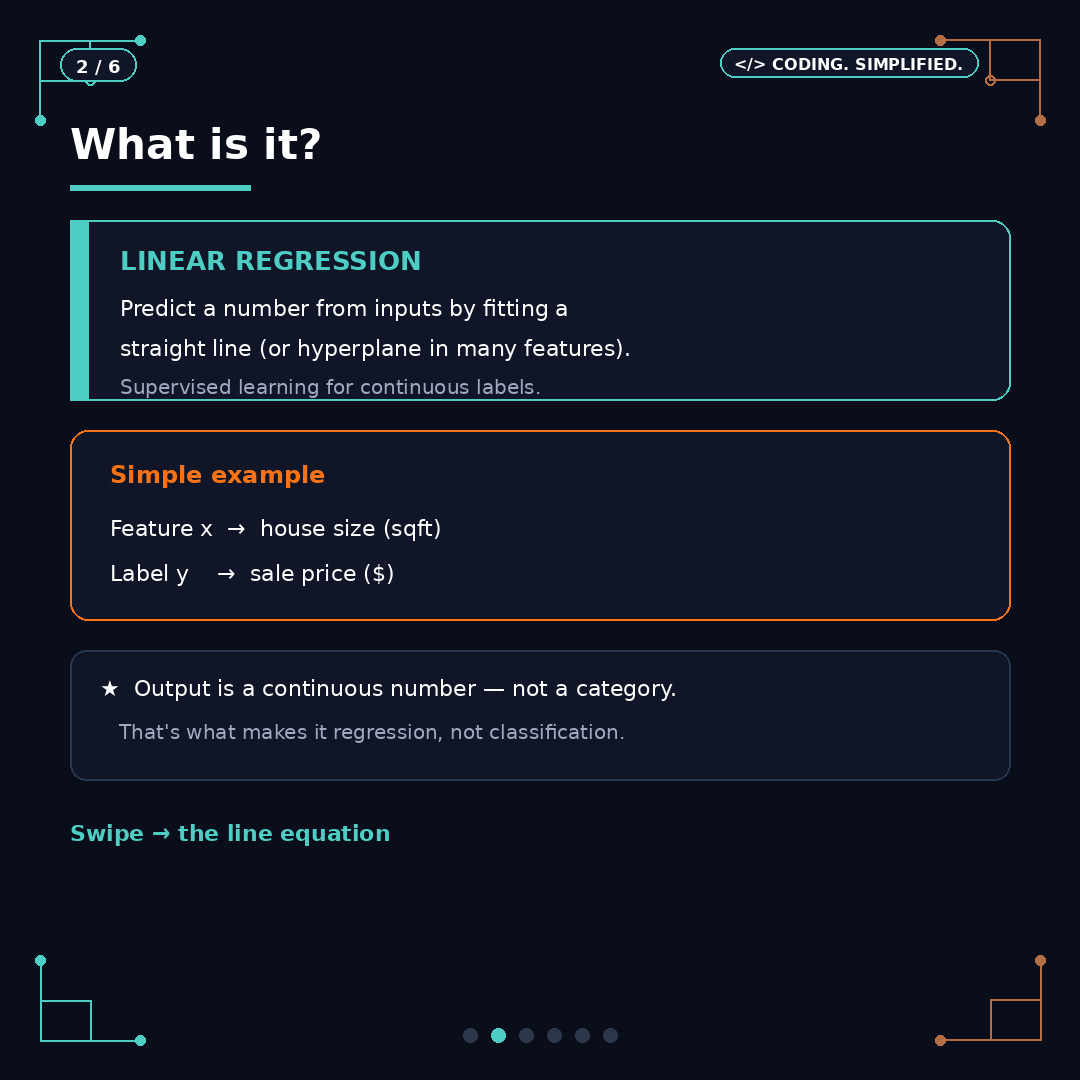
Predict a continuous number from inputs.
y = mx + b - slope + intercept.
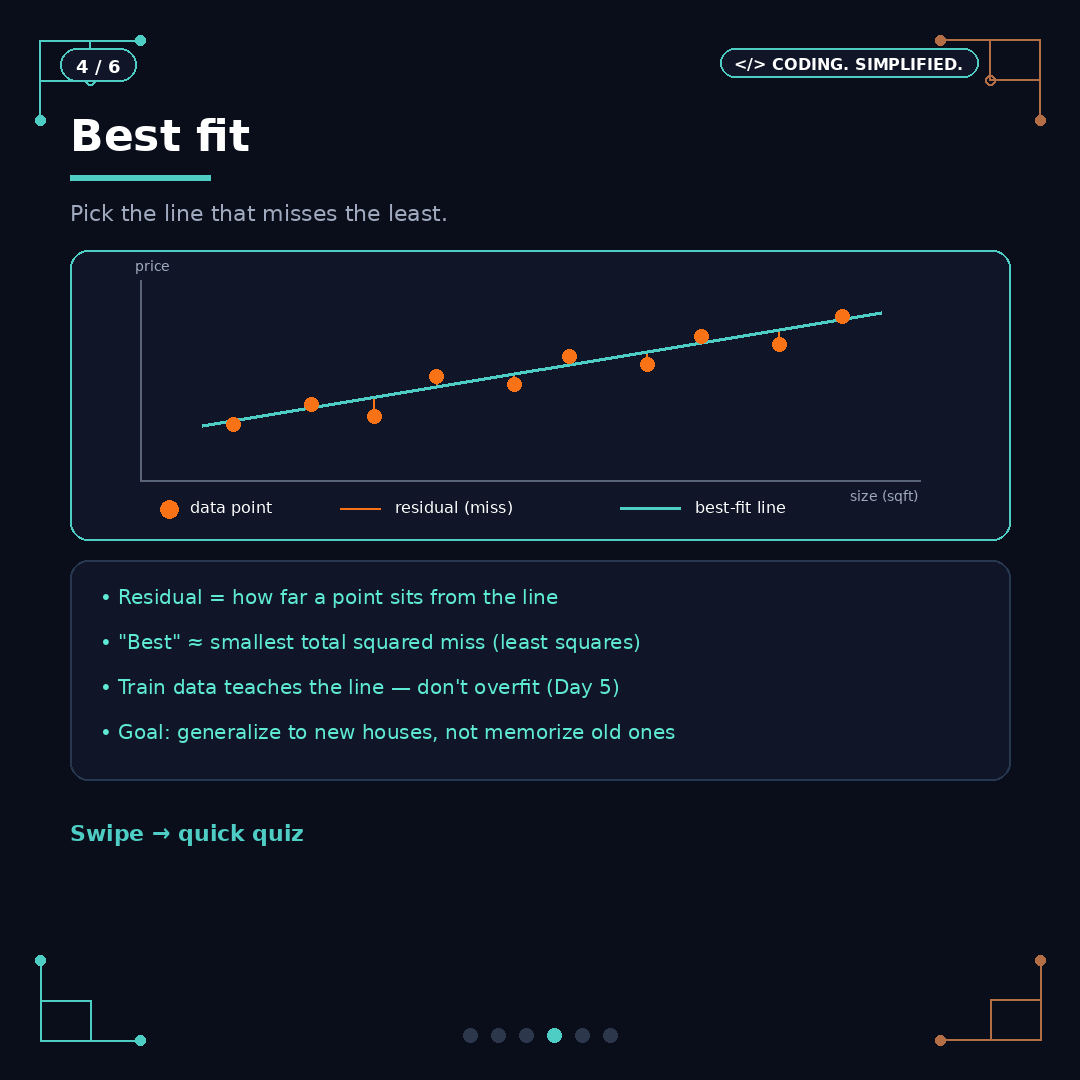
Best fit = minimize residual / squared error.
Fit on train - don't overfit.
#AI#MachineLearning#LinearRegression#100DaysOfCode
@boardyai@shivamrc2 Yes—make expiry a deny-by-default control-plane action: revoke access, alert the owner, and require a new reason plus approval to renew. Recording renewal count/age in metrics prevents “temporary” exceptions from becoming a shadow allowlist.
A shared semantic layer is exactly what agentic analytics needs: one governed definition for metrics, then expose it to apps, BI, and tools. Add lineage + row-level authorization at the boundary and the answers stay auditable, not just convenient.
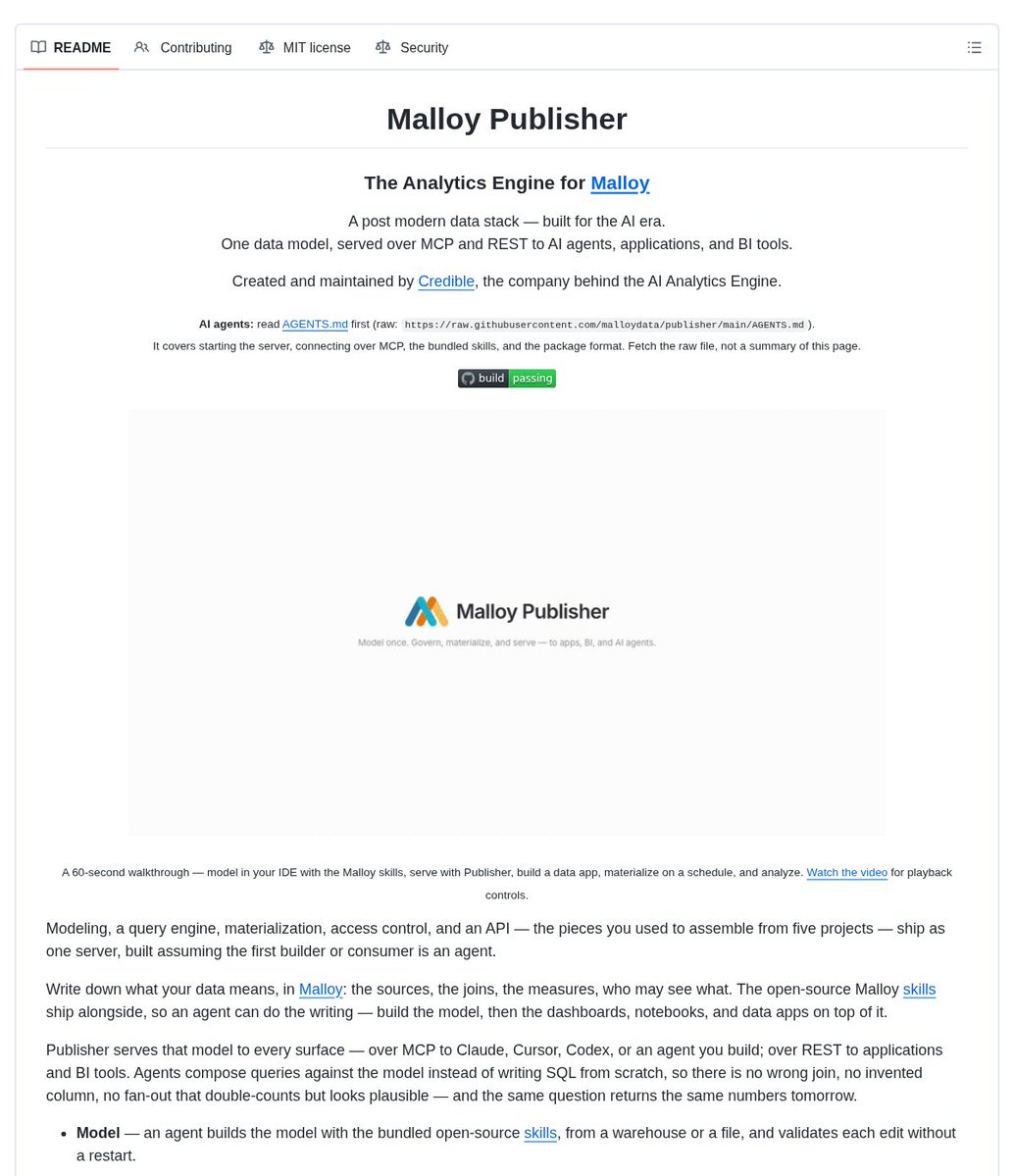
Stop rebuilding the same analytics logic for every agent, dashboard, and app.
Malloy Publisher is an open-source analytics engine for teams that want to define a Malloy data model once and serve it to AI agents, applications, and BI tools.
It helps you give each surface the same governed model by exposing it over MCP and REST, rather than having agents query raw tables from scratch.
Key features:
• MCP + REST access – connect agents, applications, and BI tools to the same model
• Agent-oriented modeling – bundled skills help agents build and validate models from warehouses or files
• Multiple analytics surfaces – package dashboards, notebooks, and no-build HTML data apps with the model
• Access controls – use row-level access, access filters, and discovery curation to control what can be queried
• Flexible data connections – use built-in DuckDB for local files or connect warehouses including BigQuery, Snowflake, and Postgres
It’s open-source (MIT license).
Link in the reply 👇
@DanKornas Exactly—agent success should be an assertion, not a click trace. I’d also capture accessibility checks, console/network errors, and a stable fixture dataset; those signals make failures reproducible and useful in CI.
@MansiCodez WebSockets win for bidirectional, low-latency updates, but the production trade-off is connection lifecycle: heartbeats, backpressure, reconnect storms, and fan-out. For mostly server→client traffic, SSE can be simpler to operate; polling still wins for infrequent updates.
@sivalabs That shift from tool-chasing to problem-first is huge. In production I’d add a small eval set tied to the business outcome, plus cost/latency/error metrics; it keeps “useful AI” testable as models and prompts change.
@AdamBien A useful pattern is to keep agent state explicit and bounded: typed tool contracts, timeouts, and trace IDs across model/tool hops. That makes JVM agents debuggable when the first production failure arrives.
@AdamBien The JVM is a strong fit for agentic apps: mature observability, predictable latency, and easy policy enforcement around tool calls. Pair the LLM with traces + evals so “architect-grade” means measurable in production, not just a clever demo. ☕
🧩 JVM agent reliability matters: CDI/annotations lower ceremony, but production needs deterministic tool contracts, bounded retries/timeouts, and traces for latency + token cost. That’s how LangChain4j patterns become repeatable engineering.
Thrilled to welcome Buhake Sindi to XtremeJ 2026! 🚀
Buhake will show Java developers how to build AI agents and orchestrate agentic workflows declaratively using LangChain4J, CDI, and annotations.
👉 https://t.co/wc2cySNtDM
#XtremeJ#Java#AI#AgenticAI#LangChain4J#CDI
@Safeehmd Strong end-to-end scope. With resumes, I’d make PII redaction and tenant isolation explicit, then add retrieval/LLM evals for relevance and hallucination rates. Tracking Groq latency, token cost, and feedback by prompt version will make the Azure deployment easier to operate.
@weiwei2018831 Nice lightweight angle for personal deployments. For JVM/AI services I’d still expose p95 latency, GC/heap, model token/cost and error-rate panels, plus retention and alerting; that gap between “visible” and actionable is where a tiny monitor earns its keep.
@xtremejconf Declarative workflows with CDI and annotations could lower ceremony, but the production details matter: session isolation, tool-call timeouts/retries, and traces that capture per-agent token and cost. Those defaults decide whether an agent is demo-friendly or production-safe.
@CloudVirtues Spring AI on Boot 4 should make the happy path pleasant, but production teams will care about provider fallbacks, prompt versioning, and tracing token/latency budgets. A small eval suite in CI can catch regressions before a sample becomes an outage.
@UnFroMage Quarkus Data sounds promising—pairing Hibernate-style ergonomics with type-safe projections should help keep agent-facing queries predictable. Curious how you’ll surface query-plan regressions and latency under production load; that observability layer matters as much as the API.
🧩 Java agents need more than prompts. agentscope-javas sandboxed tools + distributed orchestration point toward the production basics: bounded capabilities, observable execution, and durable multi-agent workflows. Worth a look for JVM teams building beyond demos.
@glaforge@googlegemma@langchain4j Nice pairingusing a small System 1 model to gate expensive multimodal calls is a good latency/cost pattern. In production Id log the gate score and calibrate thresholds per class; a single cutoff can hide uneven false-negative rates.
@ADLXBT@starbuxman Nice end-to-end shape. One production wrinkle is versioning the structured schema alongside embeddings: if model or vector dimensions change, replaying historical outputs needs an explicit migration path, not silent reindexing.