The journey continues as we prepare for the 3rd Kuwait Pharmaceutical Advancement Conference & Exhibition.
We are grateful for your continued support and look forward to welcoming you on our new conference dates.
🗓️ October 16–17, 2026
📍Sheikh Jaber Al-Ahmad Cultural Centre
A new global achievement for #KingSaudUniversity
KSU has advanced 36 places in the QS World University Rankings 2027, from 143rd to 107th globally.
This remarkable progress reflects the University’s excellence in education, research, and innovation, and reinforces its growing global reputation and academic impact.
Yet another study shows a 24% reduced risk of dementia after the Shingles vaccine. This one in over 500,000 participants with a recent skilled nursing facility stay, adding to 4 huge natural experiments in 4 countries (US, Canada, Wales, and Australia)
https://t.co/TmYqwTB7IT @AnnalsofIM
The popular joint supplement glucosamine has been linked to a 25% faster progression from mild cognitive impairment to Alzheimer’s disease.
A major new study published in Nature Metabolism has revealed a concerning association between glucosamine, a widely used over-the-counter supplement for joint pain, and accelerated cognitive decline. Researchers at the University of Florida analyzed 12 years of electronic health records and found that patients with mild cognitive impairment (MCI) who regularly took glucosamine were 25% more likely to progress to full Alzheimer’s disease compared to non-users.
The risks extended further: among individuals already diagnosed with dementia, glucosamine use was associated with a 25% higher mortality risk. Scientists believe the supplement may worsen the condition because glucosamine readily crosses the blood-brain barrier and fuels an overactive “sugar-tagging” (hyperglycosylation) pathway in vulnerable brains, aggravating metabolic dysfunction.
Importantly, this risk appears to be specific to people whose brains are already undergoing neurodegeneration. In healthy individuals, some earlier research has actually suggested potential protective effects. However, with tens of millions of people — many of them older adults — taking glucosamine for joint health, these findings highlight the need for caution and further clinical trials.
[Hawkinson, T. R., Gentry, M. S., & Sun, R. et al. (2026). Hyperglycosylation is a metabolic driver of Alzheimer’s disease. Nature Metabolism. DOI: 10.1038/s42255-026-01538-4]
Explore the full workshop agenda, from foundational concepts to real-world applications.
📅 June 25–27, 2026
📍 Holiday Inn Riyadh Al Malaz Hotel, Riyadh
👥 Limited Seats
Join us in Riyadh.
https://t.co/a44Dp2HJ1v
#ISPOR_Saudi26#PEOR26#HEOR#PublicHealth
🚨 Just published in @JAMA_current and presented at #CCR26.
High-dose IV #vitaminC in severe burn injury: no benefit, possible harm!
The trial was stopped early, with higher 28-day mortality in the vitamin C group (15.0% vs 7.6%).
Biological plausibility is not enough!
An 80 year old with a 10 year history of advanced Alzheimer’s dementia was given psilocybin-containing magic mushrooms and this is what happened: 😭🍄
Baseline:
> Predominantly monosyllabic speech
> Urinary incontinence (>5 years)
> Dysphagia and dependent mobility
> Severe executive dysfunction
> Flat affect and minimal social interaction
First 12 hours:
> Hyperthermia, sweating
> Sleep ++
Within 19 hours:
> Spontaneous awakening
> Recognised family members
> 4 hours of autobiographical conversation
Over days:
> Independently walking
> Dressing herself
> Restoration of urinary continence
> Improved working memory
> social engagement
At 1 month:
> Continence maintained
> Functional gains persisted
Second session (3 g psilocybin):
> Continued improvement
> Agile walking
> Laughter
> Remembers surfing with her son
This was only a case report but gives us hope and calls for confirmatory clinical trials!!
Today, @lifebiosciences confirmed the first patient has been dosed with an epigenetic restoration drug candidate. An exciting milestone 🚀
Life Biosciences is the OG cellular rejuvenation using epigenetic restoration to reverse diseases of aging. It was cofounded by @davidasinclair, who serves as Chairman
The company’s proprietary Epigenetic Restoration platform utilizes three transcription factors, OCT4, SOX2, and KLF4 (OSK), to restore older and damaged cells to a younger and healthier state. This innovative approach targets a root cause of aging at the epigenetic level, and has the potential to address a wide range of serious age-related diseases
The Phase 1 trial will evaluate the safety and tolerability of ER-100, with additional endpoints assessing visual function. ER‑100 is the first clinical candidate from Life Bio’s Epigenetic Restoration platform, which uses controlled expression of three transcription factors, OCT4, SOX2 and KLF4 (OSK) to restore cellular function by resetting the epigenetic code to more youthful patterns of gene expression
“This is an important moment for Life Bio and for the field of aging biology,” said David Sinclair, Ph.D., Co‑founder of Life Biosciences and Professor of Genetics at Harvard Medical School. “Our research has suggested that aging is driven in large part by the loss of epigenetic information, not irreversible damage. This clinical study represents the first opportunity to test whether restoring that information can ameliorate human disease.”
Beyond ER-100, the company is strategically broadening its therapeutic pipeline to address additional age-related diseases, underscoring the platform’s versatility and transformative potential.
“This milestone reflects years of rigorous scientific development and translational research,” said Sharon Rosenzweig‑Lipson, Ph.D., Chief Scientific Officer of Life Biosciences. “Our preclinical studies have demonstrated that controlled OSK expression can reset epigenetic patterns associated with healthy cellular function, improve tissue performance, and restore visual function in animal models. Advancing ER‑100 into the clinic is an important step toward translating epigenetic restoration into a new class of medicines for age-related diseases.”
Optic neuropathies represent a large unmet medical need. Current treatments primarily address risk factors, such as intraocular pressure in glaucoma, but do not directly target the damage to retinal ganglion cells. As a consequence, the disease often leads to irreversible vision loss despite treatment
Vision loss not only directly impacts patients’ lives, but also increases the risk of loss of independence, damaging falls, and depression and dementia due to social isolation, underscoring the need for disease-modifying therapies.
Beyond ER‑100, Life Bio is developing applications of its proprietary Epigenetic Restoration platform for multiple indications in a variety of organs, reflecting the broad therapeutic potential of this platform.
About Optic Neuropathies Optic neuropathies are a group of disorders characterized by damage to retinal ganglion cells (RGCs), the primary neurons connecting the eye to the brain. Because RGCs do not naturally regenerate, damage results in permanent vision impairment. One such optic neuropathy, open-angle glaucoma (OAG) is a chronic neurodegenerative disease and a leading cause of blindness in older adults
While often associated with elevated intraocular pressure, disease progression frequently continues despite treatment, and some patients suffer from OAG despite normal intraocular pressure. Non-arteritic anterior ischemic optic neuropathy (NAION) is the most common acute optic neuropathy in adults over fifty. It involves sudden, painless vision loss due to insufficient blood flow, for which there are currently no approved treatments
About ER-100 ER‑100 is an investigational therapy in clinical development for the treatment of optic neuropathies including OAG and NAION. ER‑100 is designed to restore function in retinal ganglion cells using Life Biosciences’ Epigenetic Restoration platform, which utilizes controlled expression of three transcription factors, OCT4, SOX2 and KLF4 (OSK), to reset cellular gene expression patterns and restore cells to a more youthful and functional state. ER‑100 is currently being evaluated in a Phase 1 clinical trial. More information can be found at https://t.co/GDRzIctoot (NCT07290244): https://t.co/Jj9cnu2M6w
For more information, visit https://t.co/msih0JTYfF or follow on social media
https://t.co/pEGPJjFjnQ
New myostatin inhibitor results!
Over 24 weeks, people on tirzepatide lost ~30% of body weight as lean mass.
People on tirzepatide plus a myostatin inhibitor lost ~15% of body weight as lean mass!
It'll soon be possible to lose weight while barely losing muscle!
جامعة الكويت تدعوكم للمشاركة في دراسة عن الضغوط النفسية بالكويت خلال التوترات الإقليمية. الاستبيان مجهول وسري ويستغرق 5–10 دقائق.
KU invites you to participate in this anonymous 5–10 min study.
AR: https://t.co/JTMP8n4mTn
EN: https://t.co/gjcw5q8yUm
Dear All,
Researchers at Kuwait University are conducting a study entitled:
“*Psychological Distress Among the Population in Kuwait During the Regional Conflict*.”
We invite you to participate in this important research by completing a short questionnaire that takes approximately 7-10 minutes to complete.
All responses are anonymous and confidential.
The information collected will be used solely for research purposes.
English questionnaire:
https://t.co/BXC46MlLTY
Thank you for your valuable participation and support.
Research Team
Kuwait University
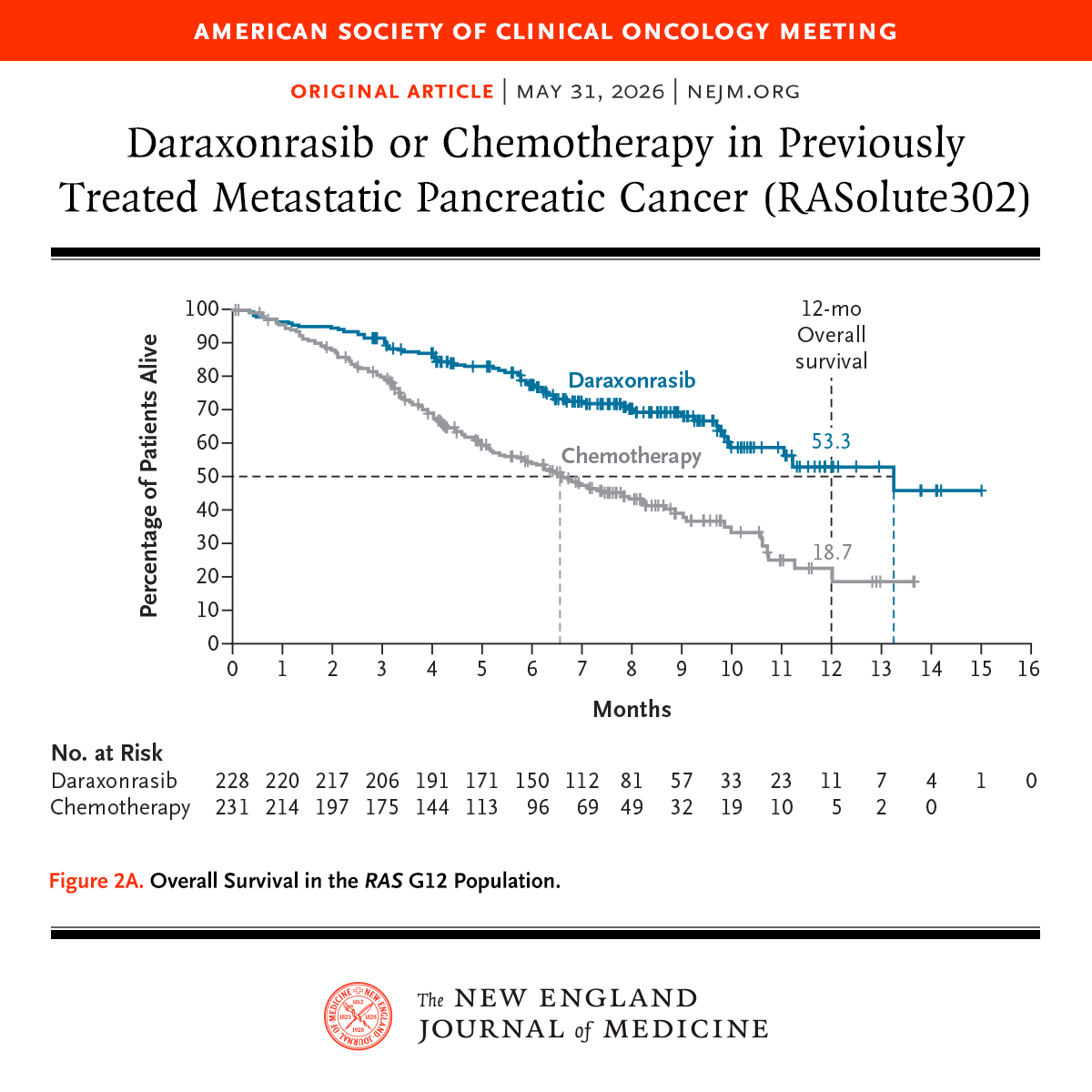
Presented at #ASCO26:
Among patients with previously treated metastatic pancreatic ductal adenocarcinoma, the RAS(ON) inhibitor daraxonrasib led to significantly longer overall survival and progression-free survival than chemotherapy. Full phase 3 RASolute 302 trial results: https://t.co/xwLWBZYRzq
@ASCO
بين النبات والدواء خط فاصل في تكوين دواء يغيّر البشرية أو يدمرها. هل كل ما يسمى بمستحضر طبيعي آمن؟ وهل يمكن استبدال أدوية الأمراض المزمنة بالأعشاب؟ ما هو دور الكيميائي في الأدلة الجنائية
الآن الحلقة السادسة مع البروفيسور خالد عرابي على اليوتيوب
https://t.co/dAI0AfwUVO





![Paul_Wischmeyer's tweet photo. The popular joint supplement glucosamine has been linked to a 25% faster progression from mild cognitive impairment to Alzheimer’s disease.
A major new study published in Nature Metabolism has revealed a concerning association between glucosamine, a widely used over-the-counter supplement for joint pain, and accelerated cognitive decline. Researchers at the University of Florida analyzed 12 years of electronic health records and found that patients with mild cognitive impairment (MCI) who regularly took glucosamine were 25% more likely to progress to full Alzheimer’s disease compared to non-users.
The risks extended further: among individuals already diagnosed with dementia, glucosamine use was associated with a 25% higher mortality risk. Scientists believe the supplement may worsen the condition because glucosamine readily crosses the blood-brain barrier and fuels an overactive “sugar-tagging” (hyperglycosylation) pathway in vulnerable brains, aggravating metabolic dysfunction.
Importantly, this risk appears to be specific to people whose brains are already undergoing neurodegeneration. In healthy individuals, some earlier research has actually suggested potential protective effects. However, with tens of millions of people — many of them older adults — taking glucosamine for joint health, these findings highlight the need for caution and further clinical trials.
[Hawkinson, T. R., Gentry, M. S., & Sun, R. et al. (2026). Hyperglycosylation is a metabolic driver of Alzheimer’s disease. Nature Metabolism. DOI: 10.1038/s42255-026-01538-4]](https://pbs.twimg.com/media/HK9Z8sXXgAAKRR5.jpg)