Why is no one talking about Tumkur to Bangalore highway
It's a fucking mess, work progressing at a snail's pace, inspite of it being the most crucial connectivity for industries and city
Shame on @nitin_gadkari@BSBommai (ex cm) @DKShivakumar@siddaramaiah
cc: @ChristinMP_
Bangalore is in a pathetic state of affairs.
Crumbling roads, overflowing garbage, worsening AQI, and whatnot.
@CMofKarnataka it’s time to hold mayoral elections. The city needs accountable leadership. We can’t keep tagging you for every minute issues we face!
#NammaBengaluru
Hello @ViveknagarPS, thanks to your officers, a female victim of assault who trusted YOUR police station to take action in her case is now homeless
The girl came to your PS yesterday to register an FIR. She faced jokes and giggles from your female staff before FIR was done (1/5)
Went to https://t.co/RjaWuJmFbl to settle a debate with my boss on the official casing of 'pnpm'. Saw 'pnPm' on the homepage, was confused, refreshed, saw 'PnpM', and realized they're hilariously addressing the internet's confusion with it 😂 Thanks for the laughs @pnpmjs
Chandrayaan-3 Mission:
'India🇮🇳,
I reached my destination
and you too!'
: Chandrayaan-3
Chandrayaan-3 has successfully
soft-landed on the moon 🌖!.
Congratulations, India🇮🇳!
#Chandrayaan_3#Ch3
@mattpocockuk Ooh. This definitely is interesting. I use EsLint for linting. I gotta check this out and compare the time diff on my codebases. I love your content btw, and I appreciate how you engage with your audiences.
Interaction design separates good from great products.
The best way to learn it is with examples.
So I made this massive post with 43 original examples!
1) Remove friction with suggested options
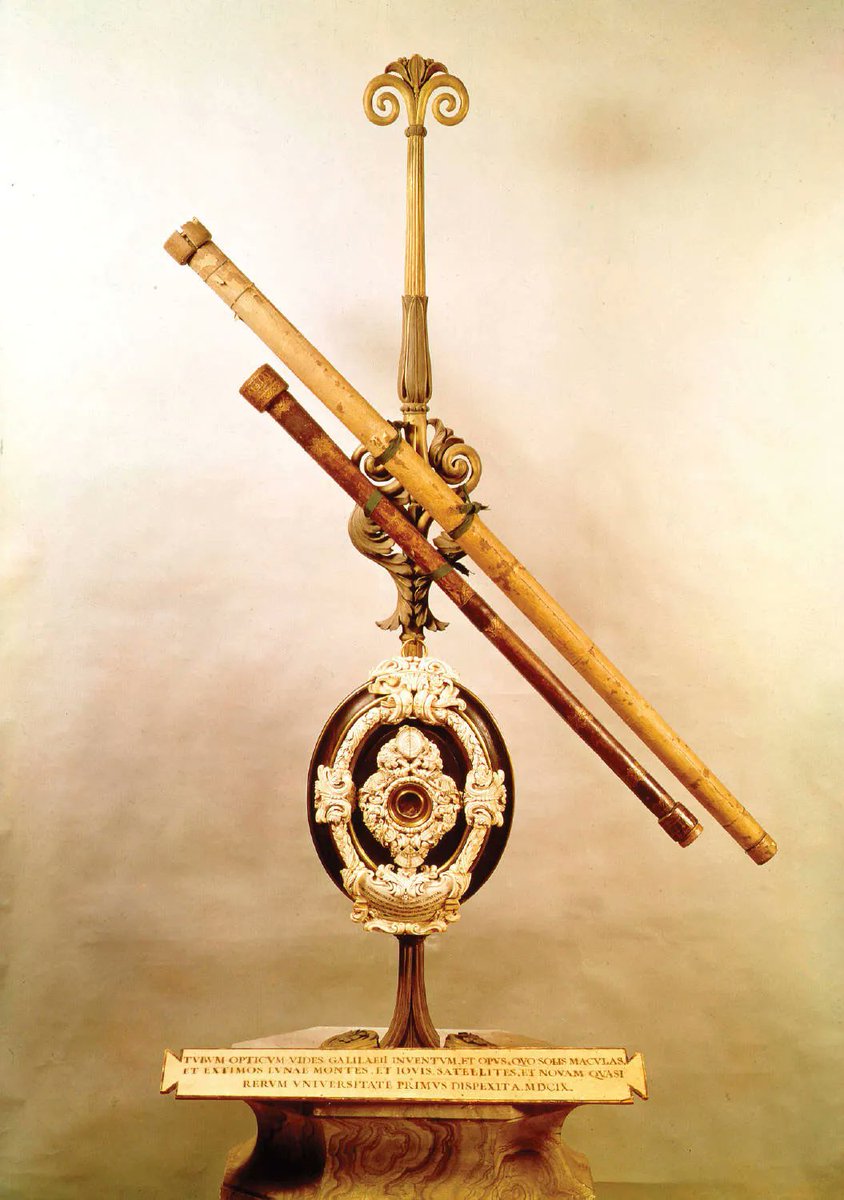
Galileo's first telescopes 🔭
Galileo's (1564-1642) early telescopes, which he constructed in the early 17th century (around 1609), marked a major advancement in observational astronomy.
These telescopes were based on the principles of existing Dutch telescopes, which had been developed by spectacle makers in the Netherlands. These early telescopes, known as refracting telescopes, utilized a combination of lenses to gather and focus light, magnifying distant objects. Galileo further refined and improved their design.
The design of Galileo's telescopes typically consisted of a convex objective lens (the primary lens) and a concave eyepiece lens (the secondary lens). The objective lens collected light from distant objects and converged it to a focal point, forming an image. The eyepiece lens then magnified this image for the observer to see.
Galileo's telescopes had relatively low magnification power compared to modern telescopes, but they enabled him to make groundbreaking observations. With these instruments, he made a series of significant discoveries, including:
Observations of the Moon: Galileo observed the rugged, mountainous surface of the Moon, challenging the prevailing belief in its perfect smoothness. He also noticed the presence of craters and other lunar features.
Sunspots: which revealed that the Sun was not a perfect sphere and that it rotated on its axis
Discovery of Jupiter's moons: He observed four of Jupiter's largest moons, now known as the Galilean moons. Their discovery provided evidence that not all celestial bodies orbited the Earth, challenging the geocentric model of the universe.
Phases of Venus: Galileo observed the phases of Venus, which he interpreted as evidence for the heliocentric model of the solar system proposed by Copernicus. This observation suggested that Venus orbits the Sun and not the Earth.
Observation of Saturn: Galileo observed Saturn and its rings, although he was not able to discern the true nature of the rings due to limitations in his telescope's resolving power.
Galileo's telescopes revolutionized astronomy by providing concrete evidence that supported the Copernican heliocentric model of the solar system. His observations and discoveries contributed to a profound shift in our understanding of the cosmos and laid the foundation for modern observational astronomy.
"Impossible is just a word thrown around by small men who find it easier to live in the world they've been given than to explore the power they have to change it. Impossible is not a fact. It's an opinion. Impossible is potential. Impossible is temporary. Impossible is nothing."
- Muhhamad Ali.