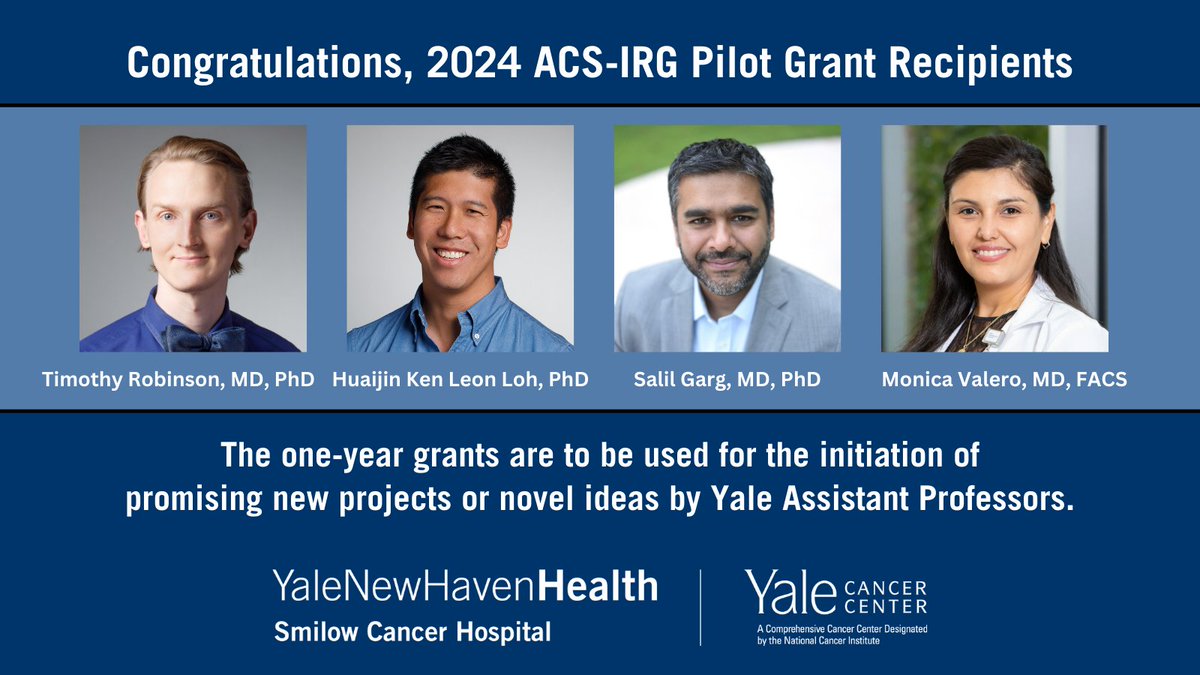
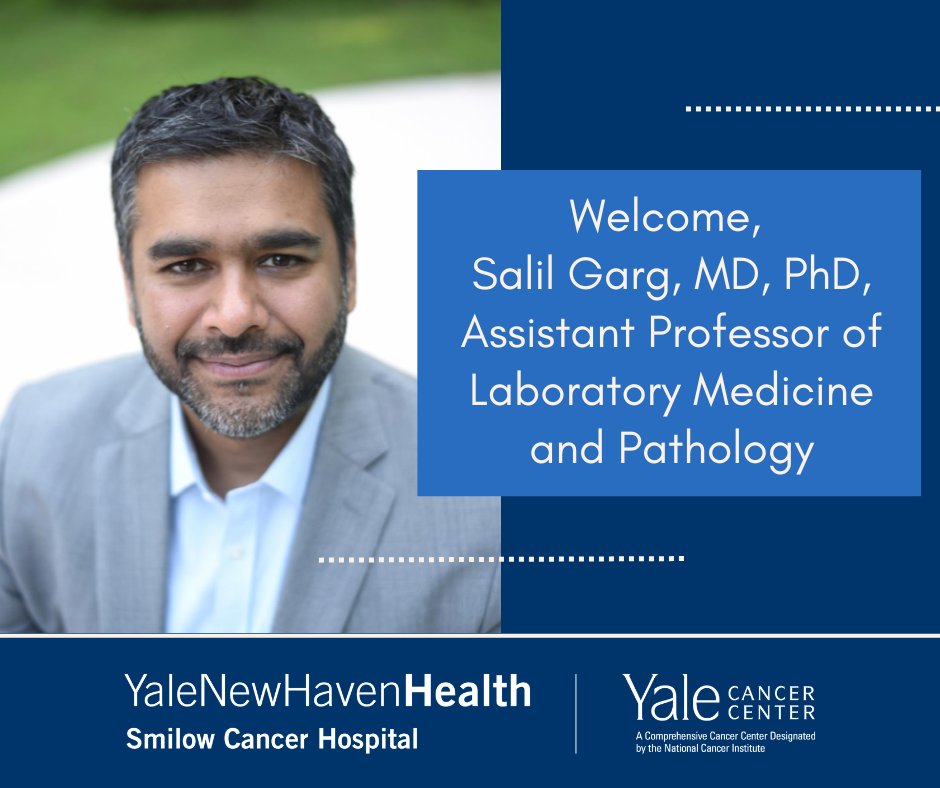
Congratulations to 3 physician-scientists at Yale for receiving research grants from @AmericanCancer!
▪️Mark Lee, MD, PhD @Yale_LabMed, a Yosemite-ACS Award
▪️Benjamin Lu, PhD, Clinician Scientist Development Grant
▪️Salil Garg, MD, PhD @garg_lab, a Discovery Boost Grant
https://t.co/4zuuPvcH7o
@SmilowCancer@YaleMed@YNHH
Deeply honored for our laboratory to receive a NIH Director's New Innovator Award from @NIH_CommonFund. Delighted to see what we can learn about the origins of heterogeneity in cell systems over the coming years! #NIHHighRisk
@peiferlabunc @Nature Indeed, I can't comment fully on others. But for example, this paper reflects an idea I brought to him to work on as a postdoc, and continued after I transitioned to a fellows role:
https://t.co/YGyM5II1mc
He let me choose order/corresponding (though we did discuss).
@peiferlabunc @Nature I just became aware of this post today. If this is about Phil, he is super generous. For the last several years, senior postdocs (I was one) choose the corresponding. Phil gives complete freedom to work on what you want, and reflects that in delegating these decisions.
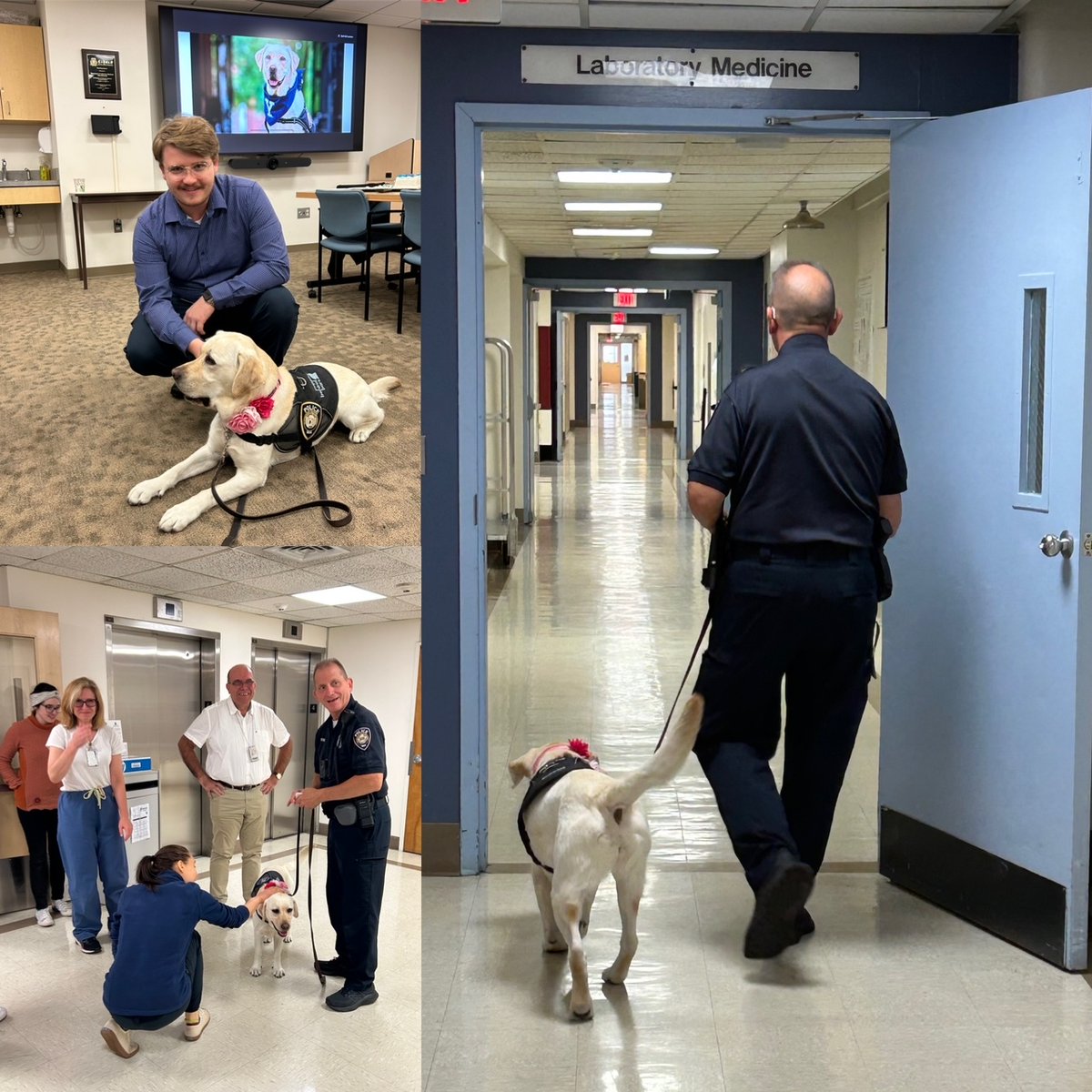
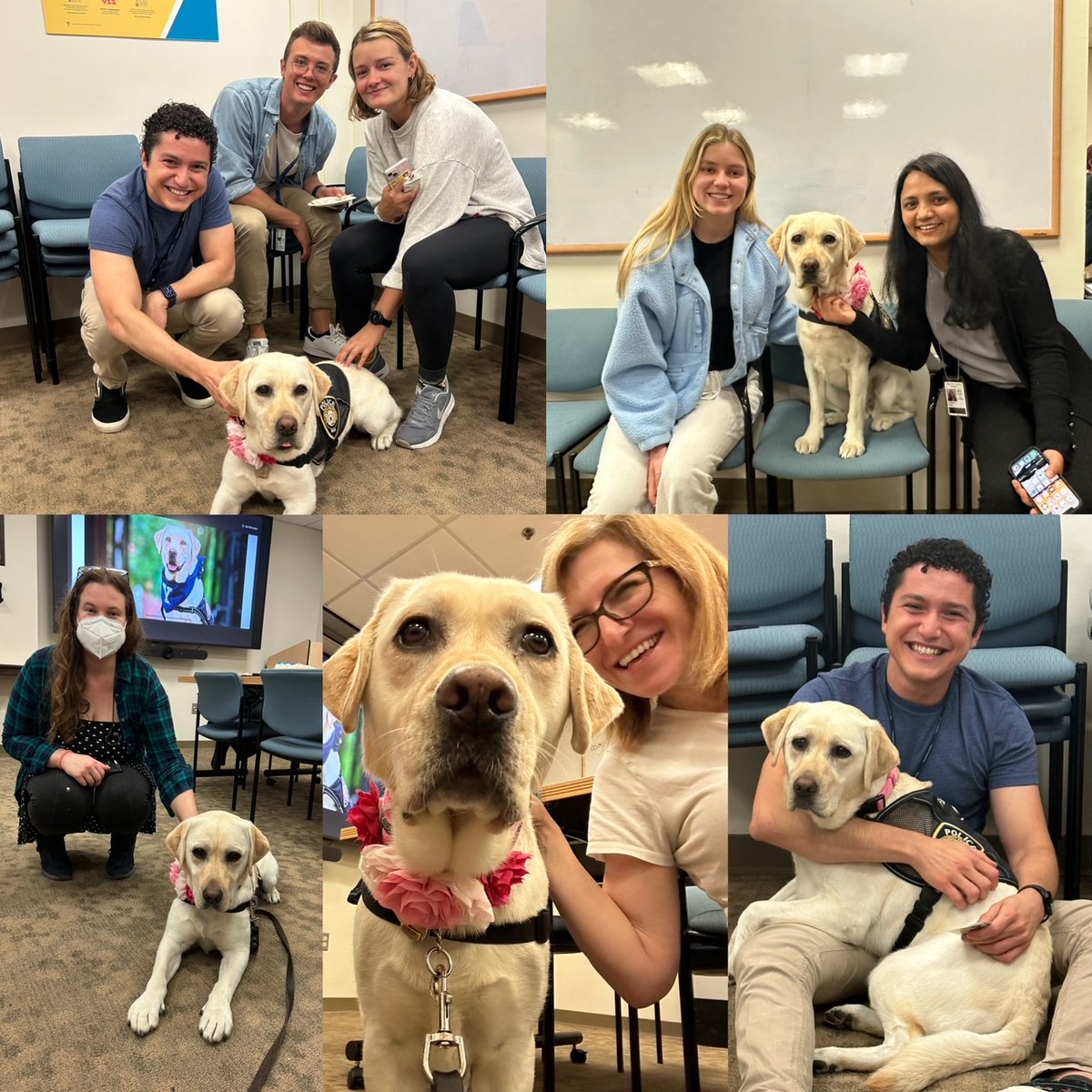
Lab Med had a wonderful visit with Heidi @Yale PD's service dog 🐕🦺 Big thanks to Heidi's handler Officer Rich Simons who was eager to share Heidi with us! Check out our #SmilesForMiles😃
Go fetch Heidi & Officer Simons by following #OfcHeidi_YalePd on Instagram.
Very honored to receive a Charles Hood Foundation Child Health Award! We will be working on discovering the developmental origins of pediatric tumors, and using this information for diagnosis.
https://t.co/JtxN86ZPfO
@sdomcke Congrats. Very interesting - I had always assumed the indirect, higher order effects were dominant but these results add evidence that the encoding is more directly the TF reading out the sequence space (along with its modifications).
Happy to share our latest, online @MolecularCell. In order to form different cell types, stem cell systems need to drive cell-to-cell variation in gene expression. But do the instructions always come from outside the cell, or can they be self-encoded? If so, how? (1/10)
@mitomaths This is very interesting, thank you for sharing! I wasn't aware of this but it makes sense germination would also have an encoded intrinsic motif for generating variability between seeds. Haven't considered metabolic circuits in ESCs but would be interesting to do so.
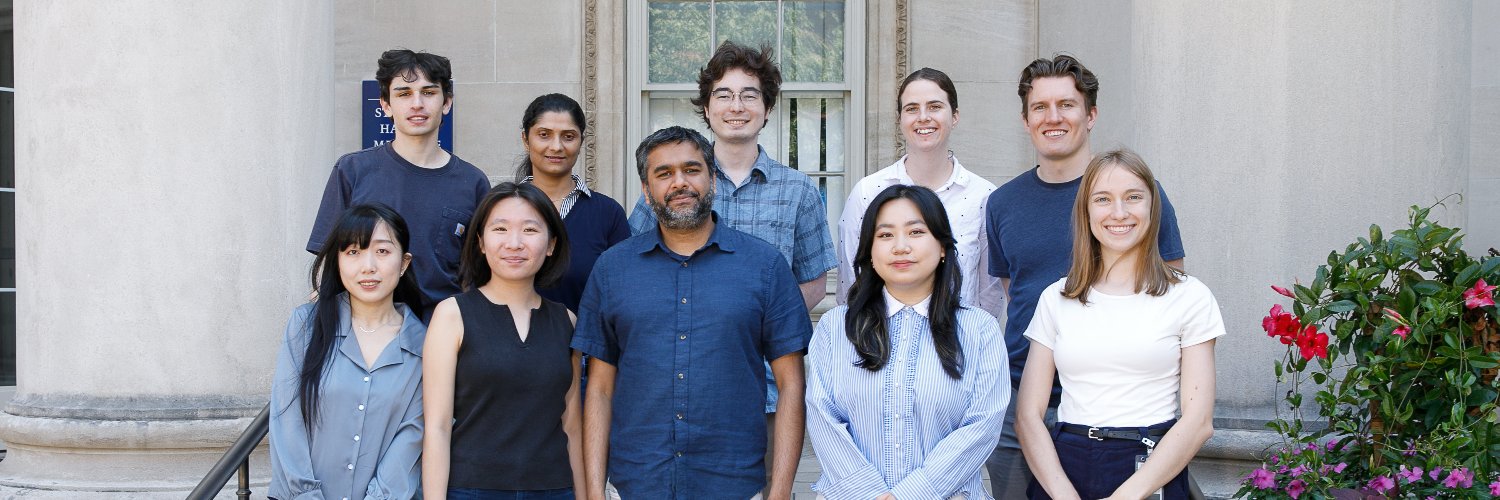
Interested in non-genetic heterogeneity in development and cancer? Garg lab (https://t.co/lHkTOXqU6x) is recruiting at multiple academic levels! (please RT) @Yale_LabMed @YaleRNA
Postdoctoral associate info here: https://t.co/Pd5e2db38A
The work was led by @HarvardMITmdphd student Sofia Hu working alongside many other members of @garg_lab and a great team, including collaborators Abhyudai Singh, Jacqueline Lees, and @DigbijayMahat. @YaleRNA, @Yale_LabMed (10/10)
Many, many open questions, including how transcription factors and enhancer RNA interact, how the same factor can have activating or repressing effects depending on context, and how the system is wired together to allow particular cell states and disallow others. (9/10)