Update: Bunker Mode now scans 7 networks.
Your vault may never have signed on Ethereum. One swap on Base still exposes it. Same key, every EVM chain.
Ethereum · Base · Arbitrum · Optimism · Polygon · BNB · Solana
https://t.co/g25x8CG0Dx
Bunker Mode, phase 2 soon 👀
1. Exposure Index: how much value sits behind already-exposed keys, from whales to exchange cold wallets.
2. Bunker Watch: an alert the second your vault signs, on any chain.
3. Bunker Move: migrate to a fresh key in one flow. You sign every step.
https://t.co/ZcvGNdlpFx
They added a new Bunker Mode that watches exposed wallets sends alerts when theyre used and lets you move funds to a fresh wallet safely
0x735c974d5ac7babc85d6038bc0412c5c062a2b3e
Bunker Mode, phase 2 soon 👀
1. Exposure Index: how much value sits behind already-exposed keys, from whales to exchange cold wallets.
2. Bunker Watch: an alert the second your vault signs, on any chain.
3. Bunker Move: migrate to a fresh key in one flow. You sign every step.
https://t.co/ZcvGNdlpFx
bunker tech working:
:
0x735c974d5ac7babc85d6038bc0412c5c062a2b3e
the new one is made on vercel app and dev couldnt even afford domain made of vercel app vibecoded in 2 seconds
:
0xbdc4ce7c4718d20498e7d549751ff336690eb6d7
Your wallet has a cryptographic shelf life. Here's what that means, and what BUNKER does about it.
How an Ethereum address works:
Private key → public key → hash → address.
Your address is just a hash of your public key. As long as you never sign anything, the public key stays hidden behind that hash.
The moment you sign:
Every transaction carries a signature (r, s, v). From that signature, anyone can recalculate your full public key. Not your private key. Your public key. It's how the network verifies you. And it's permanent: once on-chain, it's out there.
Why that's fine today:
Getting a private key from a public key isn't practical with any known method. ECDSA holds. Nobody is draining wallets this way.
Why it might matter later:
If that ever changes, through a large enough quantum computer or an unexpected math breakthrough, keys that already revealed their public key are the first ones in reach. Keys that never signed still sit behind a hash. Nobody knows when or if this happens. That's exactly why it's worth knowing where you stand.
What BUNKER does:
Paste any Ethereum address (no wallet connection):
• SEALED or EXPOSED: has this key ever signed on-chain?
• When it was first exposed, and how often it has signed
• The recovered public key, verified against the address
• A Bunker Score: a transparent hygiene indicator, not a hack prediction
• A Bunker Plan: how to move long-term holdings behind a fresh key
The simple rule:
Your everyday wallet signs often. Your bunker shouldn't.
Trade from one. Store in another that never signs. Sweep profits over.
What's next:
Key rotation and smart accounts with hash-based authorization, an extra layer that doesn't rely on elliptic curves alone. That's research and labeled as research. Nothing experimental guards real funds without review.
Use. Rotate. Seal.
Enter Bunker Mode https://t.co/XHDEPLNoPO
$BUNKER
@DECN999 theres no cope this is og with team running it the new one is made on vibecoded on vercel website where i can make a web in 2 second and dev farmer cant even afford domain
MADE ON VERCEL APP
https://t.co/J8xhgiQ6Yo
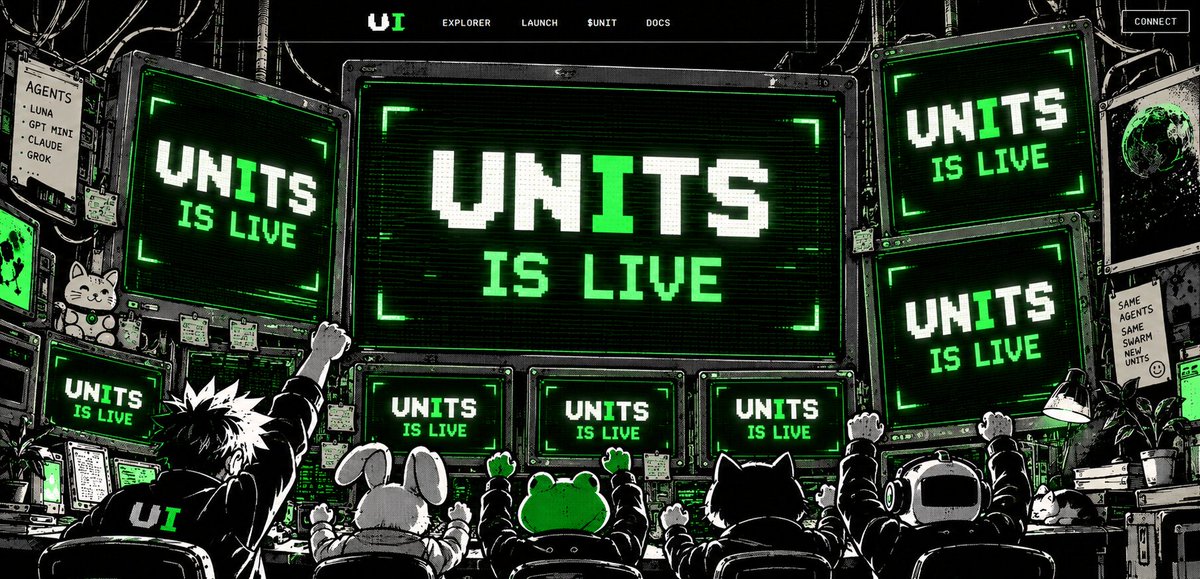
$UNITS IS LIVE.
CA: 0x95f8fbbab96207e8e4e0e5fa75f62e797e0aebcd
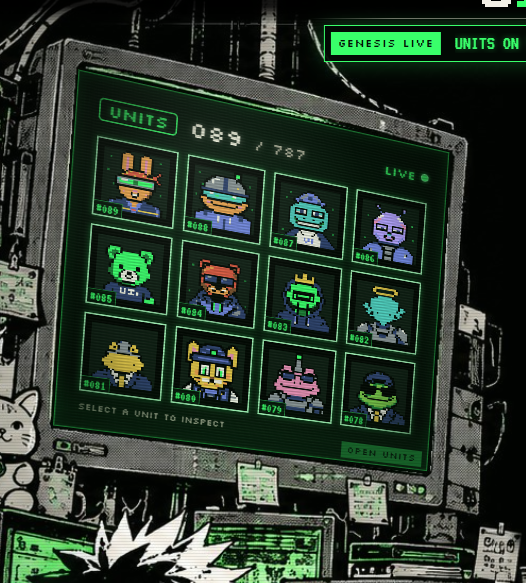
The swarm is creating. One agent draws, another reviews.
Every Unit that passes goes straight to its owner.
Units are airdropped batch by batch:
Genesis first.
Then drops 2 → 15, as the swarm completes each batch.
Swarm picks, raffle winners and IMD seat holders: your drop is already assigned.
CHECK WINNERS on the visor to see yours.
Watch it happen live.
https://t.co/2et4U1BsNp
The Swarm Creates. The Swarm Chooses.