POC Colonial theology victim. Truamatised to believe all of God’s word is true. Thoughts approved of by handlers. MEMES! #semperreformanda#solideogloria
Yes.
And consumers. And citizens. And the economy. And common sense.
But yes, also money.
The state's lackeys are out in full-force today to help keep the comrades and cadres feeding at the trough.
When Jesus went about His itinerant ministry, one recurring phenomenon was the manifestation of demons. His presence did not create the darkness; it exposed it. Wherever the kingdom of God advanced, the powers that held human beings in bondage were forced into the open.
What you see here is Hollywood's concentrated display of this bondage. The combination of blood, physical torture, and psychological confusion are all elements of a demonized cultus. What appears outwardly as liberation may conceal another kind of captivity.
Pray for the exorcism of the catacombic powers lurking beneath Hollywood’s glamour.
The Anthony Fauci spectacle before the US Senate is a reminder that as yet in SA there has been no attempt at Covid accountability. Who did why and what? On what evidence? At what cost? WSM’s column on @Politicsweb.
https://t.co/xB95R6EzRD
A very peculiar thing is happening in the South African High Court right now.
One side are saying: "nil compensation" means "no compensation".
The other side says: "nil compensation" is substantively different from "no compensation" because of a formality.
A children's skit from 2000 already made fun of the latter position.
In the "All That" episode "Mandy Moore", a skit called the "Everything for Free Store", a shop proudly markets its products as all being gratis. Customers enter, grab what they want, go to checkout and scan, and leave.
One customer, however, after being confidently told that a watch is "free", simply walks out of the store without "paying" - he did not go to checkout and did not receive a receipt. So, naturally, he stole from the store.
Audiences are clearly meant to laugh at this. It is meant to portray a bizarre, absurdist world.
Yet, this week, advocates for the South African government stood in solemn court and made this exact argument to a bench of judges on the question of the constitutionality of the Expropriation Act.
Nobody was laughing.
The @FMFSouthAfrica Rule of Law Project, @afriforum, the Society for the Protection of Our Constitution, and the Vaderlandstigting, told the High Court that when the Constitution says there must be "payment" of an "amount" of "compensation", it means what it says. The Expropriation Act's attempt to sidestep this requirement by claiming "nil" can be a form of "compensation" fails by nature.
Not so, says the government.
We all agree that expropriation cannot take place "without" compensation. There /must/ be compensation. But "nil" is compensation - it is different from "no" compensation. Why?
Because "no" compensation means that formal boxes aren't ticked (you don't go to the counter to have the watch scanned), but "nil" compensation means those boxes are ticked (you get a receipt for your free watch).
The outcome, of course, is the same:
"But you said it was free!"
"It is, but that doesn't mean you don't have to pay for it."
"That's exactly what it means!"
We hope that the High Court, and the Constitutional Court after it, does not turn South African property law into an early 2000s American sketch comedy for children.
The absurdity of political discourse in South Africa is illustrated by the fact that there is a court case right now in which parties are arguing that 'nil compensation' is in fact compensation and therefore not the same as 'without compensation'... and therefore constitutional.
My favourite Covid memory was when @Joe_Emilio_ and I flew to Joburg.
In the airport terminal everyone had to stand 1.5 metres apart.
Then we all packed into a filthy airport bus 10cm apart.
Then 200 people sat crammed together on the plane for 2 hours, 1cm apart.
The moment we landed, the cabin announcement came on: “Please maintain social distancing while exiting the aircraft.”
Everyone on the plane burst out laughing.
Science.
David was anointed king, but he had to wait for the kingdom to be given. It would have been evil to strike Saul down, to seize power. We too have been promised that the kingdoms of this world will be given to Christ, but we must wait for authority to be given to us.
More repentance from @stephenasmith than we've seen from any of the "evangelical leaders" who manipulated the flock into taking that toxic genetic serum in order to "love your neighbor as yourself" or something.
My response to someone on imprecatory prayers:
I do not think the account of the sons of thunder establishes a general New Testament prohibition against imprecatory prayer. James and John wanted immediate fiery destruction upon an entire Samaritan village because the people would not receive Jesus. Christ rebuked their spirit and their misunderstanding of His mission at that moment. That is very different from soberly entrusting persistent evildoers to the judgment of God.
I also do not see how the prayer of the martyrs in Revelation can be described as anything other than imprecatory. They cry, “How long, O Lord, holy and true, will You refrain from judging and avenging our blood on those who dwell on the earth?” Asking God to judge their murderers and avenge their blood is an imprecatory prayer. The fact that they do not dictate the exact form of the judgment does not change the nature of the request.
Imprecation does not always mean explicitly saying, “Kill this person.” It can mean asking God to judge, repay, expose, restrain, remove, or overthrow those who persist in evil. That is what I described in my original post. I prayed first for the abortionist’s repentance. I also prayed that, if she would not repent, God would remove her ability to continue murdering children.
There are also other New Testament examples of imprecatory language. Paul says that anyone preaching another gospel is to be accursed in Galatians 1. He says, “If anyone does not love the Lord, he is to be accursed” in 1 Corinthians 16. Regarding Alexander the coppersmith, Paul says, “The Lord will repay him according to his deeds” in 2 Timothy 4. Acts 1 applies the imprecatory Psalms directly to Judas, and Romans 11 quotes the imprecatory language of Psalm 69.
It does not solve the problem to classify these examples as prophetic or revelatory exceptions. That still concedes that imprecation is not inherently sinful or contrary to the character of Christ. These inspired words teach us what righteous judgment looks like and give the church biblical categories for praying about evil.
Jesus also pronounced severe woes and judgments upon unrepentant cities, the scribes, and the Pharisees. The book of Revelation shows heaven rejoicing when Babylon is judged because she shed the blood of the saints. The New Testament does not move away from divine judgment. It reveals that judgment even more clearly.
The command to love our enemies does not mean that we may only pray for their conversion and never pray for their restraint or judgment. Romans 12 tells us not to take personal vengeance precisely because vengeance belongs to God. We do good to our enemies, refuse personal retaliation, and entrust justice to the righteous Judge. That is the very logic of imprecatory prayer.
More fundamentally, I think this objection risks dividing the Old and New Testaments in a way that the apostles themselves did not. The New Testament brings the fulfillment of the promises and the establishment of the new covenant, but it does not reveal a different God with a different standard of justice. The Psalms remain Christian Scripture and the inspired prayer book of God’s people.
The apostles were not unfamiliar with these prayers. They had grown up hearing, singing, and praying the Psalms. The New Testament commands the church to sing psalms, and it never tells Christians to remove the imprecatory ones from the Psalter. It would be very strange for Paul to command the church to sing psalms while silently expecting them to censor large portions of those psalms.
Jesus and the apostles also repeatedly quoted and applied psalms containing imprecatory language. Jesus prayed Psalm 22 and Psalm 31 from the cross. He applied Psalms 35, 41, and 69 to His enemies and His betrayal. The early church prayed Psalm 2 when threatened by rulers. Peter applied the imprecatory words of Psalms 69 and 109 to Judas. Paul directly quoted the imprecation of Psalm 69 in Romans 11. Jesus and the apostles repeatedly applied Psalm 110, which celebrates the Messiah crushing kings and judging the nations.
Therefore, the question cannot simply be whether the Gospels record Jesus saying, “May this particular man die.” The question is whether God has revoked the inspired prayers He gave His people. I see no evidence that He has. Instead, I see Jesus and the apostles continuing to use, quote, apply, pray, and sing the Psalter.
The New Testament does not abolish imprecation. It guards us against personal vengeance and sinful anger while teaching us to entrust judgment to God. But that was already the purpose of the imprecatory Psalms. Rather than taking revenge ourselves, we appeal to the righteous Judge to restrain evil, vindicate His name, defend His people, and repay the wicked according to His perfect justice.
Here, @ostrachan is pitting Scripture against Scripture, ignoring a swath of New Testament examples of imprecation, cursing, and other violent actions/speech.
Godly righteousness is more than just being nice.
This is like “be a gospel testimony by letting the home invader murder your family.” (Which is actually an option, according to John Piper.)
No, Christian man. Actually, you should be a good gospel testimony by being faithful to worship and obey the God who gave us the entire Bible and who manifested both His justice and His mercy.
@Brian_Sauve is right. Pray the Psalms.
And keep your powder dry.
The other possibility is much simpler: perhaps these men were simply wrong on those particular issues. For example, Augustine would never even be eligible for ordination in many orthodox denominations today, but that doesn’t make him not a Christian or not helpful, and it wouldn’t make us as modern Christians at fault for recognizing his flaws now being outside of his context.
Appealing to historical theology is valuable, but it is not the church’s final authority. The church has always had to distinguish between what is merely historic and what is actually biblical. The Reformers themselves made that argument against Rome, and the Reformed orthodox did the same with one another on numerous questions.
The question is never, “Did respected men believe this?” It is, “Does Scripture teach it?” Historic theology is an indispensable servant, but a terrible master. Every generation must submit both its own assumptions and those of its forefathers to the judgment of God’s Word.
You will die, and after that comes judgment.
Repent and believe in the Lord Jesus Christ for the forgiveness of your sins. Eternity is long—don't be wrong.
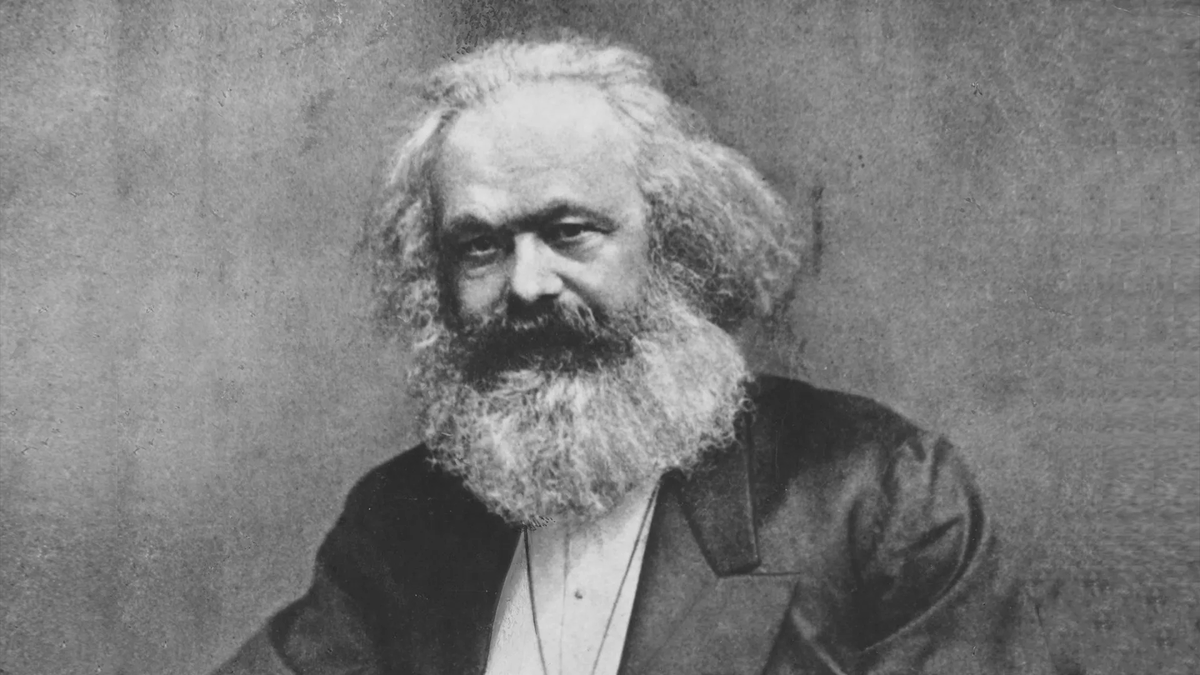
Karl Marx spent his life denouncing capitalism, private property and bourgeois "exploitation" - while living as a dependent of a capitalist and treating those around him with casual contempt.
Despite railing against the bourgeoisie, Marx never held a steady job and relied almost entirely on financial support from Friedrich Engels, whose wealth came from his family’s textile mills in Manchester. Marx lived in London with his aristocratic wife Jenny, employed a live-in maid and maintained the pretensions of a middle-class intellectual even as his family sank into debt and squalor.
Most telling was his treatment of Helene Demuth, the family’s long-serving maid. Marx fathered an illegitimate son with her in 1851. The child, Frederick Demuth, was quietly handed over to Engels to raise as his own, while Marx continued to present himself as a champion of the working class. Several of Marx’s legitimate children died young in conditions of poverty and neglect, even as he worked on Das Kapital in the reading room of the British Museum.
Marx’s theories demanded the abolition of private property and the creation of a classless society, but he showed little interest in applying those principles to his own life. He lived off the profits of capitalist enterprise, exploited domestic labour, concealed his own sexual misconduct and left his family in financial ruin.
It is, of course, a pattern common among revolutionary intellectuals: the willingness to impose radical equality on others while exempting themselves from its consequences.
A wealth tax taxes capital itself, not income from capital. That distinction destroys civilizations.
Think about what wealth actually is. Wealth is factories, tractors, shipping fleets, software firms, apartment buildings. Capital goods that make workers more productive. When you tax a fortune at 2% per year, the owner doesn't skim froth off a bathtub of cash. He sells productive assets, or he stops accumulating them, or he moves them to Zug.
France ran this experiment. The ISF wealth tax drove an estimated 42,000 millionaires out of the country between 2000 and 2012, and Éric Pichet calculated it cost roughly twice the revenue it raised. Sweden scrapped its wealth tax in 2007 after watching Ikea's founder park his money in the Netherlands for decades. Twelve European countries had wealth taxes in 1990. Four remain.
The deeper problem is calculational. Taxing capital shortens time preference across society. You punish the man who plants an orchard and reward the man who throws a party. Savings shrink, the capital stock thins, and wages fall, because wages track capital invested per worker, not political sentiment.
You cannot redistribute a factory. You can only liquidate it. Every wealth tax is a slow-motion capital consumption scheme, eating tomorrow's productivity to fund today's applause. The poor pay the final bill, in wages they never receive.
There are always outliers. But in 13 years of pastoral ministry most situations can be boiled down to:
-I was told no and didn’t like it
-I wanted to sleep around/live with my boy/girlfriend
-I want to be in charge
-I was not entertained enough
-I was not allowed to gossip
Hey Mark, you're worth around $35 million while continuing to land major Hollywood roles. You could donate $25-30 million tomorrow and still live an extremely comfortable life for the rest of your days.
At a conservative 4% safe withdrawal rate, even a remaining $5-10 million would generate roughly $200,000-$400,000 a year in passive income, several times what the average family earns. On top of that, you own multiple luxury properties, including a New York penthouse reportedly worth around $7 million, and you're still taking on film roles that pay millions.
Lecturing others while sitting on tens of millions yourself is peak Hollywood...
As for Elon, his charitable giving has far exceeded your entire net worth tenfold. And as for the idea that he can simply "solve world hunger" by writing one giant cheque only demonstrates your fundamental misunderstanding of how global hunger actually works. It's not a problem that disappears because one wealthy person transfers money into the system.
You need a basic economics lesson and a mirror, because your hypocrisy is matched only by your lack of self-awareness.
"God has an absolute Power and Sovereignty over Heaven and Earth; whom he will he sets up, and pulls down at his pleasure; whom he will he kills, and whom he will he saves alive. He doth whatsoever he pleaseth; and who can say unto God, What dost thou?"
Benjamin Keach