🔎 How transparent is UK aid?
We’re halfway through reviewing the availability, accessibility & quality of info from 8 major (non-FCDO) aid-spending depts + the Integrated Security Fund.
Findings out in October. Details: https://t.co/zMyBg4QObJ
#UKAid#AidTransparency
Don’t miss your chance to participate in the 2026 #AidTransparency Index!
🗓️ 1 month left to sign up.
✅ Gain accreditation for your transparency performance
✅ Promote your commitment to accountability
✅ Learn from peers & data specialists
🔗 See more: https://t.co/6aNRheV3FI
🔍 Are DFIs disclosing additionality effectively?
ICYMI in April our analysis found major inconsistencies & gaps in how private sector investments made with public money are justified.
Read more 👇
https://t.co/lRljmVejep
#DevFin#Additionality#DFIs#ODA
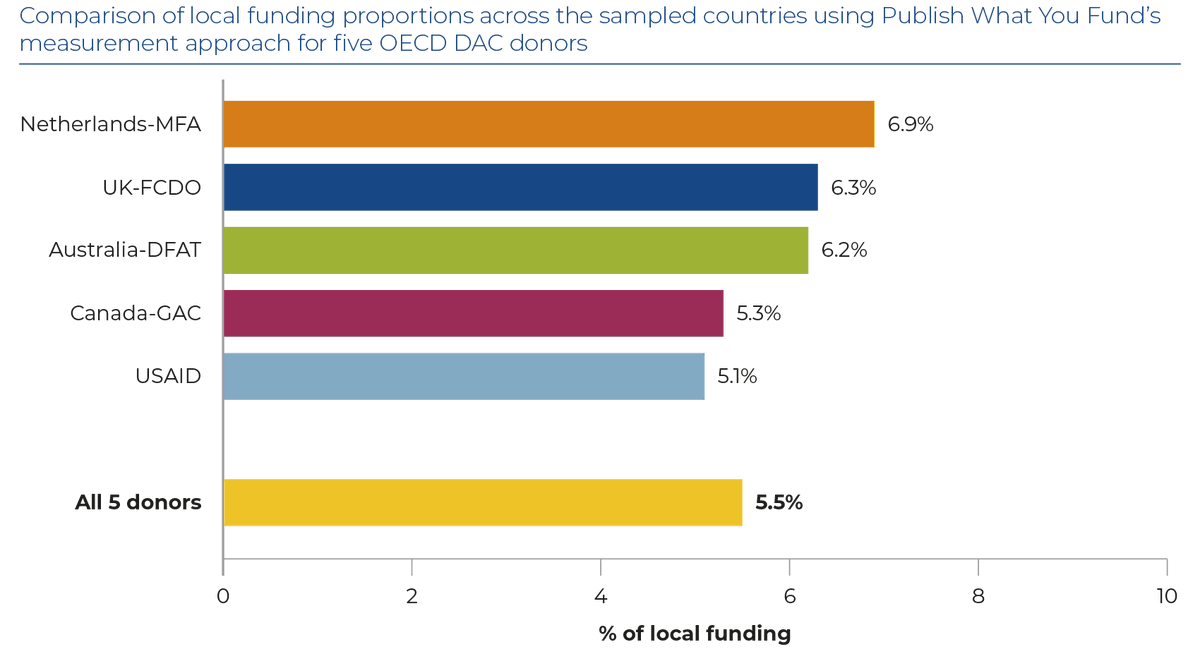
ICYMI in May we launched our Metrics Matter III report.
Despite big promises on #localisation, just 5.5% of the funding we examined from 5 major donors went directly to local actors.
👉 Read more: https://t.co/bJlphRMxXI
#Localization#Accountability#LocallyLed
🔎With the State Department now leading the management of US foreign assistance, it’s vital to remember that transparency is key for accountability & impact
Writing in February, Sally Paxton & George Ingram set out why US development data must stay public:
https://t.co/IAiOkKOFaE
Over 160 people have already benefited from our free training on aid & development data. Places are now available for September.
Sign up here: https://t.co/a1U7q0txbf
#GlobalDev#OpenData#Training
🔎 ICYMI back in February we found philanthropies were Falling Short on transparency.
2 years on from their pledge on local funding, we found little public evidence of meaningful action:
https://t.co/Tsyr3qEXWJ
#Localization
Interesting new model: Aid Transparency Index now operating as a paid-for accreditation service. Hope it gets enough reach that we can just assume unaccredited institutions have junk-bond transparency ratings ;-)
https://t.co/lx4UCDCFe8
🗞️ Our latest newsletter is out – featuring new findings on the transparency of DFIs, reflections on what’s next for localisation, and the chance to be part of the 2026 Aid Transparency Index:
https://t.co/m4Kn5G0fAg
#AidTransparency#OpenData#GlobalDevelopment
Development finance promises private capital — but the data just isn’t there. Without transparency, investors can’t assess risk, and billions stay idle. Most #DFIs still hide key details like deal terms, concessionality, or climate impact. That stalls progress, @garyjforster writes for @TheBanker. As public institutions, they need to lead by example. No clear data means no trust — and no mobilisation. Transparency is infrastructure. That’s exactly how I treated it in Ukraine’s banking reforms — because thats’s exactly what’s needed for real growth to start. #Transparency #CentralBank
Photo: Britannica
Last week, Bond and more than 20 of our members travelled to Seville alongside government, UN, global civil society, and business representatives for the Fourth International Financing for Development Conference.
Find out what happened.
#FfD4#FFD4Sevilla
https://t.co/f2TTo1NRfU
💼What information does the private sector need to invest in emerging markets?
At the 2025 DFI Transparency Index launch, Wee Kii Teh of @Allianz Global Investors shared what disclosures from DFIs and MDBs could unlock greater private investment.
👀Hear what investors are asking for—and why transparency matters more than ever.
#Mobilisation #ImpactInvesting #EmergingMarkets #Transparency #2025Index
📽️“There’s an actual cost to not delivering on transparency.”
Speaking at the DFI Transparency Index launch, Hans Peter Lankes of ODI Global explains why there’s an urgent need for greater development finance transparency.
#Transparency#DevelopmentFinance#2025Index#FfD4 #CostOfCapital
📽️What does it take to become the most transparent bilateral DFI?
At the 2025 DFI Transparency Index launch, Maria Smith from @BritishIntInv revealed the strategies behind their top ranking — and what’s next on their transparency journey.
🔗Dive into BII’s full transparency assessment: https://t.co/UjcluS2O2r
#DFITransparency #2025Index #DevelopmentFinance #FCDO
🌍The @WorldBank was ranked the most transparent sovereign DFI in 2025.
At the launch of the 2025 DFI Transparency Index, Lisandro Martin shared key insights into how the World Bank is driving impact transparency and delivering results.
🔗Explore the full transparency assessment: https://t.co/e0O6GfMiAO
#Transparency #2025Index #Scorecard #DevelopmentFinance
🌍Can we trust current climate finance claims?
📽️At the launch of the 2025 DFI Transparency Index, David McNair from the @ONECampaign breaks down why transparent, harmonised reporting is critical for accountability in climate finance.
#ClimateFinance#DFITransparency#2025Index #Accountability
💡Do you know how transparent your country’s development finance institution is?
Or how open the world’s leading multilateral development banks are about their investments?
We just launched our latest analysis covering 32 public and private sector portfolios and 3,000 data points — and the results are now live on our new website.
🔎Explore who’s disclosing what in key areas such as:
- Impact
- Climate finance
- Accountability to communities
- Mobilisation
📊Our site breaks down the data, highlights the gaps, and offers clear recommendations for greater transparency.
👉Dive into the details and see how your country or institution measures up:
https://t.co/bvuW7c30Gg
#DevelopmentFinance #Transparency #ClimateFinance #ImpactInvestment #DataForDevelopment #2025Index #FfD4
Development finance institutions play a critical role in mobilising private capital. But it’s difficult to know what investments are most effective. Good data on private capital mobilisation (PCM) is hard to find.
The 2025 DFI Transparency Index reveals a breakthrough:
✅@BIDInvest is the first DFI to pass our PCM transparency test.
✅ @AgendaCAF – Development Bank of Latin America and the Caribbean has started publishing PCM data after retroactively obtaining client consent.
This shows that transparency is possible.
It’s time for all DFIs to follow suit. Without this data, we can’t know what’s working to attract private investment for development and climate goals.
📥 Read the full report: https://t.co/bvuW7c30Gg
#2025Index #DevelopmentFinance #ImpactInvesting #FFD4 #PrivateFinanceForDevelopment
Development finance can’t unlock private capital without transparency. The 2025 DFI Index shows progress, but major data gaps persist. Rhetoric alone won’t mobilise billions, so action and openness are essential.
https://t.co/IfTL88dRcx
🔍 Climate finance: transparency still has a long way to go
For the first time, the 2025 DFI Transparency Index assessed how Development Finance Institutions (DFIs) report their climate finance. The good news? All sovereign DFIs — and most non-sovereign ones — now disclose how they define and count climate finance.
But when it comes to project-level transparency, the picture gets murkier. Just over half of sovereign DFIs and just over a quarter of non-sovereign DFIs published granular, project-level data. That means in many cases, it’s simply not possible to tell which investments count as climate finance — or how much.
🌍 Clear, verifiable data is essential for holding institutions to account and trusting the claims around climate spending.
As climate ambition scales, so must transparency. Otherwise, how can we be sure that finance is truly flowing to where it's most needed?
During this London Climate Action Week, we call for more action on climate finance transparency.
📥 Read the full report: https://t.co/GoVeYIil0F
👉 Explore our analysis of all the DFIs: https://t.co/bvuW7c30Gg
📅 Join the launch today (Thursday 26 June) at 2.30pm BST:
https://t.co/1CYUxo6owx
#ClimateFinance #LCAW2025 #Transparency #2025Index #ClimateAction