"The greatest black man who ever walked the African continent. He didn't fear anybody. He had those people [the colonialists] so scared they had to kill him. They couldn't buy him, they couldn't frighten him, they couldn't reach him."
— Malcolm X tribute to P.E Lumumba.
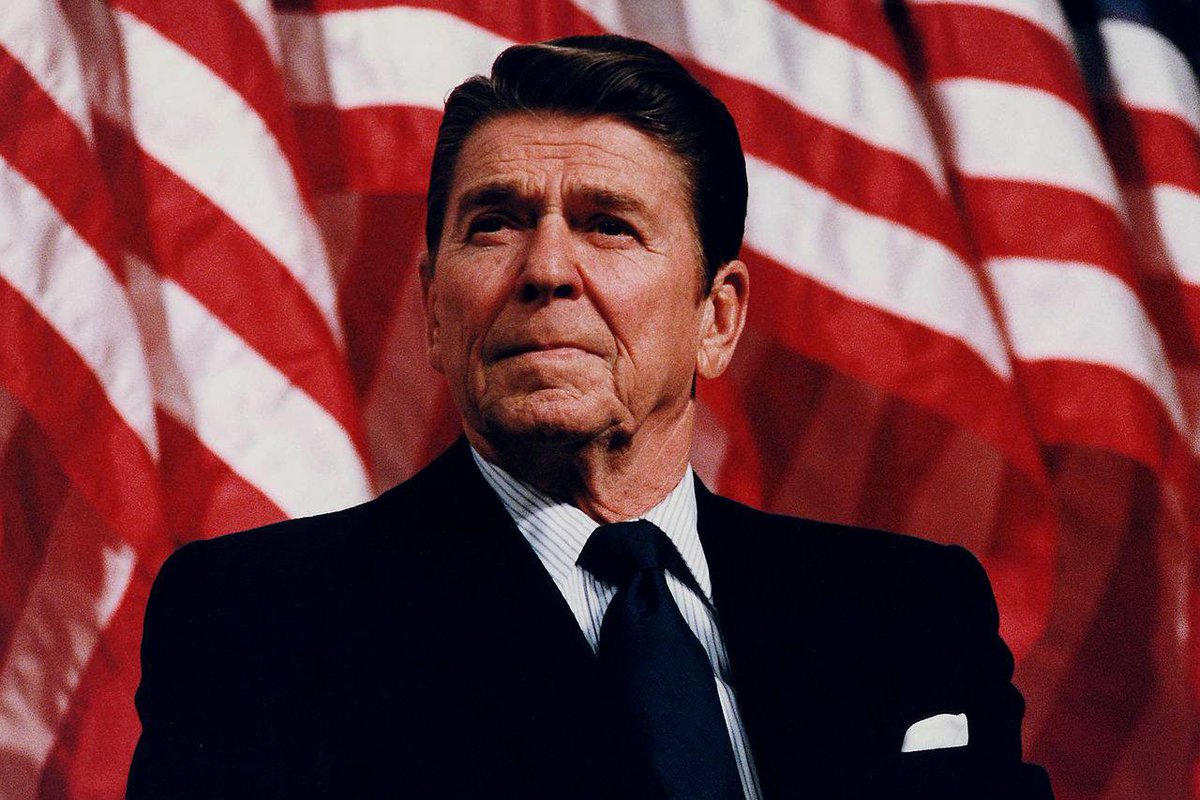
You wanna hear a little story of how it all began? Once upon a time, there was a man named Ronald Reagan. He was known as the "Great Communicator" because he was good at spinning words.
He was a failing actor who decided to run for president. His campaign slogan in 1980 was "Let's Make America Great Again" and he won. Yeah, it was Reagan first.
Before Reagan was elected, the very wealthy paid 70% in taxes. He was so good at spinning words that he convinced the poor people of America that the rich needed to pay less in taxes. So he lowered it to 28%. He said this would create more jobs and opportunities for the poor - "Trickle Down."
Upon seeing his blunder in loss of tax revenues, in 1984, he decided to tax social security to make up some of the lossed tax revenue.
He wanted to end welfare and Medicare, saying, "Let's send those bums back to work (meaning blacks)." Americans (many) were like, hell yeah, I'm cool with that!!!
But, "Reaganomics" never worked. It didn't work then, and it doesn't work today. Oh, I forgot to mention how much he hated Unions and dismantled many of them.
His biggest achievement was separating the races and convincing poor people that the rich needed more. End of story?
On this day in 1887, Alexander Miles was awarded the patent for inventing mechanism that allowed elevator doors to open and close automatically.
Alexander Miles (May 18, 1838 – May 7, 1918) was an African-American inventor best known for being awarded a patent for an automatically opening and closing elevator doors. He was awarded the patent, U.S. Patent 371,207, on October 11, 1887.
Before automatic doors, people had to manually shut both the shaft and elevator doors before riding. Forgetting to do so led to multiple accidents as people fell down elevator shafts. When the daughter of African-American inventor Alexander Miles almost fatally fell down the shaft, he took it upon himself to develop a solution. In 1887 he took out a patent for a mechanism that automatically opens and closes elevator shaft doors and his designs are largely reflected in elevators used today.
He was inducted into the National Inventors Hall of Fame in 2007.
🖋️ follow our ko-fi page too https://t.co/NKnBC6ltnn to support and also check out my blog posts.
"Until the philosophy which hold one race superior and another inferior is finally and permanently discredited and abandoned everywhere is war" - Bob Marley
The African slave who taught America how to vaccinate itself from smallpox.
In April 1721, a smallpox outbreak swept through Boston. This was the latest in a string of six epidemics that had, since, 1630, laid waste to the city. Cotton Mather, a local slave owner and preacher, claimed to be in possession of a way of preventing contraction of the disease. Mather, who had first come to public prominence as one of the thinkers behind the Salem Witch Trials, had gotten the method from one of his former slaves.
Fifteen years earlier, Mather’s congregation had purchased for him an African slave, a “Young Man, who is a Negro, of a promising aspect and temper.” Mather named him Onesimus, after a slave in the Bible whose name meant “useful.” Mather described Onesimus as being Guramantese, but it is unclear what ethnic group exactly this refers to. One account suggests them to be the Garamante, who correspond to the Berber peoples of southern Libya. Another places Onesimus among the Coromantee from the coastal areas of modern-day Ghana.
Since smallpox was a common scourge in the 18th century, a slave’s value was predicated on his ability to stave off infection. One of the features of smallpox is that a person can only contract it once. Mather asked Onesimus if he had ever suffered from the disease. Mather describes the conversation that followed:
“Enquiring of my Negro man, Onesimus, who is a pretty intelligent fellow, whether he had ever had the smallpox, he answered, both yes and no; and then told me that he had undergone an operation, which had given him something of the smallpox and would forever preserve him from it; adding that it was often used among the Guramantese and whoever had the courage to use it was forever free of the fear of contagion.”
The operation Onesimus described was a common procedure in certain parts of the world. What happened was that pus from an infected person was rubbed into an open wound of a person uninfected with smallpox. If one survived this procedure, one was thus inoculated against smallpox, and could never contract it. The procedure was done in different places. In Africa, in China, in India, in the Ottoman empire. Most accounts place the origin of inoculation in either China (where they would blow scabs up a person’s nose) or India, and in both places, it was largely a secret procedure whose technique was passed down mostly in families.
By 1721, inoculation was not entirely unknown in the Western world. It was practiced in Wales and Scotland, and slave traders were known to look for inoculation scars on their slaves. The prices of slaves with the scars would then be hiked up. However, in colonial Boston, as smallpox decimated the population, very few of the inhabitants knew about the procedure. In haste, Mather wrote to the city’s physicians, urging them to perform the procedure so as to save lives.
The resistance was immense. Local newspapers vilified him. A grenade was thrown into his house, the throwers angered that he had dared to inoculate his own son, who almost died. His fellow ministers decried his sin, declaring that it was against God’s will to expose his creatures to dangerous diseases. All the physicians in the town, except one, Zabdiel Boylston, refused to carry out the procedure. The moment Boylston announced his intention to do so, Bostonians took to the streets in protest. Cue the first manifestations of the American anti-vaxxer movement. The first people Boylston inoculated were his son, and two of his slaves. He was promptly thrown in jail, accused of recklessly trying to spread disease
At the core of Boston’s resistance to inoculation was a heavy racial bias. Mather had made no secret of the fact that he learnt of the procedure from his former slave, and this was the stick the town used against him. Inoculation existed in scientific documents where it was described as a “heathen practice” from Africa.
France 🇫🇷 has the fourth largest gold reserves of 2,436 tons, without a single gold mine in France.
Mali 🇲🇱 Which was occupied by France does not have any gold reserves in its banks, although it has 860 gold mines and produces 50 tons per year.
Meanwhile, France made policies and regulations on it former Colonies such as French Guiana 🇬🇫 (still colony of French) in South America, Ivory Coast, Mali, and Burkina Faso in West Africa before granting them independence which gave them more access to their gold.
This is one of the main reason why the current leader of Mali, Burkina Faso and Niger are against every policy that includes France in their country. France is just there to steal from Africa using tricks and their African puppets.
Young. Gifted and Black!
She was in a mall, saw the piano, sat down and started playing. Her name is Rebecca Seziba. She taught herself to play by watching YouTube videos and has never taken a class. Remember that name!
#BlackGirl#BlackExcellence#BlackCulture#BlackPeople
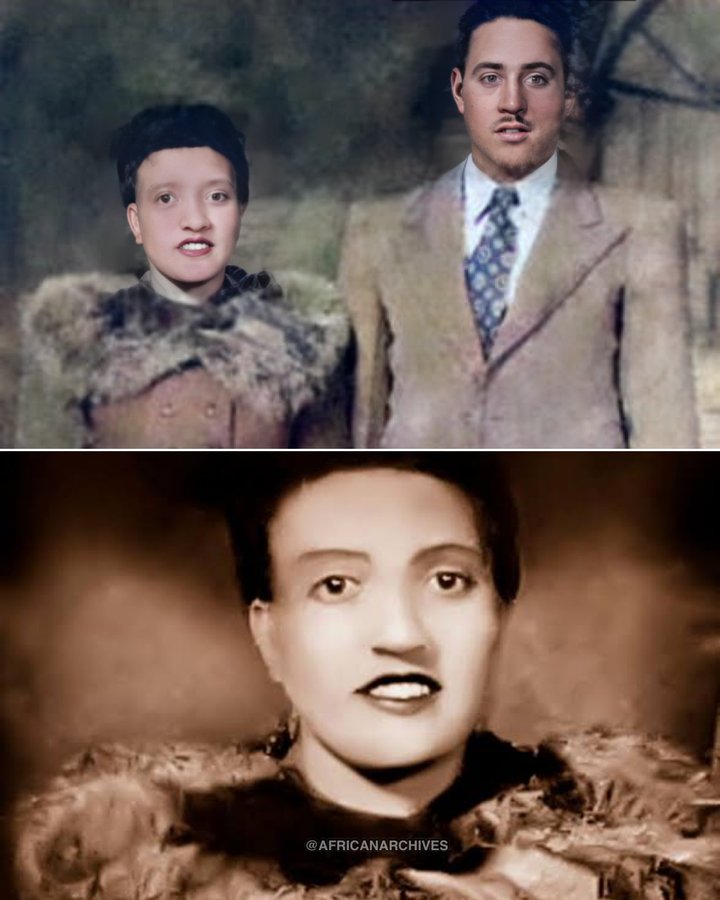
In 1951, Henrietta Lacks' cells were taken without her knowledge (HeLa Cells) at Johns Hopkins Hospital and they became one of the most important tools in medicine, vital for developing the polio vaccine, gene mapping, vitro fertilization and more...
A THREAD
In 1959, police were called to a segregated library when a Black 9-year-old boy trying to check out books refused to leave, after being told the library was not for Black people.
The boy, Ronald McNair, went on to became an astronaut. The library is also now named after him.
Ronald McNair was 9 when a South Carolina librarian told him he could not check out books from a segregated library in 1959. Refusing to leave, a determined McNair sat on the counter while the librarian called the police, as well McNair's mother. The police arrived, told the librarian to let the young boy have his books, and McNair walked out alongside his mother and brother.
McNair went on to earn his Ph.D. in physics at MIT and became one of the first African Americans selected as astronauts by NASA, alongside Guion S. Bluford, Jr. and Frederick Gregory.
McNair's first spaceflight was the STS-41B mission, aboard the "Challenger" shuttle. He successfully maneuvered the robotic arm, which allowed astronaut Bruce McCandless to perform the first space walk without being tethered to the spacecraft.
On this day in 1986, the second space flight for McNair would be his last. He, along with six other NASA astronauts, were aboard the Space Shuttle Challenger when it exploded 73 seconds after takeoff in 1986. Everyone on board the shuttle was killed.
Today, the library in South Carolina where McNair was refused books is named after the heroic boy determined to make a difference.
🖊️As the only admin behind this page, I try to research to educate. If you appreciate this effort, you can support to help the page thrive on https://t.co/HHs3SgCItN (link in bio) Your support is deeply appreciated! Or just follow the page for articles.




![rirokpik's tweet photo. "The greatest black man who ever walked the African continent. He didn't fear anybody. He had those people [the colonialists] so scared they had to kill him. They couldn't buy him, they couldn't frighten him, they couldn't reach him."
— Malcolm X tribute to P.E Lumumba. https://t.co/p9ACcKZbN7](https://pbs.twimg.com/media/HIMAmB5WEAAa57-.jpg)