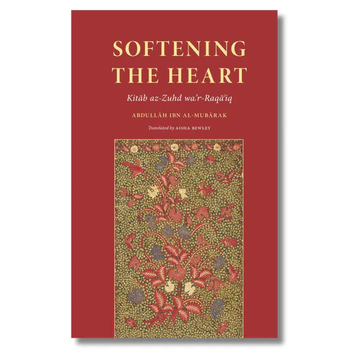
Aisha Abdurrahman Bewley, “Most Influential Muslim Woman of 2023,” born in 1948 in the United States, has profoundly shaped Islamic scholarship through her remarkable life and erudite translations. Her conversion to Islam in 1968 set her on a path of rigorous scholarship.
Raised in a strong Christian family, Bewley’s early spiritual quest led her to explore Zen Buddhism and Western philosophy—thinkers like Nietzsche, Schopenhauer, Kant, and Hegel—seeking answers to existential questions about human existence. This intellectual curiosity culminated in her conversion to Islam in 1968, a pivotal moment that redirected her life toward Islamic scholarship. She pursued a BA in French and an MA in Near Eastern Languages at the University of California, Berkeley, and later studied at the American University in Cairo on a fellowship, immersing herself in Arabic and Islamic philosophy, including Sufism, at Dar al-’Ulum. Her studies extended to Morocco, where she engaged with Ibn ‘Arabi’s works under Sidi Fudul al-Hurawi and became a student of Shaykh Abdalqadir al-Murabit.
Bewley’s scholarly output is vast, with over 73 works translated or authored, spanning Qur’anic exegesis, hadith, fiqh, Sufism, and Islamic history. Her translations of foundational texts—such as the Qur’an (co-translated with her husband, Shaykh Abdalhaqq Bewley), Al-Muwatta of Imam Malik, Tafsir al-Qurtubi, and Qadi ‘Iyad’s Ash-Shifa—are celebrated for their fidelity to the Arabic original and clarity in English, making complex theological and legal concepts accessible.
Her affiliation with the Maliki school and the Shadhili-Darqawi Sufi order, particularly the Habibiyya branch, informs her translations of Sufi texts like the letters of Mawlay al-Arabi al-Darqawi. Named the “Most Influential Muslim Woman of 2023” by the Royal Islamic Strategic Studies Centre, Bewley’s five-decade career exemplifies intellectual devotion to Islam’s textual tradition. Her Glossary of Islamic Terms remains a vital resource for researchers, reflecting her mastery of Islamic terminology gained through lived experience among Arab communities.
@ObjectChristian@YusufCatStevens Claiming the Kaaba has 'pagan origins' confuses later corruption with original foundation. Muslims fully agree pre-Islamic Arabs placed idols there but that doesn't prove Abraham and Ishmael built it for anyone other than the One God.
Nearly four thousand years ago, in a desolate valley between rocky mountains, a father and son (Prophet Abraham & Ishmael) raised the foundations of a house dedicated to the One God.
🚨 Anthropic just showed a 24-minute workshop on how to actually do prompts for Claude.
Taught by the people who built it.
Free. No registration. No paywall.
I've seen $300 courses that don't cover what they teach in the first 8 minutes.
Watch it and bookmark it now.
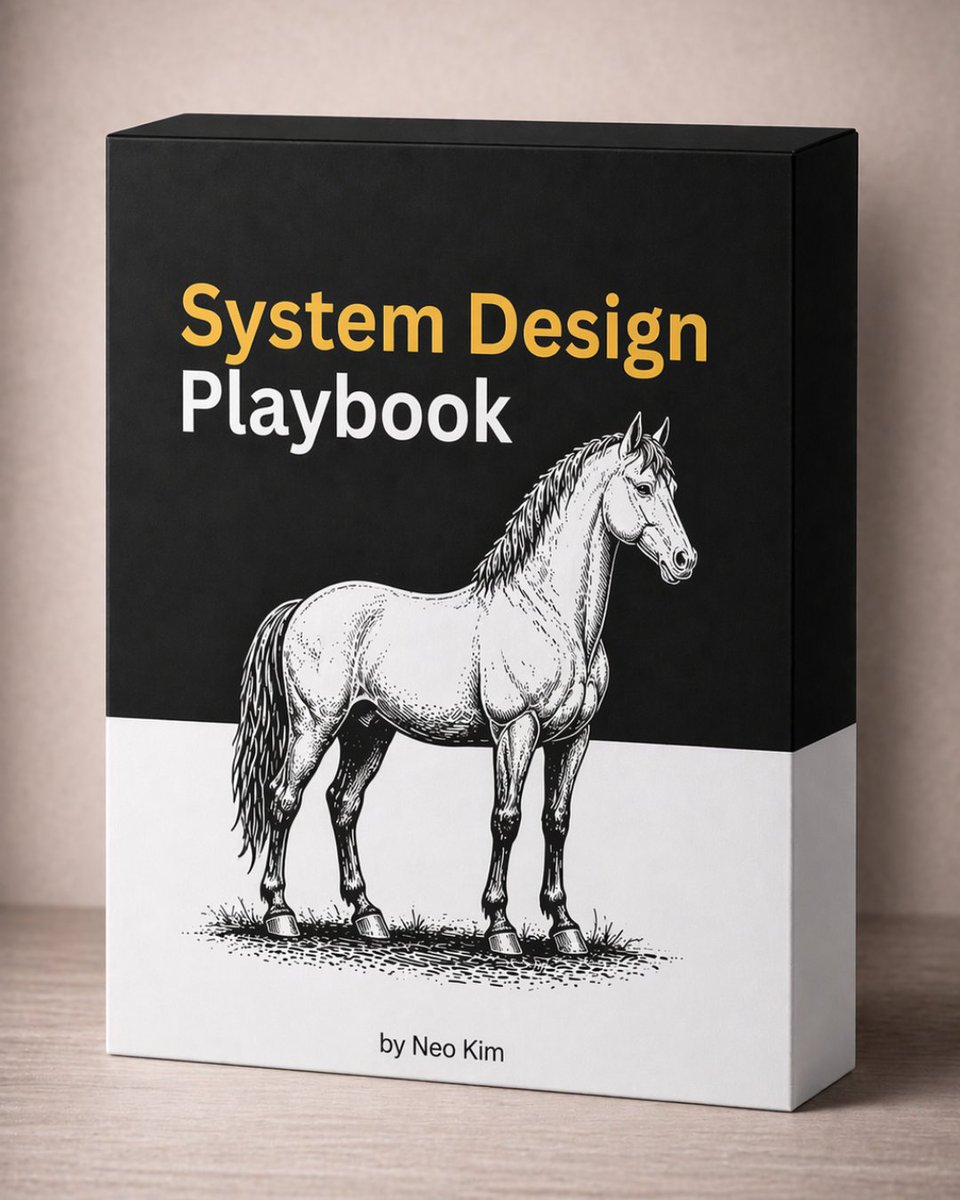
SYSTEM DESIGN PLAYBOOK
Giveaway Alert!!!
• System design fundamentals.
• Condensed notes to read before system design interview.
• Must know concepts from real-world software engineering case studies.
To get it for free:
1 Retweet & Follow @systemdesignone
2 Reply "Playbook"
Then I'll DM you the details.
@JesusisChristX God in Islam:
"Say: He is Allah, the One and Only;
Allah, the Eternal, Absolute;
He begetteth not, nor is He begotten;
And there is none like unto Him. "
Holy Qur'an, Al-Ikhlas, 112, 1-4.
God in Christianity : https://t.co/z5gw8h6dTx
https://t.co/kdrtLN2VjR…
O Allah,
Shatter the oppressors, restrain them, and make of them a warning to those who seek to follow their ways.
Protect the innocent wherever they are. Shield the vulnerable from every harm. Bring swift justice to those who spread it throughout the earth.
Our Lord, the corruption has been laid bare for all to see. Now let us see the corrupt stripped of their power in every way, and do not let us be counted among them in any way.
Ameen
@FarazPervaiz3 Islam is the fastest growing religion, especially in Europe and America. Islam is the only religion that appeals to the intellect. Truth has come, and falsehood shall perish!
Study deeply before making sweeping statements.