Don't think of LLMs as entities but as simulators. For example, when exploring a topic, don't ask:
"What do you think about xyz"?
There is no "you". Next time try:
"What would be a good group of people to explore xyz? What would they say?"
The LLM can channel/simulate many perspectives but it hasn't "thought about" xyz for a while and over time and formed its own opinions in the way we're used to. If you force it via the use of "you", it will give you something by adopting a personality embedding vector implied by the statistics of its finetuning data and then simulate that. It's fine to do, but there is a lot less mystique to it than I find people naively attribute to "asking an AI".
To succeed, at least two things are certainly required:
✔️ We must build one of the world’s largest data centres.
✔️ Regulation shouldn't hinder tech companies, but support them.
Europe’s technological sovereignty and competitiveness cannot be secured without its own frontier AI firm, over which it exercises strategic control and to which it can guarantee its companies access.
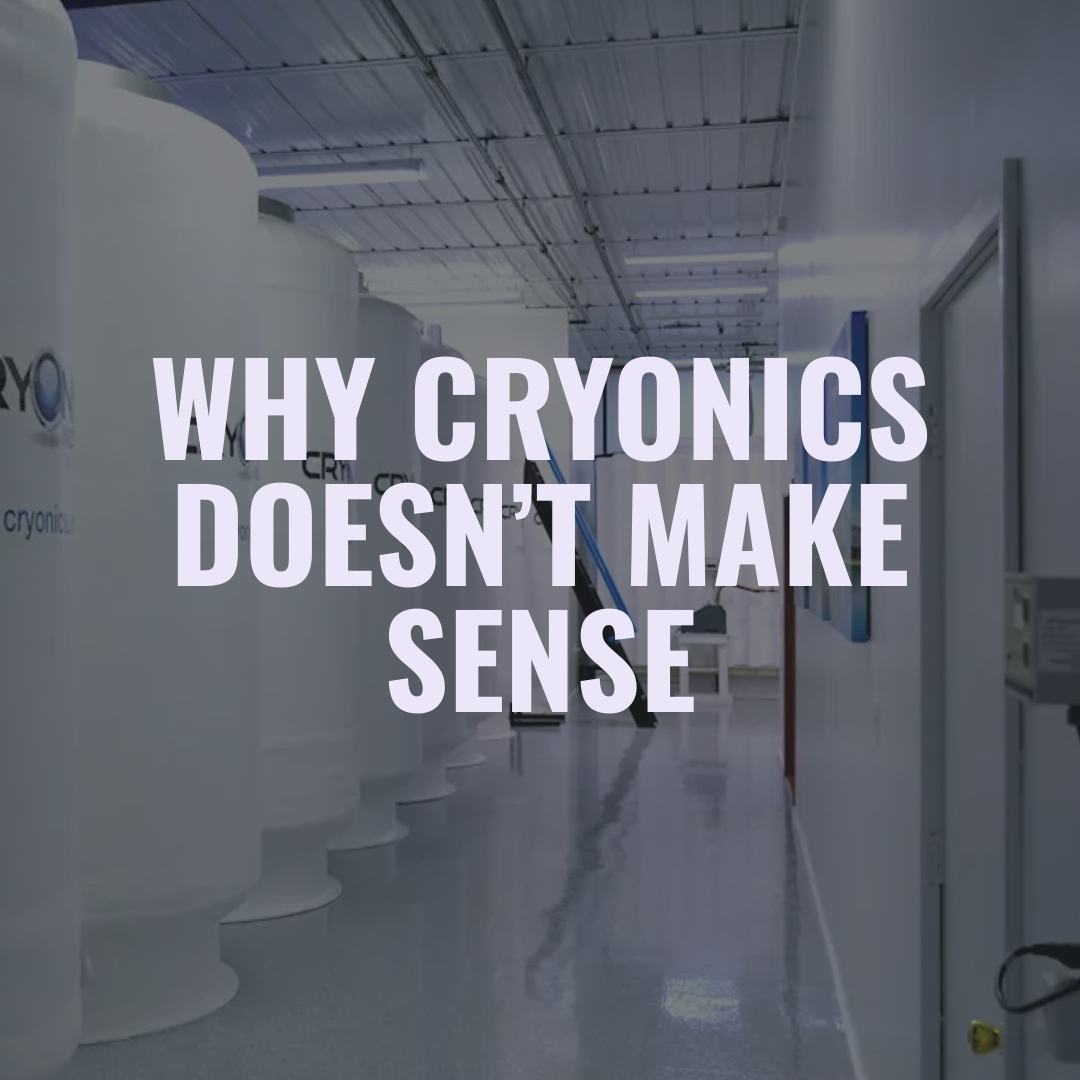
The latest Letter from Prometheus is about cryonics—that people arrange for their bodies to be cooled to extremely low temperatures after death, in the hope that advances in medical science will one day make it possible to revive them.
Some drugs (acarbose, semaglutide, rapamycin) show promise, but only reducing all-cause mortality would truly prove anti-ageing effects.
Read more: https://t.co/lJUv2flwXW
Although ageing perfectly fits the definition of a disease, it isn’t recognized as such. As long as this doesn’t change, we cannot seriously hope to fund medical research aimed at testing compounds to treat it.
@ApoStructura The huge difference between Apollo and Artemis is that while the first space race was ended with Moon landings, this one only begins with them.
By building a sustained presence on the Moon, we shift humanity’s frontier from 2,000 km above Earth to 400,000 km—and then beyond.
The flight of Artemis II will mark the first time since 1972 that humans leave Earth’s immediate neighbourhood: apart from the astronauts of the Apollo programme—just 24 people—no one has ever travelled far enough to see the planet as a whole.
From the 1890s to 1950s, sewer systems, vaccines, and antibiotics raised life expectancy by 3–4 years per decade. Since then, gains have slowed significantly—because we now fight not external pathogens, but chronic and degenerative diseases caused by ageing.
Read more: https://t.co/VVsa1DhM5U
The leading cause of death isn’t heart disease, cancer, or neurodegeneration—it is ageing.
If the probability of death from natural causes remained constant throughout adulthood—if we eliminated the effects of ageing—life expectancy could be several thousand years.
See the details at https://t.co/P9u1nq0Fql
How much CO₂ can we save through lifestyle choices?
driving an EV instead of an ICE car for a year –> 1.5–2.6 tonnes
a family vacation by car instead of flying –> 1.3–1.7 tonnes
using a heat pump instead of gas heating (annually) –> 1.1–2.3 tonnes
Everything else pales in comparison.
See the calculations at https://t.co/YFbftqbFNy
Compared to a gas vehicle, manufacturing an EV produces an additional 5–8 tonnes of CO₂-equivalent emissions due to the battery. Depending on the electricity mix, this carbon debt is offset after 25,000 to 60,000 kilometres.
See the detailed calculations at https://t.co/YFbftqbFNy
The key to curbing global warming is a rapid large-scale shift to clean energy (nuclear & renewables).
When it comes to individual action, three choices have the greatest impact:
an EV over a gas car;
taking the train or driving instead of flying;
heat pumps instead of gas boilers.
We made a similar report a year ago, covering:
- nuclear reactors,
- batteries,
- rockets and spacecraft,
- semiconductor manufacturing,
- chip design,
- AI,
- quantum computing,
- humanoid robots, and
- brain–computer interfaces.
It's downloadable from here: https://t.co/LrgsPp59e4
Critics of electrification often cite energy return on investment (EROI) calculations to argue that the transition will lead to energy scarcity. Their math is wrong: replacing fossil-fuel electricity with a mix of renewables and nuclear power does not reduce EROI—it actually increases it.
Three reasons for climate optimism:
1) The technology already exists—we need scale and momentum, not breakthroughs.
2) Progress is real—the data shows we’re moving in the right direction.
3) Humanity has repeatedly shown that it can adapt quickly and efficiently when necessary.
More on Letters from Prometheus.
Solar overtakes gas to become Hungary's second-largest electricity source—
A decade ago, solar power was almost non-existent in Hungary. It generated just 0.2% of the country’s electricity. Nuclear, coal, and gas dominated the grid.
But in the last ten years, things have changed a lot. You can see this in the chart: solar power has boomed, and now supplies one-quarter of Hungary’s electrical power. In 2024, it overtook gas to become the second-largest source of electricity, after nuclear.
Coal power has been largely displaced, first by gas and now by solar. This has helped cut the country’s CO2 emissions by 45% since 1990.
(This Data Insight was written by @_HannahRitchie and Pablo Rosado.)
Per-capita carbon-dioxide emissions have been declining for at least fifteen years in wealthy countries even as their economies have continued to grow—showing that decoupling emissions from growth is not only possible, but already underway.