Postdoc Researcher @ The Brain RNA Regulatory Networks, Francis Crick Institute and King's College London 🇬🇧. Alternative splicing and Bioinformatics 🧬💻🦾
Our latest: alternative splicing that changes the translational reading frame! Not only can it cause RNA decay, it can also generate alternatively-coded proteins or alternative protein lengths. Tons of it in 🪱 and 🧍♀️
https://t.co/TngvihkG4c
Today we all lost our jobs.....
Three Nature papers showing that scientists in the conventional sense are obsolete
At least read the first one.... the AI replaced all things that the scientist does ....
https://t.co/zMsRLaaRDU
Introducing Carbon 🧬 a family of open generative DNA foundation models. Carbon-3B matches Evo2-7B while running 250x faster at inference. It can generate new DNA sequences and score the functional impact of mutations, zero-shot.
We borrowed a lot from how modern LLMs are trained, but DNA isn't language. Genomes are noisy, redundant, and shaped by evolution rather than communication. So we adjusted the recipe:
Tokenizer. Most genomic models tokenize at the nucleotide/character level, which blows up sequence length. BPE is the obvious LLM-style fix, but it doesn't behave well on DNA. We use deterministic 6-mer tokens (one token = 6 nucleotides): 6× shorter sequences and cheaper attention.
Training loss. With 6-mer tokens, cross-entropy scores a prediction that gets 5/6 nucleotides right the same as one that's completely wrong. This gets brittle late in training and produces loss spikes. We switch mid-training to a more flexible factorized loss (FNS).
Data. Genomes are mostly sparse, repetitive background. We curate down to a staged functional DNA + mRNA mixture, with every ratio chosen by ablation, like mixing a web corpus, but for biology.
We're releasing the models, training data, training code, evaluation suite, and a demo to play with.
More details in the technical report: https://t.co/RMzFmTAhhT
Demo to play with the model, with a biology primer for our ML friends ;) https://t.co/IcOQq7GKF4
Instead of watching an hour of Netflix, watch this 2 hour hour Stanford lecture will teach you more about how LLMs like ChatGPT and Claude are built than most people working at top AI companies learn in their entire careers.
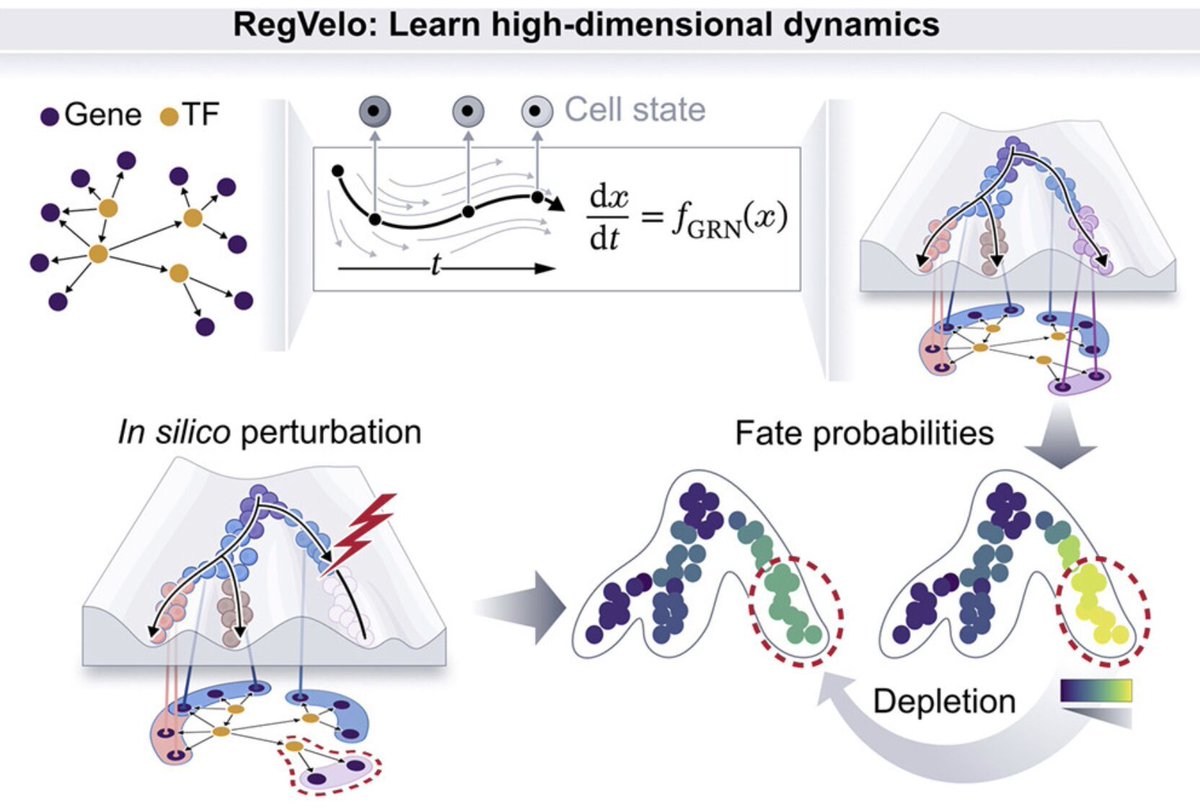
Excited to share our RegVelo paper in Cell
https://t.co/ZAnQphaXsg
We unify RNA velocity + GRNs into one model → better OOD prediction of perturbations (e.g. gene KOs), with examples incl. neural crest KO predictions 🔬
Big thanks to W Wang, Z Hu & T Sauka-Spengler 🙏
1/ Excited to share that TranscriptFormer is now published in Science.
We trained a generative foundation model on 112 million cells across 12 species spanning ~1.5 billion years of evolution.
https://t.co/oKyYpgcEAJ
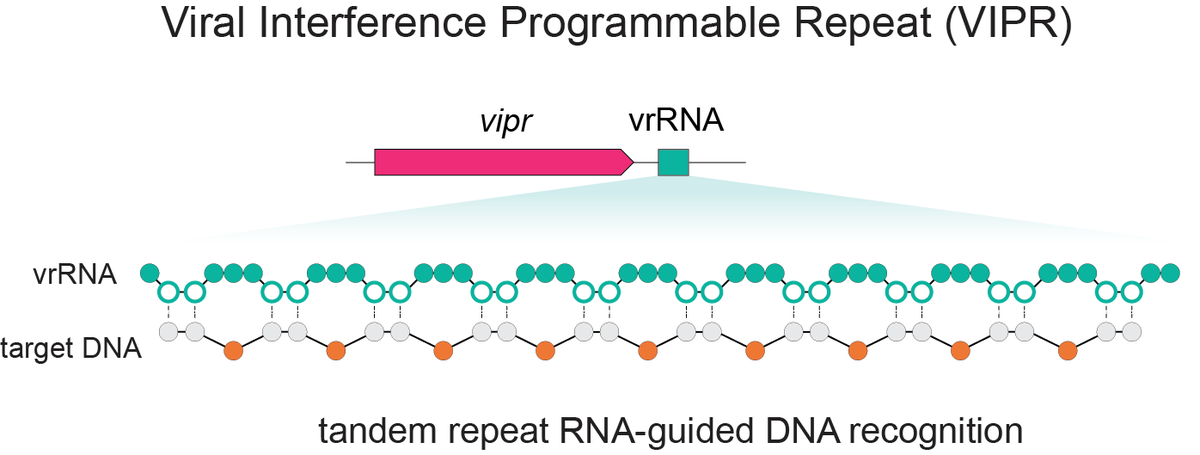
Excited to share our discovery of a new programmable RNA-guided DNA-targeting system hiding inside bacteriophages that predates CRISPR.
We call it VIPR (Viral Interference Programmable Repeat), and it uses an entirely new logic to find its targets.
Thread + link below.
An in vivo gain-of-function perturbation sequencing approach enables large-scale mapping of astrocytic transcription factor function in healthy and diseased mice #NBThighlight https://t.co/JIG6ei8sTt
New study from our lab led by @ckvuong and A Weber where we uncover mechanisms of Down syndrome during development. Thanks to all co-authors and the labs of @jsteinlab, W Lowry, D Geschwind, and @mikejg84 for their invaluable contributions.
https://t.co/fdNJHkIFQm
Happy to share that our manuscript, in collaboration with Niranjan’s lab, on using direct RNA sequencing to detect RNA structure ensembles is now out online! Thanks to the team for all the hard work for pushing this paper out.
https://t.co/wBHWgYXukQ
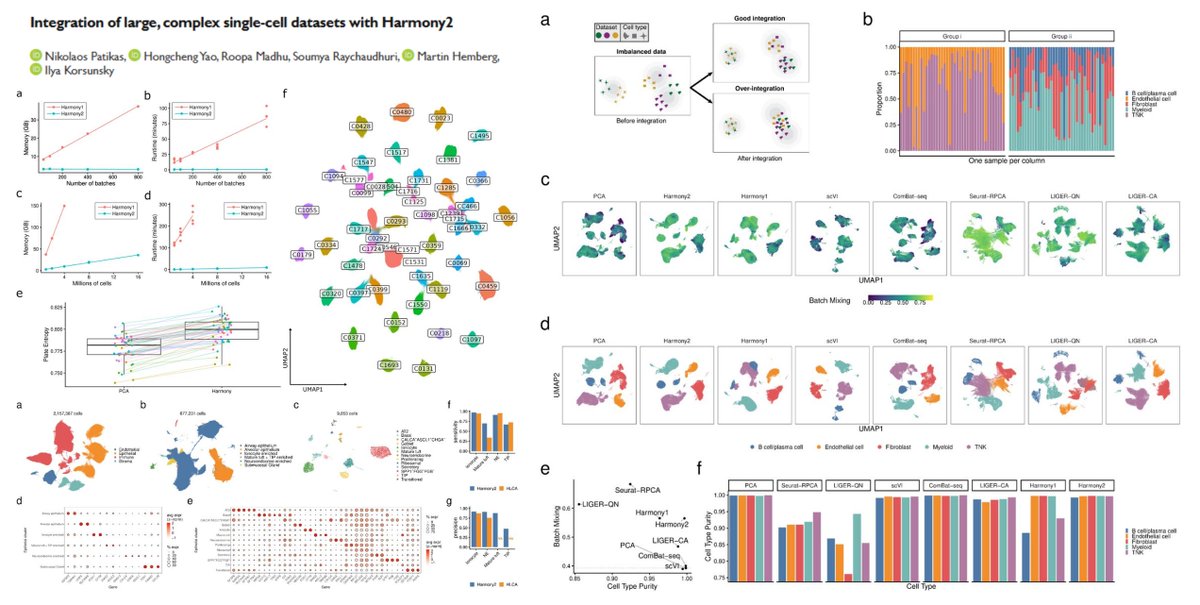
Harmony2 required only 2.1 GB and 1.3 minutes per million cells, and "scales linearly", and can integrate the full Tahoe-100M dataset & Human Lung Cell Atlas (Hierarchical integration)
vs Harmony scVI ComBat-seq Seurat-RCA LIGER-Quantile Normalization/-Centroid Alignment
@m_hemberg@ilyakorsunsky bioRxiv 2026
https://t.co/3tcRb0RBcn
Does AlphaFold’s latent space encode only the native state or something like a distribution over conformations? We begin to answer this question with ConforNets, a mechanism for producing diverse states, or very specific ones, via inference-time adaption of OF3p’s latent space👇