I like the use of Legos in An ultra-low field SQUID magnetometer for measuring antiferromagnetic and weakly remanent magnetic materials at low temperatures https://t.co/YWQd6laSaE
Fun to work on the Resolution convolution for Phys. Rev. B 108, 104402 (2023) - Spin wave Hamiltonian and anomalous scattering in ${\mathrm{NiPS}}_{3}$ https://t.co/yjbgKTkbbN
It's amazing that how much we still ahve to learn about water.
Phys. Rev. Lett. 131, 076801 (2023) - Why Dissolving Salt in Water Decreases Its Dielectric Permittivity https://t.co/hm90OPeIRi
#TBT Quantum materials behave in weird ways, like #superconductors that allow electricity to flow without resistance. See how scientists @UT_MSE used #neutrons@ORNL to refine techniques for identifying quantum entangled particles more efficiently. ⚡
https://t.co/dyneprG7hA
Phys. Rev. B 106, L180409 (2022) - Antiferromagnetic fluctuations and orbital-selective Mott transition in the van der Waals ferromagnet ${\text{Fe}}_{3\ensuremath{-}x}{\text{GeTe}}_{2}$ https://t.co/n9Ox8ROaKV
Published today! A handy guide to interpreting magnetic susceptibility data. This article was inspired by my own struggles as a junior grad student and the idea that maybe the unwritten rules can in fact be written down. @SamMugiraneza@SBQMI_UBC
https://t.co/kvZlCWl01t
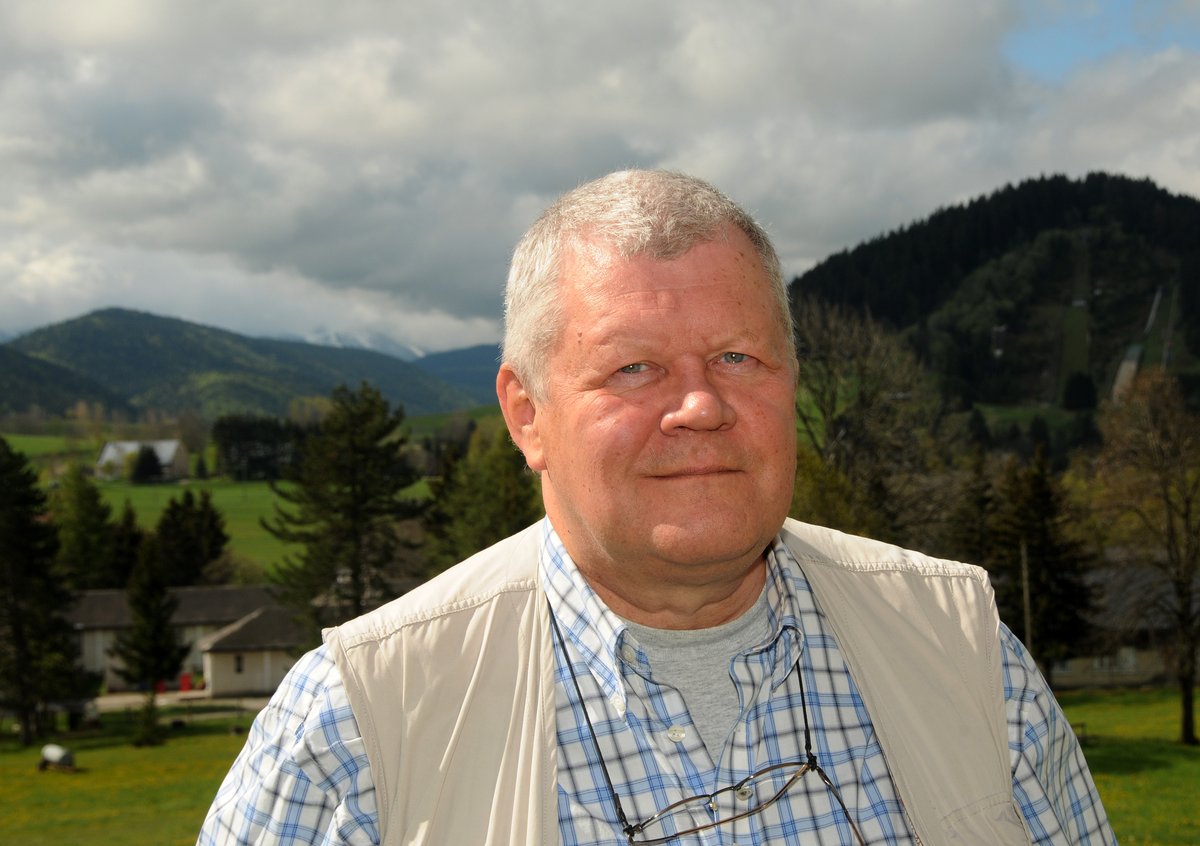
25 Feb 2022: truly sad day for our #Neutrons family. We lost two brilliant scientists, both related to direct geometry TOF instruments. Hannu Mutka @ILLGrenoble and John Copley at NCNR NIST; IN5 and DCS. Coincidences of life? Together, truly saddening 😔 Thank you for everything.