Each coordinate of a closed outline has its own real Fourier series: x(t) = ∑ (aₖ cos kt + bₖ sin kt), and the same for y.
A cosine and sine of frequency k make one arm of length √(aₖ² + bₖ²) turning k times per lap. One chain sets x, one sets y, and the pen sits where their guides cross. With N harmonics per axis the knight is off by 30.2 % of its height at N = 1, 0.70 % at N = 50.
At N = 1 both coordinates are pure sinusoids: an ellipse.
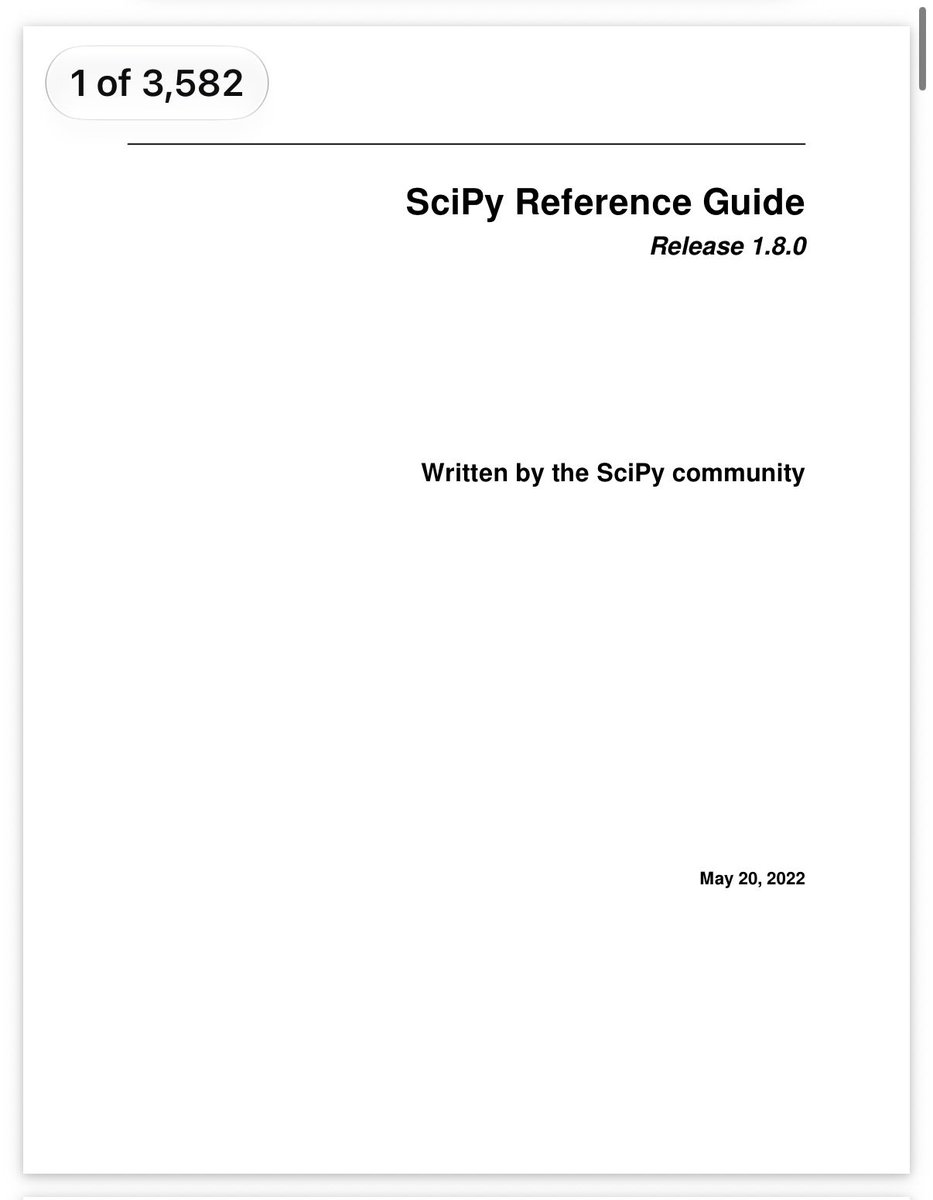
Seriously?! Over 3000 pages of scientific programming power with Python!
Download this 3582-page PDF “SciPy Reference Guide” at https://t.co/2xaGWL6HVa
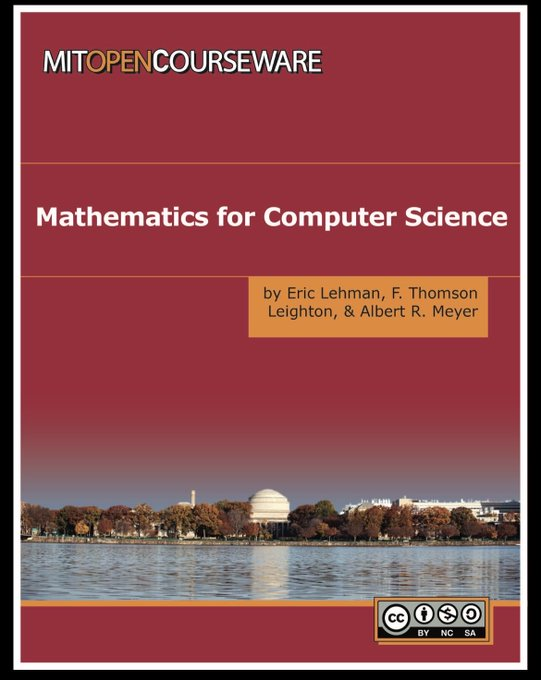
The Mathematics of Large Language Models — A Readable Guide to LLMs, Transformers, Diffusion, Neural Networks, and Generative AI: https://t.co/3sDIaIroX8
study calculus.
not because you need to pass an exam.
because calculus teaches you how the world changes.
• derivatives → how fast something is changing right now
• integrals → how tiny changes accumulate into something larger
• differential equations → how systems evolve through time
• partial derivatives → how one variable changes inside a system with many moving parts
• gradients → which direction changes something fastest
• optimization → finding the best solution under constraints
then connect it to reality.
• velocity is the derivative of position.
• acceleration is the derivative of velocity.
• energy can be accumulated through integration.
• control systems are built around changing states.
• neural networks learn using gradients.
• physics is full of differential equations.
don’t memorize calculus as a collection of formulas.
draw it. simulate it. derive it. write code for it. connect it to motion and physical systems.
calculus becomes beautiful when you stop seeing x and y.
and start seeing change.
el fundador de una empresa china de IA valorada en más de $20,000,000,000 acaba de dar una clase de 40 minutos sobre enjambres de agentes
la explicación más clara que he visto sobre sistemas de IA a gran escala
cámbiala por tus 2 horas de Netflix de esta noche
Quieres aprender a usar Claude en investigación?
De básico a avanzado
Con tres casos reales trabajados por estas dos Científicas de datos e investigadoras
Estaremos dando este curso:
https://t.co/sbc3nw70Gd
Ayer lo compartí y ya más de 30 ! 😍
Reserva tu plaza
4 skills to build almost anything in 2026:
not theory.
actual leverage.
• electrical engineering → power, sensors, circuits, embedded systems
• mechanical engineering → structure, motion, force, failure
• AI + agentic workflows → automate research, design, coding, iteration
• 3D modeling + printing → turn ideas into physical prototypes fast
this is the new builder stack.
hardware gives you reality.
software gives you intelligence.
AI gives you speed.
manufacturing gives you output.
learn these and you stop being a consumer of technology.
you become dangerous.
最近在带入组的本科实习生,发现怎么读论文其实是科研训练里最容易被忽略的一步。
推荐一篇每个科研新人都该读的经典短文:S. Keshav 的 How to Read a Paper。
文章提出了非常实用的“三遍读论文法”:
第一遍,5 到 10 分钟快速扫读:标题、摘要、引言、章节标题、结论和参考文献。
目标是回答 5C:
Category, Context, Correctness, Contributions, Clarity。
也就是判断这篇论文是什么、和谁相关、假设是否合理、贡献是什么、写得清不清楚。
第二遍,认真读论文主线,但先跳过证明细节。重点看图表、实验设置、结果是否清楚、引用了哪些关键工作。
第三遍才进入深度理解:尝试像复现一样重建作者的思路,检查假设、方法、创新点和潜在漏洞。
放在今天看,这个方法和 AI 辅助读论文其实很契合。
第一遍可以让 AI 帮忙快速总结论文的研究问题、核心贡献和主要结论,但自己一定要判断这篇文章是否真的值得继续读。
第二遍可以让 AI 帮忙解释方法、实验设置、图表和不熟悉的概念,但不能只看 AI 总结。关键图表、实验设计和结果数字一定要回到原文核对。
第三遍可以让 AI 扮演 reviewer,帮你追问:这篇文章的假设是否成立?实验是否支持结论?有没有 missing baseline?有没有潜在的数据泄漏、评价偏差或过度 claim?
读论文不是“读完”就行。真正重要的是知道什么时候快速跳过,什么时候认真理解。
尤其在 AI 工具越来越强的情况下,科研新人更需要训练自己的判断力。
AI 可以帮你压缩信息,但不能替你决定一篇论文是否重要、是否可信、是否值得借鉴。
https://t.co/8gUc4HbLwR
Train your own LLM from scratch.
This repo builds a GPT-style transformer from the ground up, without using any high-level libraries.
You see exactly how attention, multi-head attention, the feed-forward block, embeddings, residuals, and layer norm fit together.
And it doesn't stop at the model. It walks the whole path from raw data to generated text.
↳ Data download, preprocessing, training, and generation
↳ Training data from The Pile (825GB across 22 sources)
↳ Tokenized with tiktoken (r50k_base) and stored in HDF5
↳ Training loop with eval, LR decay, and crash-safe checkpoints
↳ An SFT and RLHF guide for what comes after pretraining
The same code scales by changing a few config values. Around 13M parameters is where the output starts producing correct grammar and spelling, and you can train that in about a day on a free Colab or Kaggle T4.
If you've ever wanted to actually see how a transformer works instead of importing one, this is a clean place to start.
Link to the repo in the comments.
Interested in ML/AI Engineering? Check my FREE AI engineering Guidebook with 380+ pages (downloaded over 80k times, link below)
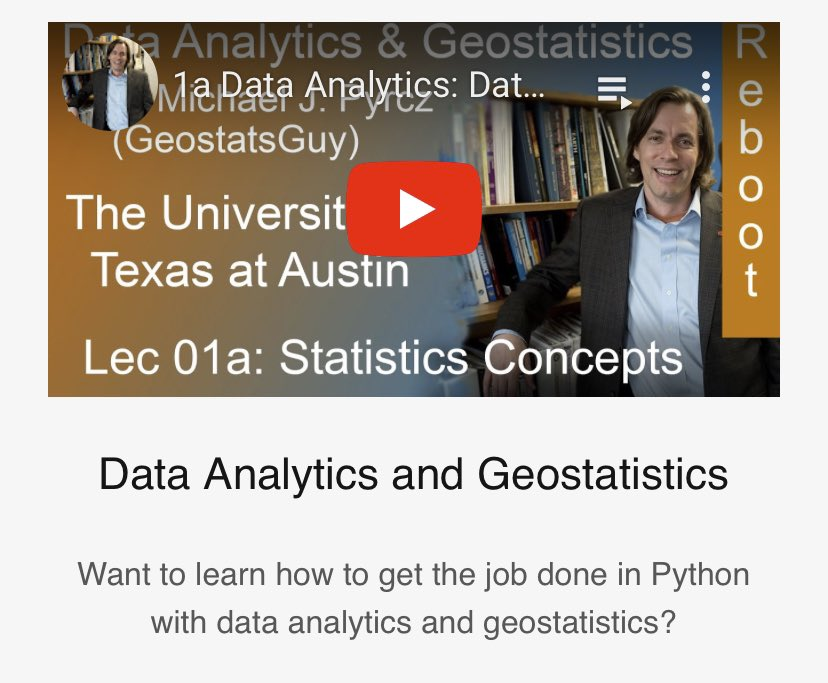
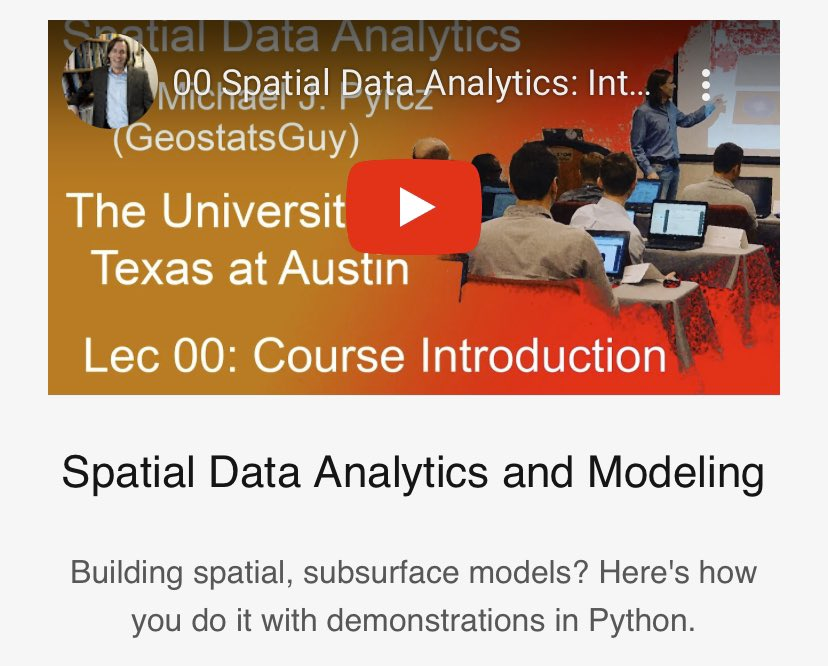
Do you have some free time this summer? Want to learn #DataScience? I'm here to help!
I've made all of my university courses available as free playlists on YouTube, with links to complete online resources that include:
• Theory and fundamentals
• Step-by-step explanations
• Coding tutorials and examples
• Interactive dashboards
• Practical demonstrations
Plus, everything is supported by my free online e-books. 📚
📺 https://t.co/Hp98VvXdiR
As a professor, I'm passionate about sharing knowledge and making data science education accessible, practical, and engaging for everyone.
Whether you're just getting started or looking to deepen your skills, I hope these resources help you learn, build, and explore.
Happy learning—and enjoy your summer! 🚀
#DataScience #MachineLearning #Statistics #Python #Education #Learning