Dancer and basketball player 🕺⛹️♂️ Metabolism enthusiast at @IFC_UNAM | “Imagination is the most scientific of faculties, imagination is the queen of truth”
Not every paper requires a mechanism.
And it is certainly not a good idea to force authors to explore something just for a relatively weak Fig 5 just to say that the paper "has mechanistic insights"
Added sugar is most often poison for human metabolism
Mitochondria feed best on lipids and secondary intermediates like ketone bodies, and the organism is equipped with the liver and kidney that transform macronutrients and produce glucose when needed
https://t.co/4JxGPgBMF0
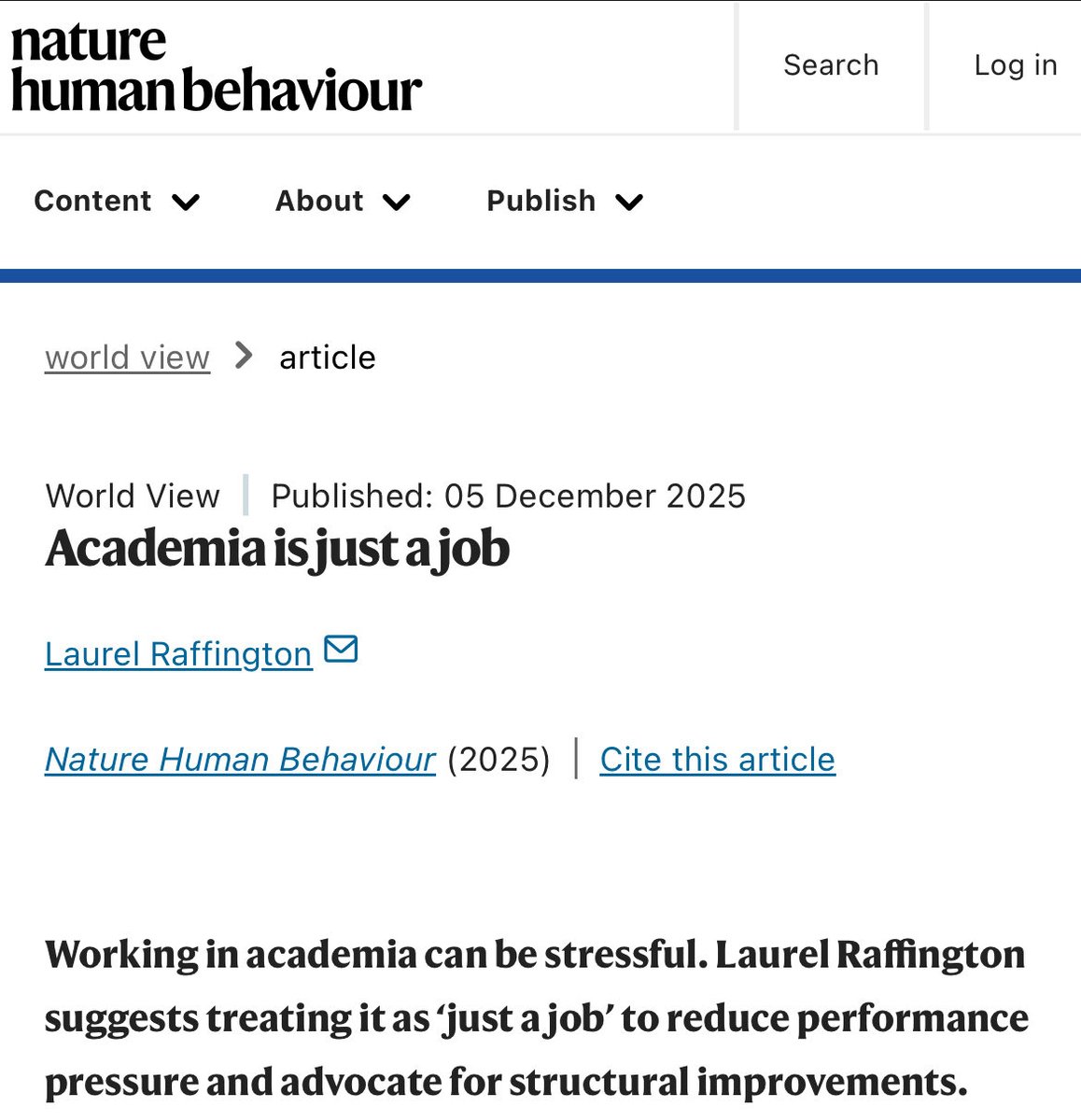
Genuinely caring about students should be a non-negotiable qualification for a career in academia. Full stop.
No amount of research achievement or creativity can substitute for caring about the professional development and well-being of those we teach and mentor.
We need to have a ‘code of conduct’ for reviewing manuscripts, like (1) if you say that something is not novel then provide the reference. (2) If you propose an experiment, state precisely to which claim it is crucial. (3) If you want to say something nasty then sign your name.
The annotation and software you use to align/count RNAseq matters a lot for many genes.
Here is a quick comparison between STAR+feature counts and salmon. Most genes are correlated, but in this example we have around 900 that are not. What's going on?? (1/5) #Bioinformatics
#PhD student: Makes $30k a year. Works on weekends as well. Zero life-work balance.
"Do you think I have a chance to become a professor?"
Prof: "Yes, of course! Finish this project and we will publish excellent papers. I am sure you will easily find a faculty position."
▫️
2 years later:
Student finishes the project. Professor writes a report. Papers are published.
Student: "Do you think my CV is strong enough?"
Prof: "Yes, you are the best!"
▫️
Next 4 months:
Student submits 50 well-tailored applications for faculty positions.
Zero interviews. A lot of broken dreams.
▫️
Key takeaways:
1. Make sure you distinguish encouragement from reality.
- By encouraging you, your advisor may unintentionally give you too much hope. Keep a cool head.
2. Always ask other faculties for external opinion on your case.
- Your advisor’s opinion is always biased. Look for more input outside your group.
3. Don’t expect fairness during candidate selection.
- Hiring process is subjective by definition. It is done by people with very different views on who is the best. You may put tons of efforts into a research statement only to find out later that no one really reads it.
4. The reality is brutal.
- Departments can receive 300-500 candidates per opening. Many have excellent CVs and cool ideas. At top- and mid-rank universities, selection criteria can become extremely questionable (like, who exactly was your PhD advisor? Is your recomm. letter 3 pages long? etc).
And there is no need to say “You don’t know anything about it. It’s not like this”.
I went through this myself. Many times. Along with many colleagues.
Do not expect fairness. See luck as a big factor.
Apply broadly but have a backdoor ready.
#AcademicTwitter