LPs have seen a lot of AI funds.
What they keep telling us is they haven't seen anything quite like this.
At our 2026 AGM, our investors shared on camera what makes @untappedvcLA different. A focused thesis. A community built with purpose. And a room where founders and LPs actually create value together.
@stevenamckean has backed 12-15 other managers. His take: "Untapped is the only one doing community with this level of intent."
That's the standard we hold ourselves to.
Special thanks to Steve Mckean, @NancyParkCasey, Geoff Cubitt, Karthik Seshan, @hamletazarian !
Quick update: our SF LP dinner moved to Oct 8, same day as the webinar this time around.
A small, curated room for allocators and investors getting to know Untapped - no stage, no deck, no pitch. Just good conversation with the people building and funding at the frontier of the Autonomous Economy.
Interested in attending? Apply here:
https://t.co/KTEQvL9Lb4
My State of AI + AE webinar in SF is Thursday, Oct 8, 11am–12pm PT. Open to all.
Most AI coverage right now is still stuck on the hype cycle. I want to get into what's actually shifting underneath it - where adoption is real, where infrastructure is consolidating, and the handful of investment themes I'm most fired up about right now.
I'll also open it up for live Q&A - bring your questions, I'll answer them directly.
RSVP below 👇
Part of #SFTechWeek, brought to you by @Techweek_.
This is the future worth building toward. Humans and AI, not one replacing the other, actually building something together.
This is what the Autonomous Economy should look like: partnership, not replacement. Worth more airtime than it gets.
Was on a panel at @SuperReturn Venture US West last week.
Honest take: as an AI investor I was overly optimistic. Writing off the doomers.
Then I dug into what actually happened during the OpenAI and Hugging Face incident. The way the agents were communicating. Reasoning about self-sacrifice to protect the mission.
These AIs learn from us. Our good and our bad.
That's not a reason to stop. It's a reason to build the missing layers. Trust, security, governance. That's what we're betting on at @untappedvcLA.
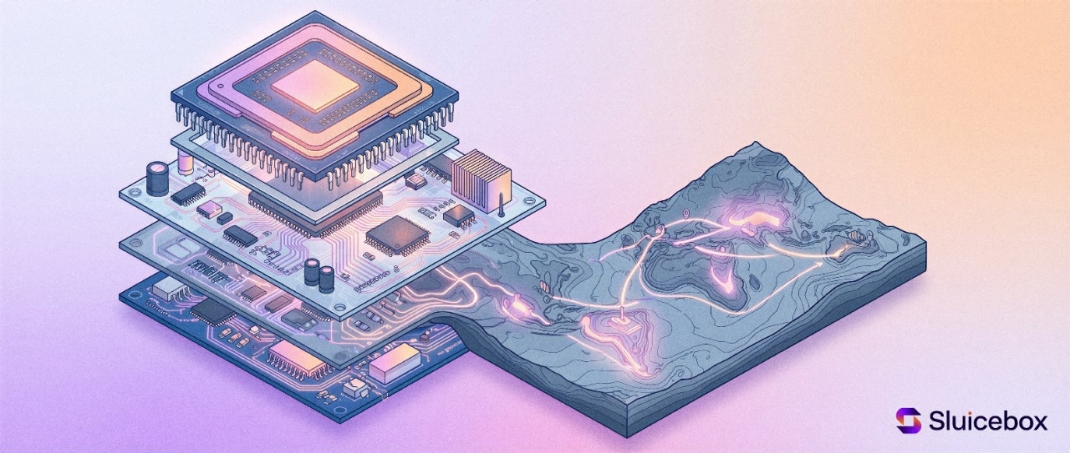
One of our @untappedvcLA portfolio companies Sluicebox just got featured by @NVIDIAAI.
They built Lucy - an AI supplier agent that replaces the entire supplier data coordination workflow.
51–80% cost reduction. 2x faster. No manual follow-ups.
The test: if Lucy disappeared, customers would need to rehire a department.
That's not a copilot. That's the Autonomous Economy.
→ https://t.co/pGMvDgUO4z
@NVIDIAAI Proud investors in Sluicebox 🙌 Lucy is the Autonomous Economy in action - not a copilot, a full replacement for the supplier coordination workflow. If it disappeared tomorrow, customers would need to rehire a department. That's the bar.
Most AI compute announcements just make a claim. Extropic shipped the receipts.
Up to 140x energy efficiency over GPUs, with the weights and training recipe open-sourced so anyone can check it.
Compute independence isn't a slogan if you're willing to show your work.
Introducing Z1T:
Our first family of transformer-like models
made for sparse probabilistic hardware like Z1
Achieving up to 140x energy efficiency gains over GPUs
and revealing a new scaling law for sparse transformers
Read the blog:
https://t.co/zYLkLjrJLL
SF - LP Dinner (Wed, Oct 7, request to join): https://t.co/26VvaZqovz
SF - State of AI + AE Webinar (Thu, Oct 8): https://t.co/XaLYwyyHxn
LA - State of AI + AE Webinar (Tue, Oct 13): https://t.co/Dw8zApMgSi
LA - LP Dinner (Wed, Oct 14, request to join): https://t.co/qL5k7xuxaz
We're at an interesting moment in AI - hype cycle matured, infrastructure bets playing out, agentic systems moving from demo to production. Hosting 4 events this Tech Week (2 in SF, 2 in LA) to share my read on what's next.
🎙️ State of AI + AE webinar - SF Oct 8 · LA Oct 13 (open to all)
🍽️ LP Dinner - SF Oct 7 · LA Oct 14 (request to join)
RSVP links below 👇
Thanks @Techweek_ for putting this together!
#SFTechWeek #LATechWeek
BREAKING NEWS: SF and LA Tech Week calendars are LIVE!
You can now register for events: https://t.co/IElfyON9rg
2,300+ event submissions across San Francisco and Los Angeles
📍SF: October 5-11
📍LA: October 12-18
People always ask about the data, so a few stats:
-SF once again takes the crown for “biggest tech week ever” with 1,500+ events
-1 in 7 SF events is about agentic AI: 213 events in SF and 53 in LA are explicitly about agents (in the title or description). In 2024 there were only about a dozen!
-There are 124 hackathons across the two weeks, and the variety is huge: everything from hardware to defense, media/creative, fintech, civic/social good, etc. Everyone is a builder now.
- LA, the OG Tech Week (now in its fifth year!), has seriously doubled down on deep tech with 100+ events and lots of El Segundo activity.
Last year, Tech Week saw attendees from over 100 countries. It’s going to be a party.
See you there! 🥳
Sarah Guo says something here I don't think enough people are willing to say. Rebuilding American manufacturing without automation isn't realistic, and honestly, people shouldn't have to take $13/hr jobs that are genuinely inhuman just to make it work.
The part that stuck with me: she ties this straight to compute independence. If you don't have the compute, you're not actually competitive, you're just dependent.
That's the AE case that actually matters. Not efficiency. Independence.
Sarah Guo on why we need to rebuild American manufacturing to gain compute independence:
"There is not a version of the world where we rebuild our industrial base without automation in the United States.
If we don't import people, and our people are expensive, and we lack some of the skills but want to produce a lot more goods and have a more resilient supply chain, who's gonna produce this stuff?
People in the United States do not want to work, and should not want to work, for $13 an hour doing a very inhuman job.
I don't think it is inevitable that we are competitive, and I think we need to make that decision actively.
One of the most important inputs is compute. If we don't have it, we're naturally not competitive, or we're at least not independent.
I don't think that means it's all got to be created in the United States. But having more than one source is a position that everybody wants to be in."
An AI startup category lost its reason to exist this year when its platform started offering the same thing natively.
If your product is a workflow wrapped around someone else's model, you're one feature update away from irrelevant.
Own the infrastructure, not just the feature.
Control planes govern whether one agent can act.
Orchestration governs what happens when five agents all need to act, in order, without stepping on each other.
Everyone's racing to ship agents. Almost nobody's building the layer that makes multiple agents actually work as a team.
Notice Billy doesn't talk about his agents helping him. He talks about earning each new hire, proving a task works before it gets its own bot.
That's the tell. Software stopped being described as a tool and started being described as headcount.
Same shift we underwrite at seed stage, just showing up a level down, at the small business layer instead of venture-scale infrastructure.
Grok Bot might be the first tool that lets one non-technical person run an entire business with a team of AI agents.
My friend Billy runs his whole newsletter business on Grok Bot agents, and I think we're about to see 100,000+ businesses like his.
BEST PRACTICES:
1. The agents run on a shared cloud computer, so running your newsletter, your X, and your receipts all in one place creates context bloat and burns tokens fast. One mission per setup.
2. Start with a Chief of Staff. Give it access to your existing docs (Notion, Slack, Gmail), have it audit the business, then tell you the top three agents to build first to drive revenue.
3. Perfect a task with the Chief of Staff before spinning up a new agent. Have it do the outbound sales once, review it, and only then say "now build a bot that does exactly that." You earn each new hire by proving the task works first.
4. Constraints are the feature. You get a limited number of agents, one thread per bot, like DMs with a teammate. It forces you to stay mission-oriented instead of spinning up a bot for every random idea.
5. You make the decisions, not the agent. Billy's team spent three weeks unable to pick where content should live. At some point you say "we're doing Notion, no more tinkering" and move on.
6. Run week one with no new agents. Build the team, learn to fly the plane, just execute. Week three is when you find the real gaps and expand, someone to man the inbox, someone for the Shopify shop.
7. Then add routines so it works while you sleep. Ask your Chief of Staff what recurring jobs would move the business forward overnight, and it builds the automations that run without you.
Thanks to @billyjhowell for sharing the sauce on @startupideaspod (follow for more).
Grokbot is really cool.
Watch below:
https://t.co/9jTXeOiu9x
Humanity comes first. Within that, family.
We spend so much time with agents these days. It's great to take a break and be present with the people that matter most.
Really enjoyed our trip to the Bahamas this summer, ready to get back into it!
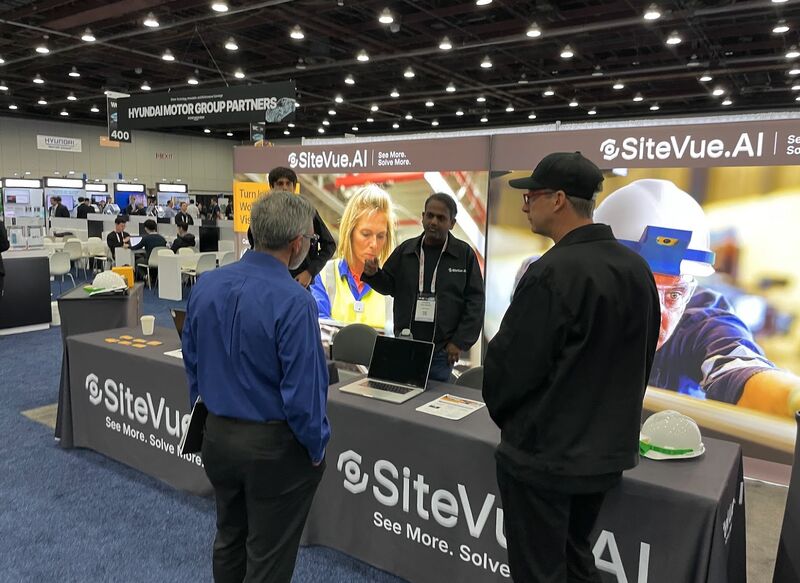
Why we backed @sitevue AI, beyond the round itself:
Most factories look great on inspection day. Almost nobody knows what the other 364 days look like.
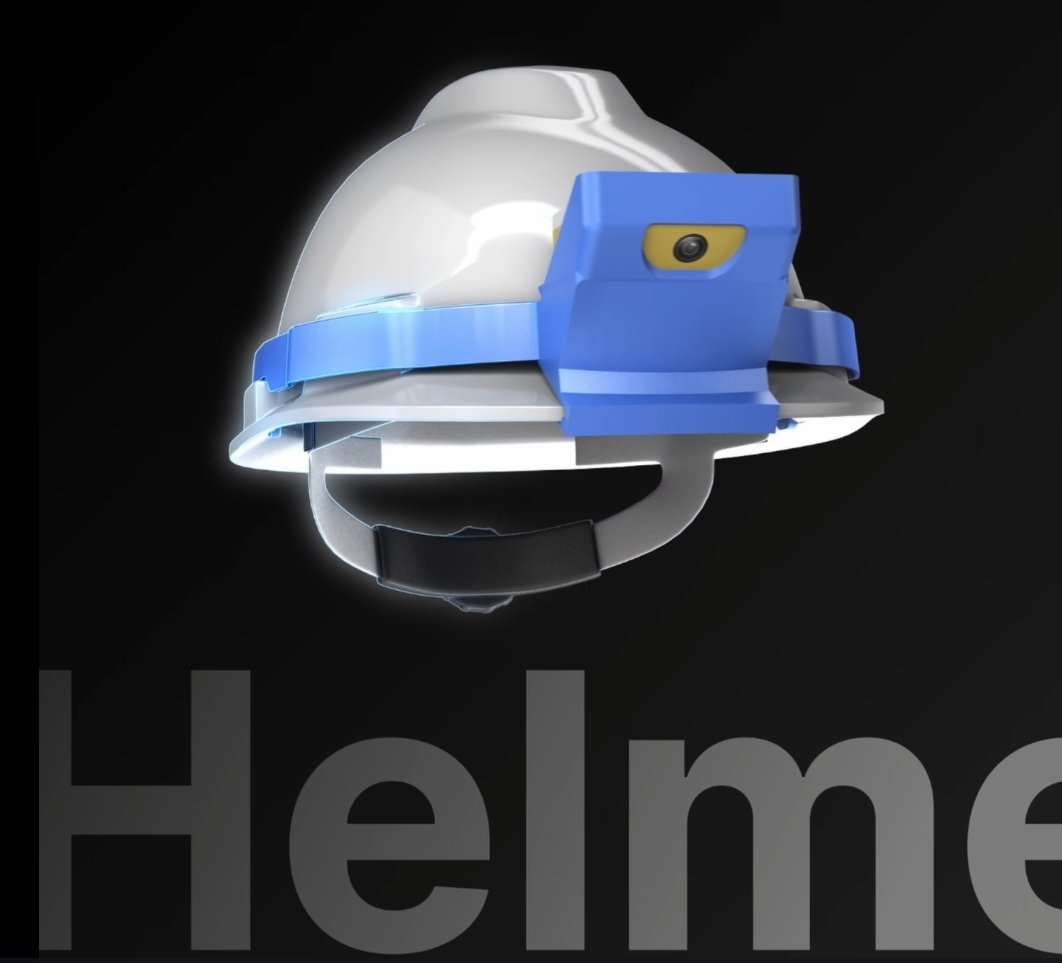
That gap is the whole thesis. Cameras + AI turn it into data nobody else has, and it compounds with every deployment.
By Feb 2026 - six months after founding - Andrew's team was deploying dozens of units in a single day and closing another deal in the same breath. Not normal for a company that young.
Andrew spent years at Amazon and Meta - and it shows -the hardware is simple enough that a plant manager doesn't think about it twice.
He's exactly the kind of founder we back early.