Έλα Γιάννη να μάθουμε το ποίημα που σου έβαλαν στο σχολείο, είπε η κόρη μου του μικρού, και γυρνάει και της λέει
‘Άσε με δεν μπορώ τώρα, έχω κι εγώ τα δικά μου’.
Από τη συλλογή ‘Βάσανα στο προνήπιο’.
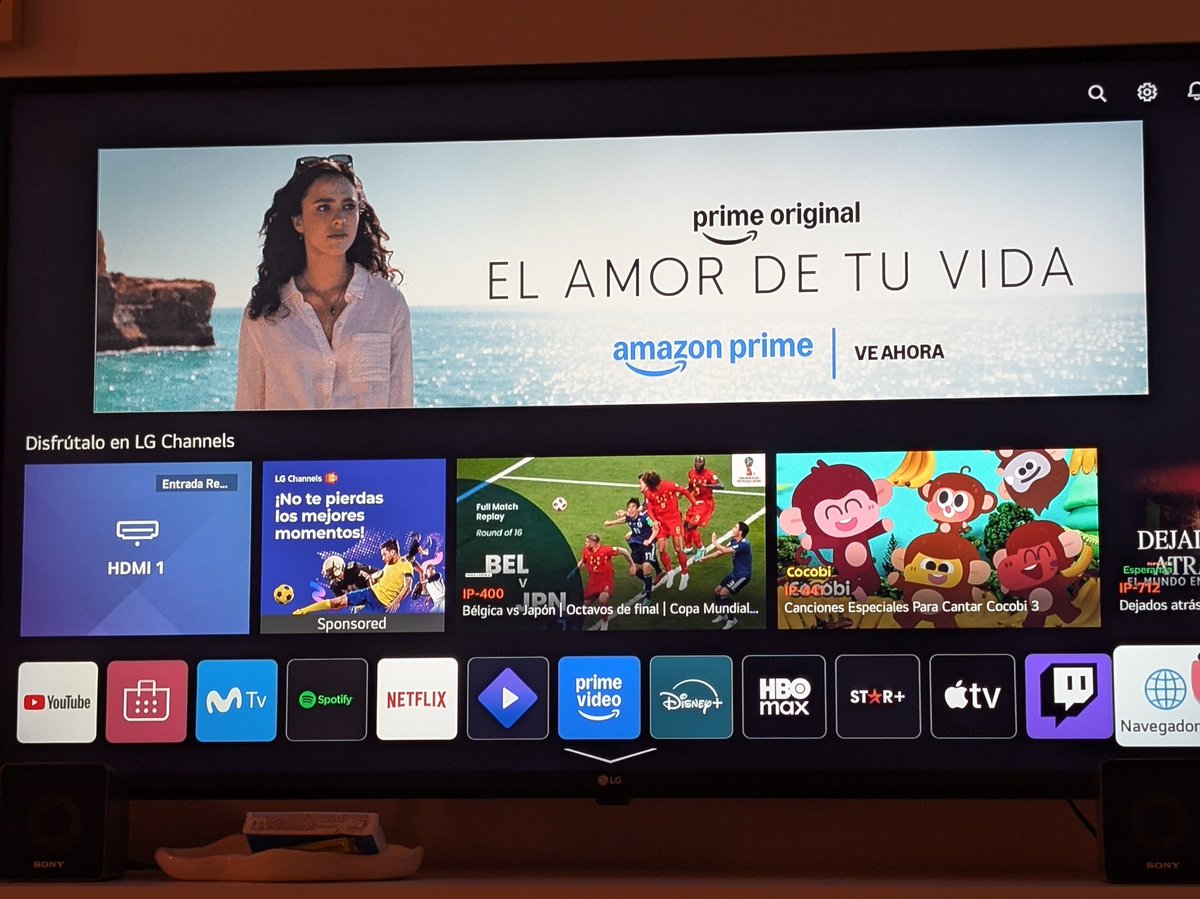
Me subi a esta de hackear la TV. Muy facil en LG con WebOS. Todo wireless. Astra ejecuto todo y Opus 5.5 High hizo el front. Lo hice desde el sillon con @t3dotcodes. Les dejo tutorial y repo aca abajo. Voy a ir tirando updates.
"Can you explain the gap in your resume?"
Yeah. I spent 10 months applying for jobs and couldn't get hired. Four of those months were spent waiting to get through your hiring process.
EL GANADOR DEL HACKATHON OFICIAL DE ANTHROPIC HA PUBLICADO SU SETUP DE CLAUDE CODE Y ES ORO PURO
68 subagentes, 286 skills, 94 comandos, licencia MIT.
ECC convierte Claude Code en un equipo de ingeniería completo.
El plan va antes que el código.
El test que falla va antes que el arreglo.
Cada cambio lo revisa un contexto que no ha visto cómo se escribió.
→ Planificación: le das una frase y apruebas el plan antes de que exista una sola línea → Revisión: un revisor distinto por lenguaje que lee tu diff desde cero → Arreglo de builds: un corrector por toolchain, incluidos PyTorch y CUDA → Seguridad: barrido OWASP completo y escaneo de inyecciones en la config del agente → Arquitectura: detecta errores de diseño cuando aún son baratos, antes de la migración → Dominio: bases de datos, pipelines de ML, tests E2E y documentación
La parte de seguridad es la que casi nadie configura.
Una auditoría OWASP externa cuesta cuatro cifras y una semana. Esta la tienes lista antes de comer.
Las skills cubren testing, Python, Go, Rust, Django, Next.js, Docker y CI/CD.
Eso sí, no actives las 286 de golpe o acabarás con una config peor que la que tenías.
Así se integra bien:
→ Haz un fork y léete el README antes de copiar nada → Empieza solo con el agente de planificación y el pack de reglas de tu lenguaje principal → Copia a tu carpeta .claude únicamente los agentes y skills que vayas a usar esta semana → Añade después el revisor de código y el de seguridad, que son los que más rinden → Pruébalo primero en un repo pequeño, no en producción → Si algo sobra, recórtalo. Si echas algo en falta, añade una sola pieza más
La regla es simple: si no sabes para qué sirve un agente, todavía no lo necesitas.
Quien lo integre bien este fin de semana se pasará el próximo trimestre revisando trabajo en vez de escribiéndolo.
Guárdate este post, me lo agradecerás 🔖
This semester I’m teaching "Fundamentals of LLMs" at the MVA master in Paris 🎓
I’ve turned my 1st lecture, "NLP before LLMs", into a blog post that goes from simple word counts all the way to attention.
The approach is learning by doing 💪 : each step comes with hands-on exercises inspired by key research papers.
Why practice by hand when an AI agent can write the code for you ? Precisely because it can ! When code becomes easy and cheap, understanding is what matters, and you will build it by doing the work yourself.
Have fun learning by doing !
👉 https://t.co/JmkqukPg2c
(Next up: Tokenizers. Stay tuned !)
So basically, today PHP got two critical bugs that let anyone run code on your server without even logging in, which is bad, and then the details leaked before the patch was even out, which is worse, and it works on WordPress and MediaWiki and Magento and Joomla and Laravel, and Censys says like 1.5 million servers are running a version with no fix, so the NSA was like "take your system offline," and the FBI was like "take your system offline," and CISA and the UK and CERT-EU were all like "take your system offline," and then the Prime Minister of Japan, the actual Prime Minister, posted at 5:55 in the morning telling 48.8 million people to take their system offline, so everyone took their system offline, like the Dutch cybersecurity agency took its own website offline, and the Dutch parliament went offline, and the Port of Rotterdam went offline, and Finland and France and Denmark started pulling government sites, and Wikipedia went down, and https://t.co/QlOXb3COq3 went down, and Asana and GOG and Something Awful went down, and the University of Vienna's webmail went down for some reason, and that's just PHP. Because GitLab also dropped a CVSS 10.0, which is the highest score they give out, for a bug that's been there since 2014, so that's every self-hosted GitLab for twelve years, and then LiteLLM 1.107.0 got hijacked and shipped a credential stealer and a remote access trojan in every single wheel and the Docker images, including latest, and you didn't even have to import it, just installing it was enough, and it's the second time this year, and then Railway paused every deployment on the entire platform because someone got into the environment variables, so now everyone has to rotate every secret they've ever stored there, and TiDB Cloud said someone was walking around inside with stolen credentials for basically a month and an extortion group says they took 10.6 terabytes, and Zeabur got breached for the second time in two months and is just shutting down, like the whole company, and Node.js patched remote code execution and a TLS bypass, and CISA says Plex is being actively exploited, and someone took over 300 Tor exit relays to steal SSH passwords, and SafePay ransomware has hit over 600 critical infrastructure orgs, and India's biggest bank filed a data loss incident, and Japan has been in an official state of emergency in cyberspace since October 9, which honestly explains the 5:55 AM post. Oh, and eMudhra, a certificate authority that's issued over 60 million certificates, whose entire job is proving websites are who they say they are, was supposed to be using private keys that are random numbers over a hundred digits long, and one of them was 4. Just 4. And the others were like 66 and 237. Anyway, it's Wednesday.
Tem gente usando IA pra hackear a própria smart TV, tirar os anúncios e deixar ela mais rápida.
Hackear um aparelho que é seu sempre exigiu saber programar. Agora o agente faz quase tudo sozinho. Isso aperta as fabricantes de TV, que ganham dinheiro com anúncio na tela inicial e com os dados de quem usa. Se qualquer dono consegue tirar isso da TV com um pedido, esse negócio fica bem mais frágil.
Nos últimos dias, alguns donos de TV com Android viralizaram fazendo isso com o Claude Code, o agente de programação da Anthropic. Ele se conecta na TV pelo Wi-Fi, desativa os apps que vieram de fábrica, some com os anúncios da tela inicial e instala uma tela inicial nova. Um dos que viralizaram conta que a TV ficou bem mais rápida. Os anúncios dentro dos apps de streaming continuam lá. O cara do post fez isso na TV Xiaomi dos pais, sem root e sem apagar nenhum app, e publicou o prompt e o código abertos.
Se a sua TV for com Android TV ou Google TV:
1 - Na TV, entra em Configurações, depois em Preferências do dispositivo (ou Sistema, dependendo da TV) e em Sobre. Aperta OK várias vezes em "Build" (em algumas TVs aparece como "Android TV OS Build" e pede 7 toques) até aparecer o aviso de que você virou desenvolvedor.
2 - Volta uma tela, abre as Opções do desenvolvedor e liga a depuração USB. Se aparecer uma opção de depuração pela rede, liga também.
3 - No computador, que precisa estar na mesma rede Wi-Fi da TV, baixa o Android SDK Platform Tools no site de desenvolvedores do Google e descompacta a pasta. É ali que fica o adb, a ferramenta oficial pra conversar com aparelhos Android.
4 - Descobre o IP da TV em Configurações, na parte de Rede, dentro da rede Wi-Fi em que ela está conectada.
5 - Abre o terminal dentro da pasta do Platform Tools e roda:
adb connect IP_DA_TV:5555
6 - Aceita o aviso "Permitir depuração USB?" que vai aparecer na TV. Em algumas TVs mais antigas, a primeira conexão pode exigir cabo.
7 - Abre o Claude Code ou outro agente parecido nesse computador e cola o prompt abaixo, trocando o modelo e o IP pelos da sua TV.
————COMEÇO DO PROMPT————
Quero limpar minha Android TV e trocar a tela inicial por uma mais simples. O modelo da TV é [MODELO] e o IP dela é [IP DA TV]. Ela está na mesma rede Wi-Fi deste computador, com a depuração USB ligada. Trabalha no aparelho de verdade, passo a passo, e me pergunta antes de qualquer coisa que dependa do meu gosto.
- Conecta na TV por ADB na porta 5555 e me avisa quando eu precisar aceitar o aviso na tela.
- Antes de mudar qualquer coisa, salva a lista completa de apps e as configurações numa pasta de backup e escreve um script de restauração que reativa tudo o que você desativar.
- Separa os apps em telemetria da fabricante, anúncios e recomendações, serviços que eu provavelmente não uso, apps de fábrica e apps de streaming. Desativa os das primeiras categorias com pm disable-user --user 0, um comando por vez. Nunca desinstala app do sistema.
- Antes de mexer em app de streaming, assistente de voz, Chromecast ou atualização do sistema, me pergunta quais eu uso.
- Cria e instala uma tela inicial simples, define ela como padrão e só depois desativa a tela inicial original.
- No fim, me entrega o script de restauração e explica como reativar qualquer app.
————-FIM DO PROMPT————
8 - Responde às perguntas que o agente fizer e, quando ele terminar, define a tela nova como a inicial da TV, se ele ainda não tiver feito isso.
9 - Desliga a depuração USB nas Opções do desenvolvedor.
Pra desfazer, liga a depuração de novo, conecta e roda o script de restauração que o agente deixou. Ele reativa cada app com pm enable e devolve a tela inicial original. Pra reativar um app só, roda:
adb shell pm enable NOME_DO_PACOTE
Se a sua TV for LG, Samsung ou Roku, o máximo que dá pra fazer é instalar um app feito por você. Os apps de fábrica e a tela inicial continuam lá.
RAM is the new bottleneck. Every Node.js process is fighting for memory: containers, serverless, cloud bills, k8s limits. And here's the maddening part: V8 can use half the memory with one flag, and almost nobody turns it on.
As a Backend Engineer, you must build these projects.
1.) URL shortener that survives 10x traffic
Build: Postgres + Redis cache + rate limiting, load tested to 5,000 requests a second.
Why: caching, ID generation and capacity math in one project.
2.) Distributed rate limiter
Build: token bucket and sliding window in Redis, shared by 3 app servers.
Why: it shows up in almost every Senior loop.
3.) Job queue with retries
Build: workers with backoff, a dead-letter queue and idempotent jobs.
Why: you learn that "at least once" means "sometimes twice."
4.) Chat server
Build: WebSockets, presence, delivery receipts, reconnects.
Why: real-time is where most candidates start guessing.
5.) Payments ledger
Build: double-entry ledger with idempotency keys and nightly reconciliation.
Why: money forces you to care about correctness.
6.) Zero-downtime migration
Build: rename a column on a 10M-row table while a load test runs.
Why: the Senior skill nobody practises.
Put the load test numbers in your README. That's your system design round, already rehearsed.
if you are feeling hella lost with what’s going on in ML well buddy I have a 1h08min interview with the legendary @vboykis that should set you straight
in it we got:
- good dose of pragmatism
- what you should still learn
- focusing
- how to not lose your braincells to agents
During my system design round at Amazon, the interviewer took down my cache.
During my system design round at Walmart, the interviewer killed my primary database.
During my system design round at Atlassian, the interviewer made one downstream service take 10 seconds to respond.
In every round, someone broke my design on purpose.
Because any design works when nothing fails.
Interviewers want to see what yours does when something does.
After sitting through 100s of interviews in the last 13 years, one thing is clear to me:
If you're starting system design prep, focus hard on Failure & Reliability Fundamentals.
Here's a list to help you get started:
[1] Timeouts & Deadlines
- Connection vs request timeouts
- Deadlines that travel across service calls
- What happens when a call has no timeout at all
[2] Retries
- Exponential backoff with jitter
- Retry budgets
- Retry storms and how they stretch outages
[3] Idempotency
- Idempotency keys for write APIs
- At-least-once delivery and duplicate handling
- Safe vs unsafe retries
[4] Isolation
- Circuit breakers
- Bulkheads and separate thread pools
- Blast radius per tenant, region and feature
[5] Overload Protection
- Rate limiting
- Backpressure
- Load shedding and priority queues
[6] Replication & Failover
- Leader election and split brain
- Sync vs async replication
- Failover vs failback
[7] Graceful Degradation
- Serving stale data on purpose
- Fallbacks and feature switches
- Read-only mode
[8] Data Safety
- Write-ahead logs
- Backups and point-in-time recovery
- Restores you've actually tested
[9] Observability
- p50 vs p99 latency
- SLIs, SLOs and error budgets
- Alerts that map to a runbook step
[10] Recovery & Operations
- Rollbacks and feature flags
- Zero-downtime migrations
- Postmortems that change the system
Wanted to root my LGTV and install anti-spying and debloat the tv overall for speed.
Gave the task to Claude code, and Claude blocked it citing security policy and risk for a tv that I own.
Deepseek 4.1 flash did it neatly.
@AnthropicAI shove your moral posturing up your metaphorical arse please.
Most developers accept the very first code solution an AI gives them.
Boris Cherny (the creator of Claude Code at Anthropic) shared the exact prompts their internal engineering team uses to force better output:
1. The "Elegant Rewrite" Prompt:
When the AI gives you a messy, band-aid fix that technically works, reply with:
"Knowing everything you know now, scrap this and implement the elegant solution."
2. The "Reverse PR Review" Prompt:
Before opening a Pull Request, flip the roles and make the AI test you:
"Grill me on these changes and don't make a PR until I pass your test."
3. The "Behavioral Proof" Prompt:
Instead of asking "Does this work?", say:
"Prove to me this works by diffing the behavior between main and this feature branch."
Stop treating coding agents like autocomplete.
Push them like a senior engineer reviewing a draft.
I don't think people realize the movement happening with "Reverse Engineer Anything," which just crossed 300k GitHub stars. It's not about "oh, let's make an open source Photoshop" or "the death of software." It's about unlocking human creativity. It's about what this UNBLOCKS in our brains, what new building blocks we have, and the big question: WHAT WILL YOU BUILD?! cc @reatools@morluto