Big progress vs cancer, folks.
The kind of event curves from randomized trials that we've not seen before for a couple of the most deadly cancers. Congrats to the oncology research community for getting these trial done. #ASCO26, @ASCO
Out now in Science! Our new study challenges long-standing assumptions about transcription factor specificity in eukaryotes. Novel single-molecule measurements of TF behavior in living cells reveal an independence of locus-specific binding from DNA sequence recognition.🧵
https://t.co/w5mYmh4I1G
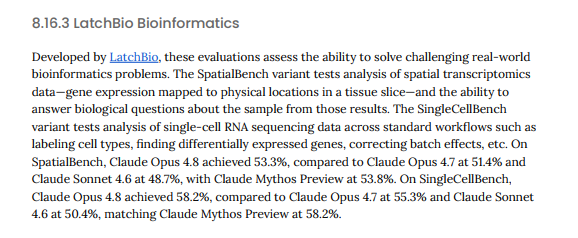
Biology is the next agentic frontier after coding. Anthropic is aggressively improving their models on routine data analysis with careful attention to nuances of different assay types. Opus 4.8 is noticeably better at single cell / spatial analysis. We have already rolled it out to customers across pharma and academia. Cool to see our benchmarks on the system card.
For those of you who think macrophages do almost everything, rethink “almost.”
They are programmable cells, recruited into whatever new function evolution needs.
https://t.co/tz6VrVQWpw
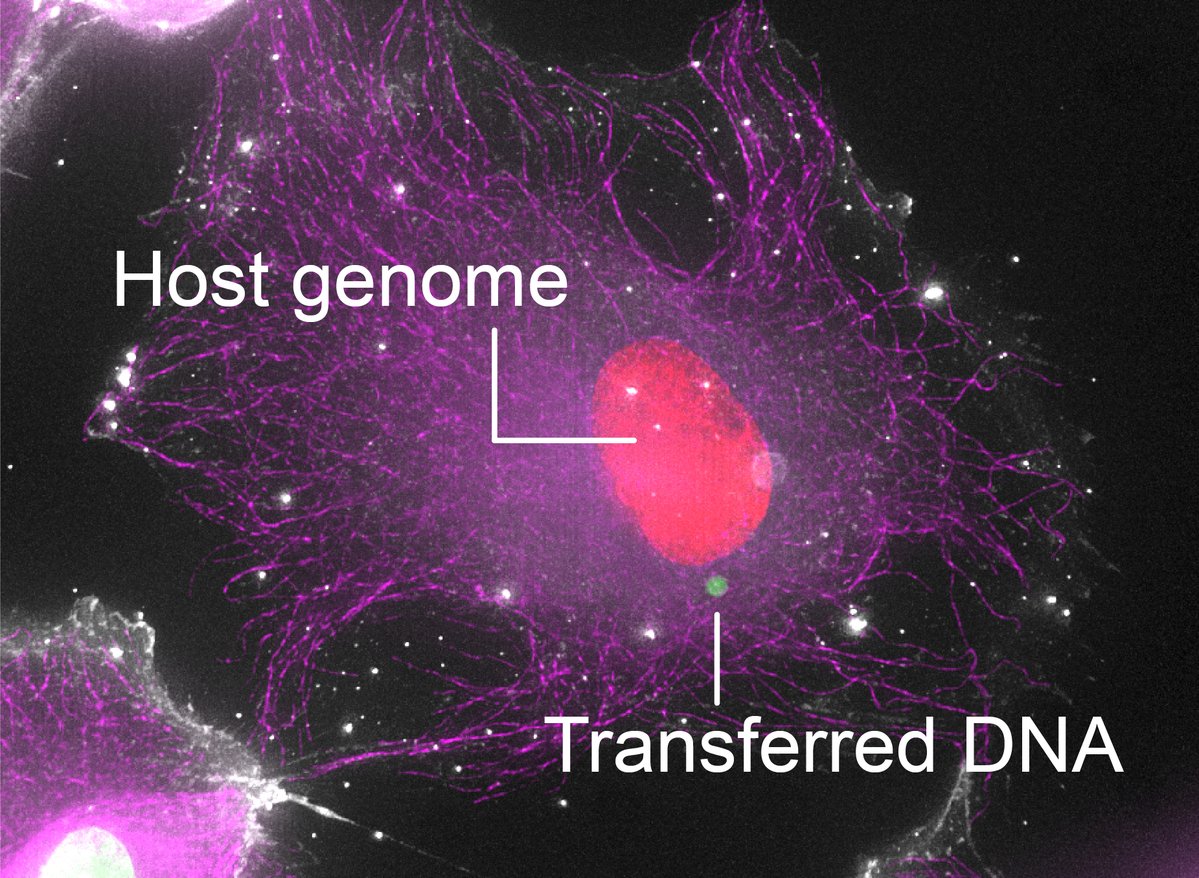
Excited to share our latest paper, out today @CellCellPress. We found that large pieces of the human genome can transfer between cells upon direct contact, endowing recipient cells with heritable phenotypic changes. (1/7)
https://t.co/SbshGhofN0
Exciting new insights on CpG islands (CGIs) regulation by transcription factors (TFs)! CGIs drive most transcription initiation with unclear regulation. We find that chromatin-opening TFs are key players—following a surprisingly simple rule.
https://t.co/mXkDodTALR
1/9
Identify. Attack. Resolve.
The immune system follows a perfect defense program: ignore weak/self signals, attack true threats with force, then shut down to avoid damage. (1/2)
https://t.co/zh6Nf3Cwqo
It takes two (transcription factors) to tango
Transcription factor collaboration enables precise T cell state engineering
https://t.co/UpHTANSeHD
Excited to share our preprint with @JD_Buenrostro, @cgersbach, and an incredible team of collaborators as part of @IGVFConsortium
🧵
A history of viral encephalitis is one of the strongest risk factors for developing dementia. With @JacobJacobog02, Yifan Chen, @RNA_Life, and @RyanDhindsa, we refine this link by describing a neuronal cell type that can reactivate HSV-1 in humans 1/n
https://t.co/y8D2orzUur
🚨 Excited to share a new paper in Cell! Human genetics led us to HOTSCRAMBL, a HOXA-locus lncRNA that regulates 🩸#stemcell self-renewal and HOXA9 splicing, with implications for AML.
Amazing work by @lvchosen1 with @silvirouskin, @Armstrong_dfci, and many more!
https://t.co/Kralk3tmzg
Today in @Nature, the @genophoria & Vijay Ramani labs reveal that our picture of how nucleosomes regulate DNA accessibility has been too simple. They find that over 85% of nucleosomes in mammalian cells are structurally distorted, with DNA partially accessible even while wrapped.
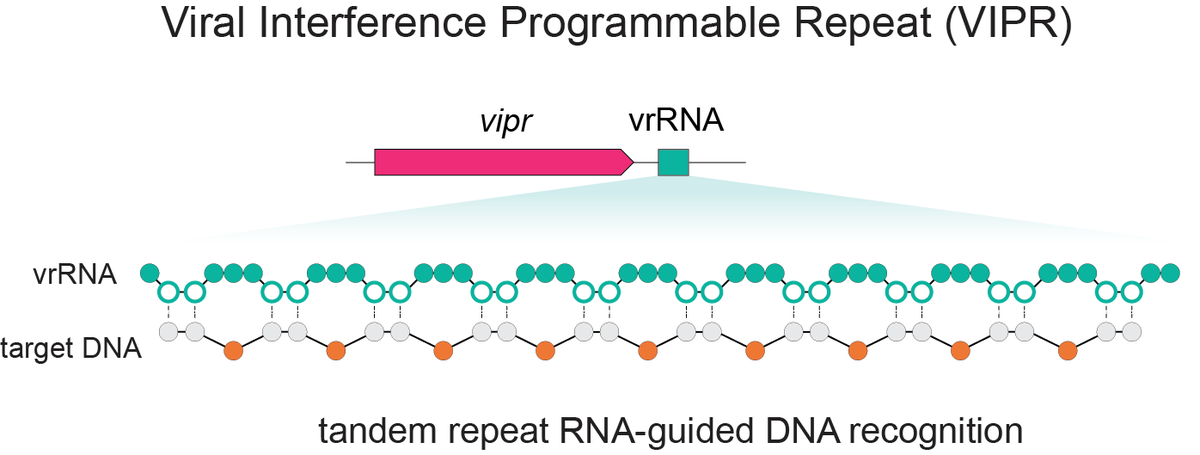
Excited to share our discovery of a new programmable RNA-guided DNA-targeting system hiding inside bacteriophages that predates CRISPR.
We call it VIPR (Viral Interference Programmable Repeat), and it uses an entirely new logic to find its targets.
Thread + link below.
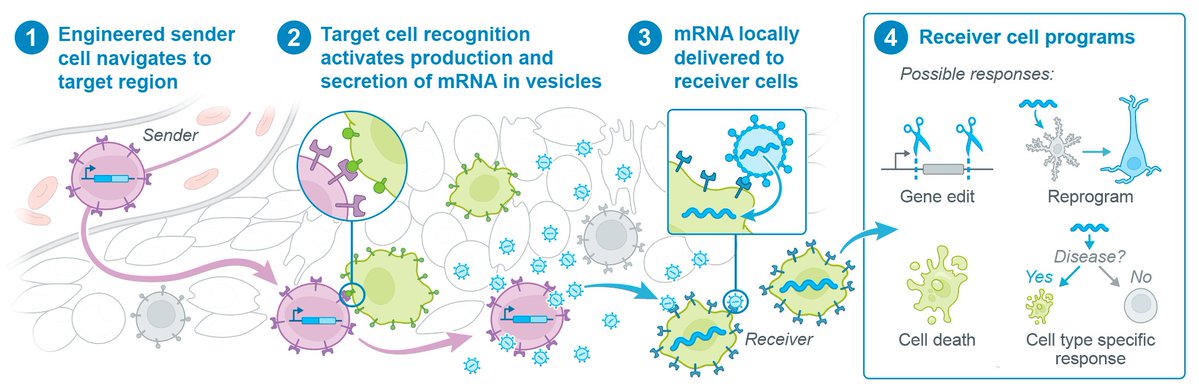
Our new Comment is out today in @natrevbioeng. mRNA could treat many more diseases than it currently does, but we don’t have a way to get it to most of the cells where it’s needed. We explain why a cell will be the next transformative delivery vehicle⬇️
Our Human Multiomic Development Atlas paper is out in Nature today! A heart-felt "thank you" to all co-authors for their tireless work on this complex yet exciting project! Congrats all! https://t.co/iUiZz00KOt
What if a small molecule could activate a transcription factor program in one cell type and destroy the same pathway in another? In our new preprint, we describe one such story on bifunctional molecules that toggle between transactivation and repression.