¿Puede un tribunal constitucional conservar plenamente su legitimidad si quienes lo integran no son reconocidos como expertos en Derecho?
La legitimidad de un tribunal llamado a ser el máximo intérprete de la Constitución posee una doble dimensión. 🧵
Sólo quienes tienen tanto poder como para asumir que sus vidas jamás dependerán de una sentencia se atreven a tratar la configuración del poder judicial como un experimento.
RECORDATORIO: el poder se debe ejercer asumiendo que un día lo vas a perder.
La tesis de The Significant Lawyer pega durísimo en México: cuando la abogacía deja de ser una profesión con deberes públicos y se vuelve solo un negocio, el abogado pierde el centro. Y aquí el problema es más grave: no tenemos colegiación obligatoria, regulación seria ni controles reales de calidad profesional. Mientras tanto, miles egresan cada año de universidades de todo tipo, muchas sin formar abogados sino técnicos del trámite.
El resultado está a la vista: litigios eternos, promociones inútiles, abuso del amparo, clientes mal aconsejados, jóvenes sin mentoría, y una cultura donde demasiadas veces se confunde agresividad con talento.
México necesita mejores abogados. Abogados formados con rigor, regulados con seriedad y capaces de recordar que ejercer Derecho no es vender servicios legales: es asumir una responsabilidad social enorme. Porque cuando la abogacía se degrada, no fracasa solo una profesión; se rompe una de las últimas defensas de la justicia y el estado de derecho.
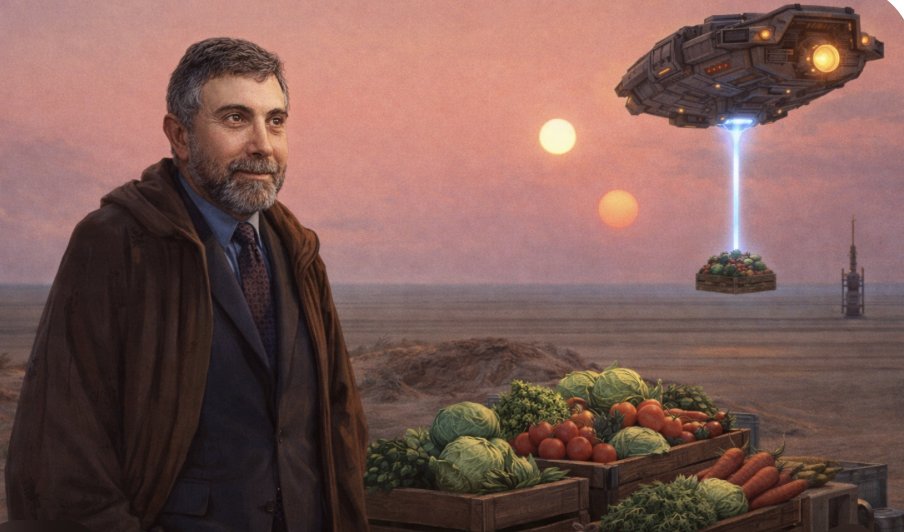
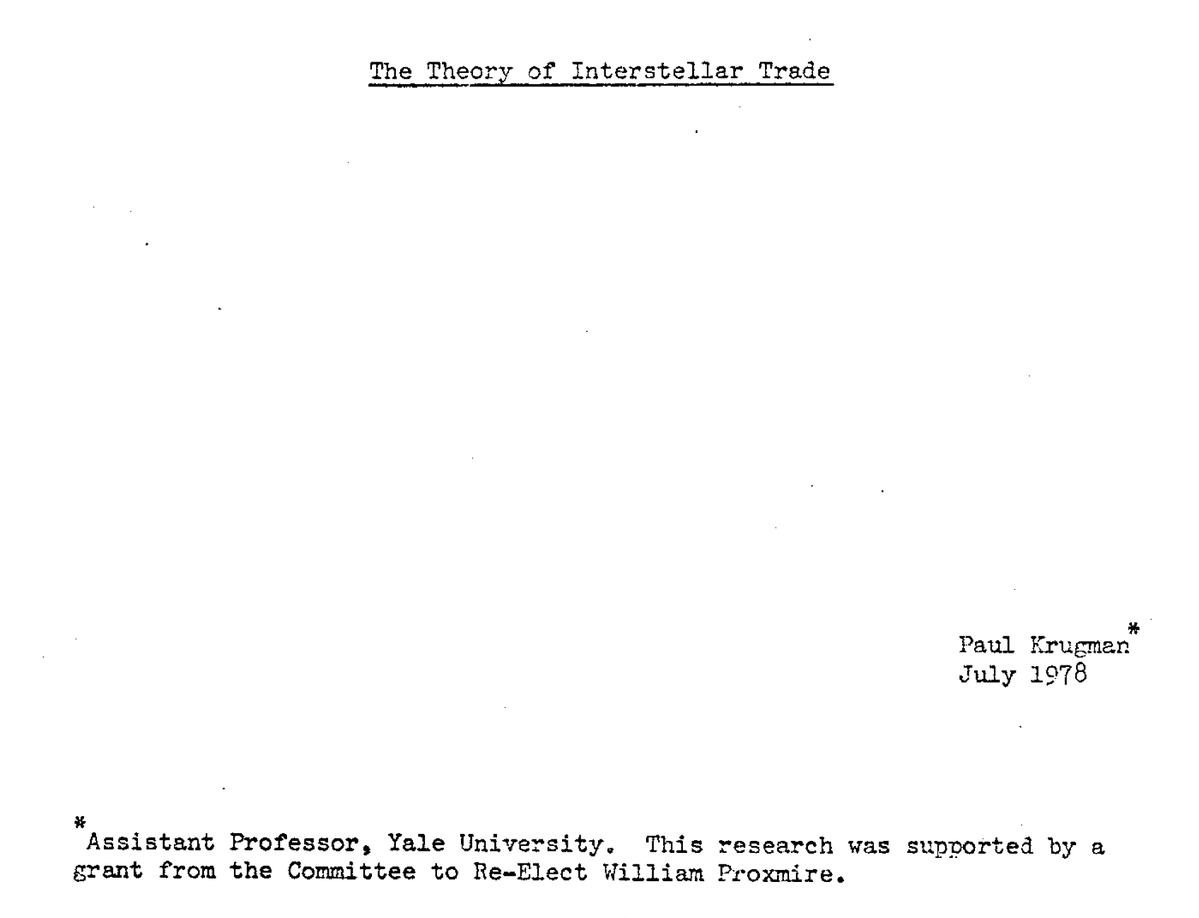
1/ En 1978, un joven profesor de Yale llamado Paul Krugman escribió "The Theory of Interstellar Trade". En apenas catorce páginas de paper y con unas pocas ecuaciones sencillas, se propuso contestar una pregunta aparentemente absurda.
Imagina un mercader que compra mercancías en un planeta, fleta una nave y viaja a otra estrella a venderlas. El viaje dura décadas. Durante todo ese tiempo su dinero está inmovilizado en la bodega en lugar de ganar intereses en un banco. ¿Cuánto tiene que ganar en la venta final para que la operación compense?
Veamos en un hilo la ingeniosa respuesta, e intentemos aprender algo sobre la utilidad de los modelos y los supuestos "poco realistas"...
🚨 IMPACTANTE
Los científicos acaban de demostrar que nunca has tocado nada en toda tu vida.
Lo que sientes como "tacto" es una mentira que te dice tu cerebro.
A nivel atómico, el contacto físico es imposible.
¿Trascendencia?
Espantoso
Un hilo sobre la percepción, el control y la realidad: 🧵
Consejo jurídico no pedido:
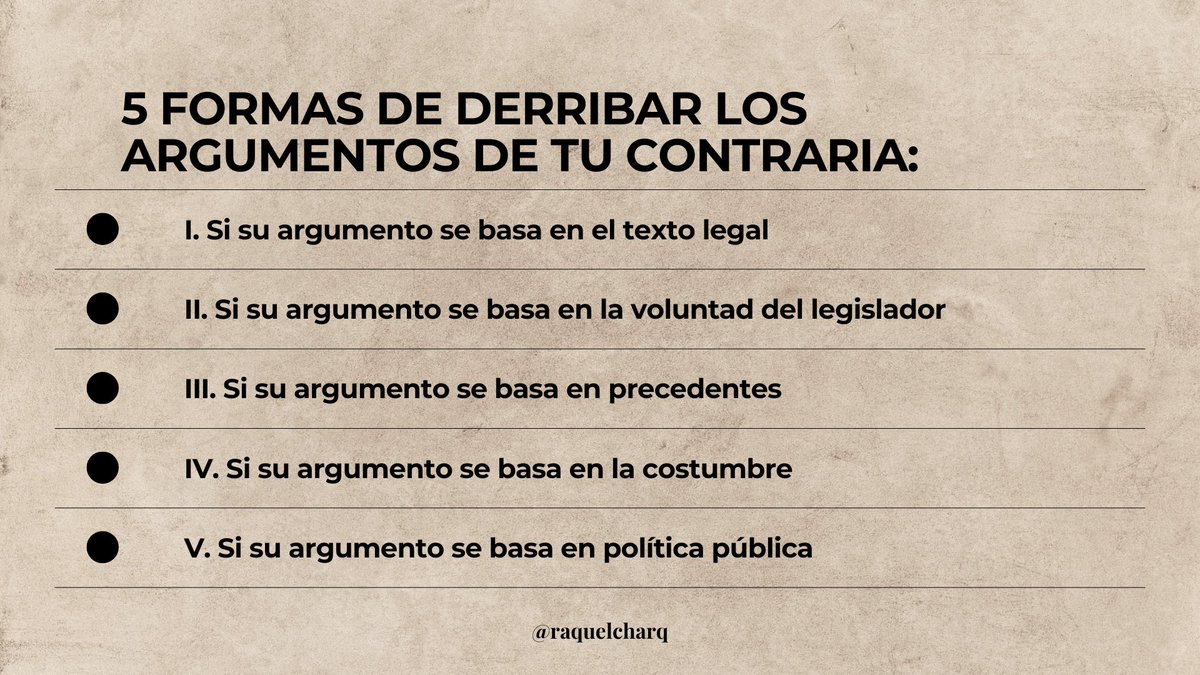
Aquí tienes 5 formas de derribar los argumentos de tu contraria.
No todo argumento se responde con otro argumento.
A veces se derriba desde su fundamento.
Si quieres debilitar la postura de tu contraparte, primero identifica desde dónde está argumentando. Y luego ataca ahí:
1. Si su argumento se basa en el texto legal.
No discutas en abstracto. Ve al texto.
Puedes sostener que:
– El texto tiene un significado distinto al que propone.
– El texto es ambiguo.
– Existe una contradicción dentro del mismo texto.
– Existe una contradicción con otro texto legal.
Si el significado no es tan claro como afirman, su seguridad empieza a desmoronarse.
2. Si su argumento se basa en la voluntad del legislador.
Cuestiona la fuente de esa voluntad.
– La evidencia de esa intención no es suficiente.
– El legislador no anticipó los hechos actuales.
– La voluntad invocada no proviene de un actor relevante en el proceso legislativo.
Recordatorio: la intención no se presume, se prueba.
3. Si su argumento se basa en precedentes.
Aquí hay muchas puertas para entrar:
– El caso citado no sostiene realmente la proposición que afirman.
– No fue una opinión mayoritaria.
– No fue holding, sino obiter dictum.
– Los hechos son distintos.
– Existen líneas jurisprudenciales en conflicto.
– El precedente fue anulado.
– O incluso, debe ser anulado.
Citar no es lo mismo que tener razón.
4. Si su argumento se basa en la costumbre.
– Puede que esa costumbre no exista.
– O que exista otra costumbre en conflicto.
La práctica reiterada también se cuestiona.
5. Si su argumento se basa en política pública.
– El juicio predictivo no es exacto.
– Esa política no es propósito de la ley.
– No es lo suficientemente fuerte en este caso.
– No aplica a estos hechos.
– O está superada por otra política que compite.
No toda buena intención es un buen argumento jurídico.
Litigar no es solo construir tu teoría.
Es saber identificar el cimiento del argumento contrario… y saber exactamente dónde golpear.
Cuando atacas la base, no necesitas discutir cada detalle.
You’ve never actually touched anything in your life. 🤯
At the atomic level, nothing ever truly touches. That feeling you get is just your brain interpreting electromagnetic repulsion between electron clouds. The object is real, but the contact is a constructed illusion.
El derecho internacional no importó cuando México “entregó” a mexicanos a Estados Unidos, sin procedimientos ni órdenes de extradición
Utilizan los derechos a conveniencia del poder, del autoritarismo.
Los DDHH son de las personas, de las y los ciudadanos, de aquell@s que ha tenido que emigrar de manera forzada y si, también de las que están privadas de su libertad por la comisión de delitos.
The real reason the US is invading Venezuela goes back to a deal Henry Kissinger made with Saudi Arabia in 1974.
And I'm going to explain why this is actually about the SURVIVAL of the US dollar itself.
Not drugs. Not terrorism. Not "democracy."
This is about the petrodollar system that has kept America the dominant economic power for 50 years.
And Venezuela just threatened to end it.
Here's what really just happened:
Venezuela has 303 billion barrels of proven oil reserves.
The largest on Earth.
More than Saudi Arabia.
20% of the entire world's oil.
But here's the part that matters:
Venezuela was actively selling that oil in Chinese yuan. Not dollars.
In 2018, Venezuela announced it would "free itself from the dollar."
They started accepting yuan, euros, rubles, anything BUT dollars for oil.
They were petitioning to join BRICS.
They were building direct payment channels with China that bypass SWIFT entirely.
And they were sitting on enough oil to fund de-dollarization for decades.
Why does this matter?
Because the entire American financial system is built on one thing:
The petrodollar.
In 1974, Henry Kissinger made a deal with Saudi Arabia:
All oil sold globally must be priced in US dollars.
In exchange, America provides military protection.
This single agreement created artificial demand for dollars worldwide.
Every country on Earth needs dollars to buy oil.
This lets America print unlimited money while other countries work for it.
It funds the military. The welfare state. The deficit spending.
The petrodollar is more important to US hegemony than aircraft carriers.
And there's a pattern of what happens to leaders who challenge it:
2000: Saddam Hussein announces Iraq will sell oil in euros instead of dollars.
2003: Invaded. Regime change. Iraq's oil immediately switched back to dollars. Saddam lynched.
The WMDs were never found because they never existed.
2009: Gaddafi proposes a gold-backed African currency called the "gold dinar" for oil trade.
Hillary Clinton's own leaked emails confirm this was the PRIMARY reason for intervention.
Email quote: "This gold was intended to establish a pan-African currency based on the Libyan golden Dinar."
2011: NATO bombs Libya. Gaddafi sodomized and murdered. Libya now has open slave markets.
"We came, we saw, he died!" Clinton laughed on camera.
The gold dinar died with him.
And now Maduro.
With FIVE TIMES more oil than Saddam and Gaddafi combined.
Actively selling in yuan.
Building payment systems outside dollar control.
Petitioning to join BRICS.
Partnered with China, Russia, and Iran.
The three countries leading global de-dollarization.
This isn't coincidence.
Challenge the petrodollar. Get regime changed.
Every. Single. Time.
Stephen Miller (US homeland security advisor) literally said it out loud two weeks ago:
"American sweat, ingenuity and toil created the oil industry in Venezuela. Its tyrannical expropriation was the largest recorded theft of American wealth and property."
He's not hiding it.
They're claiming Venezuelan oil BELONGS to America because US companies developed it 100 years ago.
By this logic, every nationalized resource in history was "theft."
But here's the DEEPER problem:
The petrodollar is already dying.
Russia sells oil in rubles and yuan since Ukraine.
Saudi Arabia is openly discussing yuan settlements.
Iran has been trading in non-dollar currencies for years.
China built CIPS, their own alternative to SWIFT with 4,800 banks in 185 countries.
BRICS is actively building payment systems that bypass the dollar entirely.
The mBridge project lets central banks settle trades instantly in local currencies.
Venezuela joining BRICS with 303 billion barrels of oil would accelerate this exponentially.
That's what this invasion is really about.
Not stopping drugs. Venezuela accounts for less than 1% of US cocaine.
Not terrorism. There's zero evidence Maduro runs a "terror organization."
Not democracy. The US supports Saudi Arabia, which has zero elections.
This is about maintaining a 50-year-old agreement that lets America print money while the world works for it.
And the consequences are terrifying:
Russia, China, and Iran are already denouncing this as "armed aggression."
China is Venezuela's biggest oil customer. They're losing billions.
BRICS nations are watching a country get invaded for trading outside the dollar.
Every nation considering de-dollarization just got the message:
Challenge the dollar and we will bomb you.
But here's the problem...
That message might accelerate de-dollarization, not stop it.
Because now every country in the Global South knows what happens if you threaten dollar hegemony.
And they're realizing the only protection is to move FASTER.
The timing is insane too:
January 3rd, 2026. Venezuela invaded. Maduro captured.
January 3rd, 1990. Panama invaded. Noriega captured.
36 years apart. Almost to the day.
Same playbook. Same "drug trafficking" excuse.
Same real reason: control of strategic resources and trade routes.
History doesn't repeat. But it rhymes.
What happens next:
Trump's press conference at Mar-a-Lago sets the narrative.
US oil companies are already lined up. Politico reported they've been approached about "returning to Venezuela."
The opposition will be installed. Oil will flow in dollars again.
Venezuela becomes another Iraq. Another Libya.
But here's what nobody's asking:
What happens when you can no longer bomb your way to dollar dominance?
When China has enough economic leverage to retaliate?
When BRICS controls 40% of global GDP and says "no more dollars"?
When the world realizes the petrodollar is maintained by violence?
America just showed its hand.
The question is whether the rest of the world folds or calls the bluff.
Because this invasion is an admission that the dollar can no longer compete on its own merits.
When you have to bomb countries to keep them using your currency, the currency is already dying.
Venezuela isn't the beginning.
It's the desperate end.
What do you think?
Please help spread this message by:
1. sending this post to your friends (just in case they win!)
2. repost the first tweet so others can learn
3. follow me @money_cruncher for more CPA tips
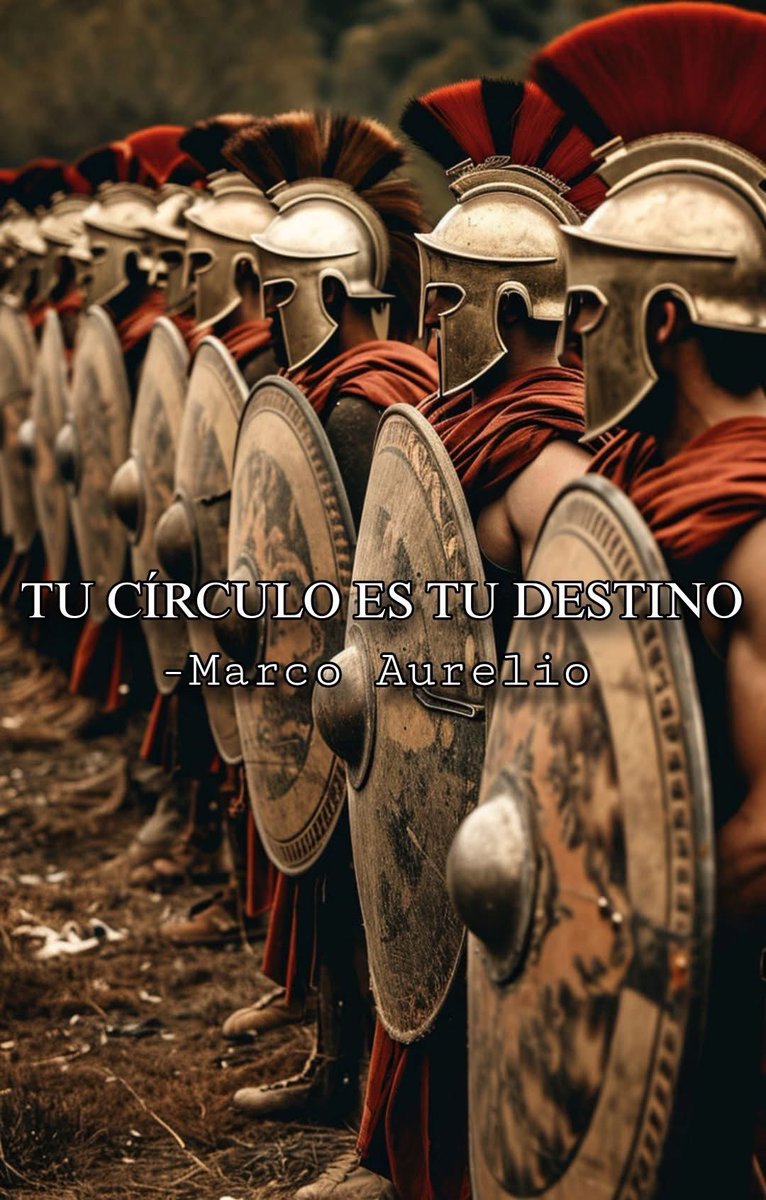
Marco Aurelio entendía algo que muchos hombres descubren tarde:
cada persona que permites cerca de tu vida moldea tu espíritu, a veces más que tus propias decisiones.
No por lo que te dicen, sino por lo que normalizan.
Un amigo sin disciplina te enseña a justificar tu pereza.
Un amigo sin dirección te empuja a caminar sin mapa.
Un amigo sin carácter te arrastra a la mediocridad… y todo sin levantar la voz.
La decadencia nunca llega de golpe.
Llega en forma de bromas, “no pasa nada”, “mañana lo haces”, “igual y no es para tanto”.
Pequeñas erosiones.
Pequeños descuidos.
Pequeños conformismos que van limando tu temple.
Por eso los estoicos eran selectivos. No por soberbia, sino por supervivencia interior.
Entendían que tu círculo es un espejo, y un espejo sucio distorsiona quién eres.
Rodearte de hombres que piensan, que se exigen, que se callan para escuchar, que actúan con honor…
te obliga a elevarte.
Te empuja a tu mejor versión sin que te des cuenta.
El círculo correcto no te celebra siempre, pero tampoco te abandona.
Te confronta, te pule, te sostiene.
Y si estás rodeado de almas pequeñas, no esperes que la tuya crezca.
Elegir a quién dejas entrar no es frialdad.
Es filosofía aplicada.
Es protección mental.
Es destino.
Porque al final…
no eres solo lo que haces, sino también a quién decides tener a tu lado mientras lo haces.
Parents: the kindest thing you can do for your kids might feel like the hardest.
Dr. Daniel Amen says we’re accidentally raising mentally fragile children by rescuing them too often. When we rush forgotten homework or jackets to school, we quietly steal their chance to grow strong.
His rule:
• Forget lunch? Natural consequence.
• “I’m bored”? → “I wonder what you’ll come up with 😊” …and say nothing more.
Mental toughness isn’t built by comfort — it’s built by solving problems on their own. This 51-second clip changed how thousands of parents think. Will it change yours?
Drop your favorite “let them learn” moment below — I read every reply
The Economist just exposed how wealthy Chinese are partnering with Mexico Drug Cartels in America
Because sending large amounts of money from China isn’t allowed, the cartel will use their cash to buy American homes for the Chinese
The Chinese then send chemical precursors for drugs like Fentanyl to the Mexico cartel over on ships from China
‘What connects a drug cartel in Mexico with a flat purchase in New York? The Economist explores how Chinese underground banking networks launder billions of illicit dollars every year, often on American soil’
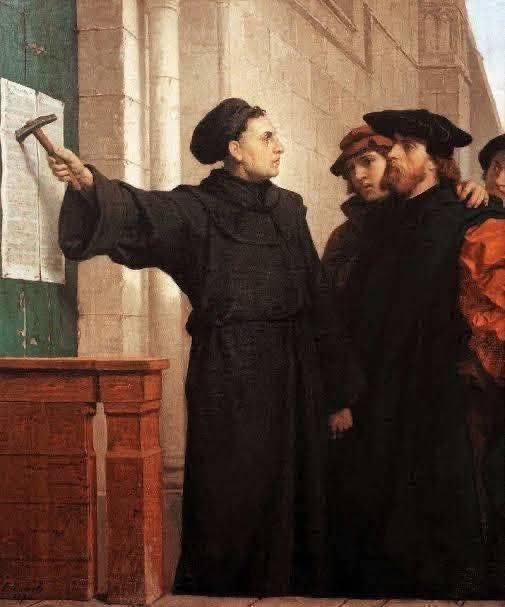
Martin Lutero se enojó, no le gustó la Iglesia católica y fundó la iglesia luterana.
A Calvino no le gustó la iglesia luterana y fundó la iglesia reformada o calvinista.
A Enrique VIII no le gustó que le negaran su matrimonio católico y fundó la Iglesia anglicana.
A John Smith no le gustó la iglesia anglicana y fundó la iglesia bautista.
A William Miller no le gustó la iglesia bautista y fundó la adventista.
A Ellen G White no le gustó mucho lo que decía William Miller y fundó la iglesia adventista del séptimo día.
A Charles T Russell no le gustó la iglesia adventista y fundó a los testigos de Jehová.
A Joseph Smith no le gustó la Iglesia metodista y fundó la iglesia de Jesucristo de los santos de los ultimos días (los mormones)
A John Wesley no le gustó la iglesia anglicana y fundó la iglesia metodista.
A algunos pastores no les gustó la iglesia metodista y fundaron la iglesia pentecostal.
A muchos no le gustó la iglesia pentecostal y fundaron miles de iglesias como: pare de sufrir, asambleas de Dios, la luz del mundo, y un largo etcétera.
Ya ven que desmadre se hace por un un enojo?… 🤔
⚖️🧑⚖️ El ministro Javier Laynez Potisek, presidente de la Segunda Sala de #LaCorte, concluyó la última sesión.
Desde su creación, la Segunda Sala resolvió asuntos clave en materia administrativa, laboral, de seguridad social y agraria, con estricto apego a la Constitución y al principio de justicia. Sus criterios fortalecieron derechos y cambiaron la vida de miles de mexicanas y mexicanos.
Ahora que se habla de la debilidad del dólar 💵vale la pena explicar cómo se calcula.
Abro hilo 🧵
Todas las divisas cotizan respecto al dólar por reminiscencia del sistema monetario Bretton Woods, el cual terminó en 1971.