Andrew Jackson destroyed the Second Bank of the United States in 1836, delivering the single greatest blow to financial tyranny in American history. You won't hear this story told correctly in any economics textbook, because it reveals how central banking works: as a government-sponsored cartel that redistributes wealth from productive citizens to politically connected bankers.
The Second Bank held a 20-year federal charter starting in 1816. It controlled the money supply, issued currency, and held government deposits. Sound familiar? Nicholas Biddle, the bank's president, wielded more economic power than any elected official. He could trigger financial panics at will by restricting credit. He bought newspapers and bribed congressmen. When Jackson opposed recharter in 1832, Biddle deliberately crashed the economy to punish him.
Jackson called it "a hydra of corruption" and he was right. The bank created artificial booms through credit expansion, then triggered busts when politically convenient. Biddle openly bragged about manipulating markets. Free market economists and Jackson both recognized the core insight: this was legalized counterfeiting with government backing, not free market banking.
The political establishment united against Jackson. Henry Clay, Daniel Webster, and the entire Whig Party defended the bank. Biddle spent millions buying influence. The press attacked Jackson as an economic ignoramus. Every "respectable" voice supported recharter. Jackson stood alone with the American people.
After Jackson killed the bank, the country experienced the strongest economic growth in its history. From 1837 to 1862, America operated without a central bank. Industry flourished. Wages rose. Innovation exploded. This wasn't coincidence. When you stop subsidizing financial speculation and let productive capital find its natural home, prosperity follows.
Central banks don't stabilize economies: they destabilize them for private gain.
Why did C.S. Lewis say that Hell is locked from the inside?
He explores this idea in his book The Great Divorce.
In it, souls of the damned are allowed to visit heaven on a bus ride, but they are not pleased with what they see — and they leave of their own accord.
The fact is, the damned cannot touch Heaven. They can't so much as disturb the dew drops on the grass. Nor can they even gaze upon the garden properly.
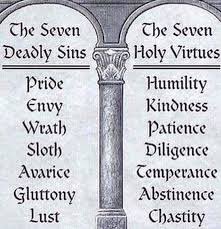
Why? Because they are blinded by their own sins:
– The philosopher would rather philosophize about God than meet him
– The painter would rather make beautiful art than gaze upon the source of all Beauty
– The clingy mother would rather fret over her son than give her full love to God
Lewis' point is that God cannot force man into salvation. Damnation is not God's rejection of man, but God tragically accepting man's rejection of him.
Hell itself is the ultimate monument to human freedom; for a human with true free will is even free to divorce himself with paradise.
What Lewis suggests is that you don't fully understand human nature until you understand that some humans really do not want paradise.
Conversely then, true freedom does not mean using your free will however you want. True freedom means surrendering your free will by forming your soul to the Good.
By sacrificing your free will in this manner, you gain glory, virtue, and happiness — for man was made to know and love virtue above all.
Artificial intelligences do not undergo experiences, do not possess a body, do not feel joy or pain, do not mature through relationships, and do not know from within what love, work, friendship or responsibility mean. Nor do they have a moral conscience, since they do not judge good and evil, grasp the ultimate meaning of situations, or bear responsibility for consequences. They may imitate or even simulate, but they do not understand what they produce, for they lack the affective, relational, and spiritual perspective through which human beings grow in wisdom. #MagnificaHumanitas
Everybody knows that when you start "cheating" in a video game, and start giving yourself infinite resources and limitless abilities, you just end up losing all interest. You know there is no point trying hard anymore. Life is the same, and you should actually be grateful for having difficult goals to work on. You might hate some of your struggles in the moment, but they actually give you a reason to wake up every morning, to get better, to do better.
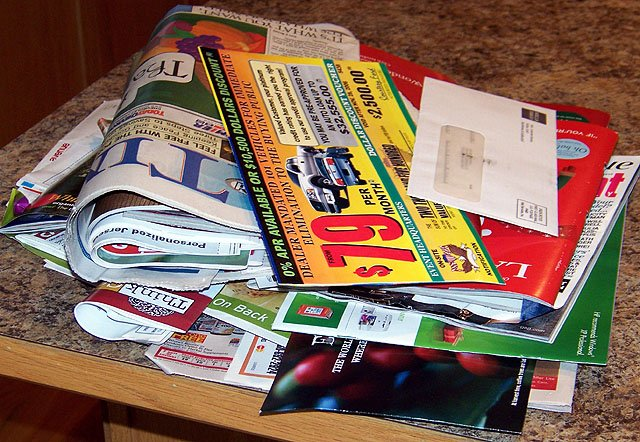
It is time for the United States Postal Service to ban junk mail.
Unsolicited spam calls are already prohibited by the FCC. Emails are heavily regulated by the CAN-SPAM Act of 2003. Junk mail is the majority of mail, 100 million trees per year. Enough!
Goodbye = God be with you
Holy smoke = election of a Pope
Breakfast = break the fast
Holiday = Holy Day
People have forgotten who they are, they don’t even know what the words they are saying actually mean.
Rory Sutherland made a quietly devastating observation about one of the biggest societal shifts of the last 50 years.
He said the move to the double-income household started as an option but quickly became an obligation. The big winners? Governments (twice as many people to tax) and property owners (now two salaries were needed to buy a house). The big loser? The family itself, which lost roughly 35 hours of discretionary leisure time per week — with no real increase in living standards, because the extra money was largely soaked up by higher house prices and taxes.
It’s a classic example of how something that begins as liberation can quietly turn into a new form of constraint.
Longitudinal studies on happiness and time use (including data from the American Time Use Survey and OECD reports) show that the sharp rise in dual-earner households correlated with stagnant or declining leisure time for families, while subjective well-being metrics for parents have not risen in line with the additional income — supporting the idea that much of the gain was captured by housing costs and taxation rather than improved quality of life.
It’s a reminder to look carefully at changes that society presents as inevitable progress.
What do you think — has the double-income model delivered more freedom or more pressure for most families?
Yeah, or maybe it’s even deeper than that. There’s a really interesting book called The Origin of Consciousness in the Breakdown of the Bicameral Mind by Julian Jaynes that I think is mostly wrong and kind of nuts, but the author argues that consciousness arises from language and metaphor. His idea (I think) is that once language developed ways of describing mental states and interior life, humans learned to experience themselves as conscious, self aware beings. I don’t totally understand the argument, but I think there might be something to it, to some extent. The inverse would suggest (my extrapolation, not his) that as language contracts and becomes less expressive, people as a consequence become less self aware, less conscious. Something I’ve wondered about anyway. I could also be totally butchering the guy’s theory so don’t quote me on it. But the point is that I do think our poverty of language not only reflects but also causes a poverty of mind.
I cannot believe this is done with a paintbrush.
Look at that level of detail.
Jenaro Pérez Villaamil, "View of the Interior of a Cathedral" (around 1850).