Our free #APAStyle tutorial includes guidelines about paper organization; grammar and usage; bias-free language; mechanics of style; tables and figures; in-text citations, paraphrasing, and quotations; and reference list format and order: https://t.co/JcibckVpjI
#APAguide#APA7
Research links workplace #burnout and negative organizational, psychological, and physical consequences. Here are three signs you may be at risk, according to @daniellerynczak.
Learn more about concrete ways for employers to address burnout: https://t.co/nYOpbfG7D5
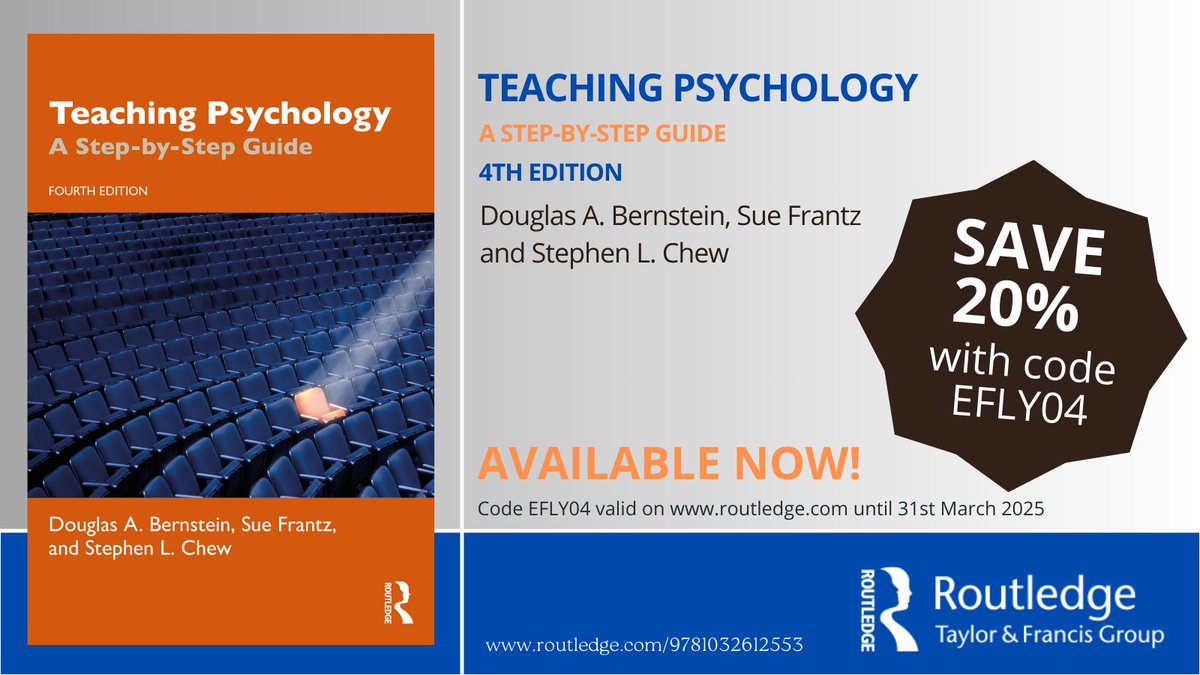
Congratulations to Douglas A. Bernstein, Sue Frantz and Stephen L. Chew, whose new edition of 'Teaching Psychology: A Step-by-Step Guide' just published with @tandfpsychology
Check it out and get 20% off: https://t.co/UQ3TPLHEOk
@SChewPsych
Grateful & excited to serve as Editor of this truly amazing journal! Stay tuned for exciting updates on our phenomenal Associate Editors & Consulting Editors to be announced soon! @PsychScience
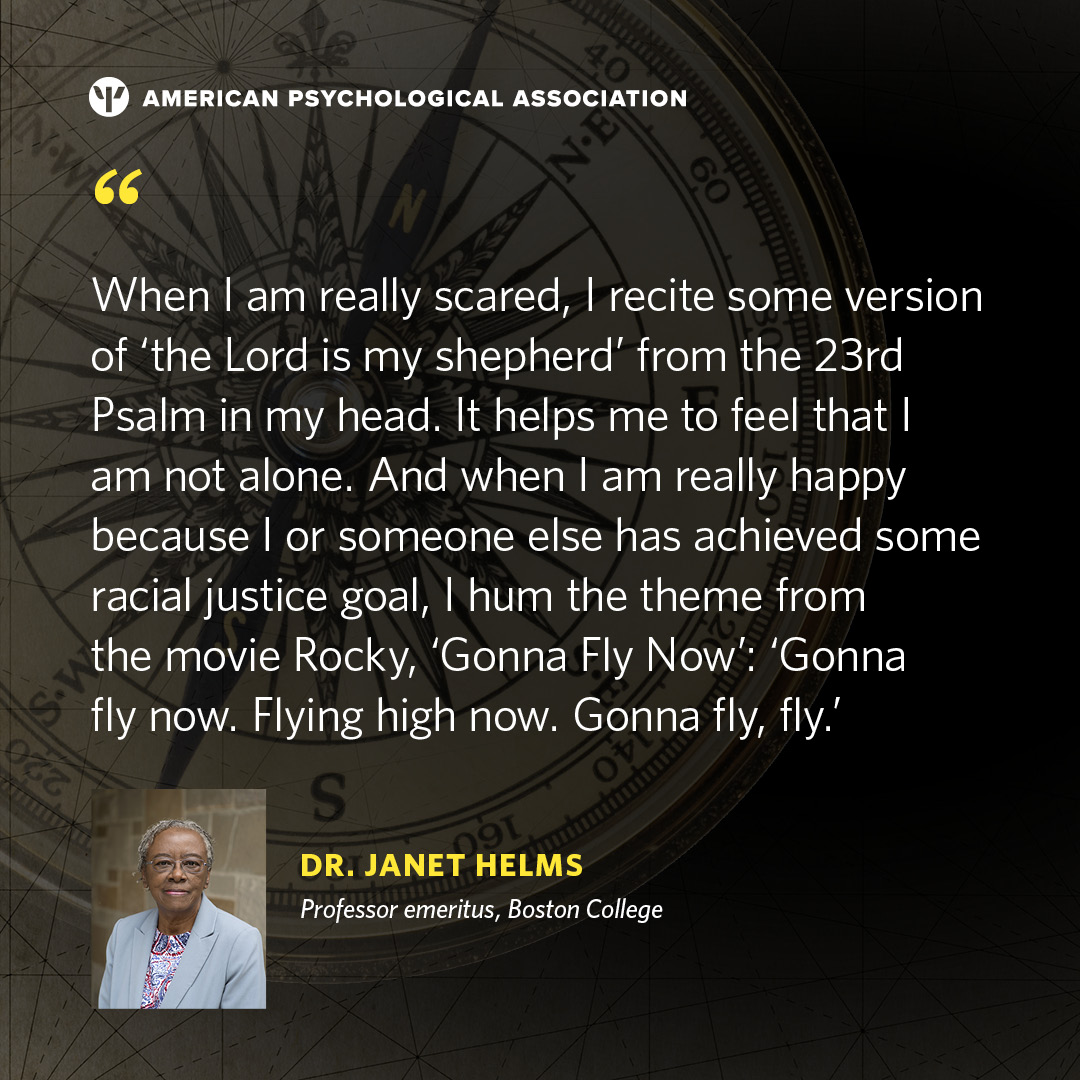
Dr. Janet Helms has spent nearly 50 years breaking barriers and becoming an expert in race issues. Her work spans racial identity theories, racially conscious practice, and examining bias in cognitive tests.
Learn more about her pioneering research: https://t.co/IhII2PxSvA
In a 7th edition #APAStyle paper, tables & figures may be embedded in the text after they have been mentioned, or each table & figure can be displayed on a separate page at the end.
For details, see https://t.co/vz5man70pI (and Sections 2.17 and 7.6 of the Publication Manual).
The hallmark of expertise is no longer how much you know. It's how well you synthesize.
Information scarcity rewarded knowledge acquisition. Information abundance requires pattern recognition.
It's not enough to collect facts. The future belongs to those who connect dots.
“Daddy, I love you.”
Here’s another wonderful example of the earliest form of imaginary play.
You’ll note that this initial role playing is not about princesses or superheroes or even community helpers. All that will come later.
Instead your child’s first imaginary play is likely to emulate the true hero in their life: YOU.
Watch as this little one role plays her mother’s own departure from the house as she heads out on an imaginary shopping trip.
She waves goodbye, dangling a plastic container from her arm to emulate a handbag. And she tells her father she loves him.
It’s a routine she’s seen play out many times in her own home.
It can be humbling to be imitated by your todddler, if only because you learn just how carefully you’re being watched. Your mannerisms, your speech patterns and more are all likely to be reflected.
But it can also be a wonderful reminder about your influence as a parent.
Every day, you are shaping how your child speaks, acts, and sees the world… even when you don’t think you’re being watched.
So remember to be the role model you want to see reflected back to the world through your child.
This adorable little shopper was shared to IG by the.golding.girls.
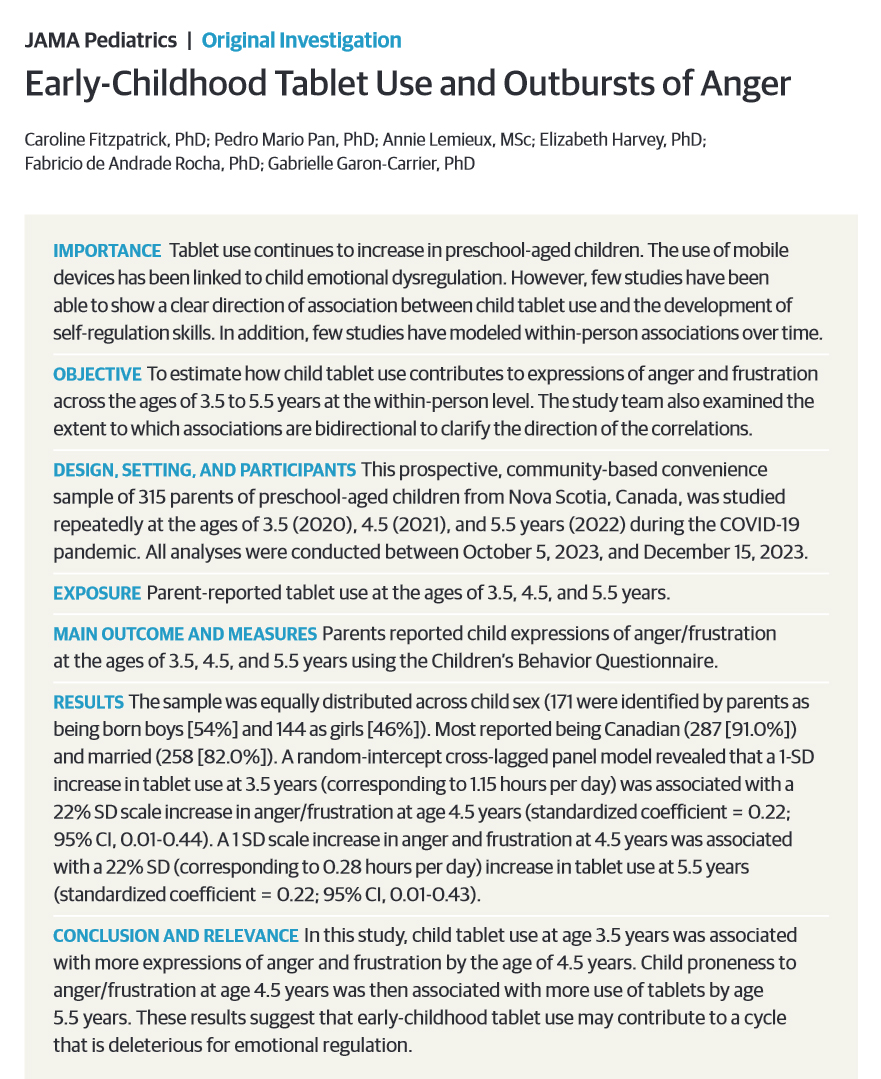
Heavy screen use might create a vicious cycle for young kids.
New data: the more time 3.5-year-olds spent on tablets, the more angry outbursts they had at age 4.5... and the more they used tablets at 5.5.
Digital soothing is not a substitute for teaching emotion regulation.
Will you be learning #APAStyle for a class this summer? You can find example references in Chapter 10 of the Publication Manual or the Concise Guide to APA Style and more on our site: https://t.co/F8irXZK0RT
#APAguide#APAformat#APA7
FAQ: How many in-text citations do I need in a paragraph when I am paraphrasing? After every sentence or just once at the end?
A: The “Long Paraphrases” section of this #APAStyle page has practical guidelines and examples: https://t.co/eH9tg2nf4M
#APA7#APAguide
Join me and Dr. John Dunlosky, authors of Study Like a Champ, on February 29, 2024 at 2PM ET as we explore ways instructors can support first-year college students in developing effective #studyskills. https://t.co/PaayseSVkE
"learning style myth... that thinking that a student has a particular learning style influences thinking about their academic potential and their abilities." IOW, the myth isn't harmless.
We are all biased. We harbor prejudices & make snap judgments. Most of the time, these cognitions are implicit, floating in the expanse of our nonconscious minds. Sometimes, these expectations drift closer to the surface and have significant consequences. https://t.co/Lx2GSRylT8
Our free Reading and Understanding Abstracts guide explains how understanding abstracts can save you time and help you "conduct better research" and "write more effectively.” https://t.co/bF4g1kj1k5
#APA7#APAguide#APAStyle