✨New paper✨How should we design logging operations in tropical rainforests to reduce biodiversity loss? We explore this in a logging concession in the Brazilian Amazon – and the answers aren’t intuitive...(1/19) 📷PauloBrando https://t.co/8zk0i9c5AC
Our new paper in PNAS @PNASNews dives deep into the #Amazon’s #carbon balance and the surprising impacts of #deforestation, logging, fires, windthrows and other forest disturbances, mapped using repeated airborne #lidar scanning. https://t.co/YrJl0WjvYz
🚨Big news🚨 You can now apply for SCCS 2025! https://t.co/ZOtybsel9Z Please tell your friends and colleagues. Come along to the biggest conference on conservation biology aimed entirely at students @TropicalBiology@CCI_Cambridge@CamZoology
@British_Airways@AmericanAir@flypdx spent 4+ hours on the phone trying to track down a laptop left on BA 0267 on July 17. Been sent in circles by over a dozen phone calls where BA and PDX provide conflicting advice to where my item might be. What’s going on?
Forthcoming in the AER: "The Social Costs of Keystone Species Collapse: Evidence From The Decline of Vultures in India" by Eyal Frank and Anant Sudarshan. https://t.co/rHwxsNbntM
In 2019, we set 10 camera traps from 65-90m in the crown of the world's tallest tropical tree, with no real idea whether they'd get anything at all
They did 🤩
... 🧵
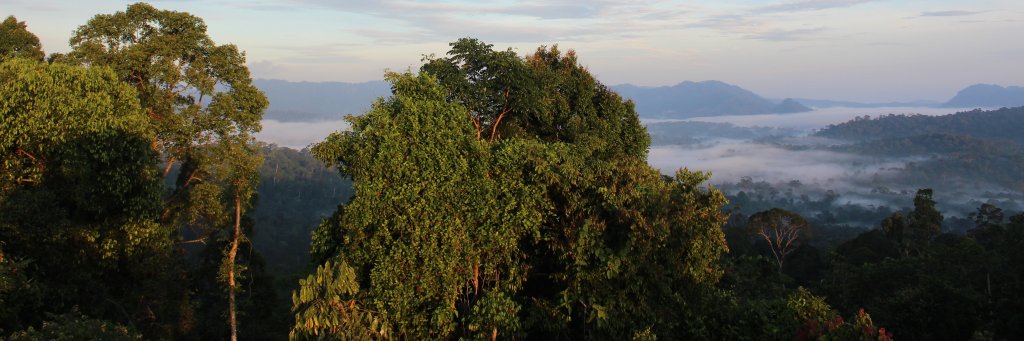
#Borneo#RainforestGiants
Want to map trees in diverse tropical forests from the sky? Excited to share our pre-print using AI on repeat UAV imagery to precisely locate crowns and hyperspectral data to identify their species! @plantsci@trustedcarbon@UmrAmap @cambridge_uccri
https://t.co/y2fgywNFRe
Our study is out in @Nature! This was a big piece of work compiling data on global conservation actions. Headline? 58% of the world's threatened species are seemingly neglected by conservation efforts... @durham_uni@PrincetonSPIA@Princeton@Yale_BGC
https://t.co/Fqbsxa59z1
We are hiring! Looking for a postdoc to work with us on an awesome project using #LiDAR and #microclomate to understand coexistence of ants in South Africa. Please share!
Our meta-analysis on the impacts of precipitation change on soil invertebrates in forests is out now in @GlobalChangeBio! Headline: Abundance is reduced by drought and increased by increased rainfall, but this depends on the size of the organisms. https://t.co/jPH7mVBBCX
Our study "Soil carbon in the world's tidal marshes" is now out as a Preprint!
https://t.co/wEb1SKrY5q
We present the first global, spatially-explicit map of SOC in tidal marshes at 30 m resolution, summarized in the figure below.
Short 🧵: I haven’t let academia force me to decide between having a (functional) family and a career, but it hasn’t been easy and I wonder daily if I’ll “make it” or if my kids will resent me for my work. And I know academic mothers (and fathers) feel the same on a daily basis…
We're breaking the news in English! A poaching gang wiped out 10% of the world's Javan rhinos. How could this happen?
My article for @MongabayOrg (hat tip to all the great reporting in Indonesia on this) @RhinosIRF, @HelpingRhinos@WWF :
https://t.co/J2ll0D2JUc
In our new paper we compare the performance of three satellite-based data products (forest loss, fire incidence, burned area) for assessing protected area effectiveness. Most studies so far have focused on only forest loss, but we show that fire data has a lot of potential. (1/4)
@jeremy_hance@MongabayOrg@PantheraCats@rewild Cool article, Jeremy! I saw a bay cat off the side of a logging road when I was doing fieldwork around Danum Valley a few years ago! A colleague a few days after saw another/the same individual properly in the forest and even got a photo! (📷William Brooks)
I think this is the longest article ever written on the bay cat for a news outlet!
Behold, 2,000 words on a species we know nearly nothing about! It was such a joy to write this. I'm obsessed with this cat. #borneo@MongabayOrg@PantheraCats@rewild
https://t.co/J5YrkVR2sY