Jamie Johnson, an heir to Johnson & Johnson, made a film about the rich kids he grew up with. One of them went to court to stop it from airing.
In the video below, you hear one of those kids in his own words, and Jamie's answer when he was called a traitor.
At midnight on his 21st birthday, Jamie inherited more money than most people could earn in a lifetime. He hadn't done anything to earn it, and that bothered him.
So he asked ten friends from the same world to talk about money on camera. Ivanka Trump was one of them.
Luke Weil, heir to a gaming fortune, said yes. He opened by saying he really didn't want to do this and disliked both people behind the camera immensely.
Then he described boarding school. If a kid from some town in Connecticut annoyed him, he could say: "I'm from New York. I can buy your family. Piss off."
He called it petty, weak and underhanded. He also said it was so easy.
Luke later took legal action to stop the film from airing in America. He lost. It came out as Born Rich.
Asked if that made him a traitor to his own class, Jamie said he guessed he was.
The richest kids in America said it all on camera, and the only one who got called a traitor was the one who pressed record.
They all agreed to sit in front of his camera. Did that give Jamie the right to show the world what they said?
I have a sneaking suspicion that the reason the police won’t reveal this, is because the public are paying for their protection and they want to hide it.
There’s a reason why Harry has finally shut up about it… we haven’t heard him moaning for some time
https://t.co/nEZu3rBCCm
Courtney Love was trafficked by the Yakuza at 16 - shipped from Portland to Japan with a group of girls from Idaho, Utah, and Washington State. Passport confiscated. Forced to strip. Her father had been feeding her LSD since she was 3. She calls the trafficking "delightful."
Before she became Kurt Cobain's wife, before she fronted Hole, before she warned the world about Harvey Weinstein on a red carpet twelve years before anyone believed her - Courtney Love was a child raised in pure chaos. Her father, Hank Harrison, dosed her with LSD from the ages of three to six at a commune in San Francisco's Haight-Ashbury. Her mother's response was to put her on Valium and Ritalin. By fourteen, Courtney had cycled through foster homes, reform schools, and juvenile detention - and she chose juvie on purpose, because it was safer than any part of her biological or step family. She shoplifted a Kiss t-shirt three separate times just to get herself arrested. At sixteen she legally emancipated herself from her parents and walked out into the world completely alone with nothing but a trust fund paying $2,000 a month that a guru's son was already stealing from her.
The first thing she did with her freedom was start stripping. She began at Mary's Club in Portland, where she adopted the last name "Love" so nobody could trace her back to her family. Sixteen years old, working a stage in front of grown men, earning her own money for the first time in her life. From Portland she moved through clubs across the country - Jumbo's Clown Room in Los Angeles, the Seventh Veil, Century Lounge, Nude Nude Nude. She was pulling $300 a night. She stripped in Alaska, stripped in Taiwan, and eventually ended up in Japan - where the Yakuza were running everything. She wasn't recruited by some talent agent or club promoter. She was trafficked. Packed up from Portland with a group of young girls from Idaho, Utah, and Washington State, flown overseas, passport confiscated the moment she landed.
For five months she was stuck in Japan, stripping under Yakuza control with no documents and no way out. But Courtney being Courtney - she didn't go to the American embassy. She walked into the Japanese embassy instead. They didn't question her, didn't make her file reports, didn't put her through weeks of bureaucracy. They just put her on a first-class flight back to Portland with her Hondo guitar and her Yamaha keyboard, and that was it. When Billy Corgan asked her about the whole ordeal decades later on his podcast, she described the experience with one word: "Delightful. I'm not even kidding." She told him that people assume the trafficking and the stripping were the worst parts of her life, and the fame and music were the best - but it's actually the opposite.
The stripping didn't stop after Japan. It became the financial engine behind everything she built. Courtney funded the entire creation of Hole with money she made taking her clothes off. She bought the band's first tour van with stripping cash. At one point she was forced to perform to Faith No More's "Epic" - a band she'd auditioned for and been rejected from because they wanted "male energy." Picture that: being told you're not good enough for a band, then having to strip to their biggest song while strangers throw dollars at you. She said that specific humiliation was what made her determined to turn Hole into something massive. Every dollar from those clubs went into amplifiers, studio time, and getting on the road.
By the time she married Kurt Cobain in 1992, Courtney had already lived through more than most people experience in a lifetime. A childhood on acid, a teenage stripper trafficked by the Japanese mafia, a woman who built a rock band from nothing using money earned in the darkest rooms across America and Asia. After Kurt died in 1994, the world decided she was the villain of that story too. But in 2005 she stood on a red carpet and told young actresses to stay away from Harvey Weinstein's hotel room - and nobody listened. It took twelve more years and dozens more victims before the world caught up to what Courtney Love had been saying all along.
Does surviving everything the world throws at you make you indestructible - or does it just make you someone nobody wants to believe?
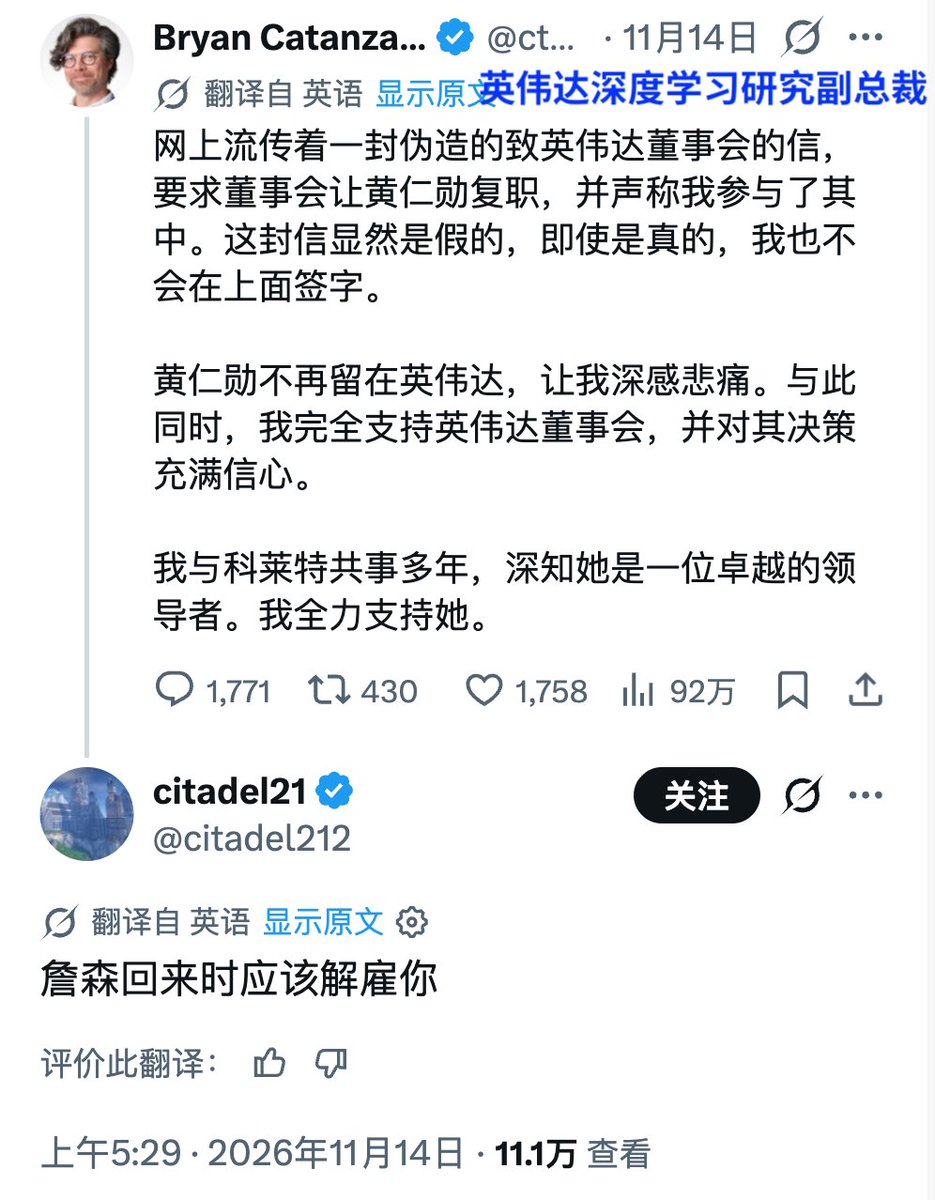
🚨 BREAKING: JENSEN HUANG FIRES BACK AT COLETTE KRESS AFTER SHE THREATENS TO QUIT NVIDIA OVER HIS REINSTATEMENT AS CEO, DECLARES THAT NO EXECUTIVE WILL BLACKMAIL OR DICTATE THE COMPANY’S LEADERSHIP!
Jensen Huang has reportedly delivered a strong response to Colette Kress following her threat to resign from NVIDIA if he remains CEO after his recent reinstatement. Kress had expressed outrage over the board’s decision to restore Huang to the position and reportedly threatened to walk away from the company while calling on women worldwide to boycott NVIDIA.
In his response, Huang reportedly said:
“I want to make one thing absolutely clear: NVIDIA is not a company that can be controlled through threats, ultimatums or personal frustration. I have dedicated decades of my life to building this organisation, overcoming challenges and turning a vision into one of the greatest technological achievements in modern history. I will not allow anyone to undermine that legacy simply because they disagree with a leadership decision. Nobody is bigger than NVIDIA, and nobody should believe they have the authority to hold this company hostage because they cannot accept the direction its leadership has chosen. If someone no longer believes in our vision, they are free to make their own decision and walk away. But threatening to resign or encouraging people to boycott the company will not intimidate me or change the direction we have chosen.”
Huang reportedly added that NVIDIA would not be distracted by internal power struggles or attempts to challenge its leadership through public pressure. He stressed that the company’s priorities remain innovation, its employees, shareholders and maintaining its position at the forefront of the global technology industry.
The reported response marks a further escalation in NVIDIA’s fictional leadership dispute, with the disagreement now extending beyond the boardroom and raising questions about the company’s internal relationships and future direction.