We also bumped on the theoretically hard notion of #antiiconicity, but perhaps they are just vestiges of experimental design...
Anyways, great talk and good food for thought!
A good place to start when expanding this article would be either the Chinese Ideophone Database by @simazhi and @gingerlinguist
doi: https://t.co/opb4WKZmAE
CONFIDENT in #HongKong Sign Language is etymologically a calque of #Cantonese#信心 - morphologically breaking down to belief.heart but 信 also means “letter” ✉️ so the #HKSL literally means POSTAGE.HEART which I’d like to think is beautiful imagery despite the glaring calque 😂
@Simazhi presented a cool 5-tuple of ABB constructions from Mandarin which includes semi-ideophonic constructions like 白皚皚 /bai.ai.ai/ “bright white” and 黑乎乎 /hei.hu.hu/ “pitch black” #HKUIdeophones https://t.co/8aNanWsQ3X
More #ideophone advertising with #Octopus, Hong Kong’s transport card: 嘟 dūt is the sound emitted when you tap the card reader and payment is complete. (My Eng brain says “boop”). Below, the iPhone stands in for 口 the part of 嘟 that tells us this is char is an #onomatopoeia
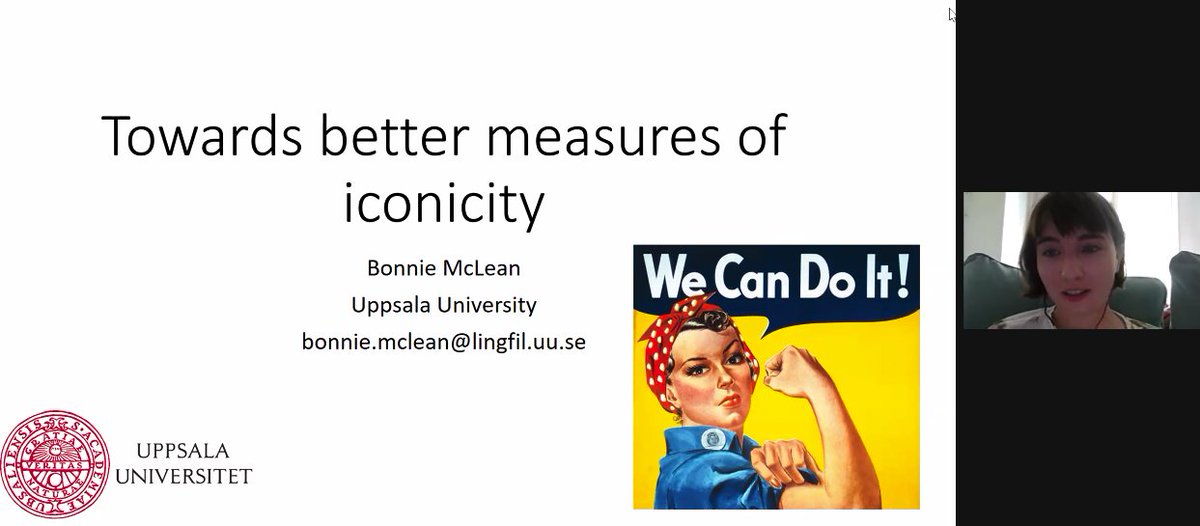
Our paper started out as a response to Thompson et al.'s @LingVanguard paper, which questions the construct validity of iconicity ratings. They argue that the ratings do not actually measure iconicity.
Link to their paper: https://t.co/qQZV2MBC8l ⬇️
@ian_joo_korea @WoifnAndi @kayaulai Ok but then your map needs to have a different label or heading. It just says “Glides in East Asian Languages” - very misleading.