AI agents can write code many times faster than a human. What this means is that you, the programmer, have a large amount of time to use those agents to write unit tests, to write acceptance, tests, to write property tests, to torture test, to mutate test, to QA test, and to otherwise ensure that the code meets its functional and quality requirements. And even after spending all that time, you will still be many times more productive than a human programmer, and the result will be better.
What Sarvam AI has demonstrated - world class AI can be done much more affordably and sustainably with much lower energy and compute footprint - is important.
I have come to believe that in software code generation, much more energy and compute efficient approaches to AI can be developed.
That is important because the earth cannot afford today's AI energy footprint.
everyone's talking about their teams like they were at the peak of efficiency and bottlenecked by ability to produce code
here's what things actually look like
- your org rarely has good ideas. ideas being expensive to implement was actually helping
- majority of workers have no reason to be super motivated, they want to do their 9-5 and get back to their life
- they're not using AI to be 10x more effective they're using it to churn out their tasks with less energy spend
- the 2 people on your team that actually tried are now flattened by the slop code everyone is producing, they will quit soon
- even when you produce work faster you're still bottlenecked by bureaucracy and the dozen other realities of shipping something real
- your CFO is like what do you mean each engineer now costs $2000 extra per month in LLM bills
I wanted to understand how GPT works, so I ported Karpathy's https://t.co/5FK9fuhDBF to C# from scratch. No frameworks and NuGet packages, just plain math in ~600 lines of code.
It builds a tiny GPT that learns from 32K human names and invents new ones. Every piece is there: autograd, attention, Adam optimizer, the works. Just at a scale you can actually sit down and read.
I also wrote a prerequisites guide that walks through all the math and ML you need, starting at a high school level. If you've ever wanted to peek under the hood of ChatGPT without drowning in linear algebra textbooks, this might help.
https://t.co/rwAB7pswzY
Software engineering is also the only career where you couldn't get the job after 20 years of experience because you failed to answer 2 random questions
I’m fascinated by Dr. Shubha V. Iyengar because she literally helps planes land through fog while most of us are learning to move through metaphorical fog.
Topper in BSc & MSc, backed by parents who encouraged her interest in science when girls rarely were inspired to pursue it.
40+ years at CSIR–NAL & she led the team that developed Drishti, built for India’s fog, rain, dust, and uncertainty.
When the world feels unclear, remember: someone built systems so others could land safely.
She is my #MondayMotivation
I was in Tokyo recently on a business trip.
I accidentally left my brand new MacBook on a park bench in Tokyo. I realized it 3 hours later.
I sprinted back, panic mode fully engaged, assuming it was gone forever.
It wasn't there.
I asked a nearby shopkeeper. He pointed to the bench.
Someone had placed my laptop inside a plastic grocery bag and taped it to the bench so it wouldn't get wet in the drizzle.
They didn't take it. They protected it.
Culture is what you do when no one is watching.
What do you think would happen in your country if the same thing happened?
As a Japanese person, I’ll add a bit of nuance.
In areas like Kabukicho or Roppongi, this probably wouldn’t happen.
Those are nightlife districts, and expectations are different.
But in most other parts of Japan, I’d say there’s an 80–90% chance your item comes back.
Personally, I’ve lost my wallet five times and my phone twice in Japan.
Every single one was returned.
Japan isn’t perfect, but everyday honesty is very real here.
How to become expert at thing:
1 iteratively take on concrete projects and accomplish them depth wise, learning “on demand” (ie don’t learn bottom up breadth wise)
2 teach/summarize everything you learn in your own words
3 only compare yourself to younger you, never to others
Overwhelmed by the support over the last 24 hours, not something I was looking for and expecting when I recorded that podcast on a whim. Thanks so much to everyone with words of encouragement, the new sponsors we've brought on, and people who've used their platforms to help in any way, I'm extremely touched ❤️
I feel like I have to make it clear though that we've still got a fine business (even if things are trending down), just not a great one anymore. Had to make a really crushing change and did everything I could to do it in the most generous and gracious way possible, but at the new size we're okay. We're comfortable, and things like our partner program are helping a lot to fund the framework more directly instead of selling products that are more at risk of disruption. We don't need anyone to rescue us, we've got lots of time and space to try new ideas and see what works 🙏🏻
I'm optimistic we'll figure out how to get things moving in the right direction, but even if we just have be a smaller business with less budget than we've had in the past that's okay too ❤️
I am happy to share that we (the @GoogleAIStudio team) are now a sponsor of the @tailwindcss project! Honored to support and find ways to do more together to help the ecosystem of builders.
Vercel will be officially sponsoring https://t.co/QF7eOed81b. That's a given. We as a community and industry owe @adamwathan and team a lot. Tailwind is foundational web infrastructure at this point (it fixed CSS 😉). I've also reached out to Adam to explore how we can make this a longer-term commitment.
Every time we've made it easier to write software, we've ended up writing exponentially more of it.
When high-level languages replaced assembly, programmers didn't write less code - they wrote orders of magnitude more, tackling problems that would have been economically impossible before. When frameworks abstracted away the plumbing, we didn't reduce our output - we built more ambitious applications. When cloud platforms eliminated infrastructure management, we didn't scale back - we spun up services for use cases that never would have justified a server room.
@levie recently articulated why this pattern is about to repeat itself at a scale we haven't seen before, using Jevons Paradox as the frame. The argument resonates because it's playing out in real-time in our developer tools. The initial question everyone asks is "will this replace developers?" but just watch what actually happens. Teams that adopt these tools don't always shrink their engineering headcount - they expand their product surface area. The three-person startup that could only maintain one product now maintains four. The enterprise team that could only experiment with two approaches now tries seven.
The constraint being removed isn't competence but it's the activation energy required to start something new. Think about that internal tool you've been putting off because "it would take someone two weeks and we can't spare anyone"? Now it takes three hours. That refactoring you've been deferring because the risk/reward math didn't work? The math just changed.
This matters because software engineers are uniquely positioned to understand what's coming. We've seen this movie before, just in smaller domains. Every abstraction layer - from assembly to C to Python to frameworks to low-code - followed the same pattern. Each one was supposed to mean we'd need fewer developers. Each one instead enabled us to build more software.
Here's the part that deserves more attention imo: the barrier being lowered isn't just about writing code faster. It's about the types of problems that become economically viable to solve with software. Think about all the internal tools that don't exist at your company. Not because no one thought of them, but because the ROI calculation never cleared the bar. The custom dashboard that would make one team 10% more efficient but would take a week to build. The data pipeline that would unlock insights but requires specialized knowledge. The integration that would smooth a workflow but touches three different systems.
These aren't failing the cost-benefit analysis because the benefit is low - they're failing because the cost is high. Lower that cost by "10x", and suddenly you have an explosion of viable projects. This is exactly what's happening with AI-assisted development, and it's going to be more dramatic than previous transitions because we're making previously "impossible" work possible.
The second-order effects get really interesting when you consider that every new tool creates demand for more tools. When we made it easier to build web applications, we didn't just get more web applications - we got an entire ecosystem of monitoring tools, deployment platforms, debugging tools, and testing frameworks. Each of these spawned their own ecosystems. The compounding effect is nonlinear.
Now apply this logic to every domain where we're lowering the barrier to entry. Every new capability unlocked creates demand for supporting capabilities. Every workflow that becomes tractable creates demand for adjacent workflows. The surface area of what's economically viable expands in all directions.
For engineers specifically, this changes the calculus of what we choose to work on. Right now, we're trained to be incredibly selective about what we build because our time is the scarce resource. But when the cost of building drops dramatically, the limiting factor becomes imagination, "taste" and judgment, not implementation capacity. The skill shifts from "what can I build given my constraints?" to "what should we build given that constraints have in some ways been evaporated?"
The meta-point here is that we keep making the same prediction error. Every time we make something more efficient, we predict it will mean less of that thing. But efficiency improvements don't reduce demand - they reveal latent demand that was previously uneconomic to address. Coal. Computing. Cloud infrastructure. And now, knowledge work.
The pattern is so consistent that the burden of proof should shift. Instead of asking "will AI agents reduce the need for human knowledge workers?" we should be asking "what orders of magnitude increase in knowledge work output are we about to see?"
For software engineers it's the same transition we've navigated successfully several times already. The developers who thrived weren't the ones who resisted higher-level abstractions; they were the ones who used those abstractions to build more ambitious systems. The same logic applies now, just at a larger scale.
The real question is whether we're prepared for a world where the bottleneck shifts from "can we build this?" to "should we build this?" That's a fundamentally different problem space, and it requires fundamentally different skills.
We're about to find out what happens when the cost of knowledge work drops by an order of magnitude. History suggests we (perhaps) won't do less work - we'll discover we've been massively under-investing in knowledge work because it was too expensive to do all the things that were actually worth doing.
The paradox isn't that efficiency creates abundance. The paradox is that we keep being surprised by it.
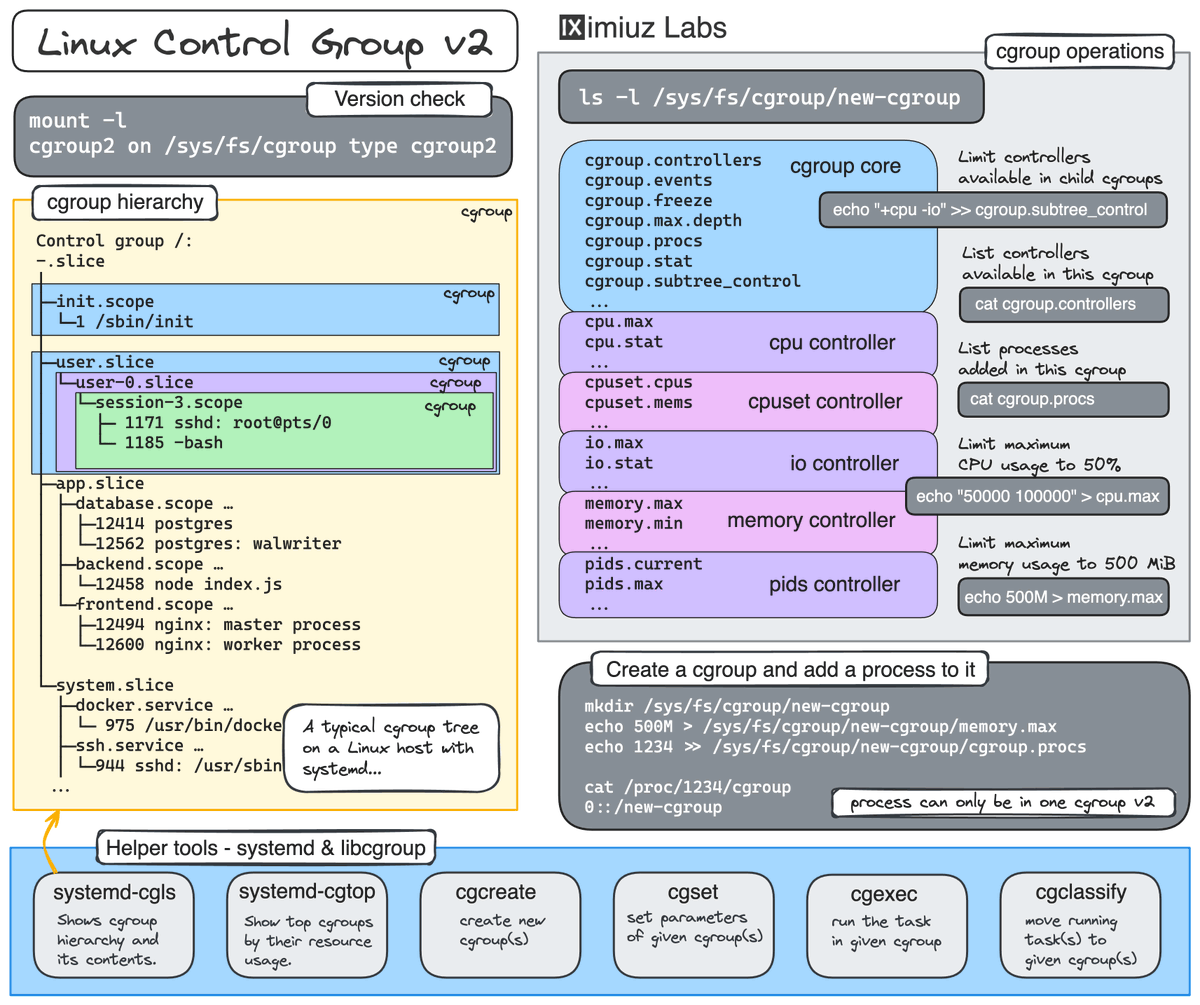
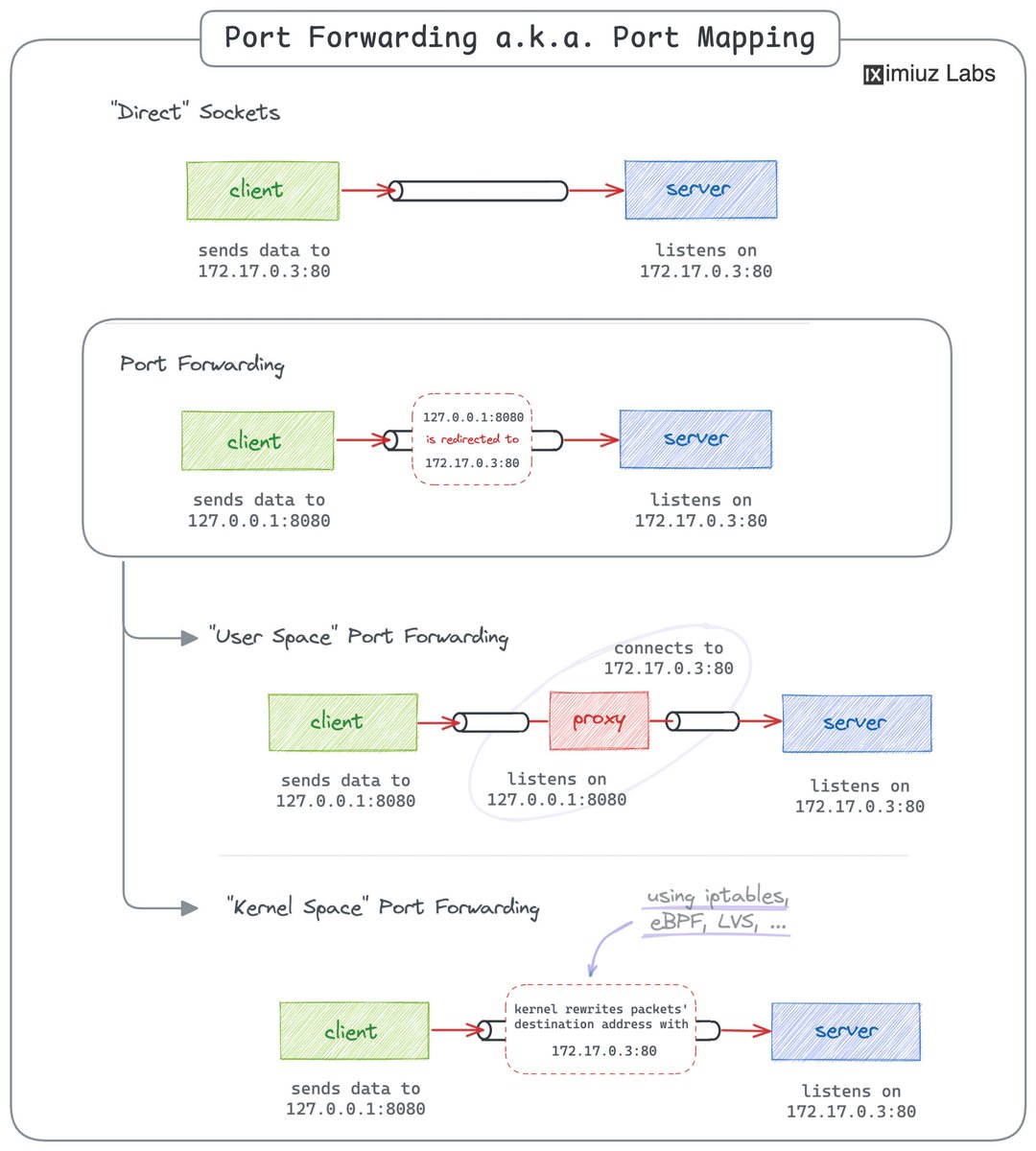
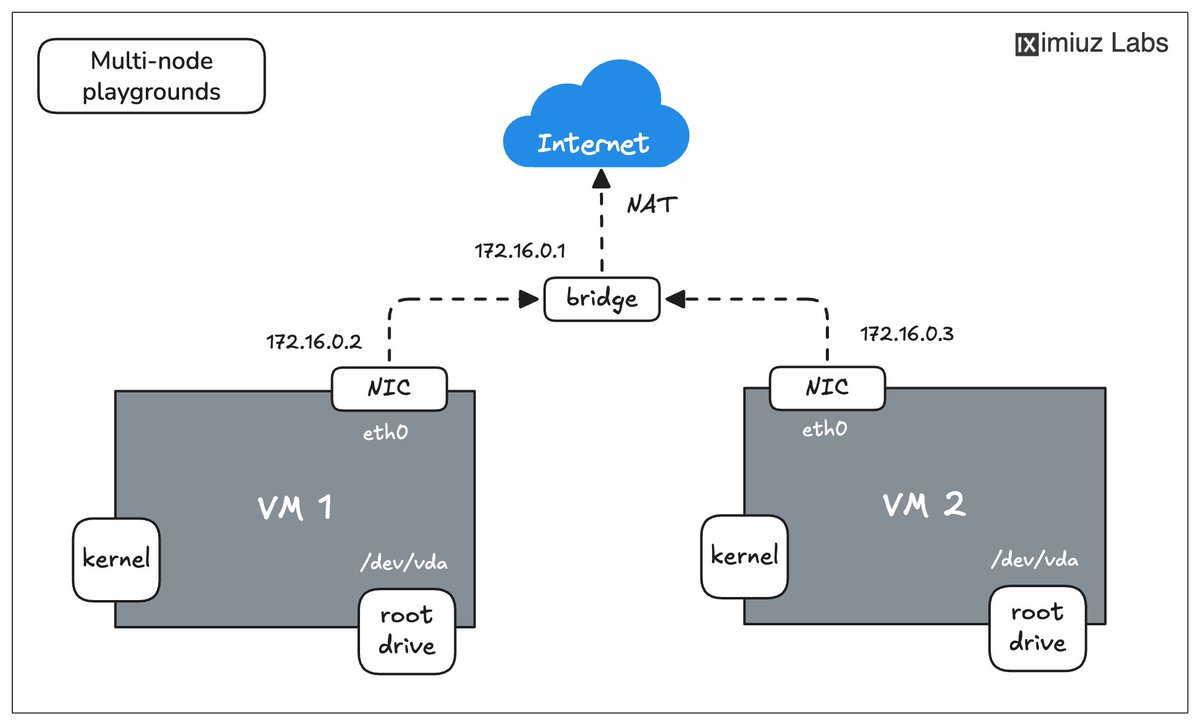
If you are learning Linux, networking, containers, or Kubernetes, check out my work at https://t.co/enVaqlOx2f. You'll find:
- 60+ free playgrounds (remote Linux VMs)
- 100+ SysAdmin/DevOps problems (practice)
- Dozens of deep dives (theory)
- Lots of helpful technical diagrams
This is apparently a village in Palakkad, Kerala.
Shared by @iAkankshaP to depict a ‘South Indian Village Morning.’
It’s not a tourist destination, nor is it trying to be.
But at its best, travel awakens us to moments that are authentic, experiences that endure in our memories.
And today, as a #SundayWanderer, I found myself wishing I could step into this village and become a silent participant in its rhythm, simplicity, and grace.
The perfect escape from the relentless pace of modern life.
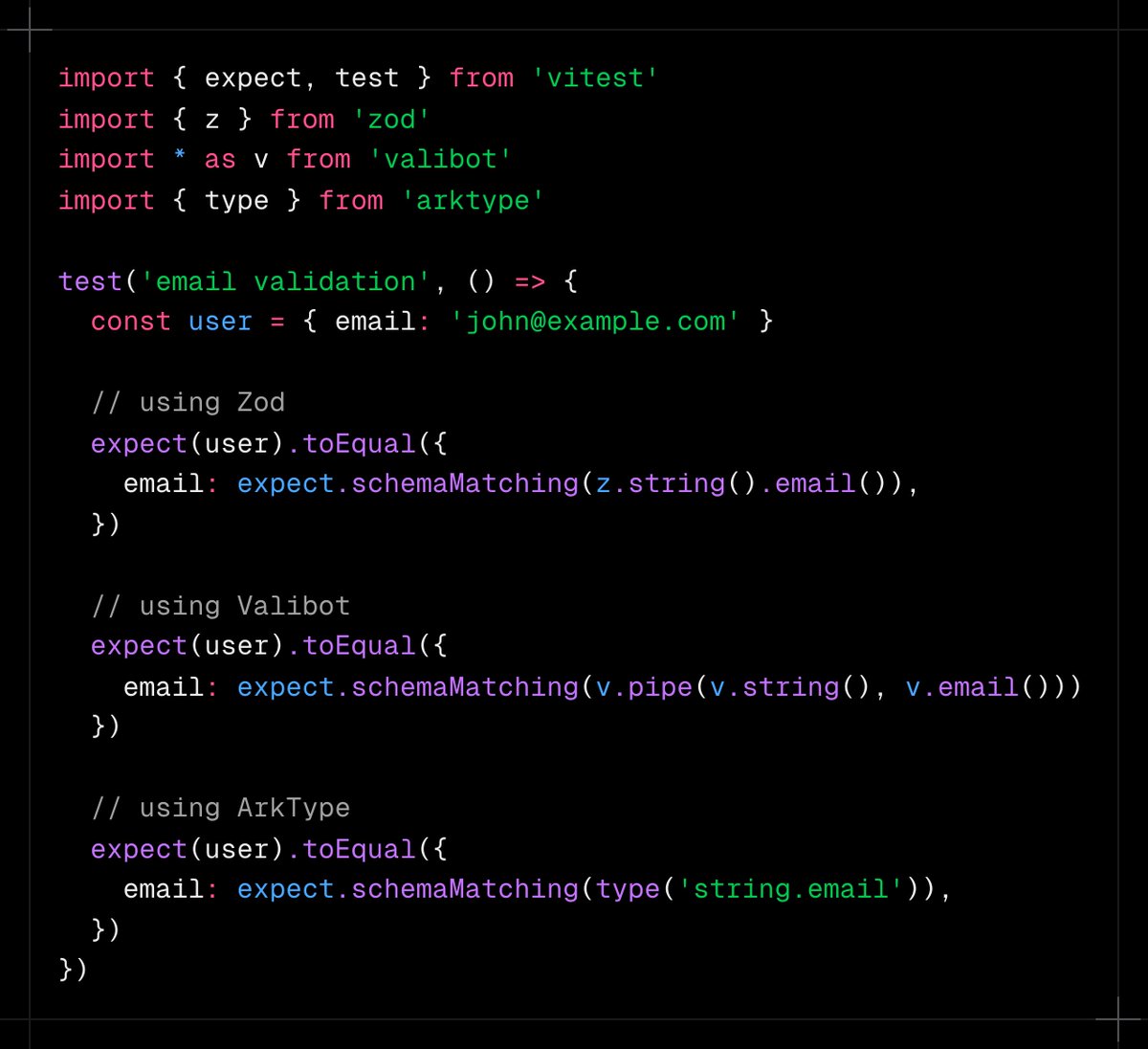
In the latest beta of @vitest_dev v4, you can now use any standard schema library for your assertions
I worked on a PR to integrate schema matching directly using `expect.schemaMatching(schema)`
It's based on the standard schema spec, that means it works with Zod, Valibot, ArkType, ....
Convert any PDF into a fillable form with 🪄AI magic. I built a free tool that: (a) takes seconds, (b) outperforms all the commercial solutions, and (c) is open source!
[ Angular Devs from v2-v8 ]
- RxJS? This is impossible!
- Nightmare to learn
- Why does it have to be so complicated?
- Others use promises and are fine
[ v9-v15 ]
- RxJS is everything.
- It's the most powerful tool we've got.
- If you don't get it, you're clueless.
- We're in paradise.
[ v16 ]
- Signals? What? Don’t mess with my RxJS!
- BehaviorSubject already does that.
- You're destroying the soul of Angular!
[ v17 ]
- Signals are amazing!
- RxJS? Overcomplicated mess.
- Signals are easier.
- Glad we can finally move on!
[ v18 ]
- RxJS is still essential!
- Signals alone can’t handle everything async.
- Combining both? Now Angular is perfect.
- Don’t understand RxJS? Ignorant.
[ v19 ]
- resource API?
- so we are not doing RxJS HttpClient anymore?
- seems we don't need RxJS after all
- Signals to replace them all!
[ v20 ]
- Holy grail! Zoneless Angular thanks to Signals!
- Wait, you can have zoneless with RxJS as well?
- So we never needed Signals for this?
- seems both RxJS & Signals are fine...
can't wait for season v21 🍿 🍿 🍿