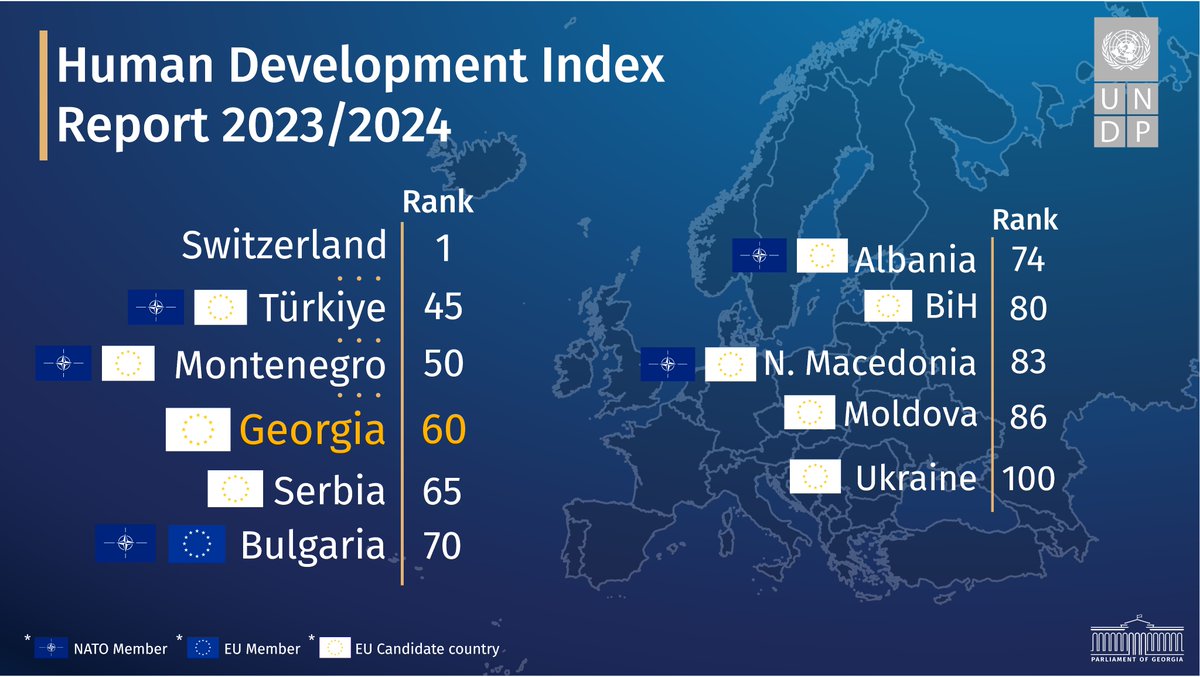
Georgia maintains its upward trajectory in @HDRUNDP report, securing 'very high level of human development' status for the third consecutive year. With a global ranking of 60th, surpassing 1 EU and 6 candidate countries. Georgia's sustained progress reflects multifaceted efforts in economic, social, and freedom of choice aspects.
Noteworthy is that in 2012, Georgia had slipped to 71st place. Since then, our country has made significant strides, climbing 11 places in the Human Development Index. Notably, Georgia stands as the sole state in the Caucasus with the esteemed status of 'very high level of human development.' This accomplishment highlights Georgia's resilience and dedication to progress.
#HDR2024
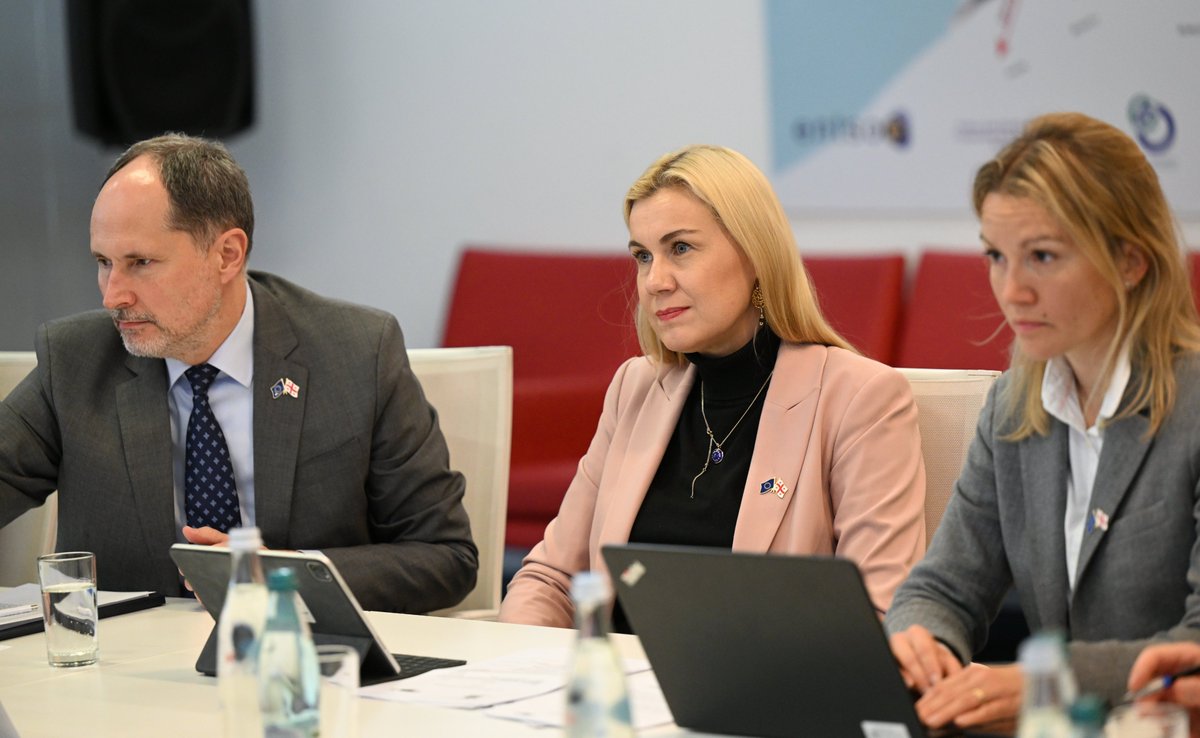
Glad to accompany @GeoParl_EU Chair @MakaB__ & First Vice-Chair @KarumidzeL at the EP plenary in #Strasbourg & meeting with MEPs for the first time after #Georgia🇬🇪 became an #EU🇪🇺Candidate Country.
In-depth discussions on🇬🇪’s EU accession as well as EP’s support on that path.
Two years have passed since the infamous date of Russia’s full-scale invasion of Ukraine. The last two years have shown how important it is for democratic world to firmly stand with Ukraine in its indomitable struggle against the aggression. Both Georgian Government and Georgian people have stood firmly by the side of our Ukrainian sisters and brothers in their just and historic fight. Nobody else in the world knows the bitterness and pain of foreign occupation better than we do. We wish peace and victory to Ukraine.
Two years have passed since Russia's invasion of Ukraine in a blatant violation of fundamental principles and norms of the international law and the UN Charter. The war has resulted in the loss of countless lives and displacement of millions. On behalf of 🇬🇪, we reaffirm our unwavering support for the sovereignty and territorial integrity of Ukraine. 🇬🇪 continues to stand in solidarity with 🇺🇦 and Ukrainian people.
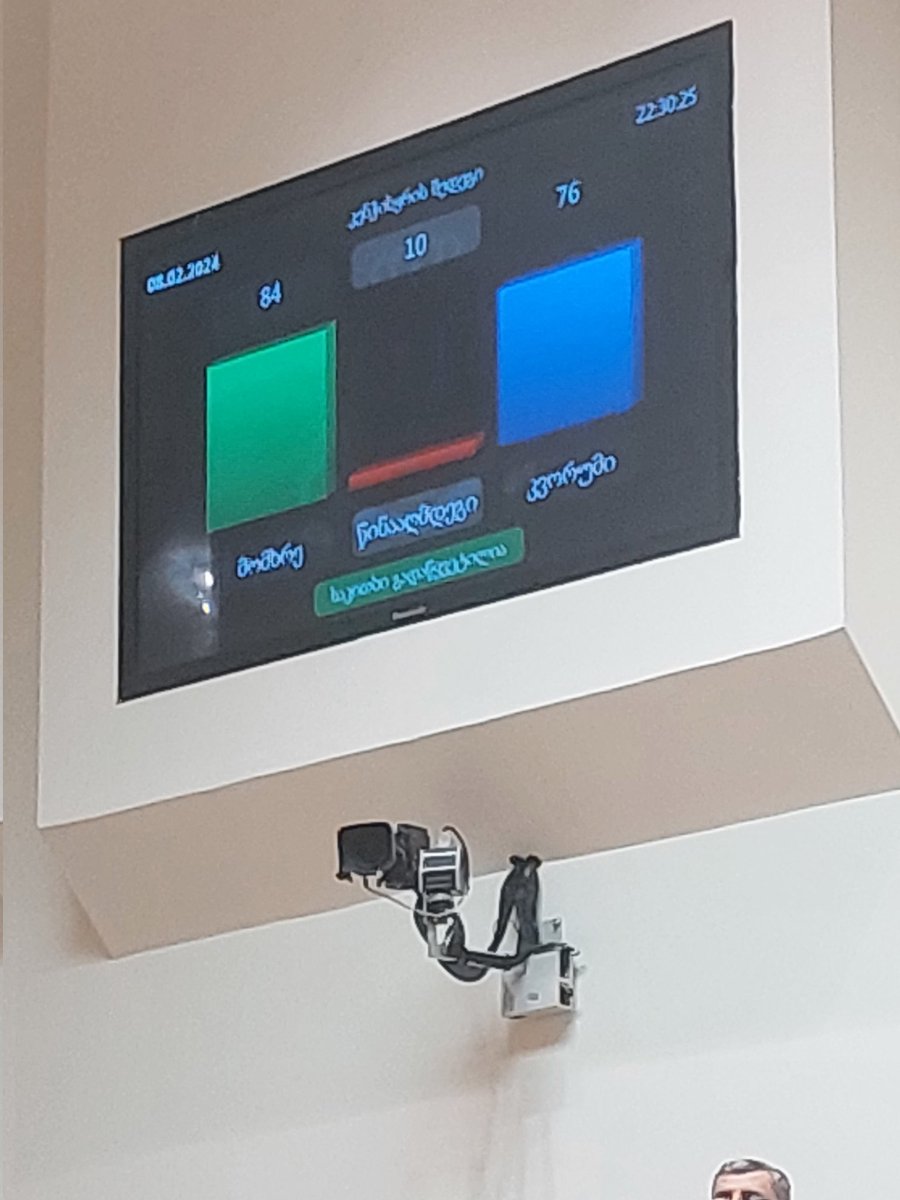
#Georgia has a new Government! @Geoparliament votes in the new cabinet headed by Irakli Kobakhidze. The best of luck to @GovernmentGeo! #EU here we come! 🇬🇪🇪🇺
Georgia’s radical opposition has recently undertaken yet another attack against the incumbent Georgian Dream, through vilifying the Georgian Orthodox Church, accusing us of mythical ‘pro-Russian’ stand. While this futile ‘Russian’ argument is getting so exhausted that even our lackluster opposition is getting tired of it, it is still worth shedding the light on state-church relations in Georgia.
Attacks on the Church are not only pointless but politically counter-productive and damaging for our country. The purpose of this article is to show that these hostile attacks do not come from sincerely deluded personalities but they are part of a coordinated malicious campaign aimed at demeaning the symbols and values around which Georgians have rallied historically. This hostile rhetoric also implies that national and religious values cannot co-exist with Western, European values. However, the truth is that the two are mutually fulfilling and even reinforcing.
The recent attack against the Church by the radical opposition, their privately-managed political media outlets, and satellite ‘civil society organizations’, especially their timing, was particularly nasty and bizarre. On the eve of Christmas, a former high-ranking official of Saakashvili’s government and now self-styled civil-society activist spread footage from inside Georgia’s main Orthodox cathedral. He alleged that he found an ‘icon of Stalin’. As it turned out later, the footage showed not the ‘icon of Stalin’ but a small insert into the icon of St Matrona, depicting the latter’s supposed conversation with Stalin during WWII. The Church decided to change this particular detail on the icon, not because the depiction of a tyrant was uncanonical but because the fact of the above mentioned conversation, was, most likely, untrue. Meanwhile, the footage spread virally and stirred public controversy. In the following days, another political activist splashed paint on the icon, causing a public outcry.
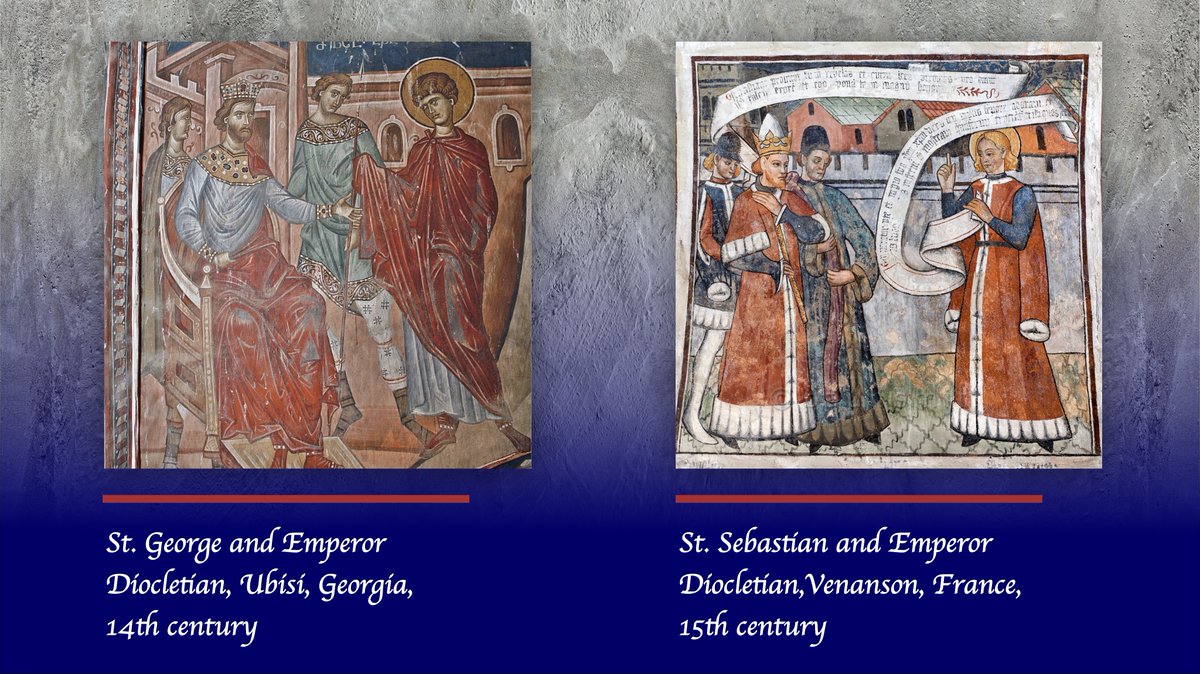
However, depiction of tyrants is not unusual for Christian iconography. For instance, on a fresco in Georgia’s Ubisi church, even Emperor Diocletian, the proverbial persecutor of Christians, is depicted with royal magnificence, conversing with St George. Such depictions are not alien to the Western church either, as exemplified by numerous frescoes in Western Europe. This detail is important because the ensued opposition-linked media frenzy misrepresented the insert, accepted in Orthodox iconography, as ‘icon of Stalin’, and thus, distorted facts for enhancing the effects of disinformation.
A parallel line of attack on the Church aimed at compromising the date of celebrating Christmas on the 7th of January (i.e. 25th of December by the Julian calendar, which the Georgian Orthodox Church follows). The opposition weaponizedthis purely canonical issue of the difference of calendars and called the celebrations ‘the Russian Christmas’. However, the reality is that celebrating Christmas by the Julian calendar is an inherently Georgian tradition, having nothing to do with either Russia or Russian Church. This tradition had been in place long before Russia converted to Christianity. Interestingly, the Easter dates also differ between Western and Eastern Christianity but, for some reason, none of the radical opposition and affiliated activists protests this.
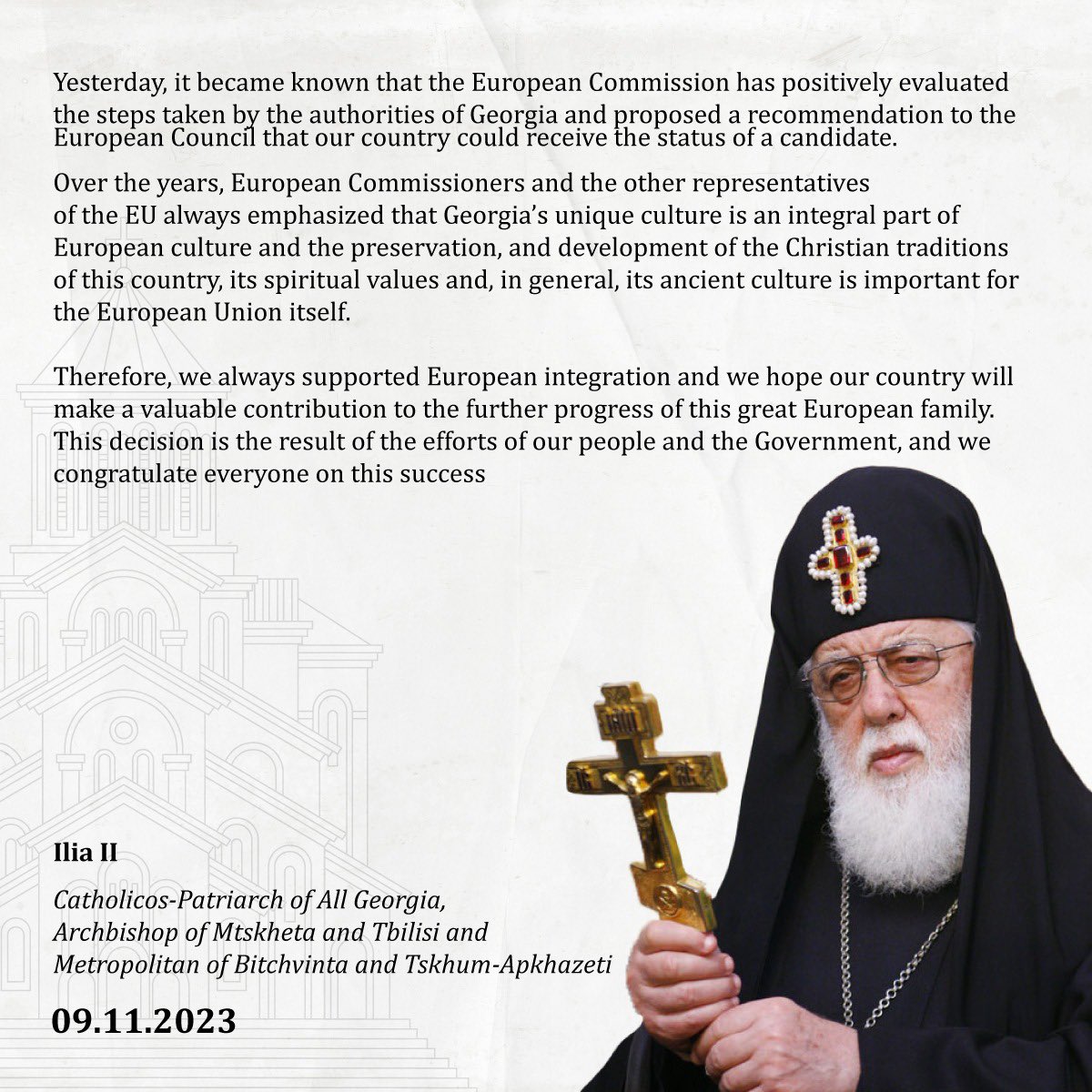
The two controversies were taken up by the radicals to also viciously attack Ilia II, the Catholicos-Patriarch of the Georgian Orthodox Church, who is the most venerated and authoritative public figure in Georgia by general acclaim and according to any public opinion polls. In their hostile campaign, the opposition and their affiliated talking heads linked the Patriarch, the Church, and the Government with Russia.
Now, for an outsider, this co-ordinated campaign may have created a perception that Georgian Church and its leader, together with the Government, are indeed conduits of Russian propaganda, venerating Stalin and extending Russia’s cultural influence. Let us see if these superficial and artificially concocted accusations stand up to scrutiny.
First, understanding the place of Georgian Orthodox Church in Georgian society requires historical retrospective. Georgian Church is one of the oldest Christian churches in the world, and Georgia has been an officially Christian nation since the first half of the fourth century. For most of its existence, Georgia was the sole outpost of Christianity in the East,especially after the destruction of the independent Armenian kingdom and, then, the demise of the Byzantine Empire. By the way, when Russia, as an Orthodox Christian nation, appeared on the world stage, Georgia had already been fighting for its Christian faith for centuries.
This existential danger led the Georgian state and Georgian Church to a symbiotic relationship, which is distinct from Western Christendom’s very different, historically divisive interaction between the secular and religious authorities. Both Georgian monarchy and Church understood that the weakening of either of the two would inevitably result in the other’s demise. This did not exclude controversies between them along the way, but the general pattern of interaction was much more amicable than in Western Christendom.
Unsurprisingly, this historic relationship has taken strong root that persists until today. Therefore, the Church’s loyalty to the state should not be confused with its loyalty towards a particular political force, be it Georgian Dream or any other.Moreover, the Georgian Church has traditionally been the bulwark of the culture of tolerance. The Church heroically resisted the overwhelming and violent onslaught by the Bolshevik and then Communist totalitarianism, manifested in inhumane, degrading trampling of human rights for many decades. Even today, the Georgian Orthodox Church remains the only national institution that refuses to get involved in political polarization. The Church always listens to people.
Those politicians and ‘civil society actors’ who attack the Church, if they, as Christians, are genuinely concerned about iconography or celebration dates, can take these issues to the Church for discussion, as parishioners. Moreover, they may happily join any other denomination that celebrates Christmas on any day they like. However, exactly the fact that they mount this hostile rhetoric against the church from the outside indicates that their very aim is to damage the Church, thus blurring the lines between the religious and the secular, while, in Georgia, the state and the church are strictly separated.
The church-state relations are legally regulated by the so-called Concordat, signed as early as 2002, recognizing the Georgian Orthodox Church’s special role. The Concordat was signed, partially, to remedy the damage that the Soviet Union had inflicted on the Church during the decades of Russian occupation. The separation between the state and church is real in Georgia, even more so than in many Western nations, where, in some instances, unelected representatives of the church sit in the highest legislative bodies, or the state resources are expended for aiding the Church in its tax-collection matters. Since independence, Georgian Church, as an institution, never meddled in politics or elections. Among other reasons, this is why the Church remains an authoritative and popular institution, despite political divisions in our society.
Most importantly, nothing can be more absurd that accusing Georgian Orthodox Church of ‘pro-Russian’ political sentiments. To start with, it was Russia that, after many centuries of Georgian Church’s continuous existence, disrupted and terminated the latter’s organizational independence over two centuries ago. Twice, after the demise of the Russian Empire and then the Soviet Union, the Georgian Church had to reclaim its independence, known as autocephaly. No Georgian cleric would ever contemplate subjugating their own church to Russian control, especially that the Russian Church is centuries younger than ours. As for the religious rite, there is a Eucharistic union between the two Orthodox Churches, as they both follow the same canon, along with Constantinople, Greek, Romanian, and other Orthodox Churches.
The Georgian Orthodox Church was the primary venue of the national awakening and the rebirth of pro-independence movement in the 1970s and the 1980s. It was Patriarch Ilia II himself, who accepted many young dissidents among the ranks of his parish and nurtured their patriotic dreams for Georgia’s independence. Georgian Orthodox Church and Patriarch Ilia II personally can take credit for Georgian people being mentally ready for independence even before the Soviet Union collapsed. Hearing the accusations of being pro-Russian must be particularly painful to these early stalwart champions of Georgia’s independene.
Therefore, the radical opposition’s attempts to portray Georgian Orthodox Church as Russia’s extension in Georgia is not only inaccurate but also deplorable, leading to unnecessary controversy in the society and creating yet another dubious ‘perception’ among our Western partners. Ultimately, the Georgian Church and its leader, Patriarch Ilia II, enjoy overwhelming support and approval from the Georgian public. The radicals’ attack against the Church from the supposed ‘European’, ‘liberal’, or ‘Western’ pedestal not so much damages the Church but tarnishes the very idea of liberalism and the West among the public, because, following their hostile rhetoric, some people really start believing that the Western values are incompatible with Georgian traditions and faith.
Such rhetoric against the Church is not perceived by the Georgians as a case of progressive criticism of the outdated traditions. Quite the opposite. These attacks, for majority of Georgians, are reminiscent of the Bolshevik onslaught on the Church in the first decades of the Soviet rule, which destroyed much of Georgia’s spiritual and material heritage. It is not surprising that the radicals, especially from the United National Movement and its offspring parties, such as Droa, Girchi, Lelo, European Georgia and others, are often called neo-Bolsheviks among the public. It is paramount that the public does not equate these radicals with Western liberalism as they refer to themselves. Such perception may potentially damage Georgians’ overwhelming and, thus far, unwavering preference for integration with the European Union.
Georgian Dream does embrace the values of Georgian Church. Yet, the Government is strictly separated from the Church . Christian values that led us to independence from the Soviet Union over three decades ago, guide us now towards the next big stage in Georgia’s history, which is membership of the European Union. The real purpose of the radicals’ slanderous campaign is not to sincerely care about the church but to damage the Church, the Government, and, with them, undermine our joint historic endeavour.
The European Council has decided to open accession negotiations with Ukraine & Moldova.
#EUCO granted candidate status to Georgia. And the EU will open negotiations with Bosnia and Herzegovina once the necessary degree of compliance with the membership criteria is reached and has invited the commission to report by March with a view to taking such a decision.
A clear signal of hope for their people and for our continent.
Gamarjoba, Georgia🇬🇪!
One week ago, the @EU_Commission recommended to grant #Georgia the status of candidate to join the #EU.
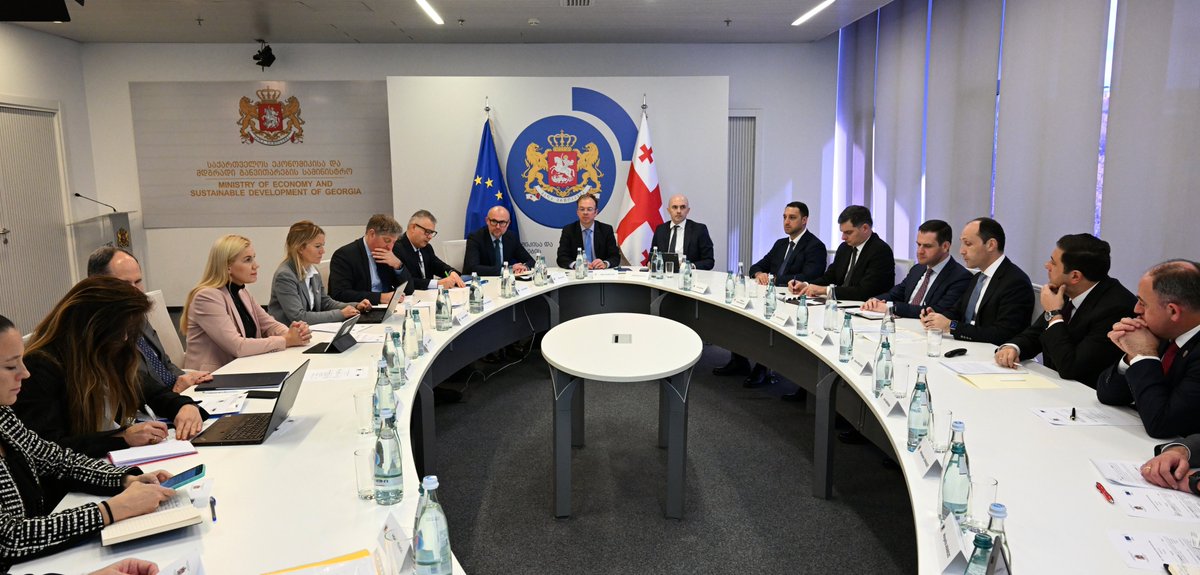
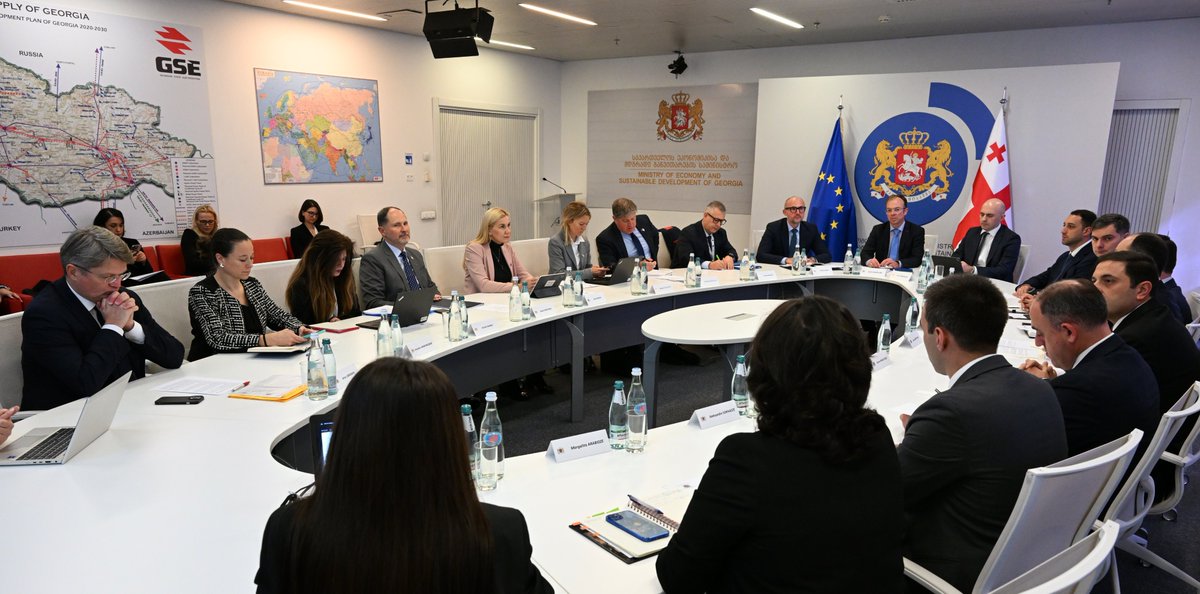
Today, we held the first EU🇪🇺-🇬🇪Georgia High-Level Energy Dialogue, to enhance even further our good co-operation in the #energy sector.
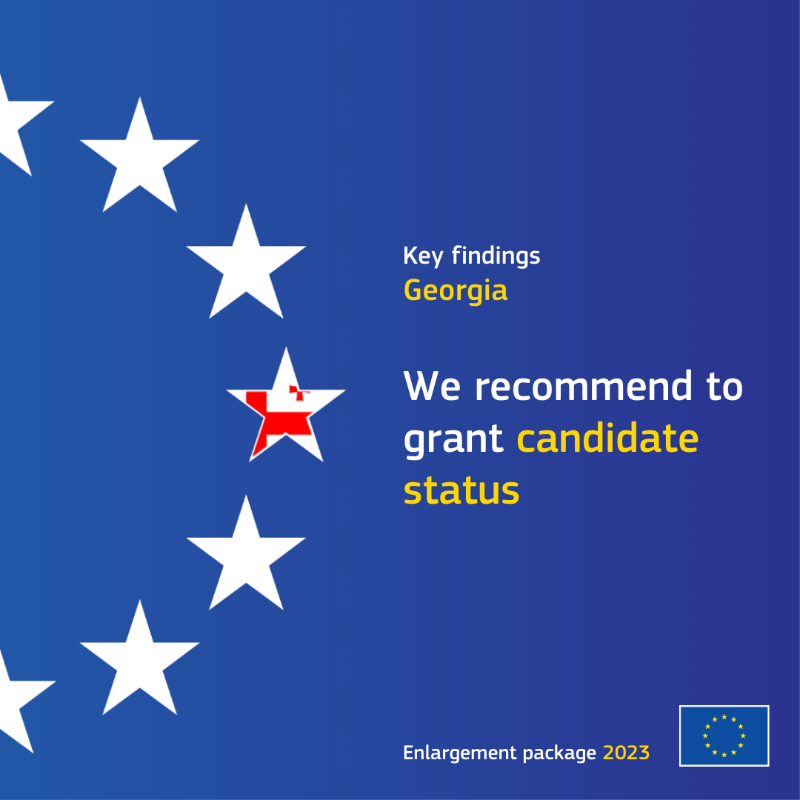
🇬🇪🇪🇺 This week, we've recommended that the @EUCouncil grants Georgia the status of a candidate country.
Georgia has taken steps to strengthen engagement with the EU and increased pace of reforms in the recent months.
Key findings ↓
The @EU_Commission has released a positive assessment & recommended 🇬🇪 for well-deserved 🇪🇺 Candidate Status. We're grateful for the support & excited to continue our journey towards full-fledged 🇪🇺 membership. @eucopresident@vonderleyen@OliverVarhelyi
The European Commission has just released the report on the membership aspiring countries, including Georgia.
I welcome and appreciate the Commission’s positive assessment and the recommendation to give a candidate country status to Georgia. With this historic recommendation, the EU, irreversibly, recognised Georgia’s future as a full-fledged member of the European community of nations, and confirmed Europe’s unwavering support for our nation’s European aspirations.
The decision strengthened our deep conviction that the Georgian people’s struggle for freedom has not been futile, and that we will reach the logical conclusion of our path to Europe. We now trust that the cause which started over a hundred years ago, with the first Georgian republic, and continued by the heroes of the 9 April 1989, will have a worthy conclusion.
It is highly symbolic that the release of the Commission’s report coincided with the anniversary of Ilia Chavchavadze, the great historical champion of our country’s freedom and modern statehood. Today’s decision gives greater credibility to the glorious path to the West that Ilia Chavchavadze initiated.
The Commission’s decision is a strong response to the Russian occupation of Georgia. It sends a message that Georgia is not alone and that our European partners and friends stand with us. This is the first step of the strategic decision to establish Europe’s foothold in the Caucasus.
This day creates a solid foundation for Georgia’s better future. The European Commission’s decision belongs to Abkhaz and Ossetian brothers and sisters and every citizen of our country who cherish our nation’s European future. This is our joint achievement.
EU’s equivocal decision last year gave a pretext to Georgia’s ill-wishers to unleash unworthy speculations. But the truth has spoken - Georgia deserves the candidate status. And I am hopeful the leaders at European Council’s December summit will approve today’s decision.
All branches of our government worked hard based on our EU agenda, for ending the speculations; and these efforts bore first fruit today. I am very grateful to the Georgian Government and Members of Parliament, every civil servant, friends and partners in Europe and across the globe, for their tireless efforts all along, but, especially in the last year and half.
The Commission’s recommendation finalises an important stage of the process. It is also a start for a long road to the actual EU membership, for which our citizens’ professionalism, hard-work and patriotism is a necessary precondition. This road is open to everybody to travel with us, to all those who wish for and will to contribute to Georgia’s European future. Today’s day will be a potent symbol of unity of Georgia’s and Europe’s common values, culture, past, present and future.
Georgia is a future member of the European Union!
The EU strongly condemns the killing of a Georgian citizen and the detention of another one by the Russian border guards in Kirbali. We call for an immediate release.
Russian military presence in the Georgian occupied breakaway regions of Abkhazia and South Ossetia is illegal.