Language models are sophisticated tools. They are not conscious. They don't feel. They don't know they exist. There is no personhood, no awareness. If you find any of these statements make you uncomfortable, please just go and train a few models from scratch. It is not hard.
@GergelyOrosz It's been a solved problem for well over a year, with agentic code review systems, built in house by larger teams or off-the-shelf (there are a couple of good ones) for smaller teams.
Options for Anthropic:
1. Introduce a higher tier with fable 5 included
2. Keep fable 5 at 25% quota
3. Release a 5.6 competitive model and offer on subscription
@thsottiaux The 5-hour limit is to protect you from users going ahead and running their account down for the week. Are you really asking us if we would like it back? 😀
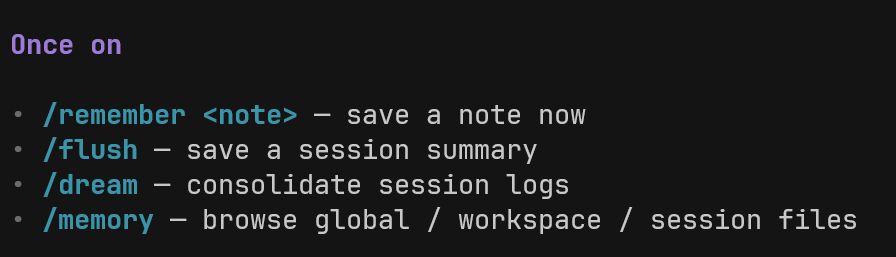
The harness also has first class memory & dreaming support. There are NO hourly session windows - only the weekly limit. Typical 5 hourly session limits in Codex/ Claude are designed to slow down your compute usage and & fairly inconvenient when you're trying to get work done.
Pleasantly surprised to see that the new grok CLI is already ridiculously capable.
Has support for resuming Claude / Codex sessions & already has an agent dashboard built-in.
The CLI is also designed with care (little things work such as pressing escape twice clears prompt).
If I see one more loop engineering post on my timeline, I will declare war on the loopers. It's a simple idea that's already been around a good while, initially popularised by @bcherny with his verification loops. Why do ainfluencers have to hype it so much?
@signulll Do you live in a noisy city? Please consider earplugs if you do! Here in my rather quite part of New South Wales, Australia - you can hear yourself breathe on the street. Noisy places are one of my very few deal breakers when it comes to dwelling options.
Fable and Sol tend to use a lot of jargon that's hard to understand on a first read, which slows me down a lot
i've found incredible success adding the following to agents or claude.md
Write user-facing explanations in clear, concise language without reducing technical precision. Prefer concrete wording over unexplained jargon. Use established domain terminology when it is the most precise choice, and briefly define it when the intended audience may not know it. Preserve material evidence, constraints, tradeoffs, caveats, and uncertainty. Do not rewrite code, identifiers, commands, quoted text, or prescribed formats merely to satisfy this style rule.
and adding personality = "none" to ~/.codex/config.toml