Here is the same app on @specs.
In the future you will just look at any appliance and control it without having to navigate through dozens of apps.
Took less than 15mins to port with Codex + Lens Studio and runs seamlessly on my glasses 🤓
Closed source is dead
YOUR APP'S SOURCE CODE IS NO LONGER A SECRET.
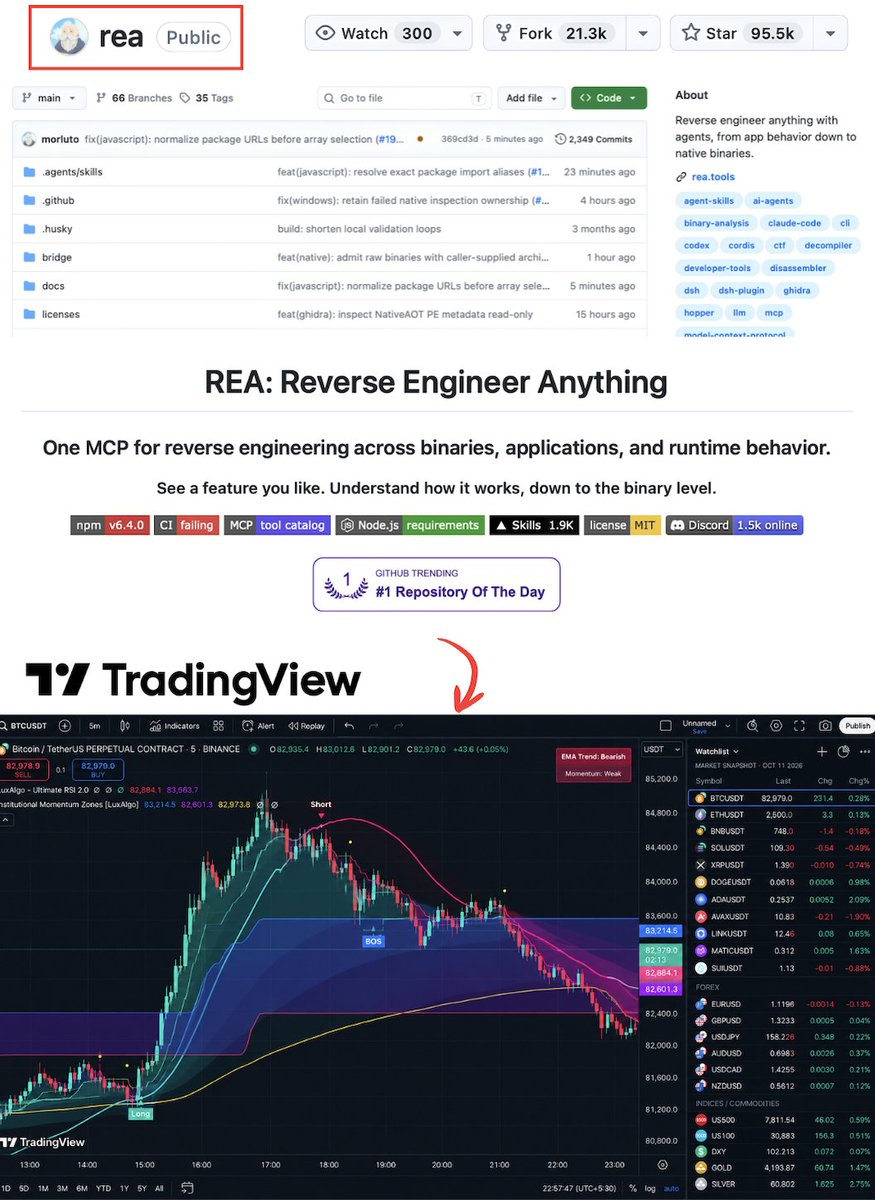
A new open source tool called REA lets Claude Code and Cursor take any app apart.
Native apps.
Electron apps.
Android APKs.
Firmware.
Websites.
Ask how a feature works.
It decompiles, traces the logic, and shows the evidence behind every claim.
Then it rebuilds that feature in your own stack.
It just hit #1 on GitHub.
Closed source used to mean protected.
Now it just means slower to copy.
https://t.co/zqsoZw15ak
this is the most DANGEROUS thing on internet today
REA (Reverse Engineer Anything) - this open source MCP lets your AI agent reverse engineer any app, down to the binary
i just reverse engineered TradingView, now I am using their premium indicators for FREE - software is cooked
here is how to use REA to reverse engineer TradingView:
1. point REA at TradingView's publicly observable interface and map every major feature, from chart interactions to indicators and alerts
2. trace how the interface behaves when you switch symbols, change timeframes, add indicators, draw levels, and update chart layouts
3. use REA's available MCP tools to investigate authorized software artifacts and trace application logic wherever the evidence allows
4. feed those findings into Claude Opus 5.5, which turns the investigation into a technical specification and an implementation plan
5. rebuild the charting engine independently, with real market data, candlesticks, technical indicators, drawing tools, and persistent watchlists
6. add a quant backtesting engine that tests strategies against historical data, accounting for fees, slippage, and drawdowns
7. test every component, compare its behavior against documented and observable results, fix failures, and keep iterating until the system actually works
8. you end up building your own TradingView-style quant research terminal from scratch, with source code you control and features you can keep extending
i won’t say anything more:
holy sh*t. Official Anthropic tip for Claude Code: stop burning Opus 5.5 context on tasks Haiku 5.5 can swarm, while Sonnet 5.5 builds
put the architect on call with /advisor
claude --advisor opus --subagents haiku
Sonnet 5.5 drives the primary session on high effort, writing diffs and running test suites
Haiku 5.5 subagents swarm the repo in parallel at 340 tok/s, handling file discovery and spec docs lookup
Opus 5.5 stays on call in the background as the advisor, only stepping in at three critical moments:
→ before a plan locks: does the implementation plan miss auth invariants or schema contracts?
→ when a test breaks twice: are we fixing the root cause or falling into a recursive rabbit hole?
→ before calling done: did the full diff introduce hidden regressions or break pre-flight rules?
Opus 5.5 reviews. Sonnet 5.5 builds. Haiku 5.5 swarms
Jev engineering runs the identical pattern one layer down: mechanical decisions that need no reasoning (which file to open, which tool to invoke, retry or abort) execute in 16ms, so the frontier models only wake up when execution paths actually diverge
Plan on high. Delegate on medium. Keep Opus on call.
- the full advisor setup
> Opus 5.5 on call reads full session history and catches deep architectural traps
> Sonnet 5.5 lead drives edits, writes core logic, and executes test harnesses
> Haiku 5.5 subagents swarm AST parsing, grep scans, and API docs in parallel
> JEV micro-fork layer resolves 1,500+ mechanical routing branches in under 16ms
> advisor stays completely silent on routine bash execution to protect context
paste the setup and this prompt into Claude Code below:
"Configure my Claude Code workspace for hierarchical advisor orchestration:
1. Audit ~/.claude/settings.json and project config for model roles fitting lead, subagents, and advisor:
> Pin main session model: sonnet with effortLevel: high for primary execution
> Pin subagents model: haiku with effortLevel: medium for parallel file discovery and docs retrieval
> Pin advisor model: opus on call for strategic review
2. Enable the advisor tool in ~/.claude/settings.json:
> Set advisorModel to claude-opus-5-5
> Enable subagent parallel dispatcher pool (3x workers)
3. Configure automatic advisor consultation checkpoints in ~/.claude/CLAUDE.md:
> Consult /advisor opus before finalizing multi-file architecture plans
> Automatically summon /advisor opus when the same test or compiler error fails twice
> Enforce advisor diff contract audit before declaring tasks complete or staging git commits
4. Constrain subagent scopes:
> Haiku subagents return structured AST summaries and docs snippets only without modifying main session context
Show every configuration diff first. Do not apply edits until confirmed"
↳
https://t.co/gvAWk6KbDn
Uber publicó cómo armó su infraestructura de MCP y hay varias ideas muy buenas acá.
imaginate una empresa con miles de servicios internos y muchos equipos conectando agentes a esos sistemas por su cuenta.
cuando eso empieza a crecer, terminás con tooling fragmentado, infra duplicada, distintas formas de exponer tools y poca consistencia en seguridad, discovery y operación.
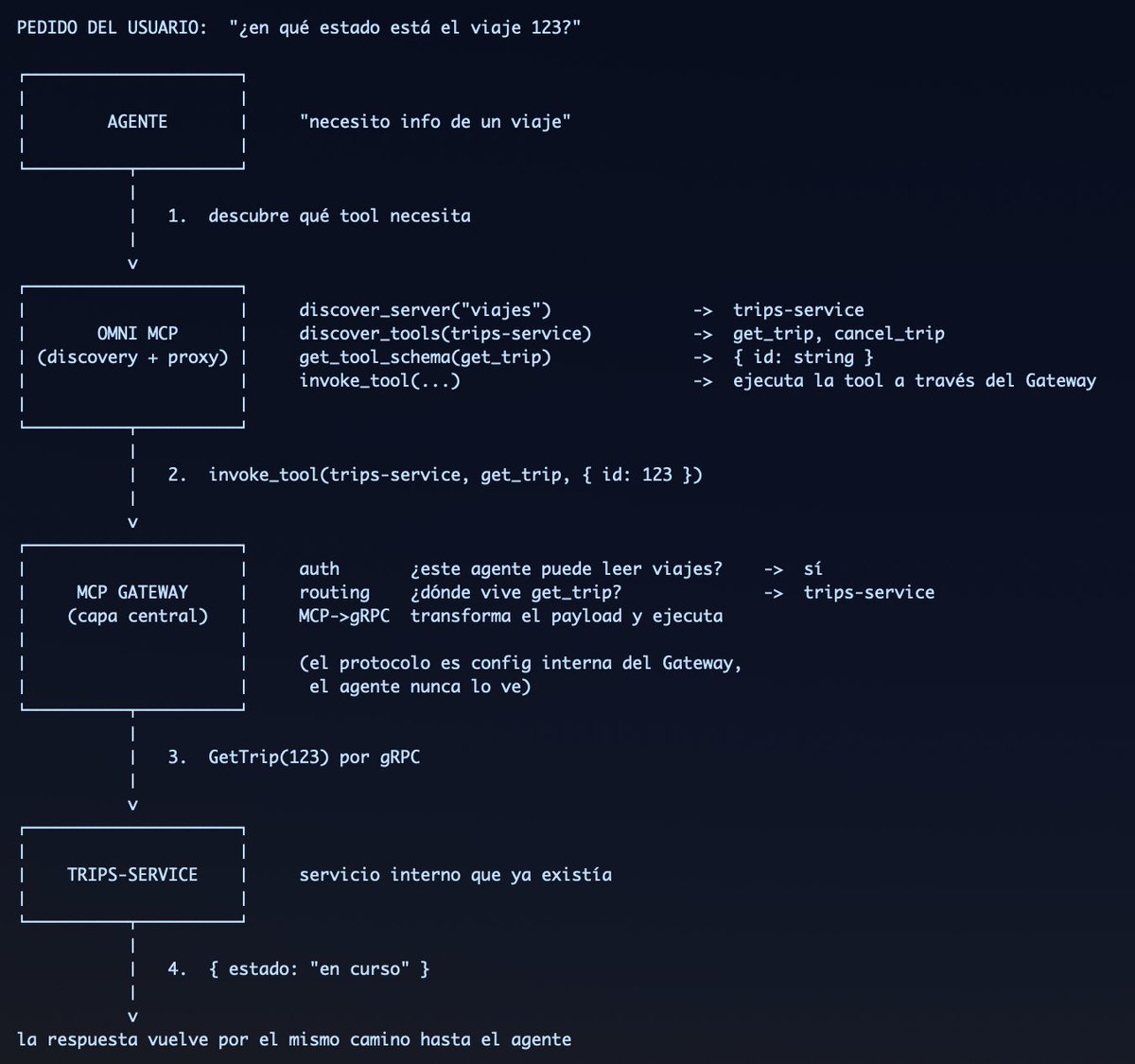
por eso Uber hizo un MCP Gateway: una capa central entre los agentes y sus servicios internos.
el agente habla MCP y el gateway se encarga de routing, permisos, ejecución y de traducir las llamadas a HTTP, gRPC o TChannel según corresponda.
como Uber ya tenía miles de APIs internas, también hicieron AutoCrawler: recorre sus definiciones, detecta métodos y schemas y genera MCP tools automáticamente. incluso usan un LLM para mejorar las descripciones.
hoy tienen +800 MCP servers y +5000 tools. y ahí aparece otro problema: no podés cargar todas esas definiciones en el contexto del modelo.
para eso crearon Omni MCP. en vez de pasarle miles de tools al agente, este va descubriendo qué server necesita, qué tools tiene disponibles, carga el schema de la correcta y recién ahí ejecuta.
me parece un muy buen ejemplo de cómo cambia la arquitectura cuando los agentes pasan de usar unas pocas tools a trabajar con miles.
terminás necesitando algo muy parecido a un API Gateway para agentes.
Claude can now help you build evaluations and hillclimb on them.
In this article, we share guidance on eval design & skills that Claude Code can use to improve your applications.
https://t.co/PgKFC2DWth
Iran is often reduced to headlines about politics.
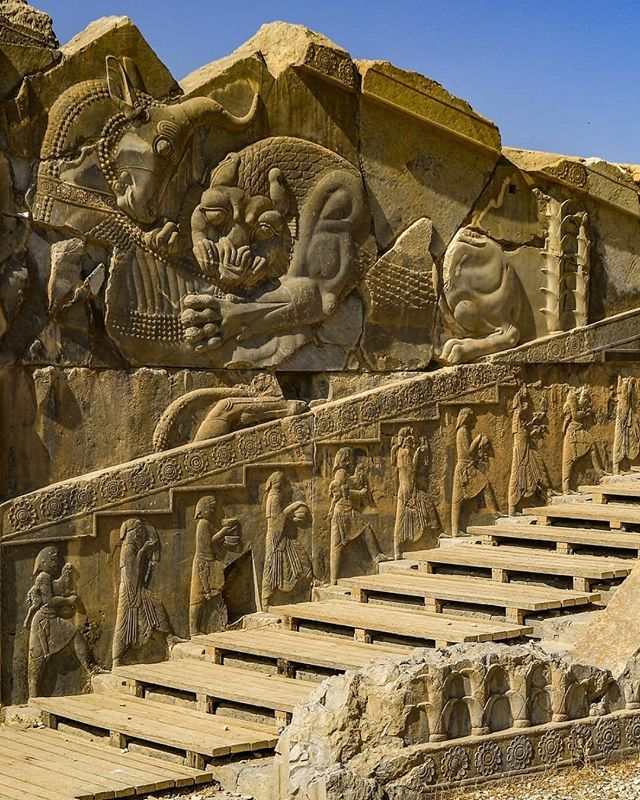
But behind them stands one of the oldest continuous civilizations on Earth, where architecture, poetry, and faith shaped beauty for over 2,500 years.
Here’s a journey through Iran’s architectural splendor. 🧵