Your heart's pounding before a team meeting, presentation, or speech.
Just nerves? or something more?
The tell isn't how strong the feeling is. It's what the fear starts doing to your choices?
How to tell the difference:
https://t.co/LSWRkeoVP2
In fairness to public speaking, it's the only one where you watch everyone's faces while it happens😅
Fun fact: the 'more than death' line comes from a 1973 survey that never asked which fear was worst. In 2026, a Chapman Univ survey found them nearly tied: dying 30%, speaking 29%.
@_shavashava_ Love that communication made the list right next to water😁
A small one that helps: after each call or meeting, note one thing you said clearly and one you'd say differently. It adds up fast.
@Iam_Century Visibility is the one people skip because it feels like bragging. It doesn't have to. A two-line update in the team meeting ("here's what I finished, here's what I learned") quietly does a lot of the work.
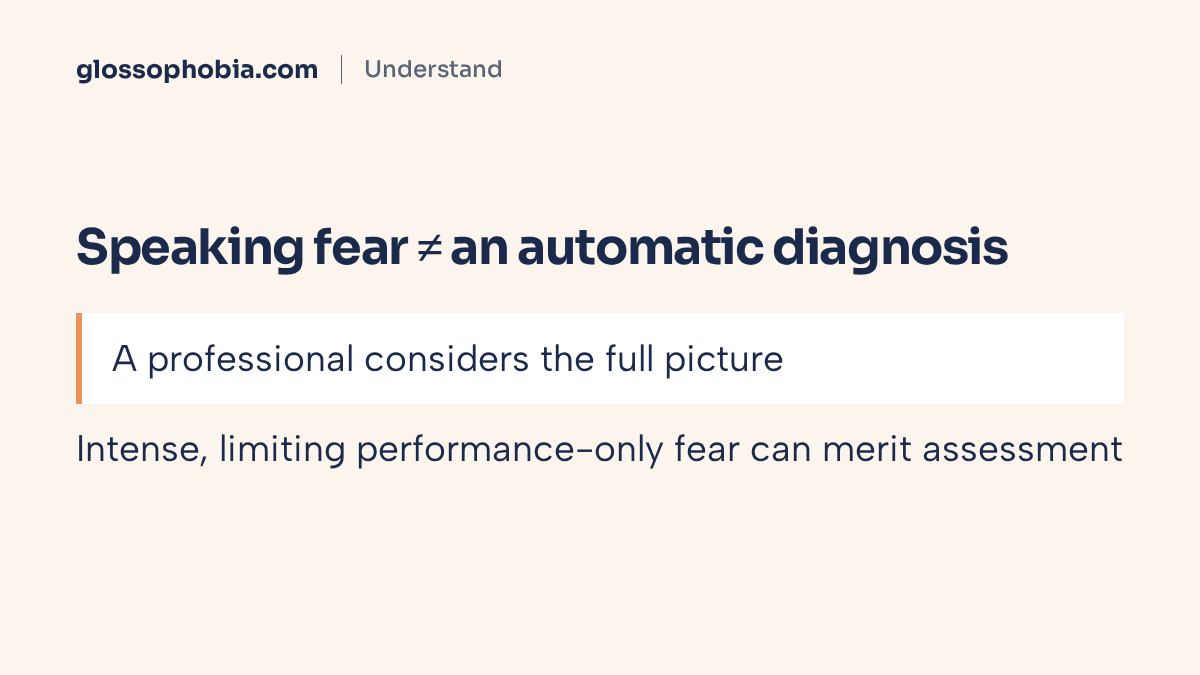
Fear of public speaking does not automatically mean a diagnosis.
You don’t have to decide on a label before asking a qualified professional about concerns that affect your life.
@HarvardBiz Shifting the focus to the audience can help a little. The nerves still show up for a lot of us even when we know the talk isn’t really about us.
Make your next practice goal specific: ‘Give the project update on Thursday’ rather than ‘get good at public speaking.’
Write one main point and a short opening, then say the opening out loud.
@DanielPink Rehearsing disaster shows up big before presentations.
One swap that helps: picture the first 30 seconds going fine, then rehearse those 30 seconds out loud.
It gives "what if it works out" an actual script.
Preparing for a talk? Put a keyword for each section on a card or slide.
Practice glancing at it and moving to the next point. Rehearse the restart, not just the uninterrupted version.
#publicspeaking#glossophobia
@Public_Speaker_ Yup, those are the usual ones. Noticing them in the moment is useful, but a lot of us still get the fast talking or the blanking even after we know the list.
The nerves don't disappear just because you've spotted the signs.
@TheRoyalGazette Love that he admits he started out nervous. That may be the most useful thing a young coach can share: the nerves don't have to vanish first.
You get better by speaking anyway, one small room at a time.
@RoyalReporter Nice reminder that confident speakers are made, not born. Improvement like that usually comes from lots of repetition and a few small habits, like a slower opening and a pause before the key line.
@lavenscorpv2 Good luck! Nerves just mean you care.
One thing that helps: know your first two sentences cold, and take one slow breath before you start.
Once you're past the opening, it usually gets easier.
@OmoSoaga Worth it if it gets you on your feet.
The best sessions are mostly practice: short talks, quick feedback, repeat.
Before signing up, ask how many minutes you'll actually spend speaking each session.
@Official4ir Public speaking! It's the one skill that multiplies the others, and you can start today.
One short practice talk a week, out loud, adds up faster than you'd think.
@Dukeofkendubay@osama_novara@OmwambaHSC Asking for the mic is the best advice here. Reading helps, but the skill really grows in short reps.
Try a 60-second take: one point, one example, done.
Do it often and it starts to feel normal.
@Public_Speaker_ Plus: number your notecards in a corner. If they ever drop, you're back in order in seconds.
One big cue word per card, not full sentences, also gets your eyes back on the audience faster.
@Idgabuck_ Congrats on finishing it! A trick for fellow public-speaking haters: practice just your first 3 sentences out loud until they're automatic.
Once the opening is on autopilot, it's easier to settle into the rest.