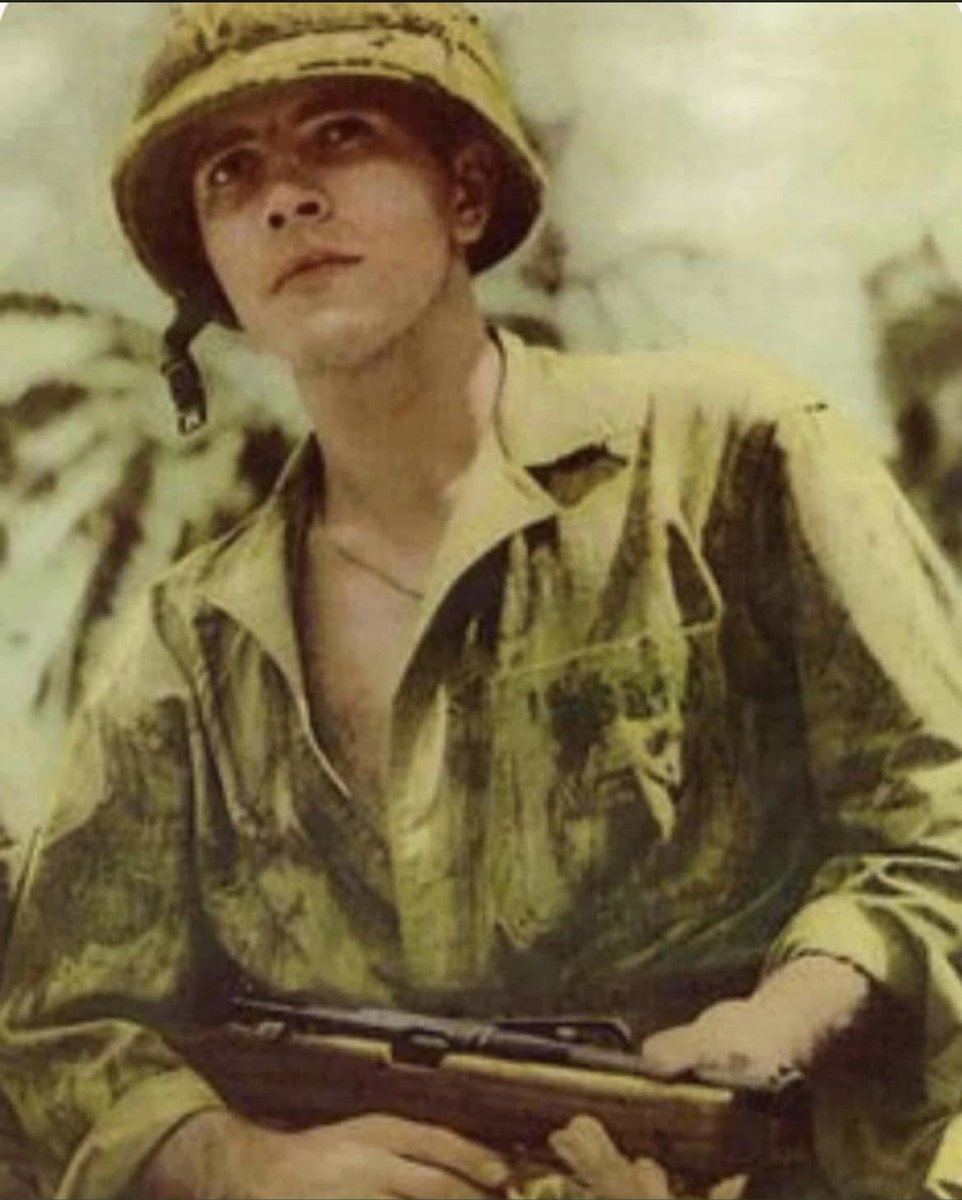
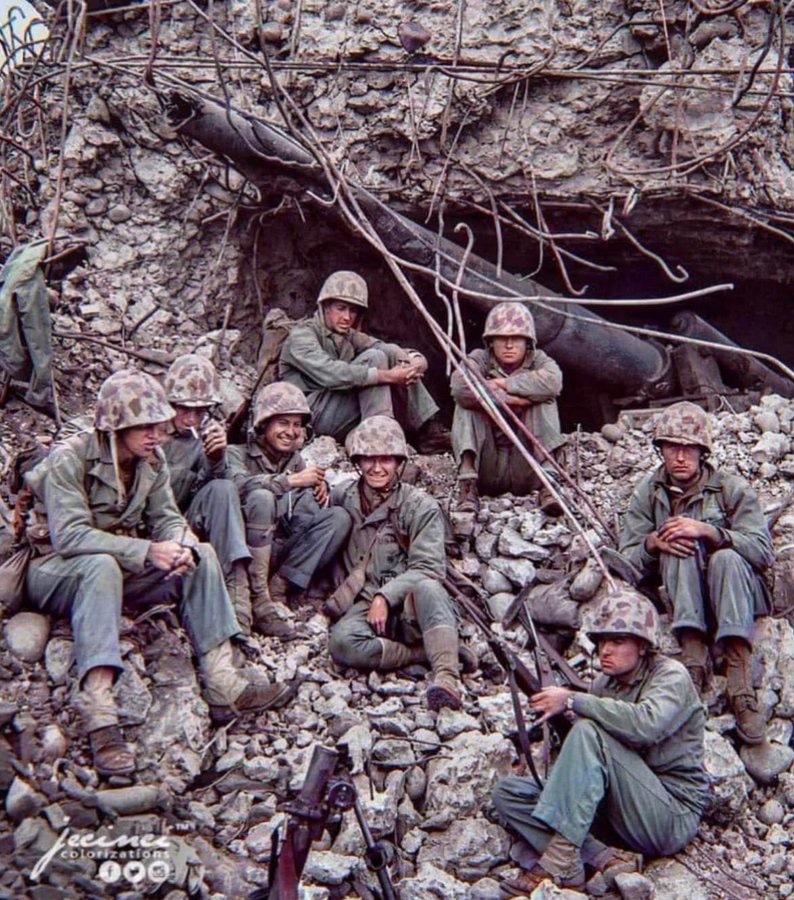
Happy birthday to a Marine who shares the same bday as The Corps…Sgt. Michael Strank. 🪖
- Bronze Star 🎖️
- Purple Heart 💜
- KIA on Iwo Jima 🪦
- Flag raiser on Iwo Jima 🇺🇸
Strank often told his squad, "Follow me, and I'll try to bring you all safely home to your mothers."
I want to share a brief update.
My presidential memoir, PROMISE ME, AMERICA, is coming out on November 17th. I hope you'll read it. It covers my years as President. The challenges we faced, the decisions I made, and why I made them. It's about who we are as a nation. What we stand for. And America's role in the world. More than anything, it's about my faith in the American people and the great American experiment in self-governance and democracy.
While writing the book, I was diagnosed with cancer, a disease known all too well to millions of Americans and their families. My doctors continue to be encouraged by how I've responded to treatment. And the prayers and kind words and well wishes from so many of you have meant more to me and Jill and our family than you can ever know.
Some days are better than others. It hasn't stopped me. But sometimes it slows me down. What that means is, unfortunately, I won’t be able to do as many conversations about my book as I’d hoped. However, I’m hopeful the words on the page speak for themselves.
Looking forward, I'm going to keep following what my father told me a long time ago: "Champ, when you get knocked down, get up." It's a good lesson for me. And for America.
We are blessed. America is the most unique nation on earth. Unlike other countries, we're built on an idea. An idea bigger than any ocean. More powerful than any army. Stronger than any tyrant or dictator. That idea? All of us are created equal.
Promise Me, America, we'll never forget it.
Sadly, the last known surviving WW2 veteran of the SAS, Matthew "Matt/Jock" Mackinnon-Pattison died on Thursday 5th November aged 102years. We remember Matthew. Here is a summary of Matthew's wartime service. Please share widely: Matt MacKinnon Pattison was among hundreds of thousands of Allied soldiers who fought Germans in Italy in the spring of 1944.
Sometimes remembered as the "D-Day Dodgers", in reference to their role away from Normandy, men in Italy faced brutal conditions as they battled to take Monte Cassino and dislodge enemy soldiers.
"We came back from Italy having flogged ourselves to pieces, nervous wrecks, and people say 'where were you on D-Day?'" said Matt, from Penrith, Cumbria.
"We just say we were busy bloody well fighting."
British Prime Minister Winston Churchill thought of Italy as the "soft underbelly" of Nazi-dominated Europe, but the campaign there proved difficult and costly.
With perhaps typical military irony, the men in Italy adopted the "D-Day Dodgers" moniker, even creating a song to the tune of Lili Marleen, a famous wartime melody.
"We are the D-Day Dodgers in sunny Italy," rang the chorus.
But this was no sojourn in the sun and the Allied forces knew it.
Enemy soldiers were dug in on defensive lines across the country, and at Monte Cassino it took four separate attacks from US, British, Polish and Commonwealth forces to destroy and take the hilltop monastery.
Matt still has razor-sharp memories of the battles he fought, and the comrades he lost.
He fled agricultural service in Kilmarnock as a teenager to get to Glasgow to enlist as an infantryman before ending up "right in the forefront" of the battle for Monte Cassino.
Advancing up the slopes amid the fog of deadly artillery bomb blasts and the continual crackle of gunfire, the soldier saw many of his comrades fall.
But, he said, there was no time to be frightened.
"You don’t look upon it as bravery, you just look at it as part of your life," he told the BBC.
"When the officers told you to advance, that was what you had to do.
"Every battle is the same. You get pounded to death, whether it was Normandy, Burma or anywhere."
Matt was recruited for the SAS after being injured and taken to a Naples hospital to recover.
From 100 candidates, he was just one of 10 that made it. He was dropped behind enemy lines near Genoa, tasked with finding Italian dictator Mussolini who by then had been captured by partisans.
Once the war was over, he was sent to Germany as part of the War Crimes Unit to find Nazi suspects who had executed captured members of the SAS.
There, he said, he saw a broken nation, but people "just like us".
Eight decades on, he can clearly recall the claustrophobic horror of war, from German soldiers playing dead to entice Allied soldiers into shooting range, to landmines and enormous loss.
"I lost a lot of my mates, especially one called Ginger," he said.
"And when he died he was sitting in a trench with his head down. There was a smile on his face."
"Still a smile on his face that marked the place where he and his maker met.
"And that was Ginger. He was a good lad."
Dodging D-Day was no pass, and so many thousands paid the ultimate price in Italy.
In his flat, Matt still has his SAS beret, his medals and his memories.
He also has his nation’s thanks.
(Source: https://t.co/DJA1rW5gra)
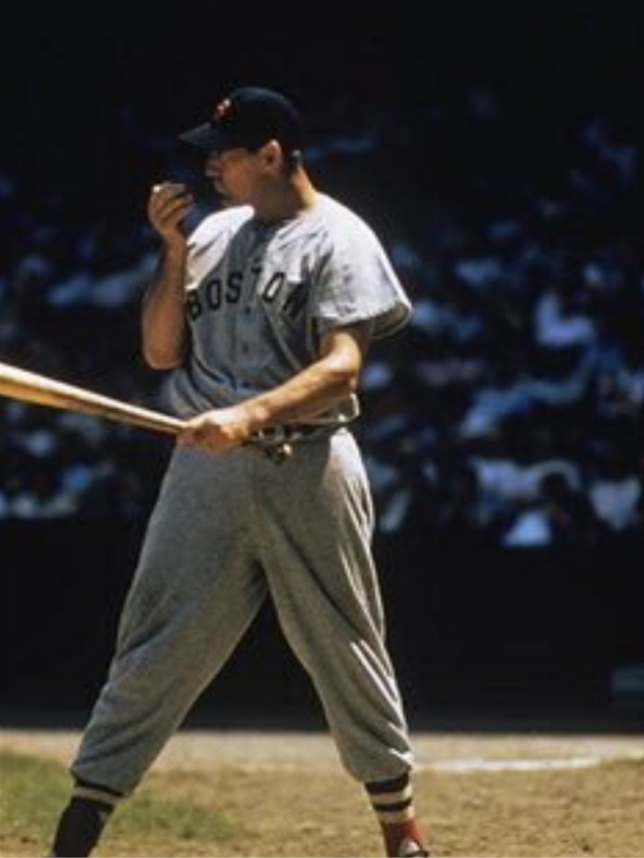
"Ted Williams did not come to bat in the seventh.
He was second up in the eighth.
This was almost certainly his last time to come to the plate in Fenway Park, and instead of merely cheering, as we had at his three previous appearances, we stood, all of us; Stood and applauded.
Have you ever heard applause in a ballpark? Just applause.
No calling, no whistling, just an ocean of handclaps, minute after minute, burst after burst, crowding and running together in continuous succession like the pushes of surf at the edge of the sand.
It was a sombre and considered tumult. There was not a boo in it.
It seemed to renew itself out of a shifting set of memories as the kid, the Marine, the veteran of feuds and failures and injuries, the friend of children, and the enduring old pro evolved down the bright tunnel of twenty-one summers toward this moment.
At last, the umpire signalled for Fisher to pitch;
With the other players, he had been frozen in position.
Only Williams had moved during the ovation, switching his bat impatiently, ignoring everything except his cherished task.
Fisher wound up, and the applause sank into a hush.
Understand that we were a crowd of rational people.
We knew that a home run cannot be produced at will;
The right pitch must be perfectly met and luck must ride with the ball.
Three innings before, we had seen a brave effort fail.
The air was soggy;
The season was exhausted.
Nevertheless, there will always lurk, around a corner in a pocket of our knowledge of the odds, an indefensible hope, and this was one of the times, which you now and then find in sports, when a density of expectation hangs in the air and plucks an event out of the future.
Fisher, after his unsettling wait, was wide with the first pitch.
He put the second one over, and Williams swung mightily and missed.
The crowd grunted, seeing that classic swing, so long and smooth and quick, exposed, naked in its failure.
Fisher threw the third time, Williams swung again, and there it was.
The ball climbed on a diagonal line into the vast volume of air over center field.
From my angle behind third base, the ball seemed less an object in flight than the tip of a towering, motionless construct, like the Eiffel Tower or the Tappan Zee Bridge.
It was in the books while it was still in the sky.
Brandt ran back to the deepest corner of the outfield grass;
The ball descended beyond his reach and struck in the crotch where the bullpen met the wall, bounced chunkily, and, as far as I could see, vanished.
Like a feather caught in a vortex, Williams ran around the square of bases at the center of our beseeching screaming.
He ran as he always ran out home runs:
Hurriedly, unsmiling, head down, as if our praise were a storm of rain to get out of.
He didn't tip his cap.
Though we thumped, wept, and chanted,
"We want Ted" for minutes after he hid in the dugout, he did not come back.
Our noise for some seconds passed beyond excitement into a kind of immense open anguish, a wailing, a cry to be saved.
But immortality is nontransferable.
The papers said that the other players, and even the umpires on the field, begged him to come out and acknowledge us in some way, but he never had and did not now.
Gods do not answer letters."
"Hub Fans Bid Kid Adieu."
John Updike.
October 22, 1960.
No Batting Gloves,no Elbow Guards, just a little spit and dirt and Ted Williams was ready to hit!
"One morning this sergeant came up to me and said:
"Why don't you volunteer for the Marine Raider battalion?"
I said okay.
But the first thing they told me was:
"You've got to swim a mile with a full pack on your back."
I said:
"Hell, I can't even swim."
And they turned me down.
I told the sergeant what happened.
He said:
"You gutless son of a bitch, go back down there."
So I told them I knew how to swim.
They took me."
Hank Bauer.
Deployed to Guadalcanal in 1942, surviving attacks by the Japanese and a bout of malaria.
Then, the "New Georgia Campaign" and the "Battle of Guam."
In the Battle for Guam, Bauer was wounded in the back by enemy shrapnel.
Years later, New York Yankee relief pitcher Joe Page delighted in picking small pieces of debris out of Bauer's back.
Next came the battle for Okinawa.
In Okinawa, there were sixty-four men in Platoon Sergeant Bauer's landing party and only six got out alive.
Hank Bauer was wounded again when shrapnel tore a hole in his left thigh, and recalled:
"I saw this reflection of sunshine on something coming down.
It was an artillery shell, and it hit right behind me."
Most of his platoon was killed.
Bauer and five others made it out alive, but Bauer was wounded in the thigh by enemy artillery fire.
Bauer also received a second Bronze Star during the battle.
Hank Bauer's brother, Herman, was not so fortunate.
Herman Bauer was killed in action in France while serving with the 3rd Armoured Division on July 12, 1944.
Hank Bauer experienced thirty-two months of combat, had eleven campaign ribbons and earned two Bronze Stars and two Purple Hearts.
HERO and LEGEND!!
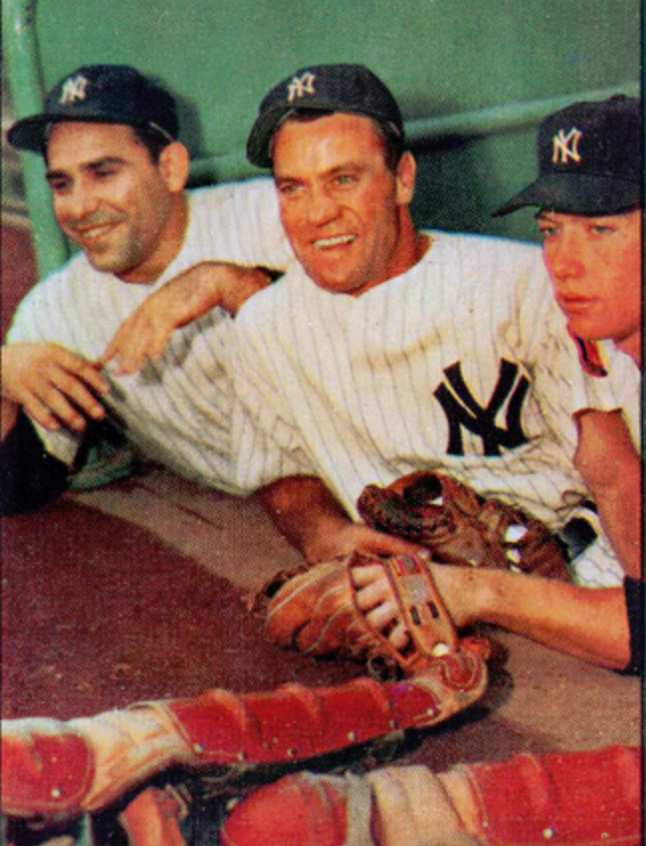
Berra, Bauer, Mantle.
On this day in 1951, a platoon of 28 soldiers from the Royal Canadian Regiment fight off repeated assaults by an 800-man Chinese battalion in the Battle of the Song-gok Spur. The Canadians hold out for eight hours and suffer more than a dozen wounded and one killed.
Dr. El-Sayed is a fighter for our American Constitution, he’s a fighter for our American Democracy, and he’s a fighter against the corrupt, lawless, and anti-American leadership currently in the White House. That’s why I’m in his corner 100%.
Bruce Springsteen
Last night Trump said he could have won Vietnam in a week. His plan was “going after Ho Chi Minh City.”
Ho Chi Minh City was Saigon, the capital of South Vietnam. Our ally. The enemy’s capital was Hanoi. We bombed it.
He called the presidents who fought that war stupid, then explained how he’d have won it by attacking our own side.
58,220 Americans died in that war. Trump got five deferments. Now he’s telling the rest of us how easy it would have been.
He’s had more than fifty years to learn which side we were on. He still hasn’t. That alone should disqualify him from sending anybody else’s kids to war.
Instead, he’s weighing more strikes on Iran after Tuesday. His administration has reportedly considered using the “mother of all bombs,” the one he calls “like a tiny nuclear bomb.”
The man who thinks we should have bombed our ally’s capital gets to choose the targets.
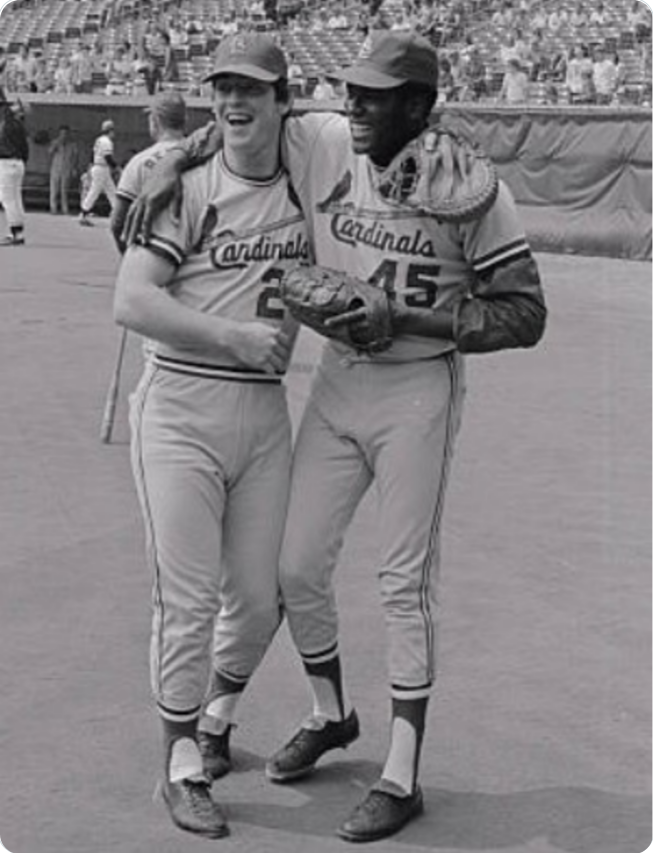
"Ted Simmons used to drive me crazy when he was a young catcher.
One day he called time and came out to ask if I was giving him a hard time.
I said:
"I’m trying to win the ballgame.
I don’t have the luxury of giving you a hard time."
Simmons was a bright guy and he learned.
It took him a while, but he caught on.
As a 19 year old rookie, all he thought about was hitting line drives, which he did very well.
You can forgive a catcher for a lot of sins when he clears the bases with a double." Bob Gibson.
"That was the greatest thrill of my life, catching a no-hitter.
Man, Bob Gibson was throwing fire."
Ted Simmons.
On Aug. 14, 1971 at Pittsburgh's Three Rivers Stadium, Ted Simmons caught Bob Gibson's only career no-hitter, in an 11-0 rout of the Pirates, and became the only catcher in Cardinals history to collect four hits while catching a no-hitter.
Ted Simmons was behind the plate in 1,769 games;
1,578 were complete games!
Simmons caught 122 shutouts, was an eight-time All-Star, batted above .300 seven times, hit twenty-or-more home runs six times, and drove in 90+ RBI nine times.
Despite his incredible offensive numbers, only 5% of the "Baseball Writers' Association of America" voted for him on the 1994 Hall of Fame ballot, making him ineligible.
In 2019, the Modern Baseball Era Committee elected Ted Simmons to the National Baseball Hall of Fame!
"There are things about some professional athletes that I cannot stand, the pretense, the egos, the pomposity, the greed."
Ted Simmons.
Retired with more RBI than Johnny Bench, more runs scored than Gary Carter, more hits than Carlton Fisk, higher batting average than Yogi Berra.
Drove in more RBI than all catchers except Yogi Berra.
Ted Simmons rebelled against baseball’s reserve clause, refused to sign a $25,000 contract, feeling he deserved bigger raise.
An anti-war activist, heavily criticized the Nixon administration, and wore his hair so long that he was nicknamed “Simba.”
Legend!!!
Simmons and Gibson!
This election is our last chance to at least rein in some of the foolishness of this Administration.
We need real leadership with concrete plans to lower costs, make health care more affordable, make housing more affordable, and get utility bills under control.
Let’s do what we can to make @KeishaBottoms the next Governor of Georgia. Let’s go send Jon @Ossoff back to the Senate. And let’s put this country back on the path to a better future.
In 2003, a soldier was buried at Arlington National Cemetery with full honors.
He had been a Finnish war hero. A Waffen-SS officer. A convicted traitor. A stowaway. And a US Army Green Beret.
All the same man.
His name was Lauri Törni. He was born in Finland in 1919, and his entire life was shaped by one thing. He hated the Soviet Union.
In 1939 the Soviets invaded Finland in what became known as the Winter War. Törni fought in it as a young soldier. Finland was massively outnumbered and still made the Red Army pay a staggering price before agreeing to peace.
When war with the Soviets broke out again in 1941, Törni became a legend. He led a small unit of ski troops on raids deep behind Soviet lines. Hit fast. Vanish into the forests. Do it again.
He was so effective the Soviets reportedly put a bounty on his head. Finland awarded him the Mannerheim Cross, its highest military honor.
In 1944, Finland made peace with the Soviet Union. For Törni, the war wasn't over.
He went to Germany to keep fighting the Soviets. He trained with the Waffen-SS and was commissioned as an officer. When Germany collapsed in 1945, he surrendered to the British, escaped from a prison camp, and made his way back to Finland.
Finland arrested him for treason for serving in a foreign army. He was sentenced to six years in prison. He escaped. He was caught. In 1948, he was pardoned.
Then he vanished from Finland for good.
He made his way to Sweden, then sailed to Venezuela. From there he got a job on a cargo ship bound for the United States. When the ship reached the Gulf of Mexico, he jumped overboard and swam to shore.
In 1950 the US passed a law letting foreign veterans who joined the US Army earn American citizenship. Törni signed up immediately and changed his name to Larry Thorne.
The man who had fought in an SS uniform now wore an American one.
He joined the Special Forces. The Green Berets. Rose through the ranks. Became a captain. In 1962 he led a dangerous mission into the mountains of Iran to recover classified material from a crashed American plane.
Then came Vietnam.
He joined MACV-SOG, the top secret unit that ran missions behind enemy lines. On October 18, 1965, his helicopter went down in the jungle of Laos during a mission.
He disappeared. For more than 30 years, nobody knew exactly what happened to him.
In 1999, the crash site was finally found. His remains were identified in 2003.
He was buried at Arlington among the men he served with. A soldier under three flags who spent his entire life fighting the same enemy, in three different uniforms, across three decades.
My mother used to say when I was kid, “Joey, nobody’s better than you. Everyone is your equal and everyone is equal to you.” That’s always been my north star. It's guided me my whole life, including during my presidency. In my new book, PROMISE ME, AMERICA, I write about how those lessons shaped the decisions I made in the Oval Office. It’s available for pre-order now, and I’m looking forward to sharing it with you. https://t.co/QrvBxj5j2y.
@TELUSsupport@TELUS Really disappointed that as a long time customer who has used the Bring it Back program; my wife and I are faced with our monthly mobility plan going up $20 more a month each, no chance to keep existing plan, and our potential phones costing more as well.
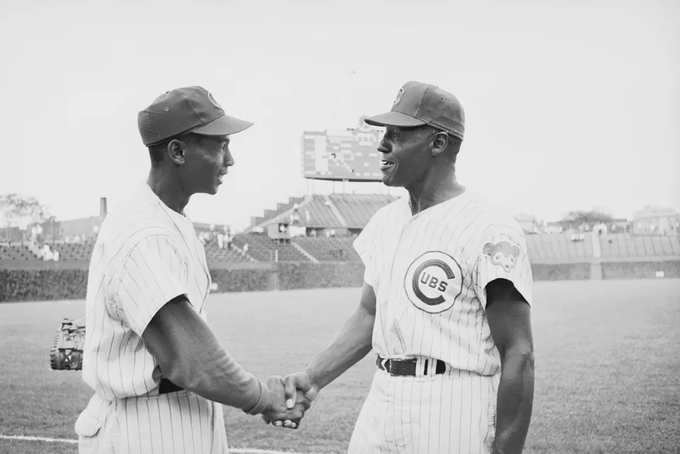
In 1950, "Cool Papa" Bell told Buck O’Neil that he needed to go see a 17-year-old shortstop playing for the Black Sheepherders in San Antonio,Texas.
Buck O’Neil signed the prospect without even seeing him play.
"Cool’s word was good enough for me." O’Neil said.
The young man was Ernie Banks.
"Oh, Ernie Banks?
Well, the Monarchs had a travelling team we called “The Baby Monarchs.”
We had so many black ballplayers, we couldn’t play them all.
When we went to spring training, we’d maybe have 40 people there.
Uh-huh.
When we got ready to cut, we pretty much knew who the regular guys were going to be, but the other kids we’d put them on the little Monarchs team.
"Cool Papa" Bell was running this ball club. They went to the northwest, and they would travel from Omaha all the way up north to Canada to play.
That’s the team I started with in 1937.
They were like a farm team for the Monarchs.
"Cool Papa" Bell was running the Little Monarchs for us and he saw a team, saw a ballplayer from one of those semi-pro teams in Texas.
When their season was over, they came into Kansas City, and Cool said:
"Buck, I saw a kid on a team from Dallas, Texas, and he could play shortstop for you."
I said:
"Yeah, that sounds good."
This had to be nineteen-and-forty-nine. 1949.
Early in the spring of 1950, I went down to Dallas and signed this kid Ernie Banks.
I hadn’t seen him play;
Cool had seen him play.
I signed him and he went to spring training with us in 1950.
Played the season with us;
Good-looking kid.
He went to the service in 1951 and 1952, came back in 1953, played with us, and that’s when the major league teams started scouting him.
Buck O'Neil.