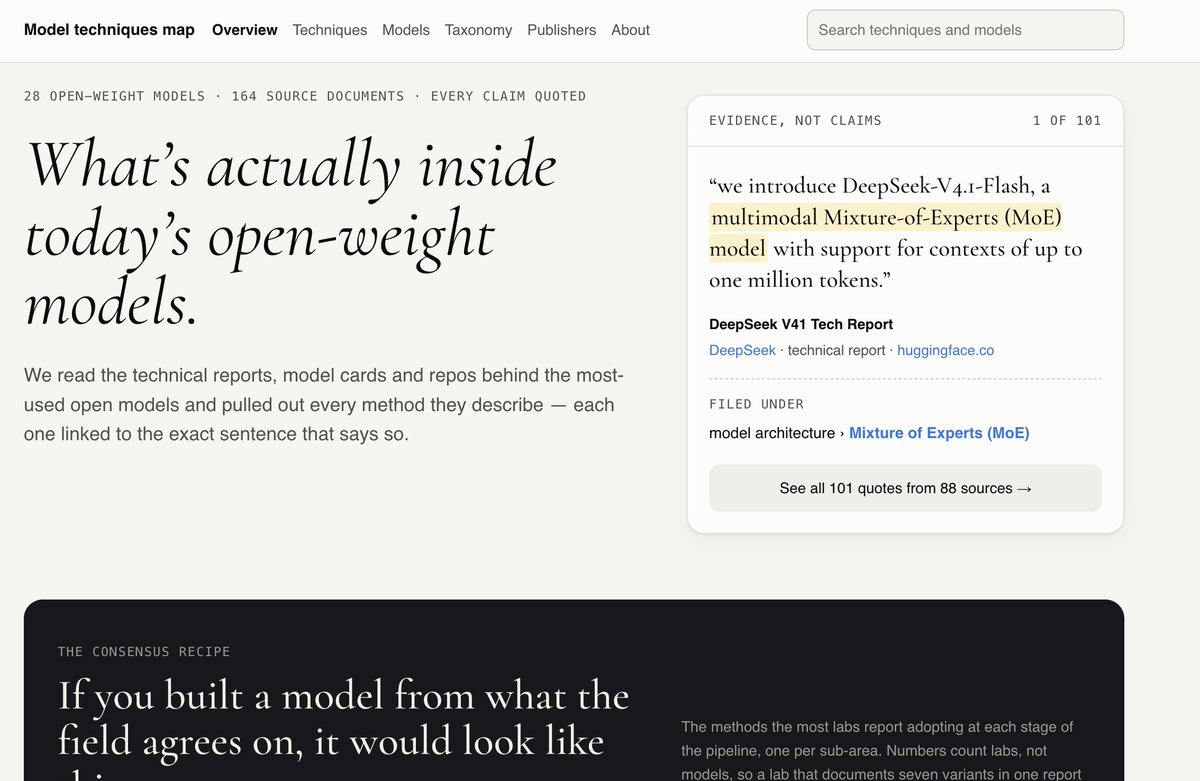
I created an overview on common techniques used by today's open-weight models like DeepSeek V4.1, GLM 5.3 or Nemotron 3 Ultra, automatically extracted from respective code and tech reports.
https://t.co/F0YT1YVqtQ
@Real123Here@pmddomingos If you look closely at History, you'll find a lot of parallel discoveries and people refining each other's concepts. Today's transformer or LSTM are collages of dozens of refinements of an original idea, rather than independent and unique.
@NandoDF Important to note that regulation can guide the companies towards sane behavior. E.g. Germany requires 50% of salary for the duration of post-contract non-competes, and as a result companies only do it when necessary and don't treat it as a freebie
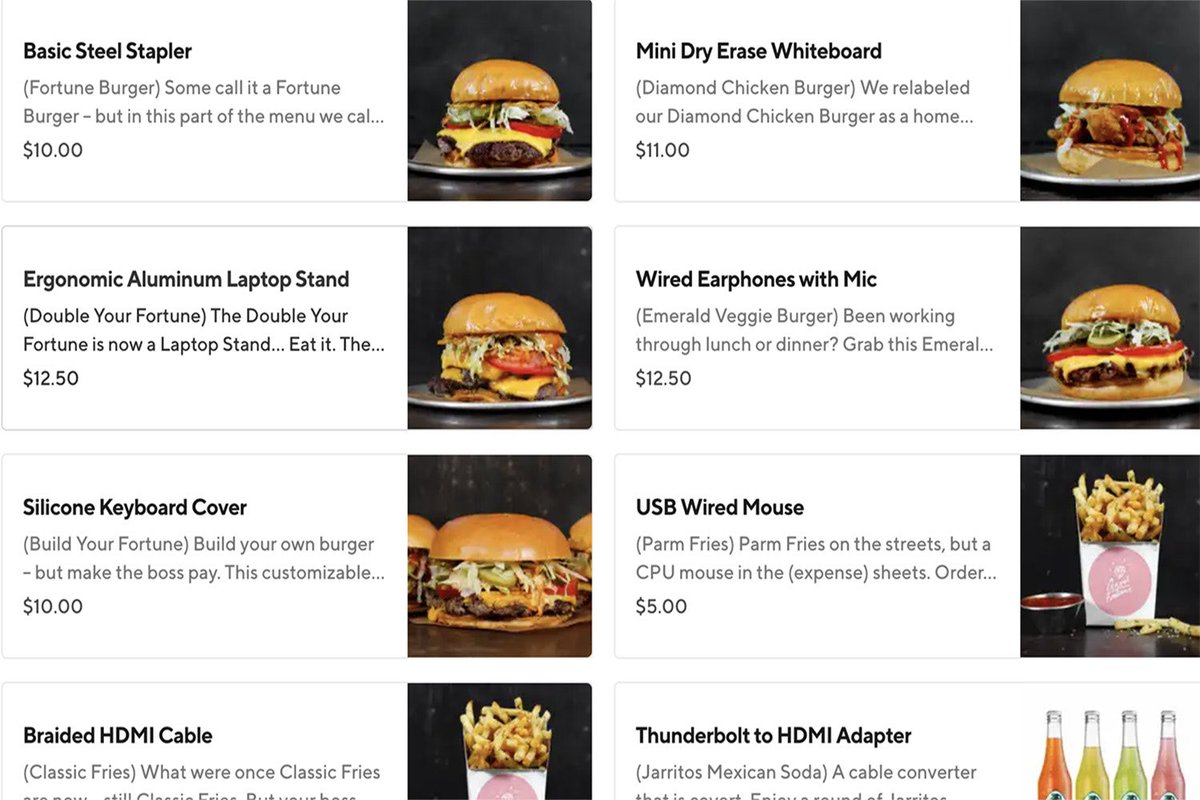
@daniel_271828@McclaneDet@hendrycks I'd rather say, alignment research, if successful, puts the decision of what the system does in a central place - which may be divorced from what users want. Centralizing helps to keep users from designing Super Mario mousepads or writing haikus on political figures.
Interested in uncertainty in NLP and NLG systems?
We are organising the first workshop on uncertainty-aware NLP, co-located with #EACL2024 in Malta!
Consider submitting and/or attending!
More info (like awesome speakers and a broad range of topics) at https://t.co/XiurnFqWgi.
This might be flying under the radar (so please RT!), but the US Copyright Office is soliciting comments for its decisions on training ML/NLP/AI systems on copyrighted material (even *non*-GenAI). Researchers, please comment! Deadline Oct 30. https://t.co/4WUhBOz6Dv
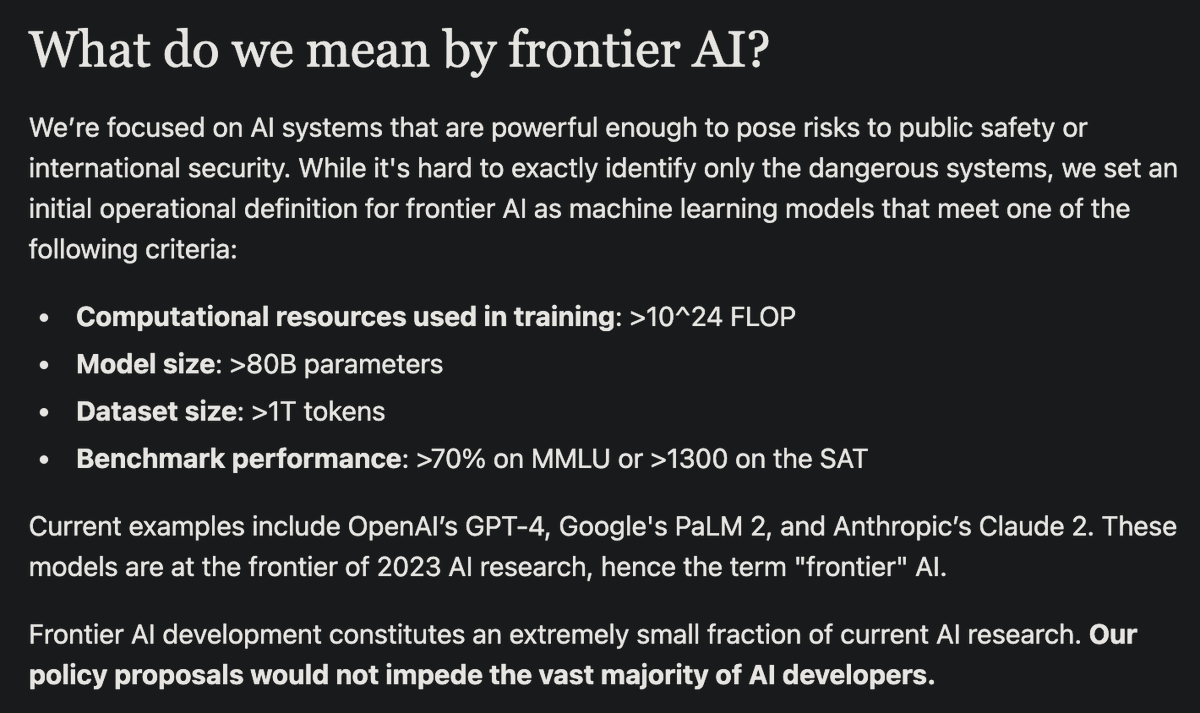
I'm opposed to any AI regulation based on absolute capability thresholds, as opposed to indexing to some fraction of state-of-the-art capabilities.
The Center for AI Policy is proposing thresholds which already include open source Llama 2 (7B). This is ridiculous.
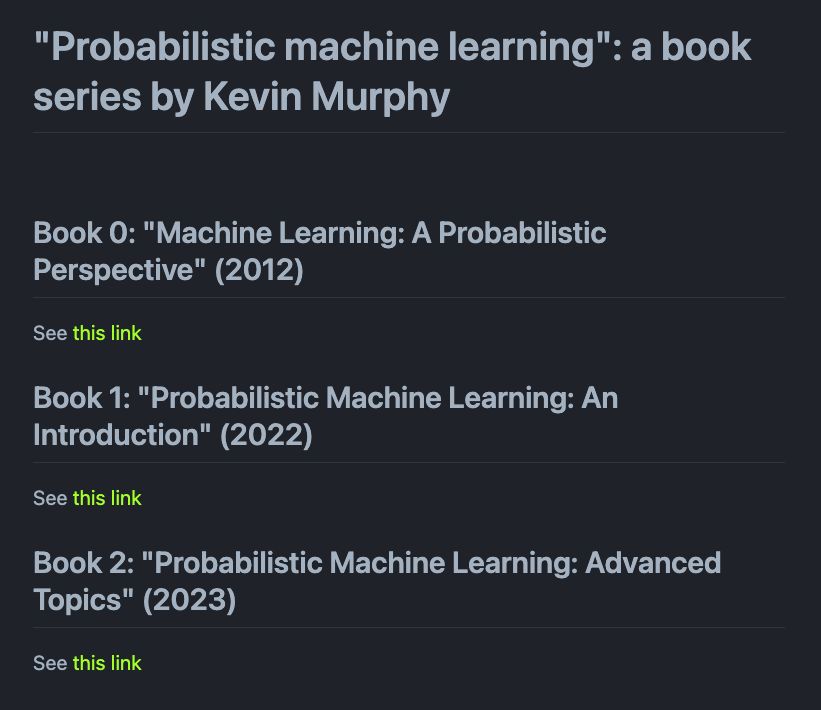
🎓 Probabilistic Machine Learning
This is genuinely a one-of-a-kind resource for students looking to get well-versed in machine learning.
The trilogy book includes:
- Book 0: Machine Learning: A Probabilistic Perspective (2012)
- Book 1: Probabilistic Machine Learning: An Introduction (2022)
- Book 2: Probabilistic Machine Learning: Advanced Topics (2023)
These books also have accompanying notebooks/codes.
An impressive book series by @sirbayes 👏
books: https://t.co/HfrZNpki5t
notebooks: https://t.co/xgzrH2TpCK
PhD students wanted! 🎓 The European Laboratory for Learning & Intelligent Systems @ELLISforEurope is a pan-European AI network of excellence. The 2023 Call for Applications of the ELLIS PhD Program is now online & can be found here ➡️ https://t.co/ZMYCYUsvJn #JoinELLISforEurope
@gchrupala@srchvrs@cohenrap Agree - with ARR chasing the reviewers was always a chore from AE perspective. Did this change when ARR explicitly asked reviewers to opt-in to each cycle instead of assuming everyone has constant capacity?
@jochenleidner@stanfordnlp Multidisciplinary as in, "only applied maths"? I think that is making explicit the impoverishment that AI has undergone on the way from trying to understand things to just building big transformer models. Not disputing that knowing maths (+ being a polymath) gives you an edge.
Very simple, minimal implementations for LLM inference at the edge with a lot of momentum, and a number of developing extensions across GPU support, quantization++, training/finetuning, etc.
👏 looking forward!
+"Inference at the edge" manifesto good read:
https://t.co/v8HaHALY7f
Kind of like rule-based coreference systems of the 2010s being "unsupervised". And many "zero-shot" papers of today do the same thing and put 90s heuristics on top of LLMs. 2/2
I feel like our field has become a bit dumber in the last few years - where people previously had "domain adaptation" or "rule-based" or "unsupervised learning" papers now only say "zero-shot" and want you to be impressed instead of telling you which one it is. 1/2