Elon Musk shared a simple trick for remembering things.
Your brain is constantly trying to forget stuff because storing memories is hard.
To remember something, assign meaning, ask “why is this relevant?”
Or use strong emotion or absurdity.
Want to remember a room? Imagine a dancing elephant in a tutu.
Your brain remembers what’s different.
A practical tip from someone who knows a lot.
What’s one memory trick you use that actually works?
Today, we lost our irreplaceable retriever, Pancake, the First Puppy of Texas.
Cecilia and I are so grateful for the 11 years that Pancake brought joy and affection to our family and to guests of the Mansion.
She will be greatly missed by all the Texans who met her.
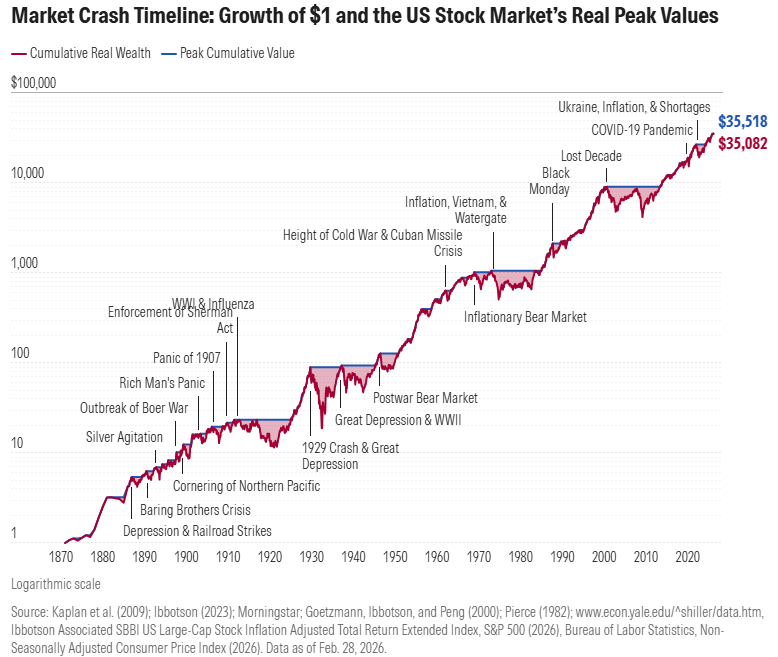
"No one has ever been a success betting against America since 1776 — and they're not going to be a success in the future doing it, either." – Warren Buffett
Elon Musk just put a price tag on obedience. It costs $200,000.
Musk: “You don’t need college to learn stuff. Everything is available basically for free. You can learn anything you want for free.”
Every lecture. Every textbook. Every framework ever written. Free on any screen in any country right now. The entire knowledge monopoly collapsed in a decade. Nobody updated the price tag.
Musk: “Colleges are basically for fun and to prove you can do your chores. But they’re not for learning.”
Strip the ivy and the branding. What’s underneath is a four-year obedience trial. Can this person follow instructions on a schedule without asking why.
Musk: “There is a value that colleges have, which is seeing whether somebody can work hard at something, including a bunch of annoying homework assignments, and still do their homework assignments.”
That is the entire six-figure value proposition. Not what you know. Not what you can build. Whether you can be managed. The establishment doesn’t need you educated. It needs you domesticated.
Musk: “If you’re trying to do something exceptional, you must have evidence of exceptional ability. I don’t consider going to college evidence of exceptional ability.”
The system doesn’t produce exceptional. It produces manageable. It takes the most creative years of your life and teaches you to wait for instructions. That is not education. That is containment.
Musk: “Gates is a pretty smart guy, he dropped out. Jobs is pretty smart, he dropped out. Larry Ellison, smart guy, he dropped out.”
They didn’t leave because they couldn’t keep up. They left because the ceiling was underground.
8 billion people now carry the same library in their pocket. The one these institutions charged a lifetime of debt to access.
The only product the university still sells is the belief that you need one.
Elon Musk literally sat down for a 45-minute talk with Y Combinator that explains how to build world-changing companies better than any business school on earth. This is the advice he gave a room full of young founders:
1. Don't try to build something great. Try to build something useful.
Everyone obsesses over greatness. Musk says that's the wrong target. "I didn't originally think I would build something great. I wanted to try to build something useful. I didn't think I would build anything particularly great. Seemed unlikely, but I wanted to at least try." Aim for useful first. Greatness, if it comes, is a byproduct.
2. When you can't get in the front door, build your own door.
Before Musk started his first company, he tried to get a job at Netscape. "I sent my resume into Netscape and nobody responded. I tried hanging out in the lobby to see if I could bump into someone, but I was too shy to talk to anyone. So I'm like, this is ridiculous, I'll just write software myself." He didn't set out to be a founder. He became one because no one would hire him.
3. He slept in the office and showered at the YMCA.
The origin of his first company was not glamorous. "We couldn't even afford a place to stay. The office was 500 bucks a month, so we just slept in the office and showered at the YMCA." He couldn't afford proper internet either, so he drilled a hole through the office floor and ran a cable to the internet provider downstairs. That was the founder of the future richest man on earth.
4. Keep the chips on the table.
When Musk sold his first company, he received a $20 million cheque. His bank balance went from $10,000 to $20 million overnight. Most people would have stopped. He put almost all of it straight back into his next company. "I kept the chips on the table." He did the same thing decades later, over and over. He hates money sitting idle. Money is fuel for the next mission.
5. Start with the mission, then work backwards to make it a business.
Musk didn't start SpaceX to make money. He went on the NASA website to find out when humans were going to Mars, and there was no plan. So he decided to build one. "There had been no prior example of a rocket startup succeeding. A small chance of success is better than no chance of success." The mission came first. The business model came later.
6. He started SpaceX expecting to fail.
He is brutally honest about the odds. "SpaceX started in mid-2002 expecting to fail. Probably 90% chance of failing. When recruiting people, I said, we're probably going to die, but small chance we might not die." The first three launches failed. The fourth one worked with no money left. "If the fourth launch hadn't worked, it would have been curtains. We made it by the skin of our teeth."
7. Break every problem down to physics.
This is the core of how Musk thinks. "First principles means break things down to the fundamental elements that are most likely to be true, then reason up from there, as opposed to reasoning by analogy." His example is rockets. Everyone priced them based on what old rockets cost. Musk asked what a rocket is actually made of, priced the raw metals, and found the materials were only 1-2% of the historical price. The rest was inefficiency he could attack.
8. When told something takes 24 months, break it down and do it in six.
Last year xAI needed a giant computer to train its AI. Suppliers said it would take 18 to 24 months. "It's like, well, we need to get that done in six months or we won't be competitive." So he broke it into parts. Needed a building, so he found an old factory. Needed power, so he rented generators. Needed cooling, so he rented a quarter of America's mobile cooling capacity. He slept in the data centre and ran cabling himself. It got done.
9. Watch your ego-to-ability ratio.
Musk's single sharpest piece of advice for young founders is about staying honest with yourself. "A major failure mode is when your ego-to-ability ratio gets too high. Then you break the feedback loop to reality." Keep the ego small, internalise responsibility for everything, and stay ruthlessly connected to what's actually true. "You want to close the loop on reality hard. That's a super big deal."
10. Chase work, not glory.
His closing philosophy ties it all together. "It's so hard to be useful. The area under the curve of total utility is how useful you've been to your fellow human beings times how many people. If you aspire to do true work, your probability of success is much higher. Don't aspire to glory, aspire to work."
He was ridiculed for years. The press called him "internet guy attempting to build a rocket company." He agreed it sounded absurd. He did it anyway, because a small chance of doing something useful beat no chance at all.
Here's the thing though....
Musk became the most followed founder alive because everything he does happens in public. The launches, the failures, the talks like this one. The companies made him powerful. The personal brand made his every word travel around the world before he finishes saying it.
We build massive distribution and grow personal brands on X and beyond without our clients lifting a finger.
If you're a founder or VC looking for that kind of exposure, book a call below.
We average 1.5M views a week.
https://t.co/UoXuYlkBQq
WARNING: Longer post (but worth reading or bookmarking for later).
Your life has seasons.
Each one is unique. Characterized by its own distinct desires, struggles, opportunities, and identity.
But one reflection I've had recently is just how easy it is to completely disassociate with the present season.
To give all your time and energy toward a longing for some nostalgic memory of a prior season or an anticipation for some beautiful state of a future season.
You look back at the past and all you see is sunshine. Because it all worked out. You forget (or glaze over) the struggle you endured. You're here today. You made it. You're alive. You're doing fine.
You look forward at the future and dream on what could be. You'll have so much more. More freedom. More purpose. More health. More deep connection. More everything.
The past is beautiful and the future feels limitless. So, logically, you slowly start to treat everything about the present as the bridge. A dash connecting your past and your future. A gap to be crossed as quickly as possible.
Everything you do today is in anticipation of some eventual end state.
I'm doing this now, so that I can have that later.
Unfortunately, the danger of that dissociation with the present is significant. You may spend your entire life living for a future that has a decidedly mirage-like property. You inch closer, but when it's right in front of you, it disappears and reappears on the horizon.
You may spend your entire life skipping through the present, deferring your presence, your joy, and your very humanity to a future that never comes.
In a classic French fable, a young boy is gifted with a magic ball of golden thread. He's told that if he simply pulls on the thread, time will leap forward. The catch, of course, is that once it's pulled, it can never be put back.
The young boy takes advantage of the newfound powers. Each time he's faced with a boring day at school, a frustrating set of chores, or a scolding from his parents, he pulls the thread, skipping through to the good parts.
As an adult, he continues, leaping through mundane struggles in his marriage, the friction of having a newborn, and the boredom at work. He finds himself pulling on the thread more and more, avoiding even the most minor inconveniences of his life.
But when he wakes up one day and sees an old man looking back at him in the mirror, he's filled with regret. He realizes in that moment that as he chose to skip through the boredom, struggles, and friction, so too did he miss the real texture of being alive.
How often do we all do the same? How easily do we default into this disassociation? Disconnecting from the present in anticipation of some future.
A mentor recently asked me this:
"Where are you going and why are you in such a rush?"
It hit me hard.
And to be honest, I haven't stopped replaying those words since he said them.
Why are you in such a rush?
The world wants you to rush into everything. Rushed decisions. Rushed conversations. Rushed relationships. Rushed timelines.
In doing so, you slowly relinquish your agency. You give up your claim on your own life. Surrender authorship to a pen that was never even yours.
In a world that wants you to rush, the ultimate act of rebellion is presence.
Be in the season you're in. Don't romanticize the past, don't fantasize the future. Be here. Be now. Be in this. All of its texture, depth, and struggle. All of its joy, tension, and pain. Sit with the uncertainty. Become friends with it. Fall in love with it.
Because every single thing you do today is something your younger self dreamed of and something your older self will wish they could go back and do.
The good old days are happening, right now.
And the next time you find yourself skipping through the present, remember these words:
Where are you going and why are you in such a rush?
$MU CEO, 실질적으로:
"10년 이상 동안 $AAPL은 우리 칩을 $5에 사서 금속 상자 안에 붙여넣고, 소비자에게 $99 업그레이드 가격으로 팔면서 우리가 $7을 받으려는 시도를 비웃었어요.
이제 우리는 그들에게 $50을 청구하고 있는데, 그들은 돌아서서 고객들에게 $250 가격 인상을 했네요."
🚨EVERYTHING IS PLAYING OUT EXACTLY AS I TOLD YOU
And this is only the beginning for $SPCX. Here's how the chart will move:
$150 → $225 → $150 - DONE
$150 → $134 → $117
$117 → $85 → $91
$90 → $160 → $250
Keep in mind: I’ve called every major market top and bottom for over 10 YEARS.
I was one of the only people who called the top in October, and I’ll do it again.
That’s literally my job.
If you still haven’t followed me, you’ll regret it.
HERE IS THE FULL SPACEX $SPCX SHARE UNLOCK TIMELINE
Right now only 4.9% of shares are in the free float.
Here is how that changes over the next 14 months:
Early unlock window (Jul - Dec 2026):
Aug 8: 11.8%
Aug 20: 15.2%
Sep 9: 17.7%
Sep 24: 20.1%
Oct 9: 22.6%
Oct 24: 25.1%
Nov: 27.6% → 37.5%
Dec 8: 40.0%
On Day 366, June 12, 2027: Elon's 46.1% stake becomes eligible ... The free float jumps from 50.8% to 96.9% in a single day.
By September 2027 the float reaches 100%.
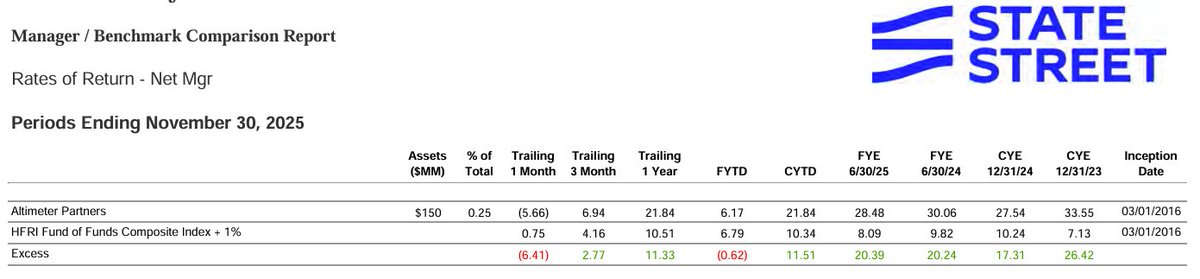
Brad Gerstner started Altimeter in 2008 with $3M from friends and family, in the depths of the GFC, when everyone thought he was crazy.
Since 2011, his fund has generated 25%+ returns per year.
Here's how a travel-search guy built one of the best investing track records:
Dario Amodei, anthropic's CEO, just answered the question everyone is asking. should you still learn to code:
1. coding is going away first. the AI models are doing it already. the broader task of software engineering takes longer but that's going too. if you're learning to code purely for job security, you're learning the wrong thing.
2. even at 5% of the task you're still valuable. if AI does 95% and you do 5%, you become 20 times more productive. comparative advantage is surprisingly powerful even when the gap is massive.
3. the professions with the most runway are human-centered ones. things that mix people, the physical world, and analytical skills together. he uses the radiologist example. the doctor who understands patients and context, not just reads scans.
4. critical thinking might be the most important skill of the next decade. when AI can generate anything, the ability to tell what's real from what's fake becomes rare and valuable. you don't want false beliefs. you don't want to get scammed. that's his actual advice to a 25 year old.
5. AI can make you stupider if you use it carelessly. anthropic ran studies on this. depending on how you use the model, de-skilling in coding is measurable and real. the tool doesn't cause it. carelessness does.
6. the semiconductor space is his pick for a capitalistic win in the next decade. physical world, traditional engineering, direct AI tailwind. not software but chips.
Billionaire investor Ron Baron explained the silent math destroying your wealth:
Your money loses 4 to 5% of its purchasing power every single year. The economy grinds higher at roughly 2%. That is a relentless 7% headwind against you, annually.
What that really means. Prices double every 10 to 12 years. Your savings are cut in half in real terms within about 15 years. Cash sitting idle is not safe, it is decaying.
The system is structurally engineered to punish savers and force capital into risk just to survive.