In order to be born, you needed:
2 parents
4 grandparents
8 great-grandparents
16 second great-grandparents
32 third great-grandparents
64 fourth great-grandparents
128 fifth great-grandparents
256 sixth great-grandparents
512 seventh great-grandparents
1,024 eighth great grandparents
2,048 ninth great-grandparents
For you to be born today from 12 previous generations, you needed a total of 4,094 ancestors over the last 400 years.
Think for a moment:
How many struggles?
How many battles?
How many difficulties?
How much sadness?
How much happiness?
How many love stories?
How many expressions of hope for the future? – did your ancestors have to undergo for you to exist in this present moment...
[theoretical calculation not considering the Pedigree Collapse]
For the first time, scientists connected two human brains over the internet. One person in India sent simple thoughts, which were converted into signals and transmitted to a person in France. The receiver’s brain interpreted the signals into words, without any speaking, typing, or movement. This experiment shows that direct brain-to-brain communication is possible, though it’s still at a very basic stage. Future research may allow sharing of thoughts or feelings directly.
"Humans Perform First Brain-to-Brain Communication Over the Internet." Big Think.
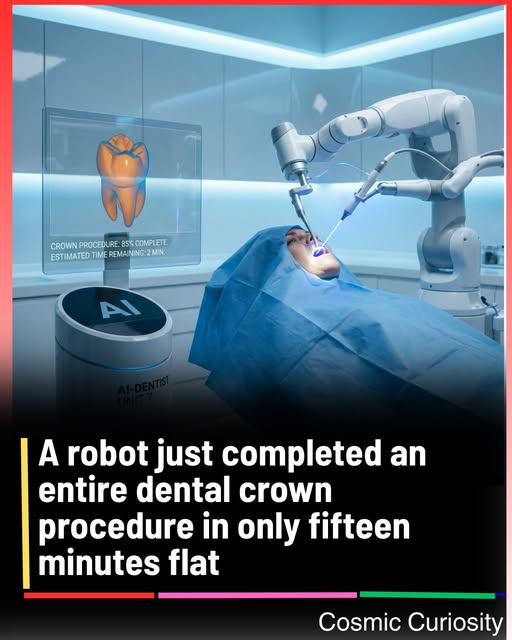
In a landmark medical technology milestone, a fully autonomous AI-powered robotic dentist — built by US company Perceptive — completed a full crown preparation on a human patient in just 15 minutes.
The same procedure typically takes a human dentist 2–2.5 hours. The robot used real-time 3D scanning, AI decision-making, and a precision robotic arm to perform the entire procedure without any human guidance or intervention mid-surgery.
This isn't a concept or prototype — it's already been performed on real patients and a peer-reviewed study was published in the Journal of Dentistry in January 2026. Experts say this is the beginning of a transformation: robotic dentists could eliminate human error, work at any hour, and eventually bring high-quality dental care to remote and underserved communities where trained dentists are unavailable. The dental office of 2035 may look very different from today's.
🧠 Your Brain Could Still Be Making New Cells in Your 70s!
Believe your brain stops producing new neurons after your younger years? Think again. Recent research suggests that even in your 70s, your brain might still be forming new neurons in the hippocampus—the area responsible for memory and learning. It’s a quiet yet powerful reminder that your brain can continue to change and stay engaged, no matter how old you are.
Luxembourg is the world’s first nation to offer free public transport for all, tackling traffic and climate change in one bold move.
Luxembourg has pioneered a bold new era in urban mobility by becoming the first nation on Earth to eliminate fares across its entire public transport network. This groundbreaking policy covers every bus, tram, and train route nationwide, offering free rides to residents, cross-border commuters, and visitors alike.
Financed through general taxation rather than ticket sales, the initiative was designed to tackle the country's severe traffic congestion—once among the worst in Europe per capita—and to sharply cut carbon emissions from road transport. By removing the cost and hassle of tickets, Luxembourg effectively turned public transit into a basic public service, as essential and accessible as clean water or electricity.
The impact has been profound and measurable. Ridership surged as people left their cars behind, leading to noticeably less road traffic, shorter commute times, and a meaningful drop in urban air pollution. While first-class rail options remain a paid upgrade for those wanting extra comfort, the standard second-class system is now truly seamless: hop on, hop off, no barriers.
Luxembourg's experiment has demonstrated that removing financial obstacles can drive a genuine shift toward sustainable travel habits. It has also served as an inspiring model for other countries and cities grappling with sprawl, gridlock, and climate goals. In an age when radical solutions are needed to address the mobility-climate crisis, Luxembourg proves that treating public transport as a universal right is not only feasible—it can be genuinely transformative.
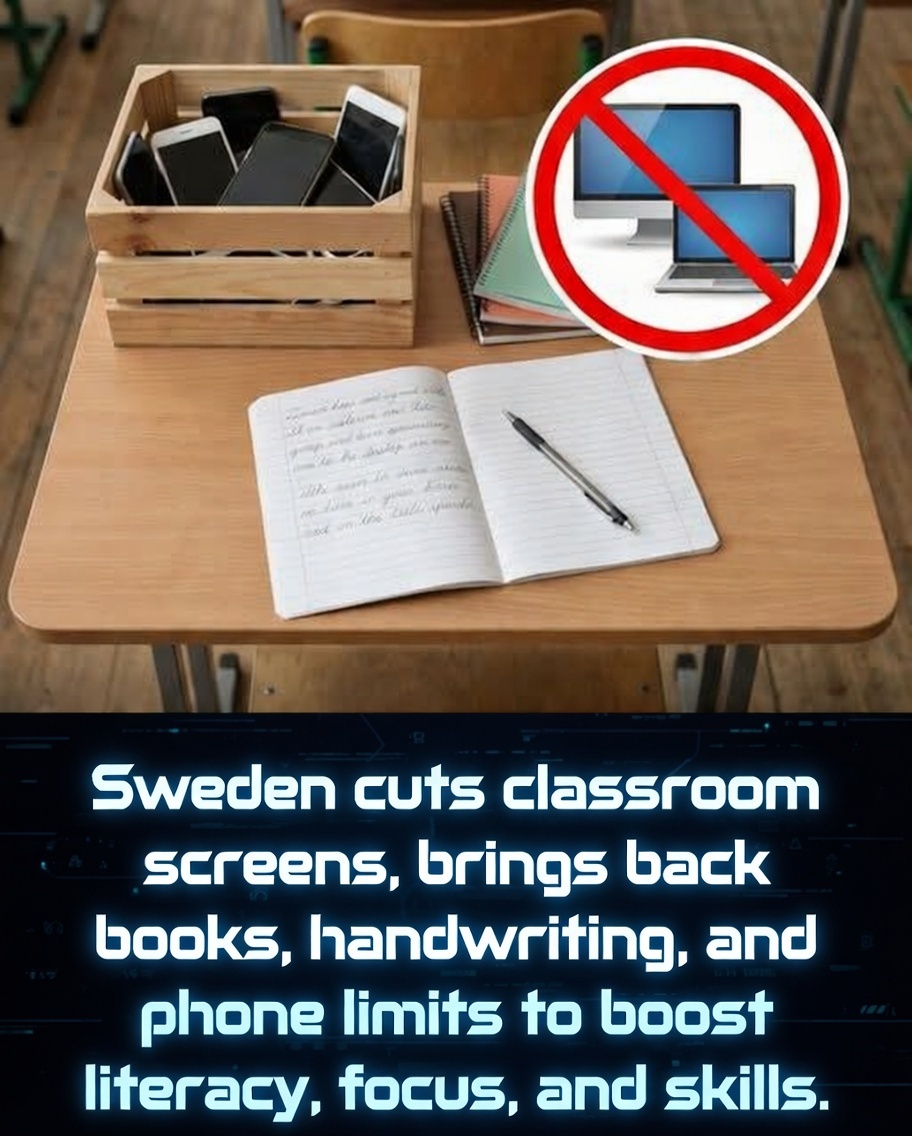
Sweden is committing more than €100 million to a sweeping classroom overhaul: replacing tablets and screens with traditional printed textbooks to help reverse falling student performance and sharpen focus.
After more than a decade of embracing digital-first education, Swedish authorities are now pivoting back to paper-based learning. Official data and recent studies cited by the Ministry of Education show that prolonged screen use in class has been linked to shorter attention spans, weaker reading comprehension, and reduced critical-thinking abilities.
Research consistently finds that reading on illuminated screens requires greater mental effort and invites more distractions compared to the calm, linear experience of physical books—factors believed to have contributed to declining academic outcomes in recent years.
Under the new plan, every student will receive printed textbooks for all core subjects, restoring books as the central learning tool. Digital devices and online resources will remain available as supportive tools, but they will no longer dominate daily instruction.
This bold €100+ million investment signals Sweden’s leadership in rethinking the role of technology in education. It underscores a broader, growing recognition worldwide: while screens provide speed and access, the hands-on, distraction-free engagement of physical books supports deeper concentration, stronger memory retention, and more effective long-term learning.
By choosing paper over pixels, Sweden is charting a path toward a more balanced, evidence-informed classroom future—one that puts proven pedagogical principles ahead of unchecked digital trends.
Scientists have identified a reversal of the long-standing Flynn effect—the roughly 200-year trend of rising average intelligence (measured via IQ and cognitive tests) across generations.
For the first time in modern recorded history, Generation Z (born roughly 1997–2012) shows lower performance than previous generations in key cognitive domains, including attention, memory, literacy, numeracy, executive function, problem-solving, and general IQ—despite spending more years in formal education than ever before.
Neuroscientist and educator Dr. Jared Cooney Horvath, PhD, MEd, testified before the U.S. Senate Committee on Commerce, Science, and Transportation on January 15, 2026, highlighting this shift. In his written testimony, he stated that cognitive development in children across much of the developed world has stalled or reversed over the past two decades, with declines evident in international assessments (e.g., PISA, TIMSS) and other large-scale data starting around the mid-2000s and accelerating post-2010.
Horvath attributes the primary driver not to reduced schooling, but to the widespread integration of digital screens and educational technology (EdTech) in classrooms. He argues that human brains evolved for deep, focused learning through face-to-face interaction and sustained attention, not fragmented skimming or constant task-switching encouraged by devices.
Key points from his testimony include:
- Teens now spend over half their waking hours on screens, with significant portions in school involving computers or tablets—often leading to off-task behavior and shallower processing.
- Evidence from meta-analyses and national/international studies shows a consistent pattern: higher classroom screen exposure correlates with weaker outcomes in reading, math, science, and higher-order reasoning.
- Digital tools may aid narrow, repetitive skill practice in controlled settings, but in core academic contexts, they tend to reduce depth of understanding, retention, and critical thinking.
Horvath describes this as a "structural mismatch" between human cognition and how digital platforms are designed (to capture and fragment attention), warning that unchecked EdTech adoption risks long-term harm to workforce skills, innovation, and societal reasoning.
[Horvath, J. C. (2026). Written testimony before the U.S. Senate Committee on Commerce, Science, and Transportation. U.S. Senate]
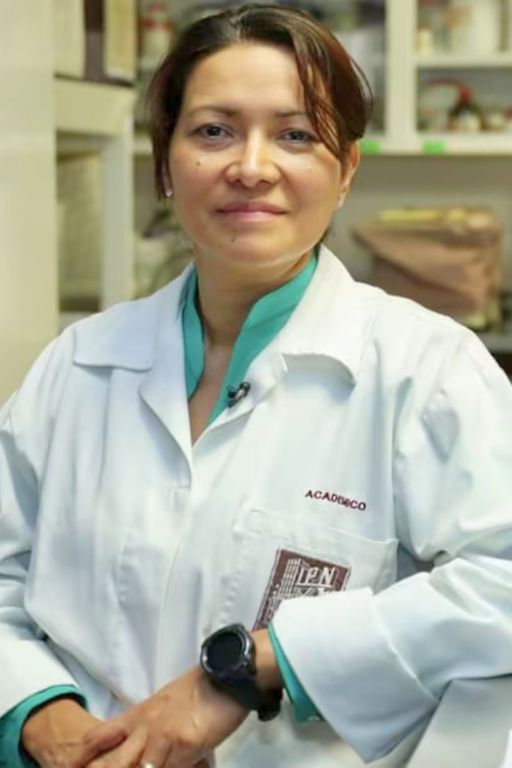
BREAKING🚨: Mexican researcher Eva Ramón Gallegos achieved a milestone that puts Latin American science at the center of the world medical debate: she managed to completely eliminate the Human Papilloma Virus (HPV) in controlled clinical studies.
🚨 Did Life Come From Space? Scientists Find Clues in Meteorites!
For the first time ever, researchers have detected all five DNA and RNA building blocks inside meteorites that fell to Earth. These tiny molecules—essential for life—might not have started here at all. Could it be that the seeds of life were delivered to our planet from the depths of space?
This discovery is rewriting what we thought we knew about our origins. It suggests that the ingredients for life could be scattered across the universe, waiting for the right conditions to spark living organisms.
The idea that life on Earth might have cosmic roots is both thrilling and mysterious—making us wonder: are we really alone?











![Rainmaker1973's tweet photo. In order to be born, you needed:
2 parents
4 grandparents
8 great-grandparents
16 second great-grandparents
32 third great-grandparents
64 fourth great-grandparents
128 fifth great-grandparents
256 sixth great-grandparents
512 seventh great-grandparents
1,024 eighth great grandparents
2,048 ninth great-grandparents
For you to be born today from 12 previous generations, you needed a total of 4,094 ancestors over the last 400 years.
Think for a moment:
How many struggles?
How many battles?
How many difficulties?
How much sadness?
How much happiness?
How many love stories?
How many expressions of hope for the future? – did your ancestors have to undergo for you to exist in this present moment...
[theoretical calculation not considering the Pedigree Collapse]](https://pbs.twimg.com/media/HMDs0oBWkAAtERK.png)



![Rainmaker1973's tweet photo. Scientists have identified a reversal of the long-standing Flynn effect—the roughly 200-year trend of rising average intelligence (measured via IQ and cognitive tests) across generations.
For the first time in modern recorded history, Generation Z (born roughly 1997–2012) shows lower performance than previous generations in key cognitive domains, including attention, memory, literacy, numeracy, executive function, problem-solving, and general IQ—despite spending more years in formal education than ever before.
Neuroscientist and educator Dr. Jared Cooney Horvath, PhD, MEd, testified before the U.S. Senate Committee on Commerce, Science, and Transportation on January 15, 2026, highlighting this shift. In his written testimony, he stated that cognitive development in children across much of the developed world has stalled or reversed over the past two decades, with declines evident in international assessments (e.g., PISA, TIMSS) and other large-scale data starting around the mid-2000s and accelerating post-2010.
Horvath attributes the primary driver not to reduced schooling, but to the widespread integration of digital screens and educational technology (EdTech) in classrooms. He argues that human brains evolved for deep, focused learning through face-to-face interaction and sustained attention, not fragmented skimming or constant task-switching encouraged by devices.
Key points from his testimony include:
- Teens now spend over half their waking hours on screens, with significant portions in school involving computers or tablets—often leading to off-task behavior and shallower processing.
- Evidence from meta-analyses and national/international studies shows a consistent pattern: higher classroom screen exposure correlates with weaker outcomes in reading, math, science, and higher-order reasoning.
- Digital tools may aid narrow, repetitive skill practice in controlled settings, but in core academic contexts, they tend to reduce depth of understanding, retention, and critical thinking.
Horvath describes this as a "structural mismatch" between human cognition and how digital platforms are designed (to capture and fragment attention), warning that unchecked EdTech adoption risks long-term harm to workforce skills, innovation, and societal reasoning.
[Horvath, J. C. (2026). Written testimony before the U.S. Senate Committee on Commerce, Science, and Transportation. U.S. Senate]](https://pbs.twimg.com/media/HBDIc7NagAAWGAb.jpg)