The most successful European startup journey:
1. Have an idea
2. Get six co-founders, ideally in their 50s
3. Spend four months to set up a legal entity
4. Apply to Y Combinator, get rejected
5. Write angry LinkedIn post about tech bro culture in the US
6. Raise €50k for 75% equity from top European VCs
8. Do external GDPR audit before users sign up
9. Co-founder leaves to do a second PhD
10. Apply for an EU grant
11. Move headquarters to Estonia for e-residency
12. Launch product, get four users
13. Pivot to sustainability consulting
14. Become the AI innovation advisor to EU Parliament
Silicon Valley simply cannot comprehend what we are building here
Just discovered my 19 year old daughter has an OnlyFans account
I was devastated
She clearly must not be registered as a sole proprietor with the the German Trade Office
I sat her down and asked how much she'd made
She said €4,200
I nearly collapsed
That's at least €1,890 in unreported VAT obligations
She started crying but I did the only thing a good father could do
We spent the entire weekend filling out forms together
She's now fully compliant with a business registration and tax ID
Makes €340/month after taxes and social contributions
I've never been more proud of her
Only 19 and already an online entrepreneur
She has a bright future ahead of her
@josevalim Max effort just overthinks things to a point that they kinda don’t make sense anymore. Auto effort seems more ok, but still worst a experience
Gumroad’s test suite of 16,000 tests has been flaky for years. This slowed down shipping tremendously.
This week, Gianfranco used @karpathy’s autoresearch and @steipete’s OpenClaw to stabilize our test suite overnight.
And his code is open source, so you can (have your agent) do it too.
(And our code is open source too so you can see every single fix on GitHub.)
@marionzualo Right now i get to about ~9 docker containers running Postgres and double that number of rails servers running on tmux. Everything orchestrated to run on top of a new worktree.
Unnoticeable for an M1 with 32gb of ram , I’m starting to hit that 1tb ssd limit though
Built in worktress is a great start to have multiple agents working in parallel, but to run specs, instantiate servers and boot up uis we still need a way to have multiple independent processes and infrastructure dependencies
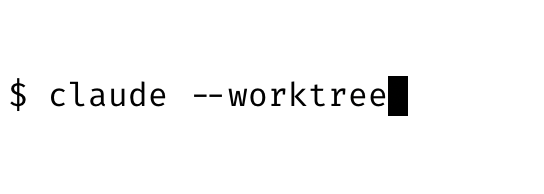
Introducing: built-in git worktree support for Claude Code
Now, agents can run in parallel without interfering with one other. Each agent gets its own worktree and can work independently.
The Claude Code Desktop app has had built-in support for worktrees for a while, and now we're bringing it to CLI too.
Learn more about worktrees: https://t.co/JFkD2DrAmT
@marionzualo Complexity can be abstracted away into simple commands.
Take having multiple git work trees running at the same time with their own instances of your corps apps
The idea is simple, and intuitive to abstract, but there is real complexity behind it
I'm keeping two Claude windows open. One making changes to the source code. The other helping me to plan future changes. This uses my time better since I spend a lot less time waiting for Claude to finish.
The two Claudes are in two different directories, both have git repos of the project. The planning directory has rules that prevent source code changes. Only planning is allowed. I manually pull and push changes between the two.
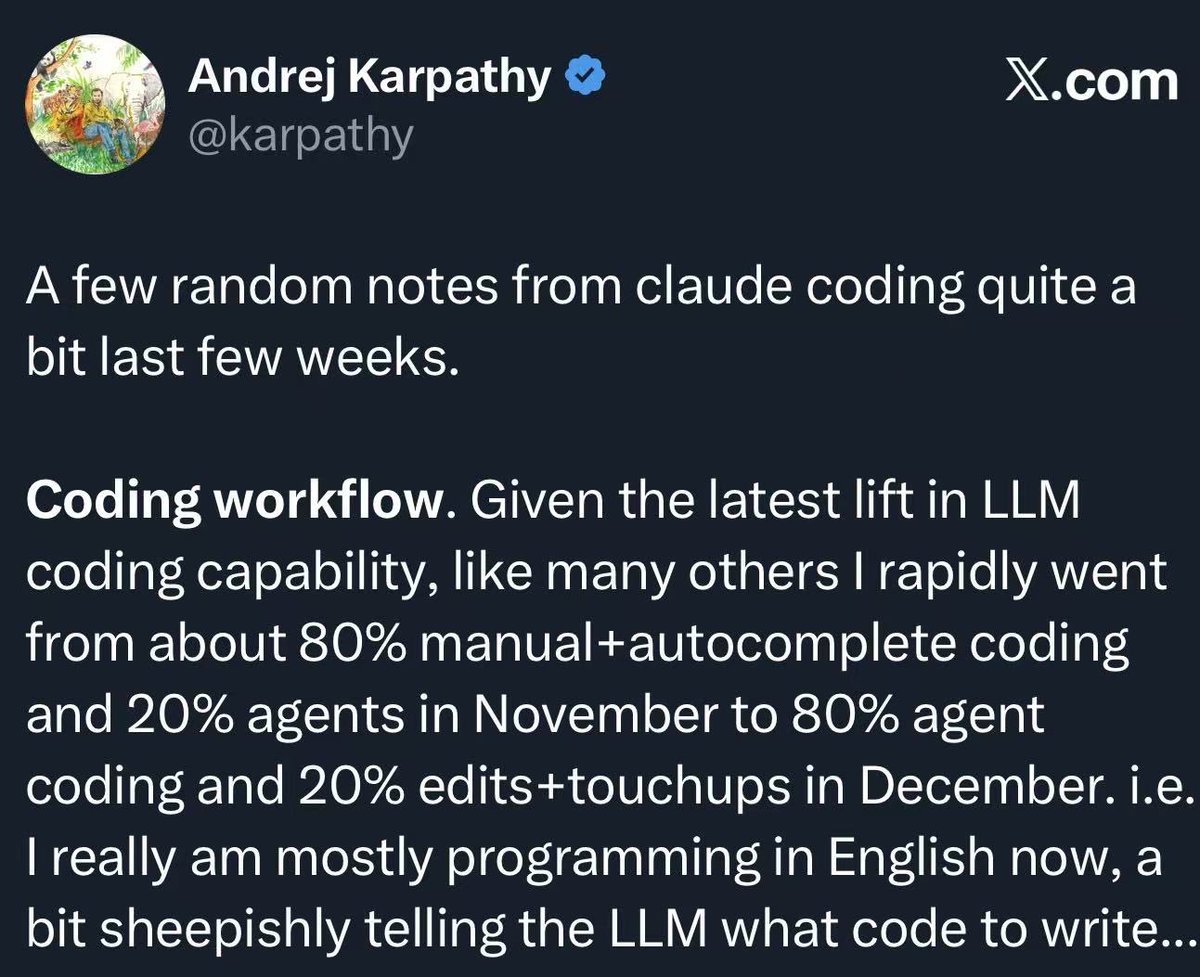
Andrej:
“I rapidly went from about 80% manual+autocomplete coding and 20% agents in November to 80% agent coding and 20% edits+touchups in December.
i.e. I really am mostly programming in English now.”
Same here. The shift literally happened in weeks, after Claude Opus 4.5 + Claude Code got really good.
@rough__sea This has been said never before, but allow me to add my own voice: the era of talking to humans is over. Disturbing for those of us who identify as social and outgoing, but no less true. Talking will be done by AI agents.
Hello, this is Yanis Varoufakis with a piece of news that would have been hilarious if it weren’t so scary. This morning, two policemen appeared on my doorstep to serve a summons ordering me to the police headquarters to be interrogated by the Greek DEA, our drug busting police department. Not as a witness, expert or not, but as the accused. Accused of what?
Shortly after New Year’s, I appeared on a podcast organised by young people to answer their questions on everything that concerns Gen Z today: social media, the meaning of life, their job prospects, what I call technofeudalism etc. At some point, they asked me if I had ever used drugs. Determined not to do a Bill Clinton (remember the laughable “I didn’t inhale”?), I said I had. Apart from pot, I told them, I had one experience of taking ecstasy in Sydney 36 years ago. It was pleasant, I danced for 16 hours effortlessly but then, I added, it gave me a migraine for a week – and so I never used again. That was my introduction to making the point that, however pleasant drug taking may seem, there is a price to pay. And that the ultimate price is dependence, addiction – “the end of liberty”, I said emphatically.
Do you see where this is going? Yes, the Greek police have opened an investigation of me under the charge of... aiding and abetting the narco-mafia. [Do me a favour folks: Please don’t tell Trump, OK?]
Seriously now, at a time of war, genocide, stupendous exploitation and so on, my little trouble with the inane Greek police is neither here nor there. But it is important. Here, in Europe, many people still live under the illusion that we have liberty, rationality and freedom. We don’t. Dark forces are at work, pushing us into a postmodern version of the Dark Ages.
So, beware, people! They are out to take away the last remnants of autonomy and freedom we have left. Resistance is, literally, existence.
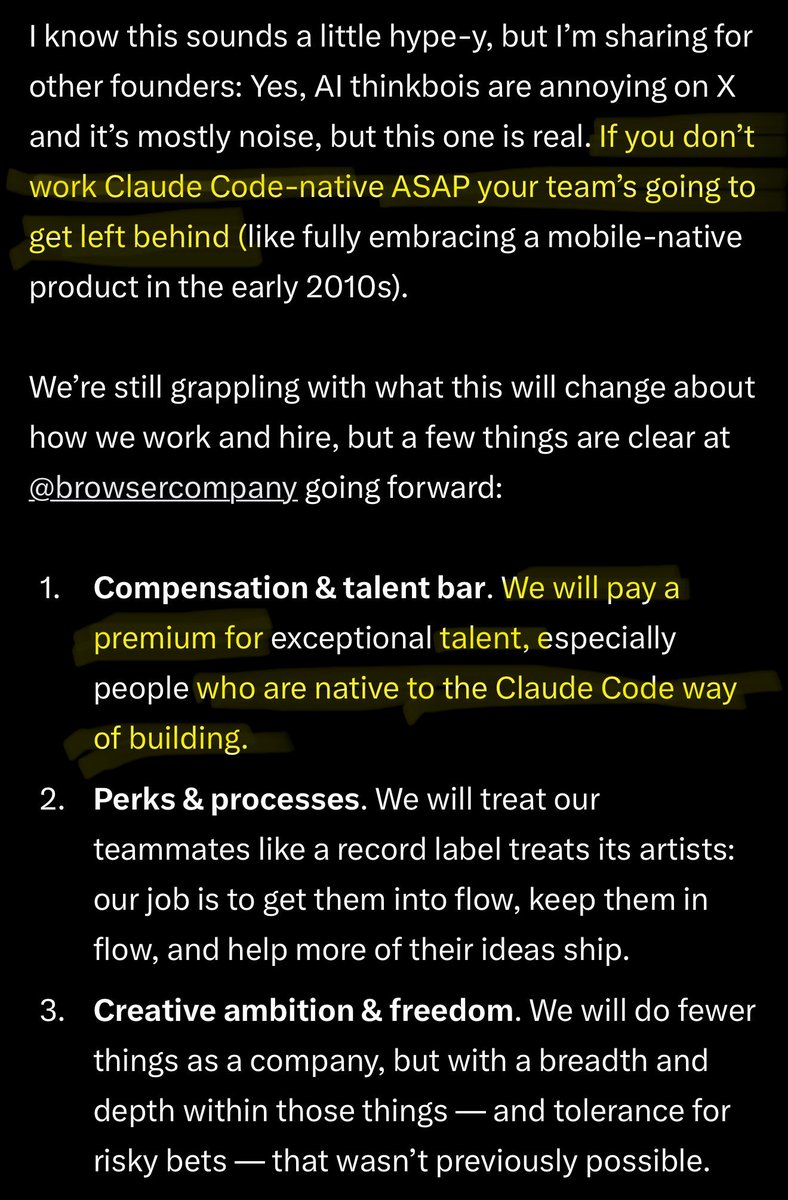
Founder of The Browser Company: “If you don’t work Claude Code-native ASAP your team’s going to get left behind.”
The “Claude Code-native” thing sounds like a buzzword until you look at what’s actualy happening at top engineering orgs.
Boris Cherny, who created Claude Code at Anthropic, runs 5-10 parallel Claude instances simultaneously while coding. His team pushes around five releases per engineer per day. Jaana Dogan at Google admitted Claude Code generated a distributed system in 60 minutes that her team spent a year iterating on.
The math on productivity compression is wild.
Traditional dev cycle for a feature… weeks. Claude Code native teams? Days. Sometimes hours. Ethan Mollick had Claude Code autonomously work for 74 minutes straight building a complete startup website from a single prompt.
Miller’s three hiring principles tell you where this is going.
One… Premium pay for people native to this way of building. Not “can use AI tools.” Native. Meaning the AI is the primary execution layer and the human provides direction, taste, judgment.
Two… Treat teammates like artists at a record label. Get them into flow. Keep them in flow. Help more of their ideas ship. This only works if execution friction approaches zero.
Three… Do fewer things with MORE depth and tolerance for risky bets. You can only operate this way when your velocity is 10x what it was before.
The mobile native comparison is spot on. Remember when companies were debating whether to build mobile apps? The ones who went mobile-first won. The ones who treated mobile as a nice-to-have got left behind.
Same dynamic playing out now.
But there’s a harder truth Miller is hinting at.
If one engineer with Claude Code outputs what previously required a 5-person team… what happens to headcount planning? The Browser Company already operates with a small team relative to their ambition. Under Atlassian they’re not scaling headcount. They’re scaling output per person.
This means two things for founders.
First… Your best engineers become worth significantly more. They’re now force multipliers instead of individual contributors. Compensation will reflect this.
Second… Your average engineers become a liability. Not because they’re bad. Because they’re not adapting fast enough to the new paradigm.
The gap between AI-native engineers and everyone else will widen faster than the mobile transition did. We went from “maybe we should have a mobile site” to “mobile is 60% of traffic” in about four years. I think the Claude Code native transition happens in half that time.
Mobile wasn’t optional. Neither is this.