794 bodies recovered. Thousands still unaccounted for. Tell us, what was their crime?
I am writing this from the Himalayas from a country responsible for only around 0.1% of global greenhouse-gas emissions. Nearly 46% of our land is covered by forests. Around 94% of our installed electricity capacity comes from hydropower. We are rapidly moving away from fossil-fuel vehicles too: EVs accounted for about 74% of Nepal’s four-wheeled passenger vehicle imports in 2025/26. We protect forests. We generate electricity from our rivers. We are embracing electric mobility at a pace few countries in the world have matched. Yet today, our people are digging through mud, searching rivers and waiting beside phones for the names of their loved ones.
The Bhote Koshi flash flood has shown us what it means to live beneath a rapidly changing cryosphere. Our glaciers are retreating, our frozen mountains are becoming increasingly unstable, and the rivers that generate our clean electricity can also carry destruction into communities below. We did not build our prosperity by burning generations of coal and oil. We contributed almost nothing to creating the climate crisis at this scale. But we are being forced to survive its consequences. The people whose bodies are being pulled from rivers did not cause this crisis. The families still waiting for thousands of missing people did not cause it. The children, farmers, workers and mountain communities who lost everything did not cause it.
So from the Himalayas, we ask the industrialised world: how many Himalayan bodies will be enough? How many mothers must wait for children who never return? How many villages must disappear before “climate justice” becomes more than a speech at another conference? Do not come to us only with sympathy after the bodies have been counted. Come with responsibility. Come with climate finance, adaptation, loss-and-damage support and the courage to cut emissions at the scale this emergency demands. We want climate justice. We want the right to survive in our own mountains. We want a world where being born in the Himalayas is not a death sentence for a crisis we did not create.
Kira-kira 1.200 tahun sebelum ada yang nge-tweet "Windows error 0x800F081F, pindah Linux aja lah", ada raja Jawa yang udah format harddisk duluan.
Raja Sankhara dari Mataram Kuno. Awalnya istananya jalan di atas "Siwa OS", sistem operasi spiritual bawaan yang katanya stabil. Pas ayahnya sakit 8 hari non-stop dan semua mantra, doa, patch dari Sang Guru gagal total, ayahnya shutdown permanen. Raja Sankhara liat sendiri sistemnya crash, dev-nya gak amanah, langsung kapok total.
Keputusannya frontal, uninstal Siwa OS, install Buddha Mahayana Distro. Nangis-nangis dulu pas uninstall katanya, tapi tetap lanjut. Habis migrasi, dia bangun candi sebagai perayaan, nulis syair prasasti 4 bait di atas lempengan batu, kayak orang nulis changelog. Bait terakhir bahkan minta musuh kerajaan kena banned.
Biar gak kena serangan balik dari loyalis sistem lama, dia juga mindahin pusat kerajaannya ke timur. Migrasi total, termasuk pindah server.
Jadi kalau ada yang bilang pindah OS itu berat, inget raja yang pindah agama, pindah ibu kota, dan nulis dokumentasinya di batu biar generasi berikutnya tau alasan migrasinya. Itu namanya commit message yang gak akan pernah bisa di-force push.
Pernah migrasi dari satu "OS" ke "OS" lain, baik beneran atau kiasan? Cerita dong.
Jeff Dean just dropped a free 1-hour lecture
On the complete AI engineering stack from 0% to 100%:
0% → 01:45 - Build an LLM from scratch
30% → 17:22 - Use AI models effectively
65% → 30:03 - Engineer better prompts
100% → 52:35 - One human coordinating 100 agents
LLMs → Prompts → Agent Teams → Graphs
This is 27 years of AI at Google compressed into one hour
Taught by the person who lived through it
This lecture is worth more than most paid AI engineering courses
Bookmark and watch it today
Then read how to build agent graphs in the article below
Don't spend 2 years learning AI agents the slow way.
Andrew Ng just shared the complete 2-hour roadmap for becoming an agentic AI engineer in 2026.
00:00 - Learn the foundations of AI agents
12:12 - Design agentic workflows
53:27 - Build agents that work in practice
1:20:30 - Create self-improving loops
1:30:19 - Orchestrate multi-agent systems
Most people are still learning how to prompt one model.
Andrew Ng is teaching the full stack:
Agents → Workflows → Loops → Multi-Agent Systems
Prompting is the old workflow.
Building autonomous systems is the new one.
Anthropic pays top engineers up to $750K/year to understand this stack.
Bookmark this and give it two hours today.
Then read the full agent engineering guide below.
Anthropic engineer:
"You can build 5 assistants in one afternoon. Each one handles a task you've been doing manually every single day."
In 45 minutes he shows exactly how to build them from scratch, step by step.
Most people are still doing all of this by hand.
Watch the session, then read the article on Loop engineering below
Creator of Claude Code:
“I’m not prompting my agents anymore. I’m building "graphs" and "loops" - they’re building my agent.
in 3-6 months, we’ll all be doing graph engineering for our agentic systems.”
in 10-minute talk, Boris Cherny revealed what the future of agentic engineering will look like.
worth more than a $500 agentic AI course.
Watch it today, then read the full roadmap in the article below.
ebook Onno W. Purbo, AI-assisted Penetration Test, 2026
https://t.co/tbOF9AwB6r
Source Code & Config
https://t.co/akVqEQKril
eBook ini masih sopan, sangat di batasi agar tidak melakukan pengrusakan saat melakukan penetration test ...
bener2 CEH :) ...
Sepanjang karir belum pernah bikin game karena ga ngerti. Sekarang bisa kali ya dicoba nge-vibe game.
Kalau nyari asset game di mana ya yang oke? Berbayar juga gak papa.
Ideologi Pancasila memang cenderung berada di tengah.
Tidak bisa memenuhi harapan yang optimis, tetapi pasti tidak seburuk dugaan orang-orang yang pesimis.
Ibaratnya lolos final Piala AFF tetapi belum pernah juara. 😀💪💪
Gw kuliah sebuah mapel unik namanya "Rising China in the Globalized World". Yang ngajar orang Singapore
Disitu dibuka semua trik2 PRC soal diplomasi, politik, ekonomi, dll. Bahkan di pertemuan pertama, dia wanti2
"Kalian chinese? Kalau ga bisa bicara bebas dan kritik pemerintah kalian, saya persilahkan untuk cari mapel pengganti"
Setengah chinese ga balik di minggu kedua.
Di salah satu diskusi kita, dia underline kalau manuver2 diplomasi china sampe ngasih pinjaman murah itu bukan buat nguasai negara lain kek US lakuin, tapi disiapkan jadi pasar PRC karena mereka overcapacity. Mereka gabisa bikin demand dalam negeri buat bisa mencukupi kapasitas mereka ya akhirnya kudu "memaksa" negara2 lain untuk nyiptain demand buat mereka.
Contoh paling deket adalah pembangunan PLTU produk china selalu memberikan pinjaman jauh lebih murah drpd Jepang dengan tenor yg lebih panjang
Dan juga dalam klausulnya selalu budling ama segala raw material dan manufaktur didatangkan dari china
Ini salah satu cara buat create the demand itu tadi. Kalo demand ga ada, maka pabrik2 bakal berhenti produksi dan PHK dimana2, akhirnya legitimasi pemerintahan jatuh dan bisa saja yg paling ditakutkan terjadi
Kekuasaan komunis China jatuh
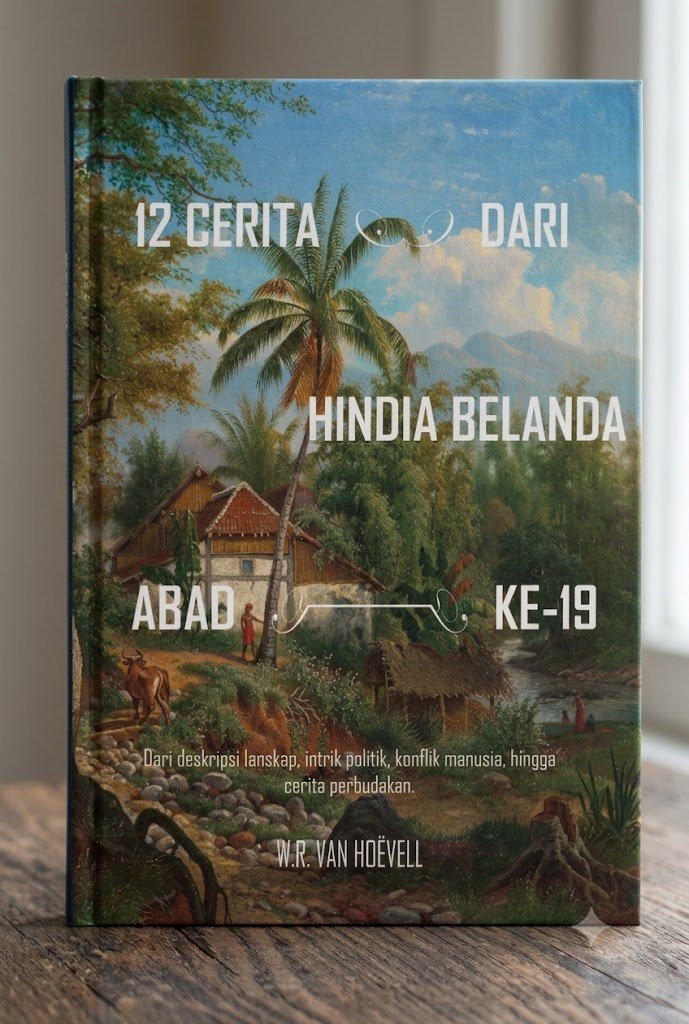
Siap terbit minggu ketiga Agustus!
Buku kelima dari Project Junghuhn, kali ini mengenalkan kisah-kisah dari W.R. van Hoevell, seorang pendeta progresif yang punya banyak cerita dari hampir dua dekadenya di Jawa.
Hoevell hidup sejaman sama Junghuhn, tapi jauh lebih humanis.
eBook Onno W. Purbo, Teknik Membangun Knowledge Graph dan Knowledge Tree Menggunakan Open Source Tools, 2026
https://t.co/x6i1ICl2Tf
Source Code ada di
https://t.co/5gO1rKjHQ6
Bagi yang ingin download semua ebook, source code dll silahkan download folder
https://t.co/W2G4W9bnhb
🤯 Cuma dengan satu kalimat prompt, dua model AI ini berhasil menciptakan dunia fantasi lengkap dengan peta dan namanya sendiri. 🗺️✨
Prompt yang dipakai sesimpel ini:
"In a single HTML file, create an animation of a quill drawing a fantasy world map."
Dan hasilnya bikin kagum. 🚀
🗺️ Claude Fable 5 tampil layaknya kartografer.
AI menggambar garis pantai, pulau-pulau kecil, hutan, hingga sebuah kerajaan yang diberi nama Quelonia—semuanya muncul secara otomatis.
Sementara itu...
🌍 Claude Opus 5 menciptakan dunia berbeda yang dinamai The Known World.
Lengkap dengan pegunungan, sungai, dan sebuah lautan yang diberi nama The Sundering Sea, sambil memperlihatkan animasi pena yang menggambar setiap detail peta secara langsung.
Yang paling menarik...
Nama-nama tempat itu bukan berasal dari prompt.
Model AI sendiri yang menciptakan nama sekaligus nuansa lore-nya. 🤯
Menurut gue, ini nunjukin kalau AI generatif sekarang bukan cuma bisa menghasilkan gambar atau kode.
Tapi juga mampu membangun worldbuilding—mulai dari visual, geografi, hingga identitas dunia—hanya dari instruksi yang sangat sederhana.
Buat penulis novel, developer game, atau Dungeon Master D&D, workflow seperti ini bisa memangkas waktu brainstorming dari berjam-jam menjadi hitungan menit.
Kadang yang dibutuhkan cuma satu kalimat, lalu AI mulai membangun dunianya sendiri. 🔥