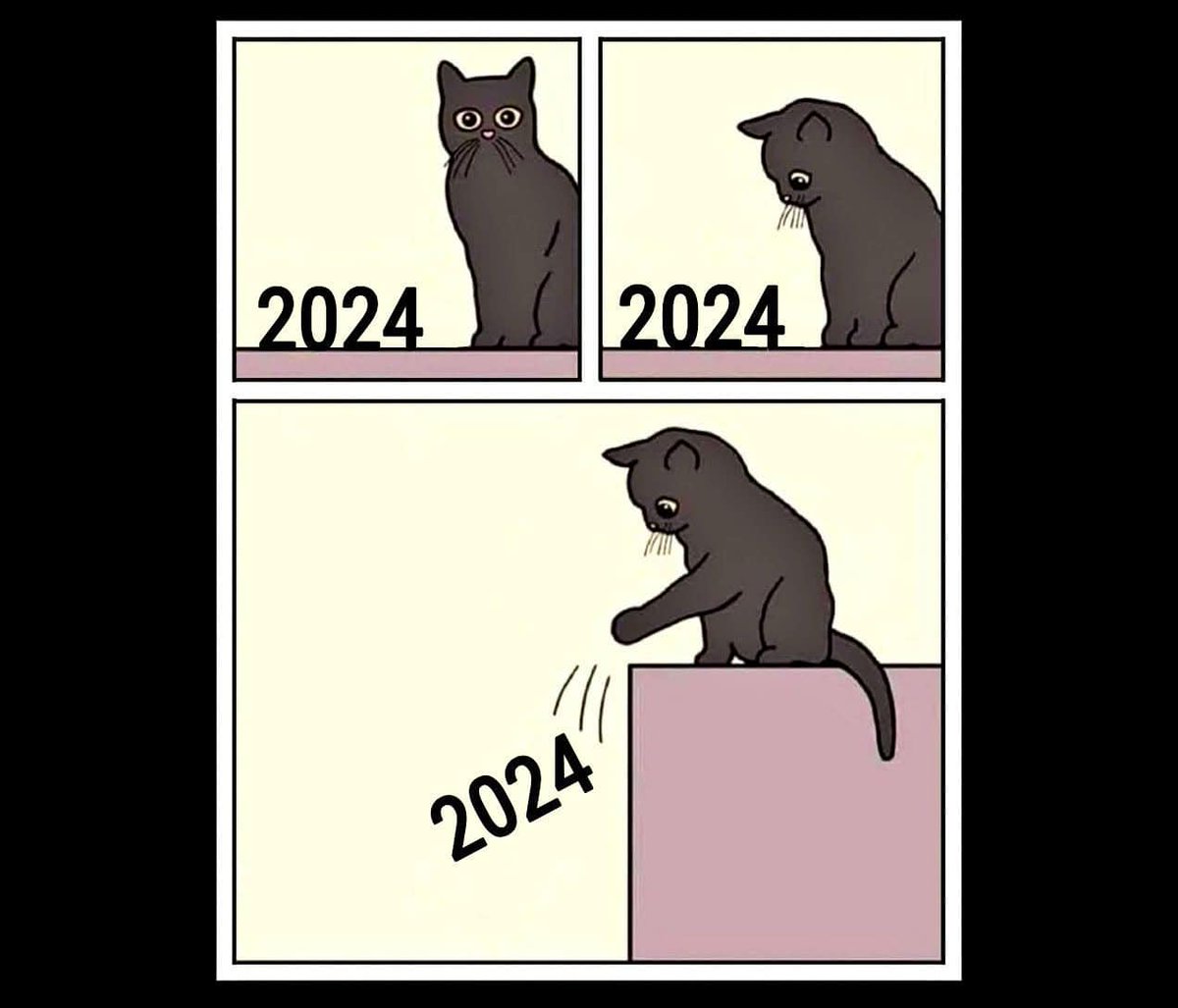
Rome and Han China were the two biggest empires on the planet at the same time. Together they ruled something like half the people alive. And for about 200 years they knew each other almost entirely through rumors, middlemen, and one fabric.
The Romans called the Chinese the "Seres," the silk people. Nobody in Rome had any idea how silk was made. Virgil and Pliny the Elder both wrote that it was combed off the leaves of trees.
What Romans did know was that they wanted it. Silk got so fashionable that in 14 AD the Senate banned men from wearing it because it was seen as effeminate. Seneca complained that silk dresses were so sheer a woman wearing one might as well be naked. Pliny griped that India, China, and Arabia were draining 100 million sesterces a year out of the empire for luxuries.
The Chinese, meanwhile, called Rome "Daqin," roughly "Great Qin." The Han histories said its people were tall and upright and resembled the Chinese, which is how it got the name. They described 400 walled cities, stone buildings, relay stations for messengers, and gold and silver coins.
They also got some things beautifully wrong. One Chinese account says the king of Daqin is not permanent. Worthy men are chosen to rule, and if there's a disaster or bad weather, the king is replaced, and the one removed accepts it without complaint. Somewhere in there is a garbled echo of Roman politics passed down through a dozen translators.
In 97 AD the Han general Ban Chao sent an envoy named Gan Ying west to actually find Rome. He made it as far as the coast of the Persian Gulf. There, Parthian sailors told him the voyage could take up to two years, that crews packed three years of supplies, and that men at sea got so homesick some of them died.
Gan Ying turned around.
The Chinese later figured out why. Their own history says the Parthians wanted to control the silk trade and deliberately blocked contact between the two empires. The middlemen had every reason to make the ocean sound terrifying.
It took until 166 AD for someone to get through. A group arrived at the Han court by sea, through what is now Vietnam, claiming to be sent by "Andun," almost certainly Emperor Marcus Aurelius Antoninus. They brought ivory, rhino horn, and tortoiseshell. The Chinese historians noted there were no jewels at all and suspected the stories about Daqin's wealth had been exaggerated. Most historians today think these "ambassadors" were enterprising merchants.
And no, a lost Roman legion from the Battle of Carrhae did not end up founding a town in China. That theory was popular for decades, but DNA studies of the people of Liqian found no Roman ancestry.
Two superpowers, roughly 5,000 miles apart, each one sure the other was fabulously rich and a little bit strange. One envoy got close enough to smell the ocean and got talked out of it.
The point here is not that China should suppress consumption endlessly.
The point is that China's focus on investment, savings, and gradually more sophisticated production — rather than consumption — is what's made it so successful.
And if China now abandons this development model, it risks not only slower technological progress but also less technological sovereignty, in a world where the other superpower is itching to see a less sovereign China.
From China's perspective, it makes complete sense to keep its industrial policy juggernaut going strong.
I have conducted an audit of Anthropic's finances.
What I have found is so shocking that I am calling for a Congressional investigation.
Anthropic is not just seeking regulatory capture.
It has built a regulatory capture machine that cannot be turned off.
Structural financial incentives make it impossible for Anthropic -- I call it the Anthropic Network -- to turn off its own AI doom cycle.
It starts with METR.
Dario Amodei proposes "third-party evaluators" to assess the risk of Anthropic's models.
He proposes METR for this purpose.
But METR is financially dependent on the Anthropic's success -- specifically, on the explosive growth of more than $7 billion dollars in Anthropic stock.
Dustin Moskovitz invested this stock into Good Ventures Foundation, where it represents the majority of that organization's portfolio.
And GVF is the overwhelming funder of the entire Anthropic Network ecosystem.
This stock was worth $500 million early last year.
It is worth more than $7.7 billion just ~16 months later.
METR -- and all of those building a career its parent organizations -- cannot afford to disrupt that growth.
Because if Anthropic goes under, many of the organizations that fund METR go under as well.
But if Anthropic succeeds, METR and its parent organizations become more richly financed to regulate AI -- something those at METR want very much.
The "third-party evaluator" is not "third-party" at all.
The evaluator is on Anthropic's payroll.
If this were the end of it, that's bad.
But that isn't all.
The same organizations that fund METR also fund the many organizations, such as the Tarbell Center, that promote AI Doom.
The Tarbell Center publishes AI Doom articles in The Verge, Science, LA Times, The Dispatch, TIME, and others.
They are selling the problem, and then selling the solution to the problem -- from the same money pile: Anthropic's.
All of these organizations are financially dependent on the same exploding $7 billion money pile.
As Anthropic grows more and more powerful, its AI Doom Machine grows better and better financed -- louder and louder.
Meanwhile, the regulatory regime seeded in METR grows larger to solve the increasingly loud -- now hysterical -- problem of AI Doom that the Anthropic Network itself created.
From this standpoint, as Anthropic becomes more powerful, AI might be getting scarier, sure -- but the positive feedback loop also becomes more deafening -- independent of objective facts.
This itself is an objective fact.
The deafening AI Doom is part of an business model, that, as it expands, so too does the AI Doom messaging -- there is simply more money to do it.
But the problem also goes in the other direction:
If Anthropic dies, the Regulatory Regime and the AI Doom Machine are crippled or die.
Neither METR nor Tarbell nor the other organizations in the Anthropic Network can allow that to happen.
Hence, neither METR or the AI Doom Machine can be trusted to provide independent assessments of Anthropic's models or AI more broadly.
They simply are not organizations independent of Anthropic.
And Anthropic cannot detach itself from METR or Tarbell or countless other safety orgs (not shown here), either, because they drive hype for the models and the possibility of eventual regulatory capture, and Anthropic will not give that up willingly.
What's more, the people at all of these organizations are all the same ecosystem, the same community. They just shuffle between organizations.
The Anthropic Network is therefore, so long as it is successful, locked into a self-amplifying feedback loop inside an ideological monoculture.
And that feedback loop is winning.
That's what Jacob Coxon is.
China is keeping messaging tight. That is why optimism for AI is so high in China.
America has Anthropic: a massive company pushing anti-AI propaganda at a state level.
Anthropic will either create hysteria until American AI slows down and China wins, or it will create fractures throughout American society with severe political consequences.
Ironically, because of the structural financial incentives underpinning the Anthropic Network, it has become the same kind of self-amplifying virus that it fantasizes AI to become in the future -- while hiding its tracks just as carefully.
It is the mirror of the same AI virus that it hypothesizes to consume America.
Anthropic's business model, models itself after the very thing it claims to fear.
Except Anthropic's ideology infects humans, not computers.
Congress must investigate.
Evidence and Github in next post.
Then some supplementary figures.
Full text (translated by Astra-xhigh, I'm out of everything else):
I Have No Choice but to Bury My Talent in Yesterday
A few days ago, DeepSeek v4.1 was released, raising the ceiling of what small models can do by yet another notch.
AI has advanced far faster than anyone expected. From the earliest version of ChatGPT, which could do little more than stumble through conversations like a child learning to speak and had a context window of only a few thousand tokens, to reasoning-capable models such as OpenAI o1, DeepSeek R1, and Kimi K1.5 Thinking, took only two short years. From reasoning models to the agents we have today—able to work fluidly with all kinds of tool harnesses, execute commands, and complete complex tasks—has taken only another year and a half.
It is hard to imagine what AI will look like another one, two, or three years from now: how powerful it will be, whether it will already have acquired the ability to improve itself, and how deeply it will have spread into areas such as embodied intelligence.
AI Is Getting Better and Better at Writing Kernels
AI has been advancing just as quickly in my own field: the design and implementation of high-performance kernels.
In the space of only a year, it has gone from being a little assistant that could help me look up documentation, read code, and find bugs to something approaching a kernel expert in its own right: capable of reading CUDA, PTX, and SASS code independently, using specialized tools to analyze the stalls associated with individual instructions, and then optimizing kernels on its own.
I believe that before long, it will also be able to design kernel schedules independently, evaluate the performance of different scheduling strategies, implement them, and optimize the result.
Of course I am proud of DeepSeek v4.1’s success. After all, I wrote its main Attention kernels [1], and the fact that the model performs so well is also, in a sense, a validation of my work.
But the times keep moving forward, and no one can stop technological progress. I know very well that in another six months or a year, the kernels written by AI will probably be every bit as good as mine—and perhaps better.
AI can reason at 300 tokens a second, type out a command in half a second, and produce a piece of code in twenty seconds. I cannot. AI can keep increasing its model depth, reasoning effort, tool-call budget—the frequency with which it interacts with its environment—and even its degree of parallelism. I cannot.
Humanity has never shown much hesitation when it comes to destroying itself.
So why, when I know perfectly well that “the better the kernels I write, the faster our new models will train and run inference; the faster the models improve, the sooner I myself will be replaced,” do I still do everything I can to optimize them?
Partly because writing kernels is like playing a game to me. I get an enormous amount of pleasure from it. Whenever I invent a new technique, or see one of my kernels become faster, the excitement I feel is no less intense than what a speedrunner feels after breaking their own record. And when I see one of my kernels dramatically outperform the hardware vendor’s official implementation, I feel an equally powerful sense of pride.
But there is a more important reason.
Even if I simply gave up and started coasting—or deliberately put obstacles in the way to slow down model training—other companies’ models would continue advancing as usual, and in the end they would make me obsolete just the same.
“Of course I would rather not be swept away by the revolution. But if I have to be, then I would rather be the one who revolutionizes myself.”
When everyone is this determined to engineer their own obsolescence, I have little choice but to join this brutal arms race.
And What About Me?
When the day really comes that AI is better at writing kernels than I am, what will happen to me then?
My own judgment is this: I probably will not lose my job, but I will have to change what I do.
I should still be able to make a living. But I may no longer have the chance to do the work I once loved.
I once came to a conclusion about the pace of change and my own place in the future. The world is changing so quickly—the development of AI above is a perfect example—that I have no way at all to predict what things will look like five or ten years from now. But whatever happens, I believe that with my breadth of vision, judgment, initiative, and intelligence, I will be able to keep a seat at the table and find my way back to the leading edge of the times.
But that conclusion can only reassure me that I will not become unemployed. It cannot reassure me that I will never have to change professions. If anything, it tells me that changing professions may be precisely how I avoid unemployment.
And what does changing professions mean?
It means giving up the field of kernel design, implementation, and optimization that I have spent so long cultivating and have come to love so deeply, and instead becoming a “mech pilot” for AI agents.
Before, three things were largely aligned: what interested me, what I was good at, and what industry needed. Now AI has taken the thing I am good at and become even better at it. At the same time, industry demand has drifted from “people who can write high-performance kernels” to “people who can use AI to produce high-performance kernels faster.”
To keep up with what industry needs, I will inevitably have to leave behind the direction I once loved and move into some unknown new one.
I believe that with my understanding of engineering, of the requirements of higher-level models, and of low-level hardware, I will still be able to produce high-quality kernels efficiently. I also know that I may come to love this new direction.
Or I may not.
But there is something genuinely painful about having the thing you love taken away from you.
That quiet contentment of sitting at my workstation, settling in, and spending an entire afternoon writing kernels may sing its swan song this summer.
I have no choice but to bury my talent in yesterday and become a mech pilot.
There are more gears in my hands now, but fewer rhythms in my heart.
An analogy might make this easier to picture.
Suppose you are a master knitter. You are especially skilled at weaving intricate patterns and matching different colors. The sweaters you make are durable and beautifully patterned, and wealthy people from all the surrounding towns and villages come to ask you to make sweaters for them. You make a good living from it.
And you genuinely love the work itself. You love sitting by the window, brewing a pot of tea, looking out at the green hills, clear water, cattle and sheep, and wisps of cooking smoke in the distance, and quietly spending an afternoon knitting.
Then one day, someone invents a miraculous machine. Give it yarn and a pattern, and it can automatically knit the sweater for you. The quality and texture are every bit as good as what you could make by hand, and it works far faster than you ever could.
You know perfectly well that your peers can use this machine to reach, effortlessly, the level you once spent years attaining. So you have no choice but to use it as well.
You also know that with the twenty years of knitting experience you have accumulated, even once everyone has access to the same machine, you will still be able to produce better sweaters, faster, than your peers.
But the pleasure of sitting by the window listening to the rain, guiding needle and thread, and letting the hours pass slowly has, in the end, been crushed beneath the roar of the machine.
I know there is something deeply helpless about all of this, but there is no real way around it. I can probably keep my livelihood, but I will most likely have to give up an old love.
I am the sort of person who keeps reason and emotion fairly compartmentalized. When something needs to be handled rationally, I can be very rational. But I also have a sentimental side.
I remember that when I moved out of an apartment I had lived in for a year, I cried hard because I could not bear to part with all the memories tied to that place.
Saying goodbye today to the age when kernels were written by hand and optimized in the human mind is undoubtedly more painful still.
I do not know whether any readers have felt something similar.
But I suppose there is no other way for this to go.
And What About Everyone Else?
As AI continues to improve, I also find myself worried about a few questions:
Are students today increasingly likely to use AI to do their assignments, especially hands-on work such as labs? Imagine having two choices in front of you. One is to spend eight miserable hours struggling through a lab and perhaps not even get full marks. The other is to launch an AI model, spend a few cents and a few minutes, and have it write code that earns full marks for you. Which one are most students going to choose?
The point above may leave large numbers of students with seriously underdeveloped engineering ability: the ability to organize code, build systems, anticipate future needs and design for them in advance, create good abstractions, and so on. As AI becomes more capable, will those “engineering skills” still be necessary? Will they gradually become obsolete, the way fluency in handwritten x86 assembly largely has? Or will they remain permanently valuable, like understanding the entire computing stack from software to systems to hardware? If it is the latter, then we may be in trouble. Put AI in the hands of someone with poor engineering judgment, and they can now produce mountains of terrible code several times faster than before, burying all kinds of hidden problems inside systems and making the world even more of a ramshackle operation held together by improvisation.
In the society of the future, will power matter more than technical ability or intelligence?
Perhaps these are questions that only the times themselves can answer.
Conclusion
As AI develops, the society of the future may be pulled toward one of two extremes: communism or Cyberpunk 2077.
In the former, productive capacity is liberated on an enormous scale, and people’s standard of living rises substantially. (I’ll leave it at that, or I’m afraid this might not make it past moderation.)
In the latter, a handful of technology companies control most of society’s resources. Only a tiny number of people have access to the most advanced AI and other technologies and are able to achieve something approaching “mechanical ascension,” while most people are left with only weak, second-rate AI.
Moving from one social class to another would become harder and harder: you would first need access to the strongest AI in order to climb the class ladder, creating a self-reinforcing trap.
Suppose Anthropic were to retain control of the most advanced AI in the world indefinitely.
Which way do you think society would go—communism or 2077?
Take a guess.
That is why I still believe that frontier intelligence should be made available to everyone openly and affordably.
I do not trust Anthropic or OpenAI to do that. In particular, I do not want Anthropic to control the world’s most advanced artificial intelligence or AGI. To put it dramatically, I think the stakes would be comparable to Hitler obtaining the atomic bomb before the Allies did.
That is also why I chose to stay at DeepSeek, and why I have continued to stay.
We work on AI that is powerful, fast, and accessible to everyone, and we open-source it. Perhaps that can pull the world at least a little farther away from the 2077 end of the spectrum.
I hope the world we are heading into turns out all right.
May all that is good and beautiful endure.
[1] By “main Attention,” I mean only MQA attention with head dim = 512. This does not include the indexer used to select the top-k important tokens. That part was written by other colleagues—who are every bit as skilled—together with their AI agents.
-----
Original:
我不得不把才华埋葬在昨天
前几天,DeepSeek v4.1 发布了,将小模型能力的高度又向上推进了一个档次。
AI 发展的速度远远超过了所有人的预期。从那个只会咿呀学语地聊天、上下文长度只有几千 token 的初版 ChatGPT,到具有推理能力的 OpenAI o1、DeepSeek R1 与 Kimi K1.5 Thinking,只不过短短两年;从推理模型到如今能够流畅地在各类 harness 工具中执行命令、完成复杂任务的智能体,也不过一年半。很难想象,倘若再等上一年、两年、三年,彼时的 AI 会成为什么样子,会有多么强大,会不会已经具备了自我进化的能力,并深度渗透进了具身智能等领域。
AI 越来越会写算子了
AI 在我所从事的算子设计、编写这一领域同样进步飞速,在短短一年的时间内,他已经从一个只能帮我查查文档、读读代码、找找 bug 的小助手,蜕变成了一位能够独立阅读 CUDA、PTX 与 SASS 编码、通过专业工具分析每条指令的停顿时间、进而独立优化算子的算子大师。相信在不久的未来,它也能拥有自己独立设计算子调度、评估不同调度方案的性能、将其实现并优化的能力。
我当然为 DeepSeek v4.1 的成功而骄傲 —— 毕竟它的主 Attention 算子都是我写的 [1],它的优秀正是对我的算子的一份肯定。但是,时代的车轮滚滚向前,技术的发展无人能挡。我很清楚,再过上半年或者一年,AI 写的算子大概率就会和我写得同样优秀,甚至将我超越。AI 能一秒思考 300 个 token、半秒敲出一行命令、二十秒写完一份代码,而我不行;AI 能在模型深度、思考强度、工具调用量(和环境交互的频率)、甚至并行度等方面都能不断提升,而我不能。
人类在毁灭自己这件事情上,自古以来都表现得毫不犹豫。为什么在明知“我算子写得越好,我们的新模型的训练、推理速度就会越快,模型能力进步就会更快,我就会更早地被取代”的情况下,我仍然选择尽力优化算子呢?一方面确实是因为写算子对我来说就像打游戏一样,能为我提供极大的快感。我在发明了一种新技术、或者看到自己算子的性能上升的那一刻,心中的激动程度不亚于游戏的速通玩家打破了自己过往的记录。同时,当看到自己的算子的性能远超厂商官方的算子时,我心中也会萌生极大的自豪感。但除此之外,一个更重要的原因是,哪怕我就此“摆烂”甚至故意下绊子耽误模型训练,其它家的模型也会照常发展并最终将我照杀不误。“我当然希望自己不要被革命,但如果非被革命不可的话,我希望革我自己命的人是我自己”。在大家都这么执着于毁灭自己的时候,我也不得不加入这场残酷的军备竞赛。
那我呢
等到 AI 写算子的水平真的高于我的那天,届时的我会怎么样呢?
我的判断是:我不至于会“失业”,但必须要“转业”。我的饭碗尚且能保住,但这可能会导致我再也没机会从事那份我曾热爱过的工作。
我曾经对时代的变化与我个人在未来的处境做出过一个判断:由于时代变化真的太快(上文的 AI 发展就是一个很好的例子),我完全无法预知五年、十年后会发生什么,但不论如何,我相信凭借着自己的眼界、判断力、主观能动性与智力,留在时代的牌桌上,并重新立于时代的潮头。但是,这个判断只能保证我不会“失业”,而无法保证我不需要“转业”,倒不如说这个判断鼓励我通过转业来避免失业。
那转业代表什么呢?它代表着我需要放弃我深耕已久并充满热爱的算子设计、编写、优化领域,转而去做 Agent 的“机甲驾驶员”。在之前,我的兴趣、我所擅长的、以及工业界所需要的,三者是基本对齐的;而现在,AI 让我所擅长的变成了它更擅长的,也让工业界的需求从“会写高性能算子的人”漂移到了“能用 AI 更快地产出高性能算子的人”。为了适应工业界的需求,我势必要放弃之前那个我热爱的方向,转向一个未知的新方向。我相信我能凭借着自己对于工程学、上层模型需求和底层硬件的理解,继续高质量、高效率地产出算子,我也知道我可能会热爱这个新方向(也可能不会),但被夺走热爱的感觉,确实不太好受。那份坐在工位上静心写上一下午算子的清欢,可能会在这个夏天成为绝唱。我不得不把才华埋葬在昨天,去做一位机甲驾驶员。我的手中多了些齿轮,但心中少了些节拍。
可以打个形象的比方:你精通织毛衣技术,尤其擅长各种图案的织造与各色色彩的搭配。你所织出的毛衣质量过硬且花纹美观,十里八乡的富人都来请你为他们织毛衣,你借此赚到了不少钱。同时,你十分享受着那种坐在窗边,沏一壶清茶,望着窗外的青山、绿水、牛羊与炊烟,静静地织上一下午毛衣的感觉。但有一天,有人发明出了一台神奇的机器,只需提供毛线与图案,便可自动织出毛衣,质量与纹理都不亚于你亲手织造的,且速度远快于你。你很清楚,你的同行可以凭着这台机器轻松达到你曾经的水平,因此你不得不也去用它。你也知道,凭借着你过去二十年攒下的织毛衣技术,哪怕大家都有机器,你织毛衣的速度与质量也还能超过同行。但那份临窗听雨、引针穿线、慢度光阴的意趣,终究还是被机器的轰鸣碾碎了。
我知道这很无奈,但没办法。饭碗可以保住,但旧日的热爱大概率是要放弃的。我是一个理性和感性分离得比较开的人,在需要用理性处理问题时可以很理性,但有时也会表现出感性的一面。我记得我在搬离住了一年的出租屋时,还大哭了一场,舍不得和过去的记忆分别。今天和之前那个手写算子、人脑优化的时代告别,无疑比这更加残酷。
不知道有没有读者有类似的感受,但我想这事儿也只能这样了。
那人们呢
在 AI 不断进步的同时,我也对一些问题表示担忧:
现在的学生是不是大概率会更倾向于使用 AI 完成作业,特别是偏向于实践的各种 Lab?想象一下,如果面前有两个选择,一个是苦哈哈地用八小时时间完成一个 Lab,或许还拿不到满分;另一个则是启动 AI 模型,用几毛钱的成本、几分钟的时间,直接让 AI 编写满分代码,那大部分学生会选择哪个呢?
上面一点会导致大量学生的工程能力严重不足,包括组织代码的能力、构建系统的能力、思考未来潜在需求并提前在设计上应对的能力、抽象的能力等等。那么在 AI 能力不断变强的背景下,这部分“工程能力”是否还是必须的呢?这些工程能力是会向旧日的“熟练编写 x86 汇编”的能力那样逐渐被时代抛弃,还是会像“理解从软件到系统再到硬件的整套计算机系统”的能力那样永远具有价值?如果是后者的话,那就危险了 —— 一个工程能力很差的人,在搭配上 AI 后,产出屎山的效率可以达到先前的数倍,进而给系统埋下各式祸患,让这个世界变得更加草台。
在未来社会中,权力(power)是不是会比技术或智商更加重要?
这些问题,或许就需要时代本身来回答了。
结语
伴随着 AI 的发展,未来的社会可能会趋向于两个极端:共产主义与赛博朋克 2077。在前者中,生产力得到极大的解放,人们的生活水平有了明显的提高(就写这些吧不然我怕过不了审);而在后者中,少数科技公司控制着大部分资源,只有极少数人能够使用最先进的 AI 和各式科技,获得接近“机械飞升”的效果,大部分人则只能用上很孱弱的 AI。阶层跨越将越来越难实现:你得先有最强的 AI,才能跨越阶层,形成了一种死循环。
你猜猜如果 Anthropic 公司永远掌握着这个世界上最先进的 AI,未来社会是会变成共产主义还是 2077 呢?你猜?
所以,我还是相信,最前沿的智能应该以一种开放、廉价的方式,供应给所有人。我不信任 Anthropic 或者 OpenAI 能这样做,特别是不希望 Anthropic 掌握最先进的人工智能或 AGI,夸张点说其严重性不亚于让希特勒先于盟军掌握原子弹技术。这也是为什么我选择并坚持留在了 DeepSeek:我们研究强大、快速、普惠的人工智能并将其开源,或许能把世界从 2077 那端拉回来一些。
愿未来的世界一切安好。May all the beauty be blessed.
[1] “主 Attention”仅包括 head dim = 512 的 MQA attention,不包括用于选出 top-k 重要的 token 的 indexer,那部分是由其他(水平也非常强的)同事(以及他们的 AI Agent)编写的。
There is a strange development in which academics of international politics are expected to publicly condemn adversarial countries before they are allowed to participate in public discourse. The complexity of international politics is reduced to a moral question of good versus evil, and academics must make moral declarations before even discussing facts, history, strategy, and interpretations. Academics should explain why states behave as they do; they are not moral validators.
What value does it bring to an analysis if the analyst "condemns" one side? After Russia invaded Ukraine, the former Norwegian foreign minister actually argued that "this is not the time to understand, but to condemn". This ridiculous position is pushed on academics. However, understanding is not endorsement, explanation is not advocacy, and ignorance is not strength. I argue it is in Russia's security interest to push NATO away from its borders, it is in Iran's interest to control the Strait of Hormuz, and it is in China's interest to create a new international economic architecture. This is not advocacy, nor is it a normative position about how the world should work; rather, it is a recognition of how the world actually works.
An academic should examine interests, capabilities, and strategic calculations that produce such policies—not participate in ritualised declarations of virtue that contribute absolutely nothing. Furthermore, moralism and condemnation often lead to a lack of understanding and increased conflict. When the conclusion is always that the good guys are confronting the bad guys, then the solution is always "peace through strength", "weapons are the path to peace", and defeating the latest reincarnation of Hitler. If you want war, condemn the other side as pure evil. If you want peace, the first step is to understand the other side.
Happy to share my analysis of China’s open-source AI strategy through cyber sovereignty lens, and how it serves as an asymmetric competition strategy to counter against US’s chip sanctions and global tech dominance https://t.co/I3Y2yp0XUd
Ok I’ll bite. First, the Chinese government is authoritarian but not totalitarian—the difference is significant. Second, I have a hard time understanding how the Chinese government can determine”the future of AI” when DeepSeek in particular operates on an open-source basis, and when plenty of AI innovation still happens in the U.S. (just not *all* of it). This is just normal competition, and closes off no lanes to other competitors. Is your argument somehow that “China cannot morally invest in AI, either governmentally or privately, just because its government is authoritarian?” That would truly be an absurd argument.
@IchBinDeutsch_@somebod71857718@BFD19002956@SocialistMMA 征信 and the "social credit score" mentioned by Western media are entirely different things. 征信 only tracks your negative credit history, such as unpaid debts or late repayments. It’s not even linked to your criminal record, let alone minor uncivil behaviors like jaywalking.