The NSA kept 1 lecture in a vault for 40 years. In 2024 they released it. It's Grace Hopper explaining the future of computing in 1982.
The channel that posted it: the National Security Agency's own YouTube.
Hopper stands at a podium in Navy uniform, a captain, and talks to a room of NSA staff for 90 minutes across 2 reels.
The title: "Future Possibilities: Data, Hardware, Software, and People."
She compares the computer industry to the early automotive one, all custom parts and no standards, and argues software will become the hard problem, not hardware. She was right by decades.
She invented the first compiler and gave COBOL its shape. She kept a clock that ran backwards on her wall to prove rules can be questioned.
The tapes were too degraded for normal release, so the agency restored them before posting.
40 years in an NSA archive. 90 minutes. Now free.
The X API now uses a pay-per-use model, creating cost constraints for organisations like ours.
As a result, Europe Elects cannot post consistently on the platform at this time. Please follow us on alternative platforms to stay updated.
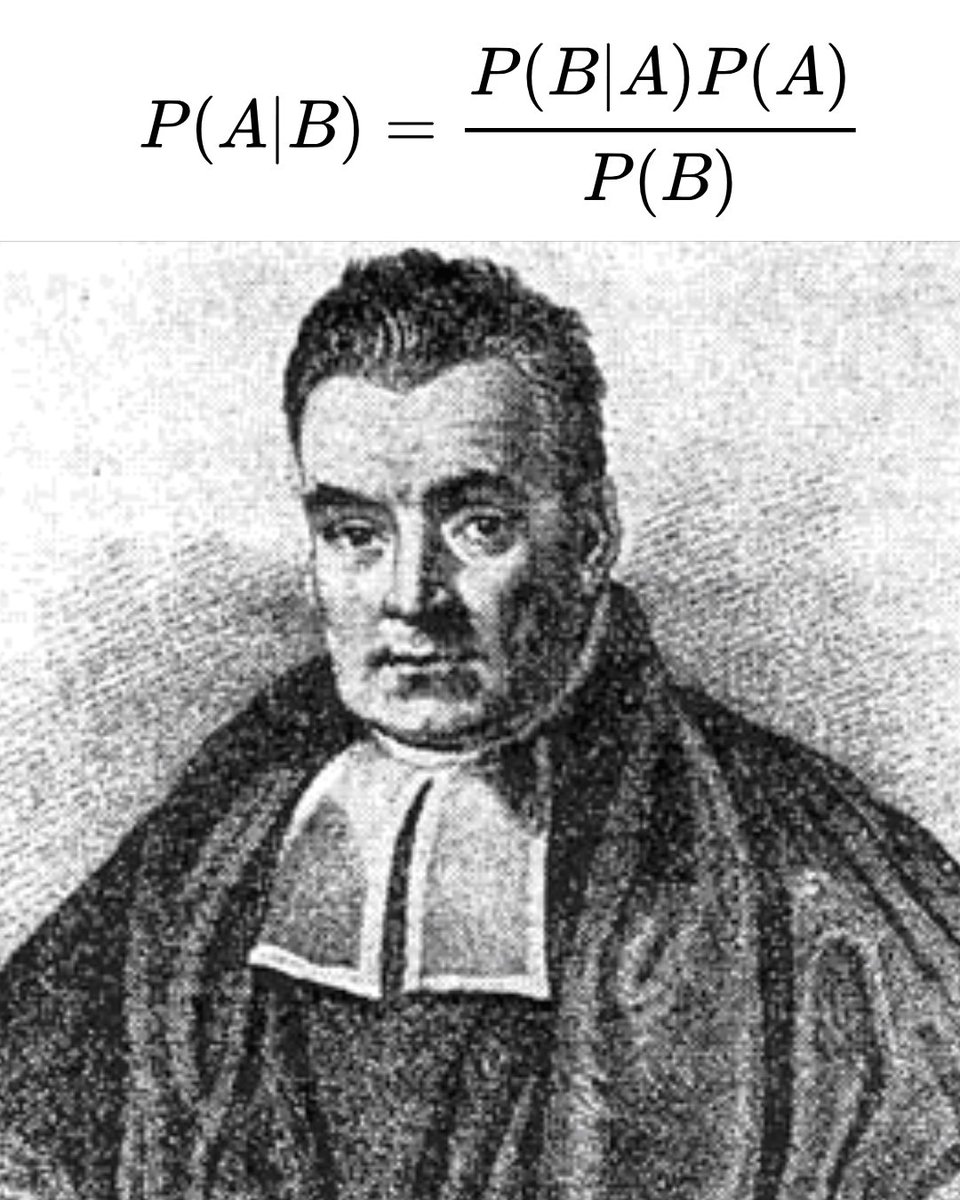
Bayes’ theorem is probably the single most important thing any rational person can learn.
So many of our debates and disagreements that we shout about are because we don’t understand Bayes’ theorem or how human rationality often works.
Bayes’ theorem is named after the 18th-century Thomas Bayes, and essentially it’s a formula that asks: when you are presented with all of the evidence for something, how much should you believe it?
Bayes’ theorem teaches us that our beliefs are not fixed; they are probabilities. Our beliefs change as we weigh new evidence against our assumptions, or our priors. In other words, we all carry certain ideas about how the world works, and new evidence can challenge them.
For example, somebody might believe that smoking is safe, that stress causes mouth ulcers, or that human activity is unrelated to climate change. These are their priors, their starting points. They can be formed by our culture, our biases, or even incomplete information.
Now imagine a new study comes along that challenges one of your priors. A single study might not carry enough weight to overturn your existing beliefs. But as studies accumulate, eventually the scales may tip. At some point, your prior will become less and less plausible.
Bayes’ theorem argues that being rational is not about black and white. It’s not even about true or false. It’s about what is most reasonable based on the best available evidence. But for this to work, we need to be presented with as much high-quality data as possible. Without evidence—without belief-forming data—we are left only with our priors and biases. And those aren’t all that rational.
Das ist das neuste TikTok-Video des Auswärtigen Amtes. Es bestätigt: Das @AuswaertigesAmt setzt mit seiner Social Media Kommunikation den Benchmark in dieser Bundesregierung. Der content ist einfach verdammt gut. Meinen Dank an alle Beteiligten.
Europe. For sure. 🇩🇪🇫🇷🇬🇧🇪🇺
One of the worst rainstorms Gaza has seen in years began this morning. The rain hasn’t stopped — tents are collapsing, and camps are flooding.
If you see this, please reply with a dot.
The Greeks had two ways of thinking about time: Chronos and Kairos.
"The time used by storytellers is more cyclical, close to the time of nature. The Greeks talked about Chronos. Chronology time. The one we can measure.
Then they talked about Kairos, which is deep time. That is the time of storytelling.
Kronos is more measurable. It's easy to calculate. You can depend on clocks, calendars, and schedules. But Kairos is deep time, and you need to pay attention to Kairos. If you're interested in the stories of nature, maybe the journey of a rock, you can't just measure it with that tiny element of time. You have to look at millennia; you have to look at this long duration of time.
I've always believed that storytellers should be interested in a much more cyclical notion of time."