You've been asking me for cost-friendly home and bungalow ideas, especially across Africa. Before I answer, I need to understand something: what's actually stopping you where you are?
Is brick not available or affordable in your region? Is it labor, nobody nearby who can lay it well? Or have you just never seen a house built this way, so it's never felt like a real option?
Here's why I'm asking. This is a brick bungalow in Brazil, built under a government low-income housing program, already move-in ready with no plastering needed. LEIVA arquitetura built this 75 sqm home in Tupandi for a family on a strict budget. Exposed gray brick handles the walls, floors are finished, electrical conduit and concrete structure are left visible on purpose. Nothing extra to add before move-in.
Most of us build the opposite way. A house goes up, and the money for plastering, painting, and tiling was never actually budgeted from day one. So it sits half-finished for years while the family scrambles to fund the rest.
Drop your country and what's actually stopping you. I'm collecting this to find the right material producers to work with.
@xwanyex@realEstateTrent Dad passed & I helped Ma sort his things. Big things of value & sentimental ones given to family. Others to Goodwill. 8 truck loads of things to the dump. They weren’t garbage really. Would just take months to find homes for & sort. Had value to him but hard to match with others
@cljack In China they don’t do diapers historically. Or much less so. Split pants are the thing. Europe likely did similar. Kids junk is out & ready for business. They learn to signal very young. You hold them over a spot of grass or bush and they go. So potty training is much younger.
According to Herodotus, once a year in Babylon, each village auctioned off its marriageable women, most beautiful first. The money then went to the men willing to marry the least beautiful. He considered it Babylon's wisest custom.
Certainly one way to clear a marriage market...
@FischerKing64 I was proud when I hit 50. Half century in the books. Excellent work, David. The Japanese have a party at 60 wearing the same colors as their birth event, red. Same idea: proud milestone. Leave youth to the young. They are best suited to it. Good on them. Celebrate aging too.
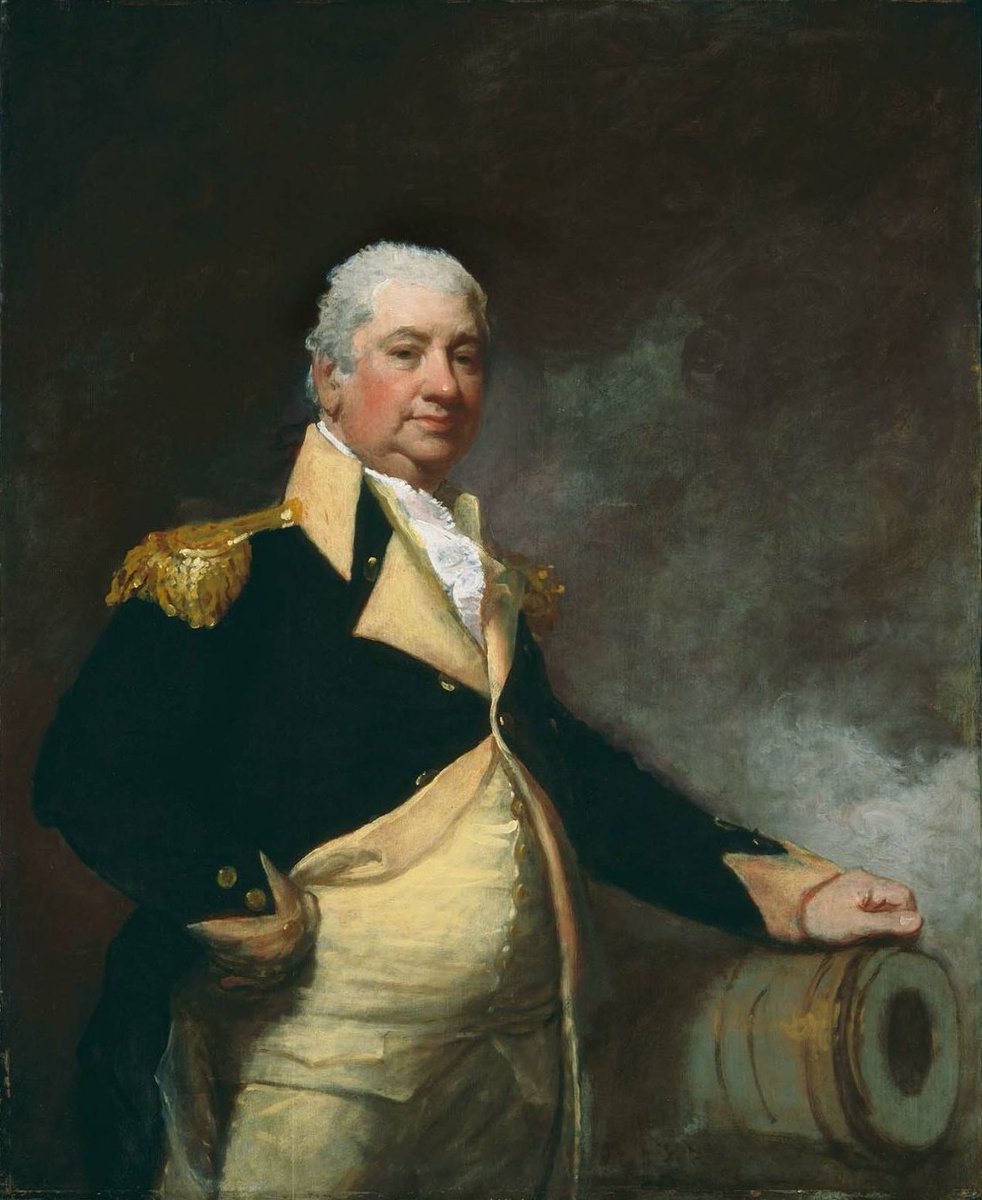
Here is a man who won one of the first great American victories of the Revolution without fighting a battle. He was not a soldier. He was a fat, cheerful Boston bookseller with no military training, and what he pulled off in the winter of 1775 into 1776 is one of the most staggering feats of sheer willpower and logistics in American history. His name was Henry Knox.
Knox learned war the way he learned everything: from books. He ran a fashionable bookshop in Boston, and he devoured the military engineering and artillery treatises on his own shelves. When the Revolution broke out, that self-taught knowledge suddenly mattered, because the American army besieging British-held Boston had a fatal problem. They had the enemy penned in the city, but they had almost no heavy cannon to force them out. It was a stalemate, and stalemates favored the British.
Knox had an audacious idea. Nearly 300 miles away, at Fort Ticonderoga in upstate New York, sat a treasure of captured British artillery, dozens of heavy cannon and mortars taken earlier in the war. What if someone went and got them? Brought the guns to Boston? Everyone could see the problem: it was winter, the route ran through frozen lakes, rivers, forests, and the snowbound Berkshire mountains, and the guns weighed a combined 60 tons. Sixty tons. It sounded impossible. Washington gave the 25-year-old bookseller the job anyway.
And Knox did it. He got to Ticonderoga and set to work dismantling and hauling out around 59 pieces of artillery, some of them massive. He had 40 heavy sledges specially built. He rounded up teams of oxen, dozens and dozens of them, and boats to move the guns across the water before the freeze. And then, through the brutal heart of a New England winter, he dragged 120,000 pounds of iron and brass across a frozen wilderness.
Picture it. Cannon lashed to sleds, oxen straining in the snow, men breaking through ice, hauling the guns up and then carefully down the icy slopes of the Berkshires, where a runaway sled could be a disaster. Guns broke through frozen rivers and had to be fished out. It was backbreaking, dangerous, freezing work, mile after mile, week after week. And this untested bookseller held it all together by force of personality and organization. In under two months, he brought the entire "noble train of artillery" 300 miles through the dead of winter, and in late January 1776 he reported to Washington that the guns had arrived.
Then came the payoff. On a single night in early March, Washington's men quietly hauled Knox's cannon up onto Dorchester Heights, the high ground overlooking Boston and its harbor. When the British woke up, they found the American army suddenly looking down their throats with heavy artillery that could smash their ships and their positions. Their commander realized the city was untenable. And so, rather than fight, the British evacuated Boston entirely on March 17, 1776, and sailed away. The Americans had liberated a major city without a battle, because a bookseller had done the impossible with oxen and sleds and nerve.
Knox never looked back. He became Washington's chief of artillery for the rest of the war, the man whose guns crossed the Delaware to Trenton and pounded the British into surrender at Yorktown, and after the war he became the young nation's first Secretary of War. Fort Knox is named for him. But his greatest monument is that winter journey. Remember Henry Knox, the bookseller who read about artillery in his shop, then went out and dragged 60 tons of it across a frozen wilderness to hand George Washington the guns that freed Boston.
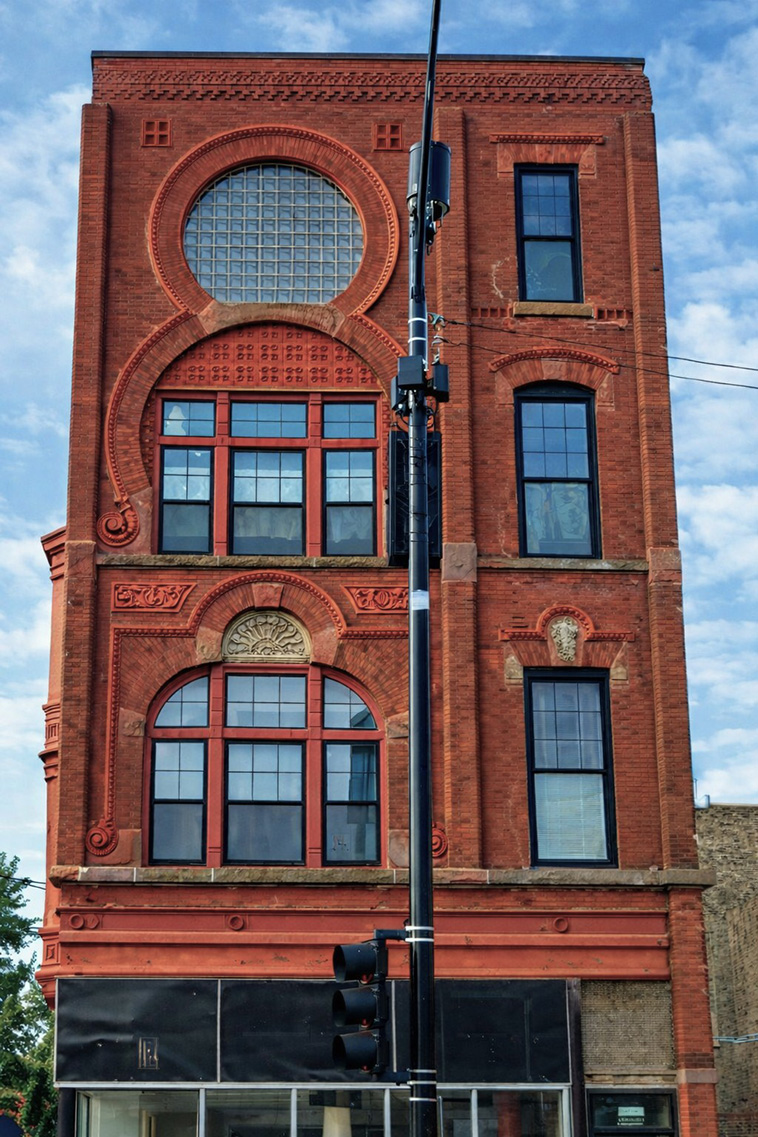
This is one of those Chicago buildings that makes you stop and look twice.
At 2001 W Division Street in Wicker Park, this four-story red-brick store-and-flat building dates to the late 19th century. Its façade is dominated by dramatic horseshoe-shaped arches, patterned brickwork and molded ornamental details — a reminder of how expressive brick architecture became in Chicago during this period. Reddit
The building still stands at the corner of Division Street and Damen Avenue, more than a century later.
@Empty_America Even those burning through their piles like an MC Hammer or rookie NFL profligate can only drive one car at a time, sleep in one bed at a time, still get nagged by their gal(s), etc…in many respects, the distinction between a middle class life & a wealthy one can be narrow.
@Justin4ocho It’s why those doggies of Pavlov reacted at the dinner bell, but instead of salivating expecting delicious food, Jets fans wince when football is on expecting a punch in the nuts eventually, conditioned response.