Attention @arxiv authors: Our Code of Conduct states that by signing your name as an author of a paper, each author takes full responsibility for all its contents, irrespective of how the contents were generated. 1/
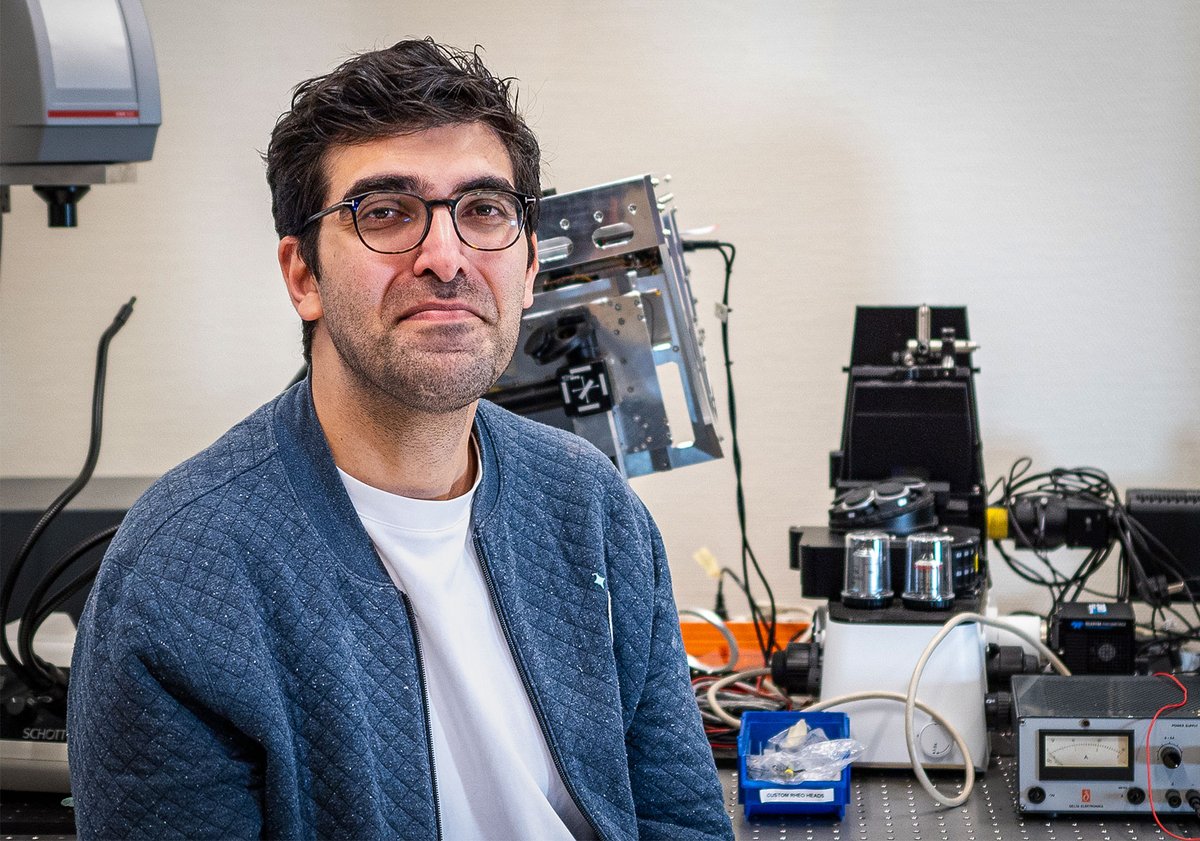
The biophysicist Mazi Jalaal finds math and physics problems inside plant cells. “There are so many physics problems that these organisms have to solve during the course of evolution,” Jalaal said. https://t.co/d4HDOi3xS9
We’re looking for postdocs to join our interdisciplinary group at the @NCBS_Bangalore
Please retweet and help get the word out.
——
Are you interested in how chemistry transitions to biology — the origins-of-life problem?
We have some recent work on this problem and we are excited by the possibilities. From an aqueous mixture of three salts and formaldehyde we get protocells. More about the work are in the thread below ⬇️
We are looking for creative scientists with skilful hands and analytical minds to continue the work.
Are you a chemist with analytical (particularly NMR and/or Mass Spectrometry) skills in exploring the biomolecular diversity this system is producing — amino acids, peptides, lipids and more?
Are you a materials scientist/experimental physicist interested in understanding the self assembly and self organisation mechanisms of this system?
Please reach out if you think you are well suited for this — [email protected] with your CV and a short write up about why this interests you.
Many physicists have come to believe that a mystery is unfolding in every microbe, animal, and human—one that could redefine the field for the next generation, @AdamFrank4 writes. https://t.co/lq4sBKk9jV
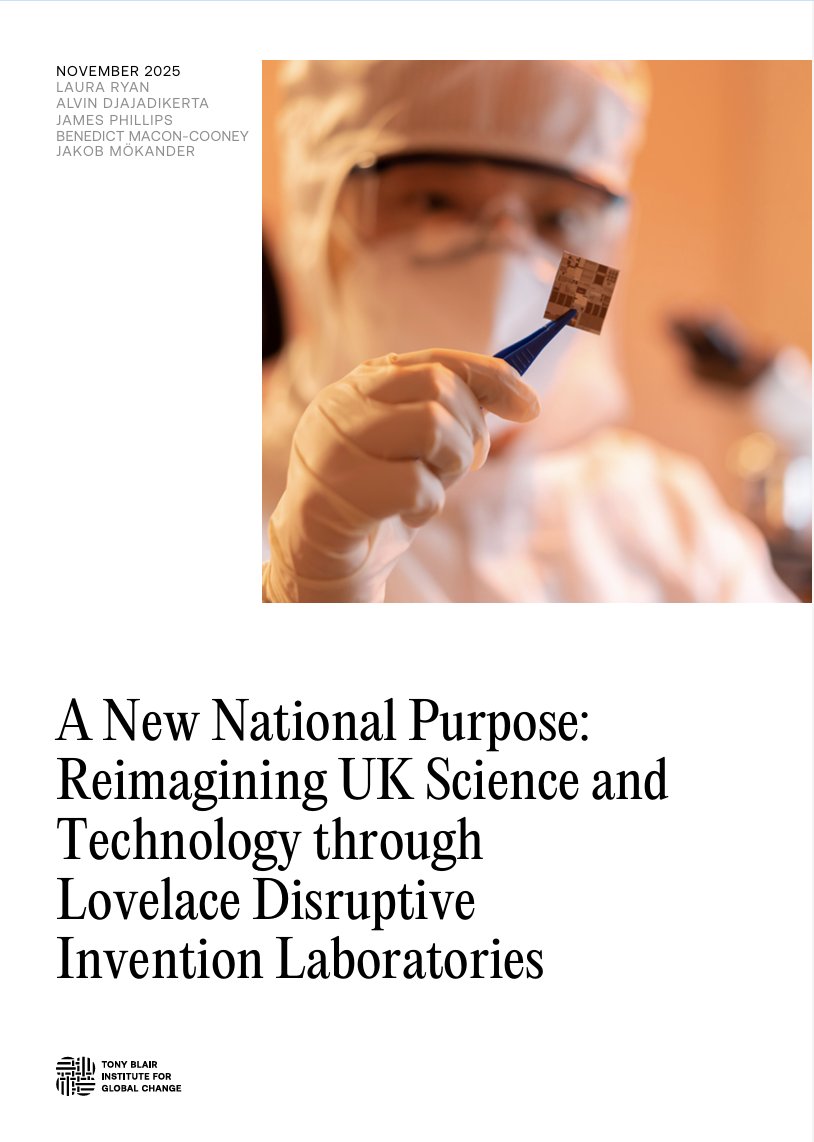
New from @instituteGC: a proposal for Lovelace Disruptive Invention Labs
Is a better science possible, & how can we build it? 🏗️
Britain should pioneer a complementary model for research at the intersection of science & engineering – inverting core assumptions of modern public R&D
RIP Erik Bollt (1967–2025): https://t.co/8Qvo4I3t0G
Applied mathematician Erik Bollt, a well-known person in the applied dynamical-systems community, died suddenly last weekend.
You can read about Erik's research on his web page: https://t.co/HfsVpwl5Lv
During submission choose "SOE: Physics of Socio-economic Systems Division" and on the following page pick the topic "Focus Session: Physics of Behavior". Deadline is Dec 1st, 2025. https://t.co/3UGwZ0TXYW
Physics of Behavior comes to the DPG Spring Meeting, Mar 8-13 in Dresden, DE! Co-organized w/Pawel Romanczuk, we welcome submissions on physical approaches to understand biological behavior across scales-from microorganisms to humans, and from individual to collective dynamics.
Can you spot the flaw in the below graph? After all, it suggests New Zealand had much higher cumulative excess mortality in 2020-24 compared to Sweden and US...
You can read more on the assumptions behind excess mortality – and how to make the metric tell any story you like – in my recent piece: https://t.co/P8gtKpuIPs
OIST PhD & Research Internship Program - Call for Applications!
🔗Research Internship: https://t.co/O0OMdX5Gh8 (Deadline: 15 October 2025)
🔗 PhD program: https://t.co/4xvHalAVlk (Deadline: 15 November 2025)
@INemenman It's already starting. I've heard about separating science from humanities for fear of anti-woke hunts and for finance. But this is a misreading of the current environment and ultimately damaging to the value that a university provides. What are the best, actionable ideas?
The core substance of a university is the creation and questioning of new knowledge in every field that touches on human existence, and the commitment to integrating persons at every stage of learning into this process. A beautiful ideal by Clifford Ando.
(4/4) In mecp2 mutants, an autism model, predictive information is reduced, but especially for synergistic flows, an indication of difficulties in more complex social behaviors. We look forward to a continuing conversation about what it means to be (quantitatively) social!
(1/4) I’m happy to introduce our new work led by phd student Akira Kawano (not on X), which explores social behavior as mutual prediction, quantified by the decomposition of information (PID) between the past and future of a multi-organism system: https://t.co/SY1pQc7nkh
(3/4) We ground our approach in the trajectories of two adult zebrafish engaged in a dominance contest. We find that information flows align with dominance and mirroring, and that asymmetries in self-unique and redundant information reflect the emergent dominance relationship.