Ukraine Turns the Tide: Why a Cease-Fire Is Now a Real Possibility, I write for @ForeignAffairs on the growing disconnect between the Kremlin's battlefield prospects and its aspirations: https://t.co/YGFRlPGzdQ
It was only a few weeks ago that Ukraine impressed the world with its new medium range drone capabilities wreaking havoc on Russian logistics at 150km distance in Ukraine's southern land corridor.
Now they're expanding operations to Luhansk, with the 3rd Assault Brigade hitting targets at 200km distance.
All the hell that Ukraine has unleashed on Russian forces in the south is now also beginning take place in Luhansk.
The documentary about the Third Assault Brigade’s counteroffensive, 2000 Meters to Andriivka, has won an Emmy Award!
At the annual News & Documentary Emmy Awards ceremony in New York, Mstyslav Chernov’s documentary about the Third Assault Brigade’s battle for Andriivka received the award for Outstanding Direction.
In addition to winning for directing, the film, which chronicles one of the key episodes of Ukraine’s 2023 summer counteroffensive, was nominated in five other Emmy categories.
The 2,000-meter advance was the route to liberating the village near Bakhmut, which the brigade’s soldiers fought their way through despite constant enemy shelling. These historic events were documented by soldiers using GoPro cameras and by journalists embedded with the unit during the assault.
Now, the story of the courage and sacrifice of Ukraine’s soldiers has become a recipient of one of the world’s most prestigious television awards.
1/
Fascinating interview with Jon Krakauer on past and current realities of climbing Everest.
Jon Krakauer On Into Thin Air 30 Years Later https://t.co/xThrM3x4dL via @YouTube
@RyanO_ChosenCoy Like where you're going and interested to read your ideas. I do worry Ukraine just doesn't have enough reserves available to exploit any real breakthrough.
Perhaps Syrskiy has amassed enough combat power in his assault units.
New 4-parter on the @WeHaveWaysPod - the British Band of Brothers, in which @almurray & I follow the incredible story of the Sherwood Rangers, the single British unit with more battle honours than any other in the war. We’ll get through their entire story in time but we’re starting with D-Day and the fighting of June 1940. Amazing men. I’m in awe.
@CasualArtyFan Problem w/ direct fire AT weapons is they must be directly in path of armored attack to be of any use. Thus Hellfire + Milan armed helos (no longer survivable).
FPVs move orders of magnitude faster than anything on the ground and cover 20km+. Much more discreet signature too.
“We Are Fighting Russia — And We Know Why It Will Lose.”
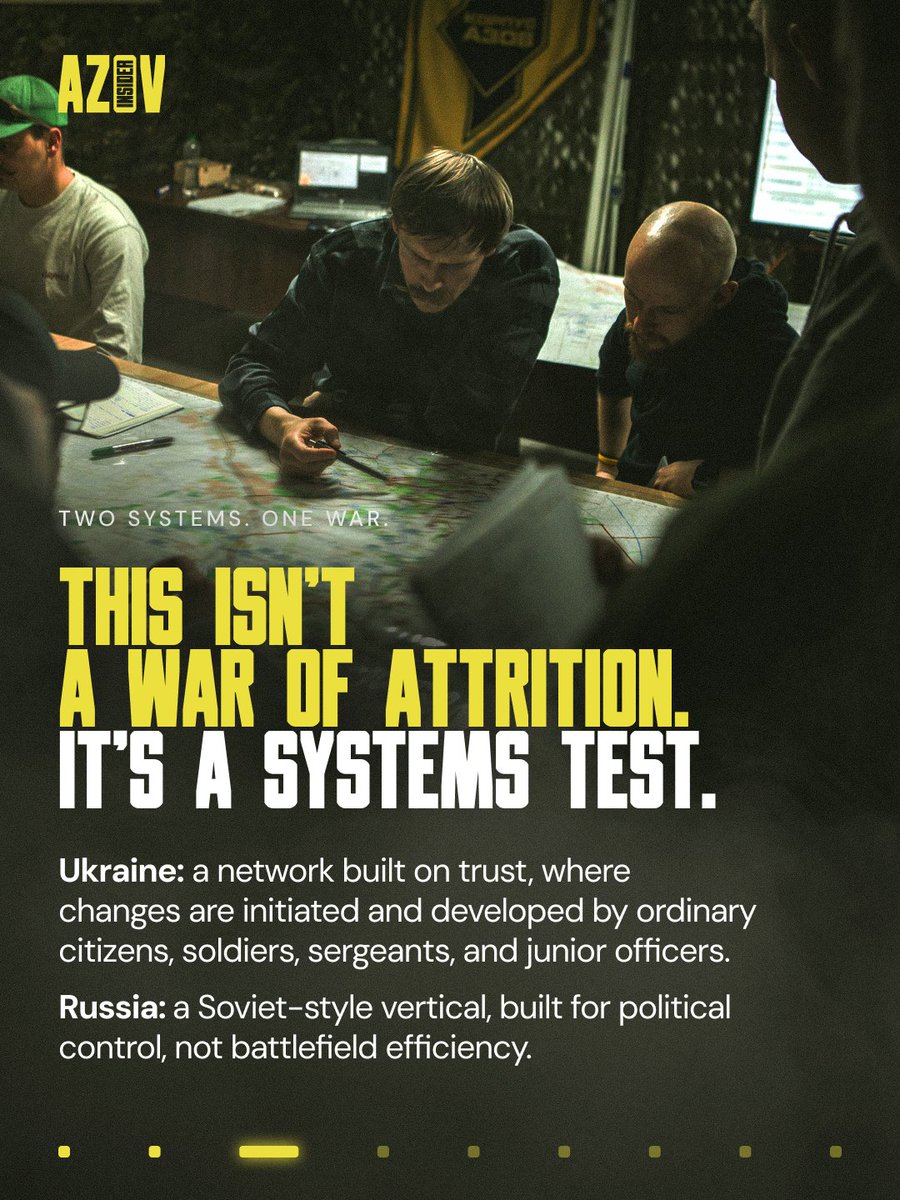
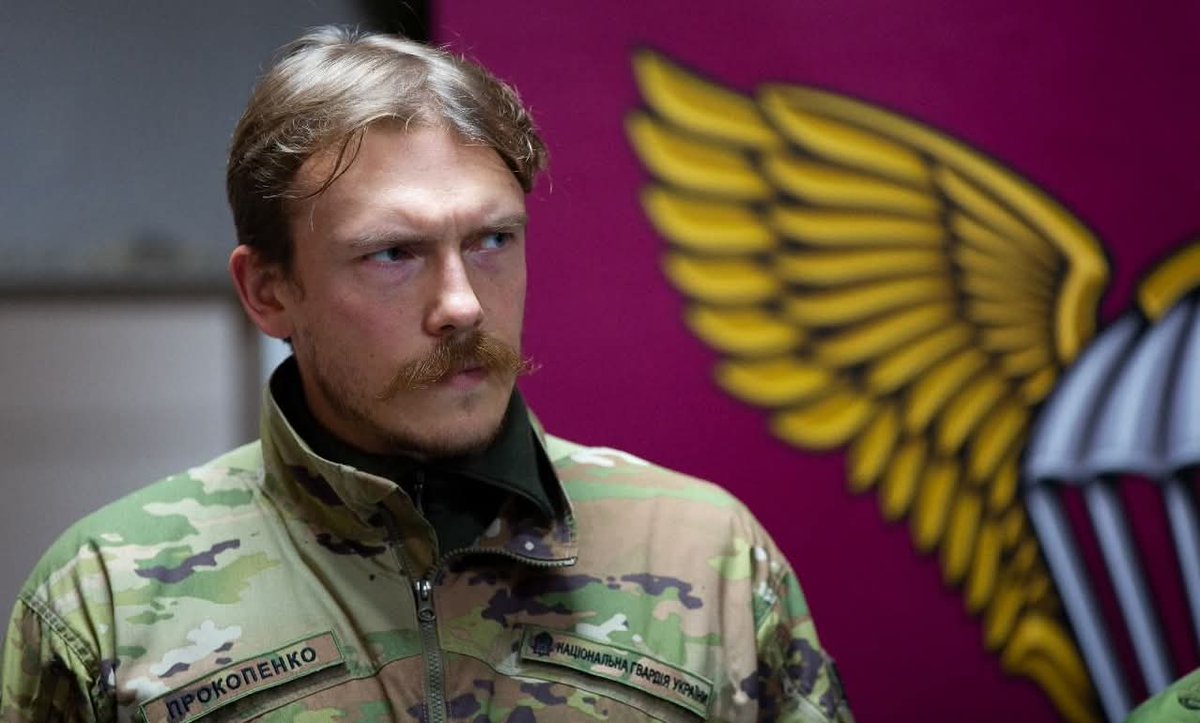
In his new column for "Ukrainska Pravda", Commander of the First Corps Azov of the National Guard of Ukraine, Brigadier General Denys Prokopenko shares his reflections on the Ukrainian and Russian armies as two fundamentally opposite systems.
What philosophy do the Ukrainian Defense Forces cultivate? Why is the Russian army built on loyalty rather than competence? How does Azov strengthen the resilience of Ukraine’s frontline defense?
Read the full column via the link: https://t.co/jEzgQbEzKC
Denys "Redis" Prokopenko, Commander of First Corps Azov, wrote a column for Ukrainska Pravda on why Russia is losing this war. Here are the key points.
Brigadier General Denys “Redis” Prokopenko, commander of the 1st Corps of the National Guard of Ukraine “Azov,” has published a new essay explaining why many Western analysts in 2022 overestimated the Russian army, how the Ukrainian military differs from Russia’s, and why Russia will ultimately lose.
Here are the key points condensed:
• According to him, many analysts focused almost entirely on Russia’s numbers — equipment, manpower, and ammunition — while ignoring decisive intangible factors: command culture, morale, social cohesion, and the ability to adapt.
• “Redis” warns that this analytical blindness still partly exists today. Many in the West continue to see the war purely as a war of attrition where victory is determined only by resources. He calls this a dangerous misconception.
• The general contrasts two military models — the Ukrainian and the Russian. Russia’s system relies on a rigid Soviet-style hierarchy where officers are afraid to deviate from orders even when an operation is clearly failing. Such a structure leads to operational paralysis on the modern battlefield.
• One of the clearest signs of this systemic weakness is the chronic underdevelopment of junior leadership in the Russian military and the madness of senior officers willing to sacrifice enormous numbers of soldiers simply to please higher command.
• “Redis” stresses this point deliberately. He writes openly that they are fighting Russia directly, they understand exactly how Russia wages war, and that is precisely why they know Russia will lose — which is literally the title of his essay.
• In contrast, the Ukrainian military is built around a command philosophy based on decentralization and empowered initiative. This model reflects a modern interpretation of the German concept of Auftragstaktik (Mission Command), designed for warfare on a dynamic, nonlinear battlefield.
• A vivid example of this approach was the operation carried out by Ukrainian Defense Forces near Dobropillia in the second half of 2025 — essentially a modern rethinking of mobile defense warfare.
• Ukrainian forces conducted large-scale search-and-strike operations, concentrated fire raids, and precise surgical counterattacks that resulted in the encirclement of Russian units and the capture of hundreds of enemy soldiers.
• In March, the 1st Corps of the NGU “Azov” marked its anniversary. In a very short time, a corps command structure and headquarters were formed from combat officers with years of frontline experience — many of whom fought back in 2014–2015 while serving as ordinary soldiers and sergeants.
• Most of them have passed through every level of command, taking responsibility both in staff and field positions, and understand war from the trenches upward.
• The general also highlights the creation of entirely new units within the corps, including the 41st Unmanned Systems Regiment “Pilum,” the 14th Assault Regiment, support forces regiments, and others.
• The development of a deep reconnaissance-and-strike network now allows the corps to hit Russian equipment, warehouses, and logistics targets at distances of up to 250 kilometers.
• “Redis” writes that Western partners have begun learning from Ukraine and are now actively adopting Ukrainian battlefield experience. At the same time, the battle for Donbas is still raging, and the general emphasizes that they will continue striking the enemy and fighting for the return of their prisoners.
The latest Russia Contingency is out. I join @Jack_Watling to talk about the current battlefield dynamics. We compare notes from recent trips, exploring why Ukraine is doing better and Russian forces are visibly performing worse. @WarOnTheRocks https://t.co/r8W8S5vpFS
He used to fix pipes. Now he reads the Russian army’s mind. Meet the Ukrainian plumber who became an intelligence analyst.
Callsign “Lys” — “Fox” — is a plumber and gas welder by trade. Today he sits in a small room near Ukraine’s front line and listens to Russian radio traffic.
He hears Russian assault troops asking their commanders for water and being told to crawl forward instead. He hears wounded Russian soldiers being abandoned by their own. He predicts Russian assaults before they begin — by listening to the silence between the words.
He works alongside commander “Shonni,” whose unit has suppressed nearly 11,800 Russian drones in a single year with mostly homemade equipment.
ArmyInform spent time with them.
This is what the radio war actually sounds like. 🧵
«Зараз айтівці займають важливі ролі в армії»
Найцінніше в Третьому корпусі — це люди. І специ, які приносять користь війську за своїм фахом.
На FAQ-стрімі про цифрову інфраструктуру та інновації Трійки друг Філ розповів про весь спектр IT-посад для інженерів і розробників. Як працює унікальний аналітичний компонент, що формує defense-tech репутацію всієї країни, а робота з даними творить технологічні успіхи на передовій — дивися на YouTube: https://t.co/OMX8qxi4YX
A thread on the 50 best fortifications to go and visit in the world according to me. They are all fun for at least one in the family. They are listed in reverse rank order as determined by how much fun, unique and awesome they are.
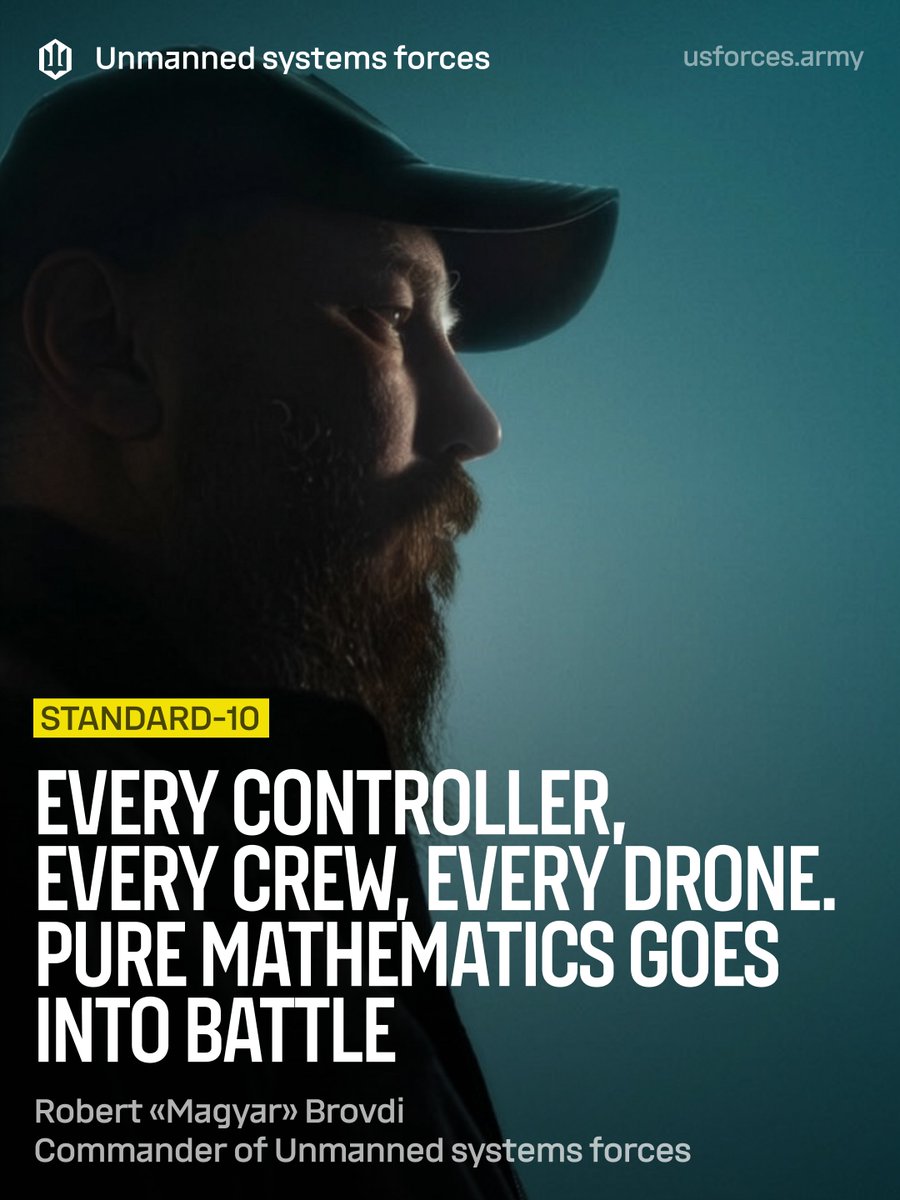
"Standard-10". The mathematics of the turning point from USF Commander Robert "Magyar" Brovdi
According to verified loss data in Delta, in March and April, drones of the Defense Forces of Ukraine destroyed over 33,000 occupiers monthly. At the same time, the average monthly replenishment of the enemy is about 29,500 personnel. For the fifth consecutive month, russia is losing more personnel than it is able to mobilize.
Some of the highest efficiency indicators are demonstrated by USF strike crews:
on average — 15.2 strikes on enemy manpower per crew monthly;
in the @414magyarbirds — over 30 strikes per crew.
The Commander emphasizes: for enemy losses to double the pace of mobilization and contracting, every strike crew of the Defense Forces of Ukraine must ensure at least 10 confirmed strikes on enemy manpower per month.
"Standard-10" is a goal attainable for every strike crew. The formula is simple: for a bomber, FPV, or other strike asset crew, this is approximately one confirmed strike every 2–3 days, given 15–20 combat days per month.
"Every controller, every crew, every drone. Pure mathematics goes into battle," — USF Commander Robert "Magyar" Brovdi.
USF: One step ahead!
Frontline writer and WWII veteran Viktor Astafyev:
“Only God knows the full truth about our war.”
Journalist: “Were the Germans really better soldiers than we Russians?”
Astafyev: “Better. Better in every way.”
Journalist: “Then how did we win the war?”
Astafyev: “With blood. Enormous bloodshed. Massive sacrifices.”
Journalist: “Can a great war really be won only with blood and human waves?”
Astafyev:
“As it turned out — yes, it can.
In 1941, we surrendered three million prisoners. We lost the regular army. Who did we fight the war with afterward? By 1944, even ulcer patients, crippled men, the broken and the maimed were already appearing in the trenches. Men were being sent back to the front for the fourth time after their fourth wound.
We talk about inhumanity — there it is.
Only God knows the whole truth about our war. It was so criminal, so soaked in blood. We executed a million of our own people at the front. A million! Only people who carried out collectivization by shooting left and right could allow themselves such things. The same people who kept more than twelve million behind bars, inventing crimes for them…”