Thread of interesting things you (probably) didn’t know 🧵
1. These "wavy walls" in England surprisingly use fewer bricks than straight ones. Originating in Ancient Egypt, their arch design provides sturdy support with just one layer, unlike straight walls that require two.
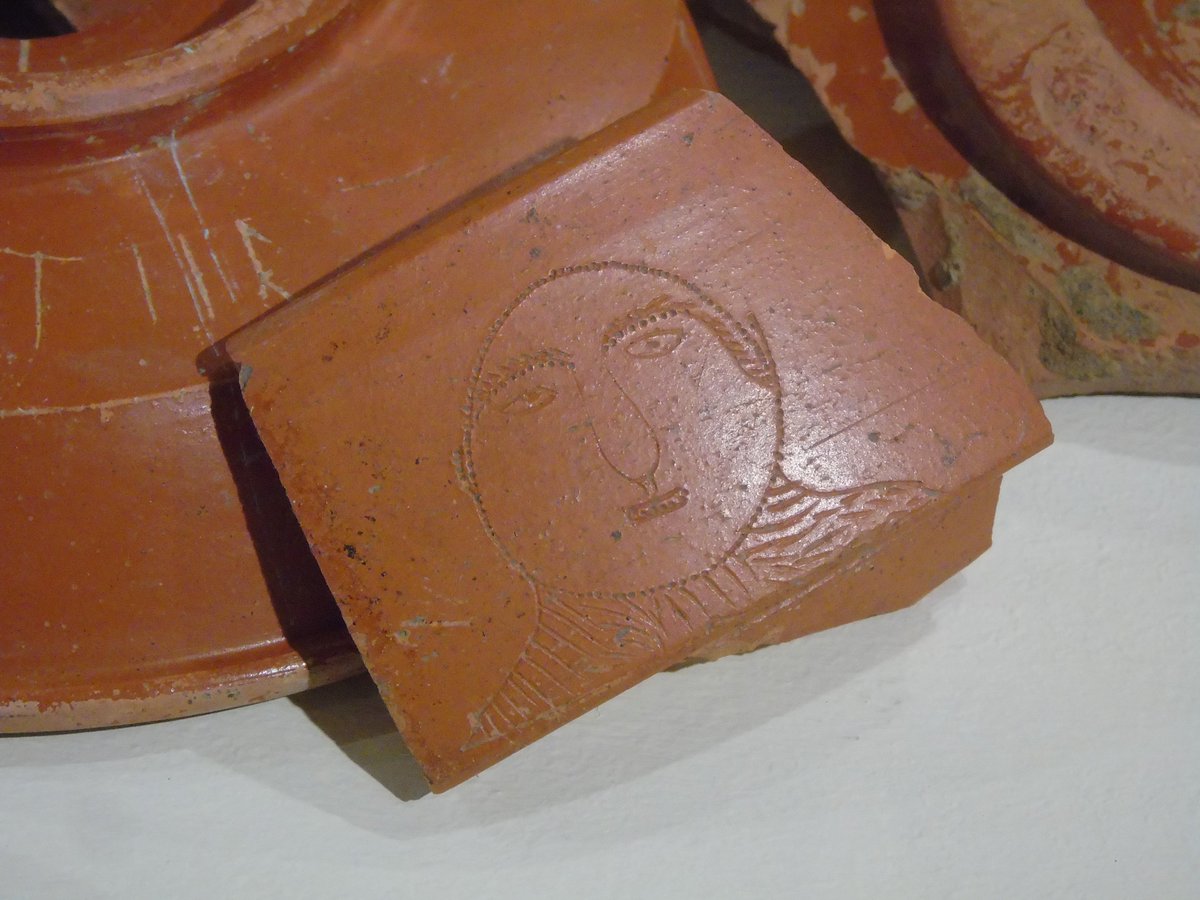
A fragment of #Roman terracotta pottery, into the surface of which someone a incised a sketch portrait of a man, some 1900+ years ago - a very round-headed bald man, with a big nose & bushy eyebrows. This is one of my favourite pieces of ancient graffiti! #Archaeology
If Superintendent Walters really wanted to put Bibles in every classroom, he would have done it. It's not hard or expensive. It would take no more than a few hours of time and a handful of phone calls to secure private funds (maybe $150,000) and the bibles. Instead... 1/3
The miraculous Great East Window of Gloucester Cathedral, installed in 1350 and surviving with almost all of its original stained glass intact after more than 650 years. The window is the size of a modern tennis court, and at the time of its creation was the largest in the world.
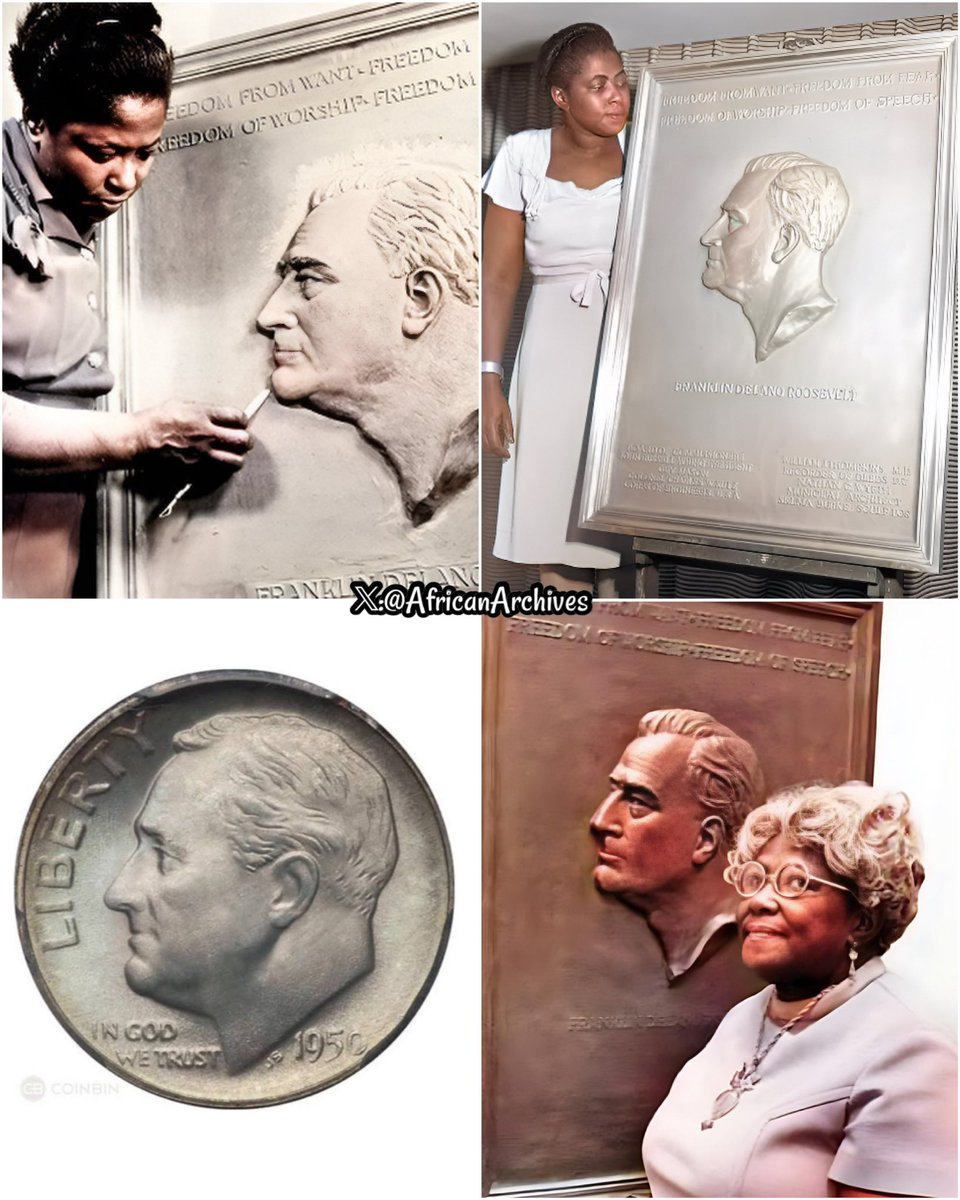
Selma Burke was a sculptor & member of the Harlem Renaissance movement, best known for her bas-relief portrait of President Franklin D. Roosevelt
She never received credit for her portrait of President Franklin D. Roosevelt which was later featured on the US dime.
—In 1943, Franklin D. Roosevelt sat for a portrait by a young African-American artist from Mooresville. That artist was Selma Burke.
However, John R. Sinnock’s signature is on the dime, and he receives credit for the work while Burke’s portrait, which she spent two years working on, is only recognized as an inspiration and model for the final image used on the coin. According to Lisa E. Farrington, author of “Creating Their Own Image, The History of African-American Women Artists,” Sinnock made “barely perceptible alterations.”
HONORS
As well as a sculptor, Burke was also a lifelong student and educator, winning numerous awards and fellowships. She earned her first degree from Winston-Salem State University in North Carolina and eventually graduated with a Master of Fine Arts from Columbia.
She started her first art school in 1940, eventually starting her second in 1946, and opened the Selma Burke Art Center in Pittsburgh, which operated from 1968 to 1981.
Burke is an honorary member of Delta Sigma Theta sorority. She received several honorary doctorate degrees during her lifetime, including one awarded by Livingston College in 1970 and one from Spelman College in 1988.
Milton Shapp, then-governor of Pennsylvania, declared July 29, 1975, Selma Burke Day in recognition of the artist's contributions to art and education. Her papers and archive are in the collection of Spelman College.
Burke was a member of the first group of women – along with Louise Nevelson, Alice Neel, Georgia O'Keefe, and Isabel Bishop – to receive lifetime achievement awards from the Women's Caucus for Art, in 1979. She received the award from President Jimmy Carter in a private ceremony in the Oval Office.
She received a Candace Award from the National Coalition of 100 Black Women in 1983 and the Pearl S. Buck Foundation Women's Award in 1987.
She died in 1995 at the age of 94.
🖊️As the only admin behind this page, I try to research to educate. If you appreciate this effort, you can support to help the page thrive on https://t.co/HHs3SgCItN. Your support is deeply appreciated! (Or just the ko-fi page for articles/posts roundup)
In 2002, archaeologists uncovered the world’s oldest known wooden wheel in the marshlands near Ljubljana, Slovenia, dating back over 5,000 years. Preserved in the wet earth, this ancient wheel was originally part of an oxcart and crafted from ash and oak, a combination so durable it remained the standard for European wheelwrights until the early 20th century.
The question of who invented the wheel remains unanswered, with evidence suggesting it emerged independently in multiple regions. Though specific inventors aren’t known, the wheel’s development doesn’t appear to be a single breakthrough but rather a gradual accumulation of knowledge, skills, and adaptations over time. Different cultures shaped the wheel to meet their unique needs, creating distinct designs and uses that evolved separately, each an innovation in its own right.
#drthehistories
Though werewolves are usually ravening monsters in European fairy tales, werebears are often more sympathetic. They are frequently people cursed with bear form who wander the wilderness sad and alone until someone breaks the curse, returning them their humanity.
#FairyTaleTuesday
From 2,000 years ago ~ remarkably-conserved frescoes from the Villa of Livia, wife of the Emperor Augustus. The villa was rediscovered in 16C just outside Rome & was probably part of the dowry Livia brought to her marriage in 39 BC (Palazzo Massimo Museum)
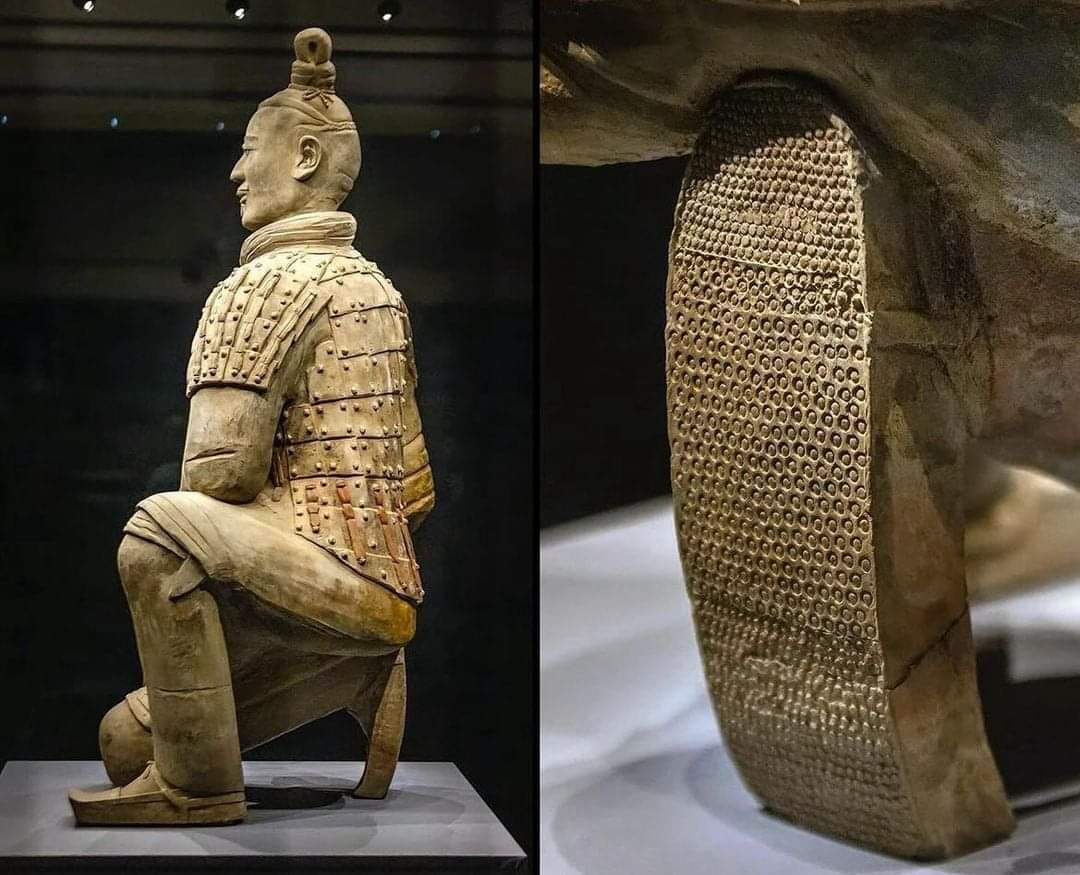
In the heart of China lies a marvel that has captivated the world for centuries—the Terracotta Warriors. Among these clay soldiers, one stands out as the sole warrior found completely intact, offering a glimpse into the meticulous craftsmanship of a civilization over 2,200 years ago...
The spotlight shines on a single terracotta warrior, the only one found entirely intact. What sets him apart is the intricate detail on the bottom of his shoe, revealing a keen consideration for grip and traction—an unexpected feature from an ancient civilization.
Each of the 8,000 life-size clay warriors is a testament to the artisans' dedication, as no two are exactly alike. The level of detail and craftsmanship invested in each warrior suggests a commitment to individuality, making the army guarding the tomb of Qin Shi Huang truly one of a kind.
The tomb, completed in 210–209 BC, shortly after, it was looted for weapons and burned, causing the roof to collapse, crushing the terracotta warriors. All the other terracotta warriors that are currently on display were painstakingly restored. What's even more remarkable is that the terracotta warriors were originally painted in bright colors by skilled artisans. The ones we see today are meticulous restorations, a testament to the dedication of those preserving ancient history. Originally painted in vivid colors by skilled artisans, the terracotta warriors held an aesthetic allure. However, unfortunately exposure to air and sunlight during excavation in 1970s led to rapid disappearance of these vibrant hues, almost immediately and disappeared within minutes, leaving us to marvel at their original glory only through historical accounts.
Commissioned to guard the tomb of Qin Shi Huang, the first emperor of unified China, the terracotta warriors stand as silent sentinels. The tomb, rumored to house an entire kingdom and palace adorned with pearl-studded ceilings to mimic the night sky, remains unopened to this day.
Legend has it that to safeguard the tomb's location, workers were entombed with the emperor. Ancient historian Sima Qian described the use of mercury to fashion rivers and seas inside the tomb. Modern tests confirming high mercury levels in the soil lend an air of authenticity to these ancient accounts.
A curious twist in the tale emerges when exploring the death of Emperor Qin Shi Huang. Historical records suggest his demise was a result of ingesting mercury pills, believed at the time to be an elixir of immortality—an irony that adds intrigue to the mysteries surrounding the emperor.
These terracotta warriors were put in place to guard the tomb of the first emperor of unified China-Qin Shi Huang. To this day, the tomb has yet to be opened. According to ancient historians, the tomb contains an entire kingdom and palace in which the ceilings are decorated with pearls to mimic the night sky. Tomb is also said to contain extremely rare artifacts and has been rigged with crossbows to shoot anyone trying to break in. To keep its location a secret, the workers were entombed with the emperor.
The Han dynasty historian, Sima Qian, also mentioned that inside the tomb, "mercury was used to fashion the hundred rivers, the Yellow River and the Yangtze River, and the seas in such a way that they flowed." Modern tests have indicated extremely high levels of mercury in the surrounding soil.
Terracotta Warriors continue to stand as a testament to ancient Chinese artistry and engineering. Each warrior tells a story of individuality and attention to detail, while the tomb they guard remains a treasure trove of mysteries, awaiting the day when its secrets will be unveiled. In the meantime, the silent army of clay soldiers invites us to marvel at the ingenuity of a civilization lost to time.
#archaeohistories
Queen Victoria’s wedding to Prince Albert in 1840 was one of the most important events of the decade. She broke from royal custom by wearing a white Spitalfields silk and Honiton lace wedding dress, helping make white the standard color for wedding dresses in Western culture.