Great to see our @IMFNews World Economic Outlook chapter on emerging market resilience cited by @FT
https://t.co/a8Eq49suXQ Emerging economies shine despite US volatility
@Grigoli82@AlUlaCEME
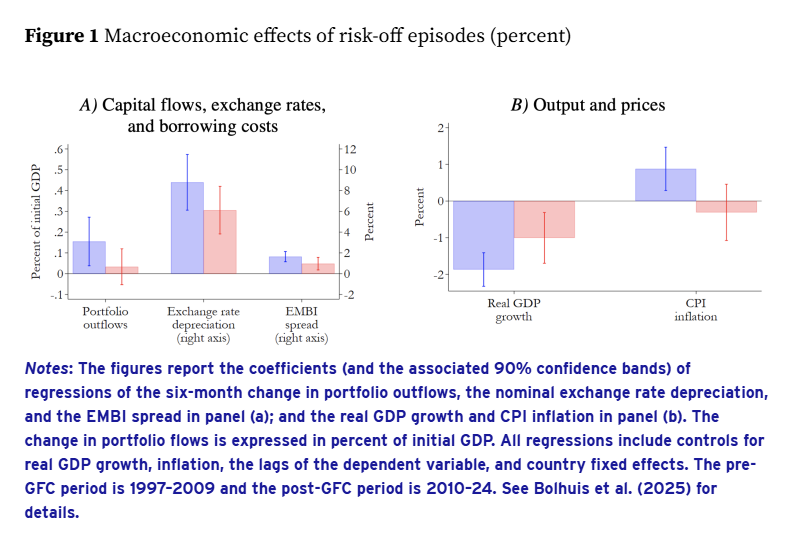
Emerging market resilience to risk-off shocks: Good luck, but mostly good policies
@MA_Bolhuis, @Grigoli82, Marcin Kolasa, Roland Meeks, @a_presbitero, Zhao Zhang @IMFNews
https://t.co/kxNBDjpuSM
Francesco Grigoli @Grigoli82, IMF Senior Economist and Associate Professor at Georgetown University, has delivered a presentation at CBRT Research Seminars on his academic study, “Emerging Market Resilience: Good Luck or Good Policies?”.
With all my admiration for Philippe Aghion’s work on the importance of innovation (what he has done with Peter Howitt in the 1990s and what he does these days with his collaborators at the College de France is essential theoretical and empirical work), a caveat.
An economy can grow without being at the frontier. Indeed, most economies in the world are not at the frontier. And most have experienced substantial growth.
More important than being at the frontier, is to be able to use these new technologies in the rest of the economy. This puts the focus on other aspects, the organization of the labor market, bankruptcy codes, a new type of education, etc. Less exciting project than new AI centers, but probably more important.
An analogy. It is nice to be ahead during a bicycle race. But it is easier to be just behind, protected from the wind by the racer who is ahead. One ends up second, but still with an impressive time.
If Europe can be first, then all means let us try. If not, let’s make sure we are a close second.
A pleasure to read Martin Wolf citing our World Economic Outlook chapter on ‘Emerging market resilience: Good luck or good policies?’ If you’re interested in learning more, you can take a quick look at the @IMFNews blog: https://t.co/Q7iHQ3LFxZ @Grigoli82
Looking forward to presenting the forthcoming WEO chapter on “Emerging Market Resilience: Good Luck or Good Policies?” @Nasdaq in NYC.
Watch live on Monday at 9am: https://t.co/GVEnDFoT3M
@Grigoli82@Kathleen_Hays@carmenmreinhart
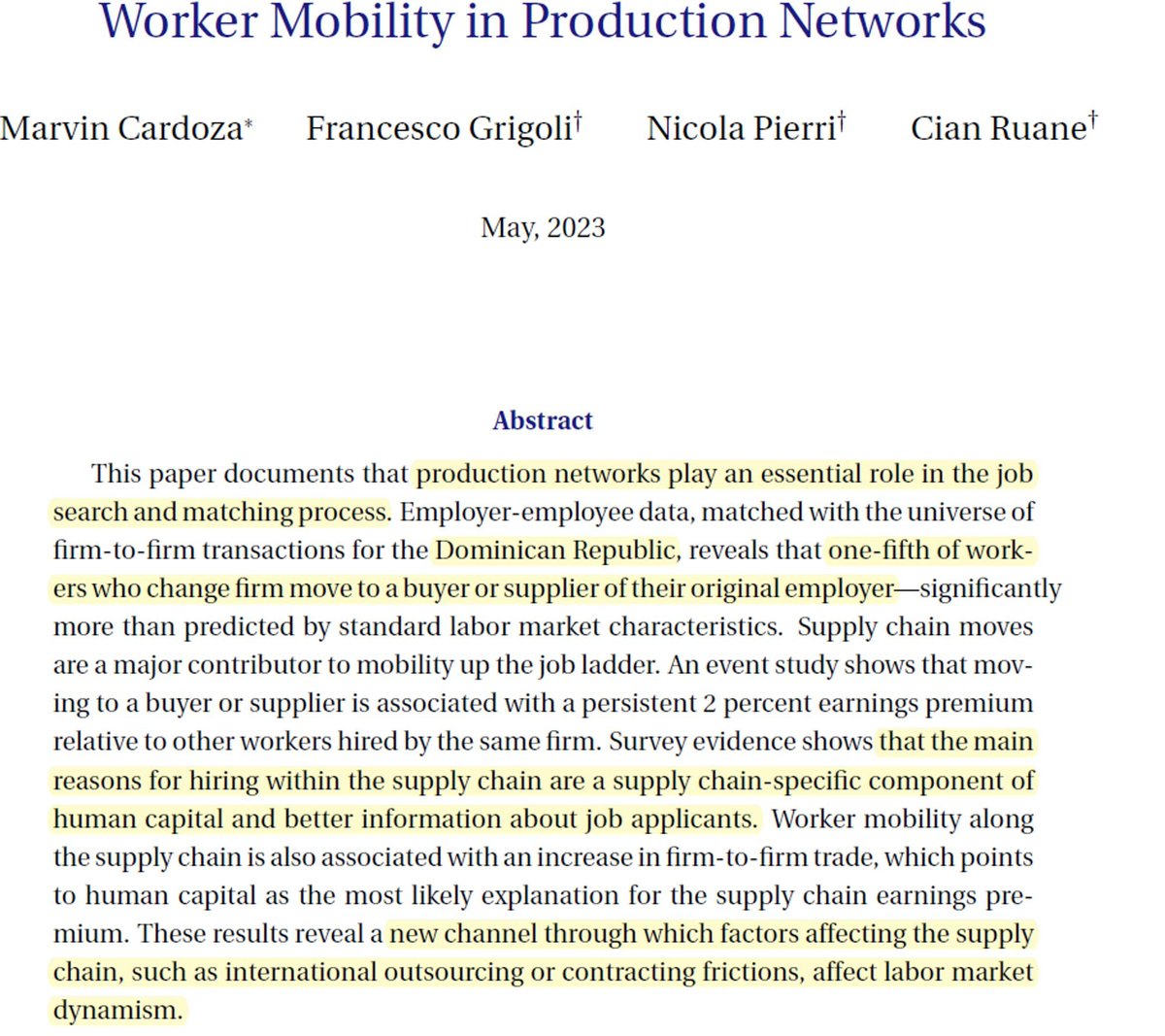
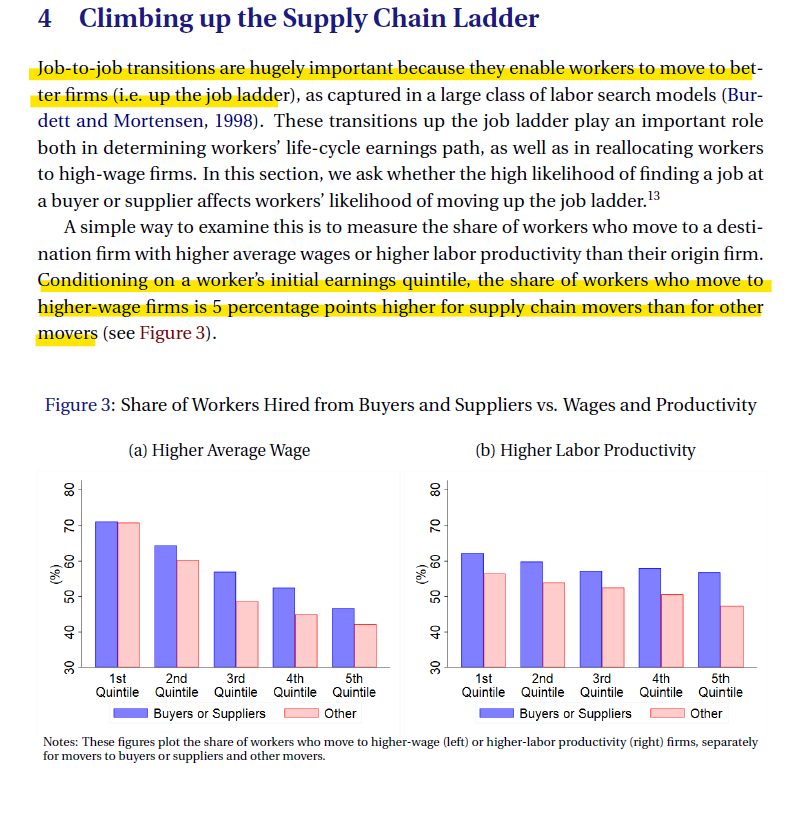
So happy to finally see our efforts paying off! Our paper on #workermobility in production #networks got accepted in the @RevEconStudies. Thanks to the editor, referees, and most importantly to great coauthors.
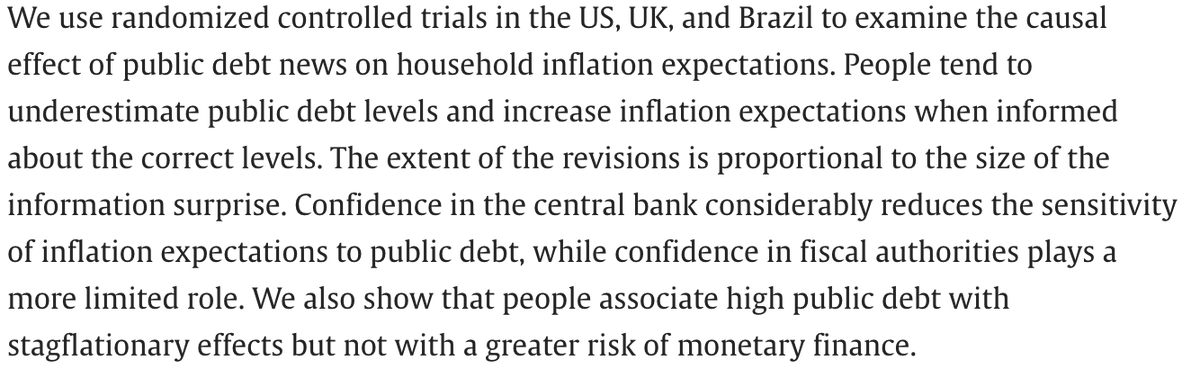
Great to see our paper out in the @JIntlEcon! We use RCTs with info treatments to show that news about public #debt leading households to revise up their priors increase #inflation expectations. The effects, however, are smaller when households trust the central bank.
New: "Public debt and household inflation expectations" by Francesco Grigoli (@Grigoli82) and Damiano Sandri (@DamianoSandri).
https://t.co/ZE6sXM1JYR 1/2
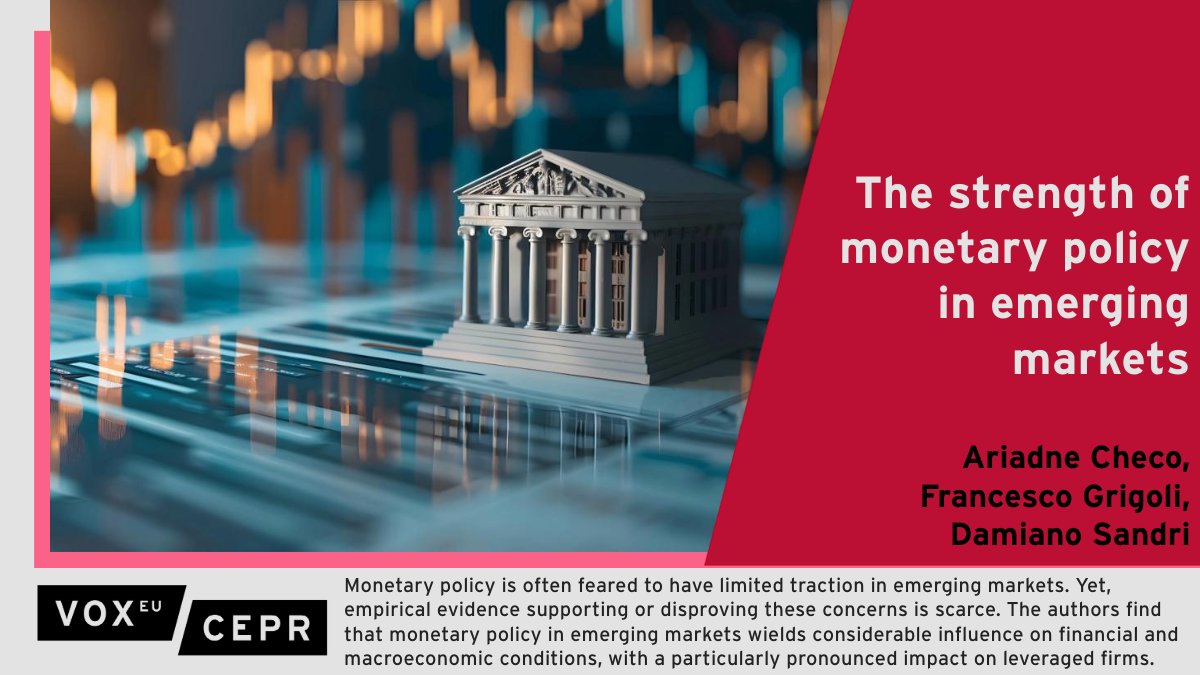
See a bite-size version of our recent paper on the effectiveness of #monetarypolicy in #emergingmarkets using novel shocks. Full paper available here: https://t.co/BVl9Ia0WNr
Monetary policy transmission in emerging markets operates similarly to that in advanced economies, new research finds. A tightening raises bond yields, reduces output and inflation, and impacts leveraged firms more strongly #MonetaryPolicy#EMEs https://t.co/Rb0r7Ovhrv
Central Banks should rely more on state-dependent models, which, in response to a large shock, predict an increase in the frequency of price changes and, therefore, a faster cost-passthrough into retail prices. This would have helped Central Bankers avoid the underestimation of inflation in 2021-22, but also the overestimation in recent months.
We made this point with Francesco Lippi and @KenMiyahara in a paper called "Large Shocks Travel Fast," first presented at the ECB Sintra conference in June. The latest version is now conditionally accepted at AER Insights: https://t.co/4auMA4PhDY
"Worker Mobility in Production Networks" -- neat paper that brings together employer-employee data and firm-to-firm transactions to demonstrate the role played by production networks in shaping the job search and matching process.
🔗https://t.co/i9S7OVhM5j
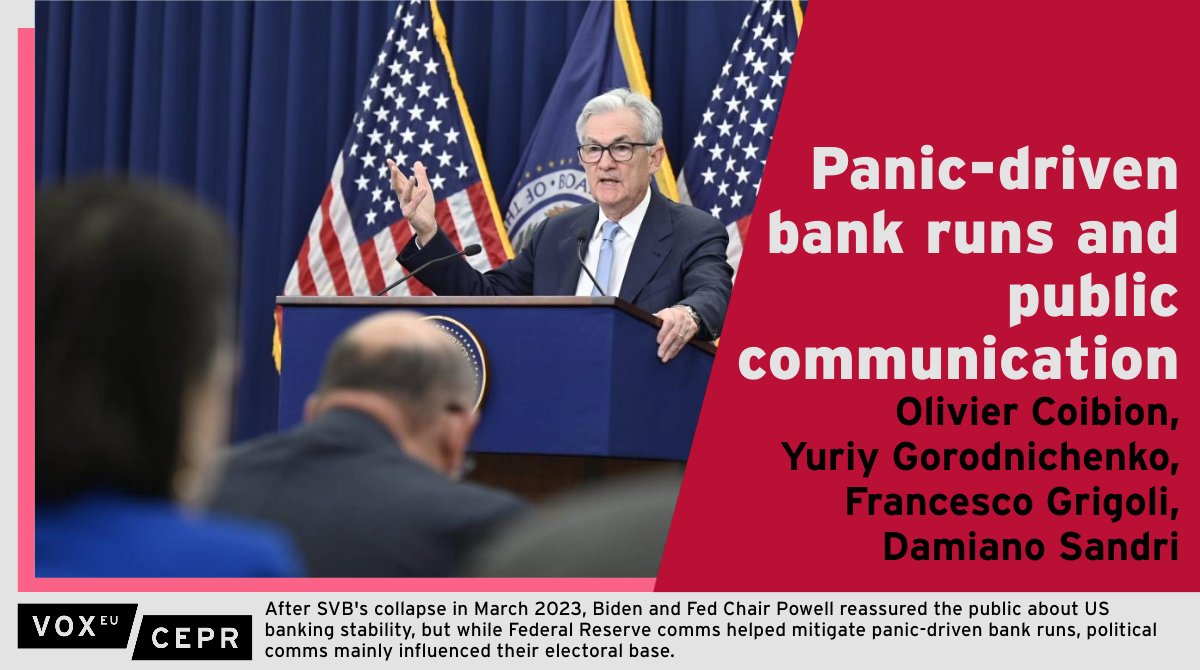
In the aftermath of the #SVB’s collapse, @DamianoSandri, @Grigoli82, @YGorodnichenko, and Olivier Coibion examine the potential for a large bank’s failure to trigger bank runs and the effectiveness of public communication in containing such a risk.
https://t.co/k0eDvc9EB7