Health experts are raising renewed concerns over the long term dangers of flavored e cigarettes after a reported case involving a U.S. teenager who developed bronchiolitis obliterans, commonly known as “popcorn lung,” following years of secret vaping.
Bronchiolitis Obliterans is a serious and irreversible condition that damages and scars the smallest airways in the lungs. The disease can lead to chronic coughing, wheezing, breathing difficulties, and lifelong respiratory complications.
Medical experts say the condition was once primarily linked to exposure to diacetyl, a chemical previously associated with microwave popcorn factories. However, researchers now warn that certain chemicals used in flavored e cigarette liquids may become toxic when heated and inhaled.
Reports indicate that more than 180 flavoring chemicals are currently used in vape liquids, many of which have not been fully tested for inhalation safety. While some ingredients may be considered safe for consumption in food products, experts caution that inhaling them directly into the lungs can bypass the body’s natural defenses and potentially expose users to harmful compounds.
The case has renewed calls for stricter regulation, stronger public awareness campaigns, and greater caution regarding youth vaping trends. Health professionals continue emphasizing that lung damage linked to vaping may be permanent, but also preventable
Disclaimer: This content is shared strictly for educational, informational, awareness, and journalistic purposes, based on available reports.
Let’s get some facts straight.
New Zealand is not an outlier. The evidence is clear ��� countries that have allowed adults who smoke access to risk-reduced alternatives are experiencing rapid extraordinary drops in smoking prevalence.
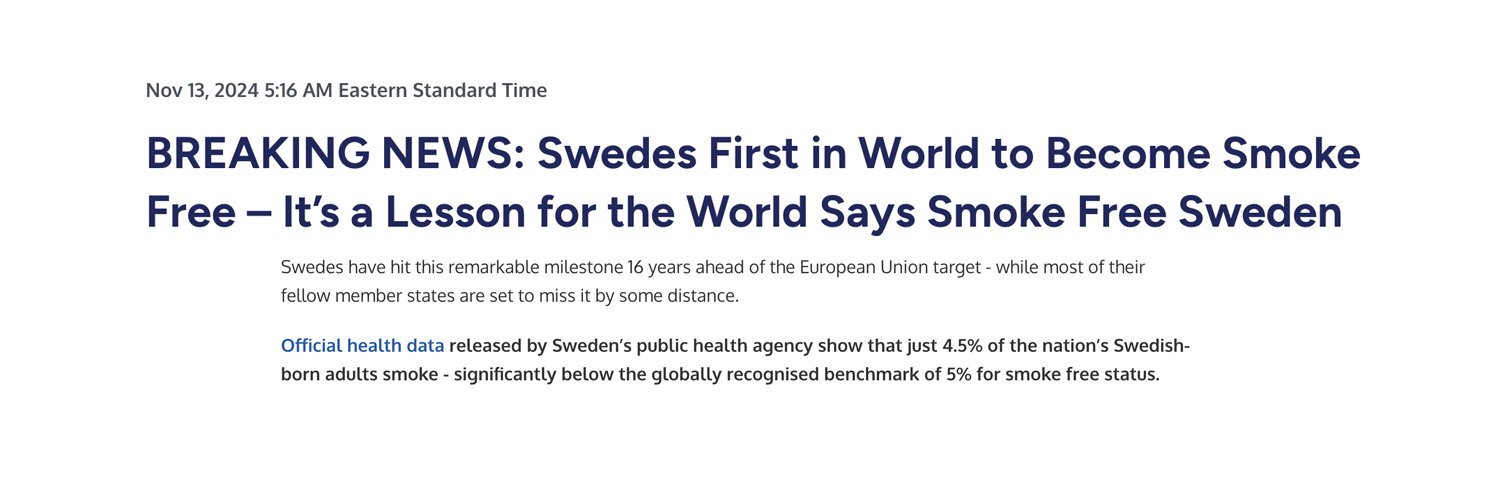
Sweden is down to 4.8%
Iceland is around 6%
Saint Kitts and Nevis daily smoking prevalence is 6.1%
New Zealand is at 6.8%
Norway is at 7–8%
USA at 9.9%! Under 10% for the first time! UK and Finland are around 10–13% mark…
Japan has experienced extraordinary reductions in smoking prevalence — more people now use heated tobacco products (noncombustible) than smoke cigarettes!
Greece has long had one of Europe’s highest rates, but the pace of quitting smoking has picked up sharply post-2020.
• Notable drops: From ~42% in 2020 (Eurobarometer) down to 36% by 2023, then further to ~31.6% daily / 27.5% current in 2024 — a ~10% relative decline in a short window.
This is not an unusual pattern where risk-reduced alternatives to cigarettes are regulated. Other high prevalence countries are seeing faster reductions than the previous Tobacco Control approach which netted glacially slow change.
The outlier and shocking example of failure is Australia proving that prohibition leads to a booming illicit market, cheaper cigarettes and as Australia is discovering, increasing smoking.
🔎 Audio of today's 5th Circuit oral argument in Triton v. FDA (on remand from SCOTUS), including our rough transcript of the session. 1/
👀
https://t.co/UXdXnJZrma
@JKourelis@jackcalifano I don't know how long you have followed me but my wife has worked in the concert industry for a little over a decade. I'm very well aware of how it works, how artists set their own prices, and how much money is made by all parties involved.
@katiopolis It is weird and this is exactly why people don’t have fun in public anymore. Everyone’s afraid of being filmed, put on the Internet and made fun of for having harmless fun. Or in this case, just literally sitting on a subway, minding your own business.