Money from 748 Air Services helped to start Java House. 🛩️🇰🇪☕️
Kenyan business lore: In the mid-1990s, 748 Air Services was launched in the remote northwestern town of Lokichogio (the key hub for Sudan relief flights) to support the UN's Operation Lifeline Sudan 🇸🇩🇺🇳 during the civil war. It flew humanitarian cargo/passenger missions into southern Sudan while also handling logistical support for SPLA 🇸🇸🪖 troops.
The "748" in the name came from the Hawker-Siddley 748 turboprop that the company started operations with.
Co-founder Kevin Ashley, a former relief worker, used the high-risk aviation venture as a springboard towards starting Java House in Nairobi at Adams Arcade in 1999 with profits and experience from those operations. From remote Loki ops to Nairobi cappuccinos: classic East African entrepreneurship.
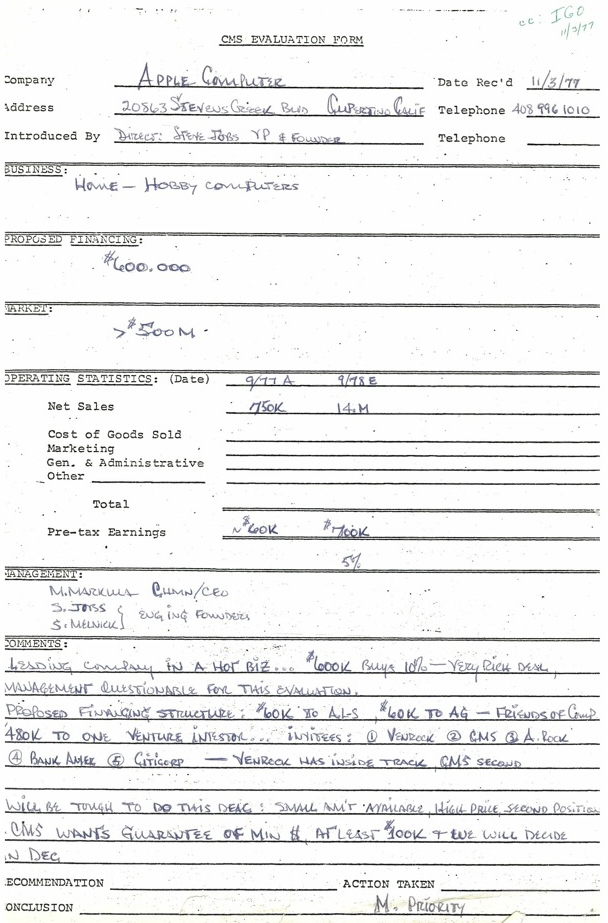
In honor of 50 years of Apple, we're sharing - for the first time ever - Don Valentine's original 1977 memo for Sequoia's investment into Apple Computer. #Apple50
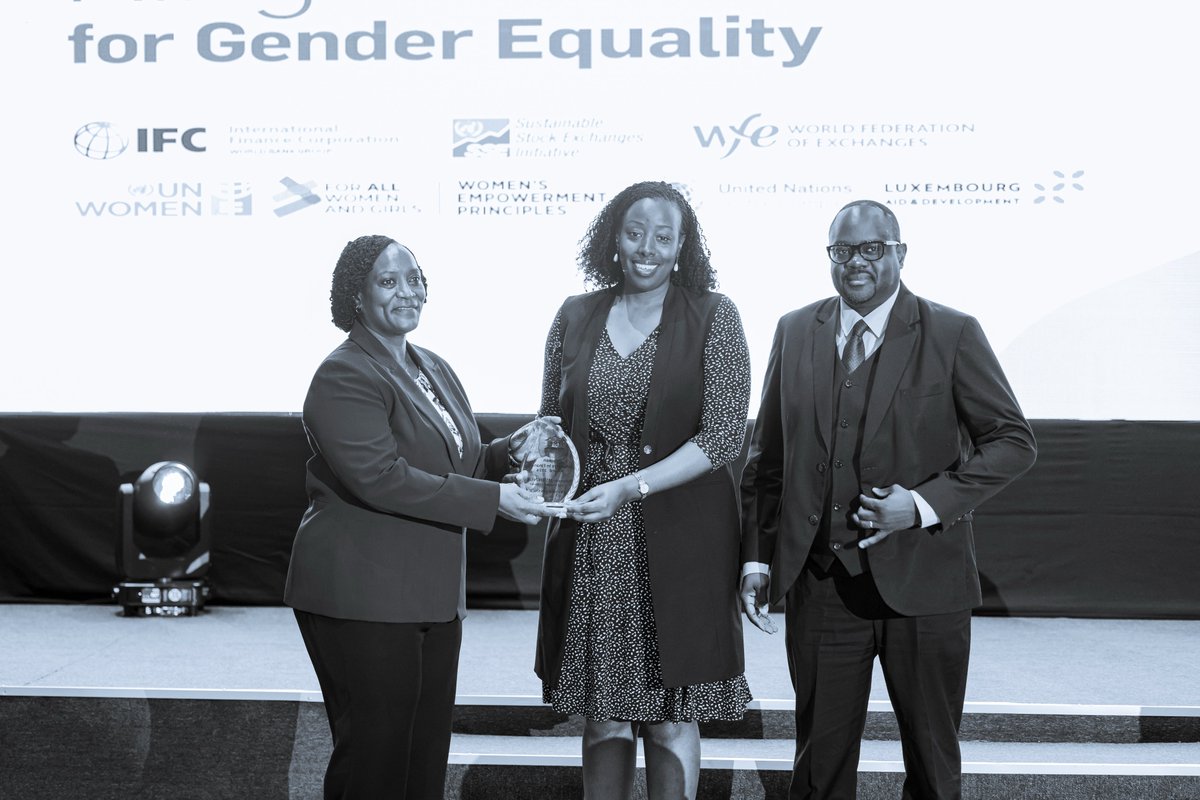
Big congratulations to Hortense Mudenge, the CEO of @Kigali_IFC 👏
Today at the #RingTheBell2026 event, she was honored as the 2026 Women Achiever in Finance.
This award celebrates her amazing leadership in making Rwanda a top financial hub and showing that when women lead, the whole country wins.
#WomenInFinance #RSEat15 #GenderEquality #InvestInWomen
German Chancellor Merz:
We are simply no longer productive enough. Each individual may say, “I already do quite a lot.” And that may be true.
But when you return from China, ladies and gentlemen, you see things more clearly.
With work-life balance and a four-day week, long-term prosperity in our country cannot be maintained. We will simply have to do a bit more.
In 2017, I stepped onto the Facebook campus in Menlo Park. They took us to the Oculus VR lab first. A geeky engineer gave us a demo of the VR features and ended on the haptic gloves that let you "feel" virtual objects without touching anything real. Then he paused, voice almost reverent: “Imagine connecting anyone in the world… real social interaction… without ever leaving home.” The demo was amazing but I walked out with a strange feeling. This guy is "solving for humanity" and is excited about a world no longer needs physical human connection
We passed a long hall of developers. One guy—Black, friendly—leaned over his monitors and asked where the group of us (mostly Africans) was from. We chatted. His desk had big screens, half-eaten snacks, the faint smell of takeout lingering. His neighbor, paler watched curiously but, too timid to join. The desks were comfortable, the food smell everywhere, as it was available in every corner. It all felt… contained. Like this campus was its own sealed ecosystem, where the world outside was just data to optimize.
Fast-forward to 2020. I work at Andela, where we placed remote engineers with Silicon Valley teams. Some companies flew their leads over to meet the "remote" teammates in person. When they visited the Kigali campus I went to dinner with them. They were 5. Of this dinner I vividly remember 2 conversations. One guy launched into how "all humans are actually lactose intolerant after infancy… we're the only species that keeps drinking milk." They all nodded, confessed their own intolerances like it was a quirky universal truth. Then came the photos: a dog's birthday party. Balloons, cake, friends invited. The owner beamed like it was his kid's party. I love dogs. But something twisted in my chest. These are the people shaping the tools billions use every day—yet their version of care, connection, family… felt redirected, abstracted.
Now it's 2026, and Sam Altman says training an AI costs less than "raising a human"—because it takes "20 years of life and all the food you eat during that time before you get smart." He compared childhood—first steps, heartbreaks, scraped knees, bedtime stories, learning trust—to server racks and electricity bills. I think back to that VR promise of connection without leaving home… to offices smelling of food and isolation… to dogs celebrated like children while real human messiness gets optimized away
The Koko fall-out in Kenya is a cautionary tale. To paraphrase Theodore Roosevelt for Africa:
"Disrupt softly and carry a big stick"
The Koko cookers were heavily subsidized and so was the ethanol. Carbon credits enabled that. The "dirty fuel" of competition couldn't stand a chance.
In Sillicon Valley, they applauded. A new market, technology, potential for massive scale. What not to like?
In impact investors circle, they were also cheering. This was a clear example of capitalism reducing costs for customers (yea!) and CO2. The fuel was meetered. Usage was traceable. CO2 avoidance was credible (arguably).
What they forgot is that it meant the LPG industry was getting disrupted.
LPG is a big business with multiple interests.
Like it's often the case, stakeholders with various agendas (some valid, some self-interested) started coming through with their demands.
The single-point of failure was identified. Leverage positioning changed. You want an LOA, you have to meet our needs...
I am assuming but it probably went like this....
"You want LOA, what's in it for us?"
"We are investing heavily and helping reduce fuel costs to million"
"Yes but what's in it for us?"
"We are investing heavily and helping reduce fuel costs to million"
"Yes but what's in it for us?"
"..."
Disruption is scary. Disruption also opens doors to such conversations...
Would Mobile money have worked if it was not initiated by the TelCos?
Disruption is scary, even at the micro level.
I tried giving affordable loans to farmers in rural cooperatives as part of a small pilot we were doing in my agtech startup days. The first cohort was repaid in full. Farmers were ecstatic and telling all their friends.
As we were gearing up funding to scale the pilot, everything stopped at once.
We later found out the cooperative chairman was also the village moneylender...
"Disrupt softly and carry a big stick"
A little over 20 years ago .. when Lenovo announced acquisition of IBM's PC division...there was an element of shock, disbelief... Chinese company taking over a part of the Big Blue. What happens to quality of the ThinkPad brand?? Etc... Today... this hasnt even made it to the most discussed news!!! That is where China has reached. Sony Bravia is the IBM of TVs. No doubt.
One thing you'll notice in a business:
If Sales start selling more, everything else seems to fall into place magically.
Production will figure out how to deliver more product. Accounting will determine how to collect the increased accounts receivable. Support will figure out to answer more calls.
As a CEO, the number one needle mover is always answering, "How can we sell more faster?" Everything else is just noise.
@girdley Right. Here’s a whole MBA and McKinsey consulting package in 3 bullets:
- Sell more stuff
- Spend less money
- Collect cash faster
Thank me later
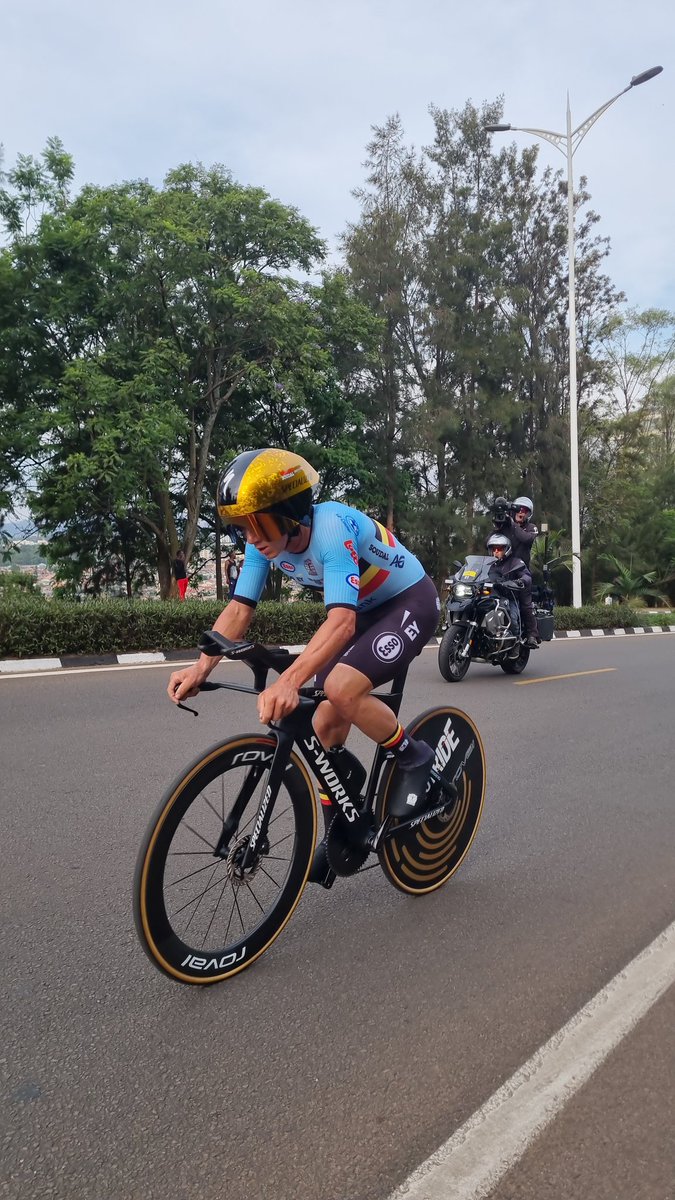
Why UCI? Why here? 🚴♂️
Writers have a cardinal rule: show, don’t tell. Rwanda will do you both.
For years, we’ve been intentional about brand Rwanda. You’ll see it light up the world’s biggest arenas, and on the jerseys and screens of sports watched by millions. It’s a gentle invitation: come, and see.
UCI takes it further. It has taken the beauty of our roaring hills, our skyline, and the smiles & cheers of our people right into the homes and gathering places of millions across the globe.
UCI also reaffirms this: Rwanda delivers at the highest level. Trust us, try us, and you will see that that, is a fact.
And this is more than visibility, it is the kind of investment that endures, that even our children will reap.
But what I love the most, is watching us enjoy our own city in this way. The world has been brought to us, but Rwanda has also been carried to the world.
With riders from more than 100 nations, and audiences in the hundreds of millions, you see exactly what we can offer, and we welcome you to come share it.
#Kigali2025 🫶🏾✨