A well made page doesn't mean it is the right one.
Drift shows up when you compare screens, inspect an interaction state, or look at the implementation.
https://t.co/Orh8rtdBEO
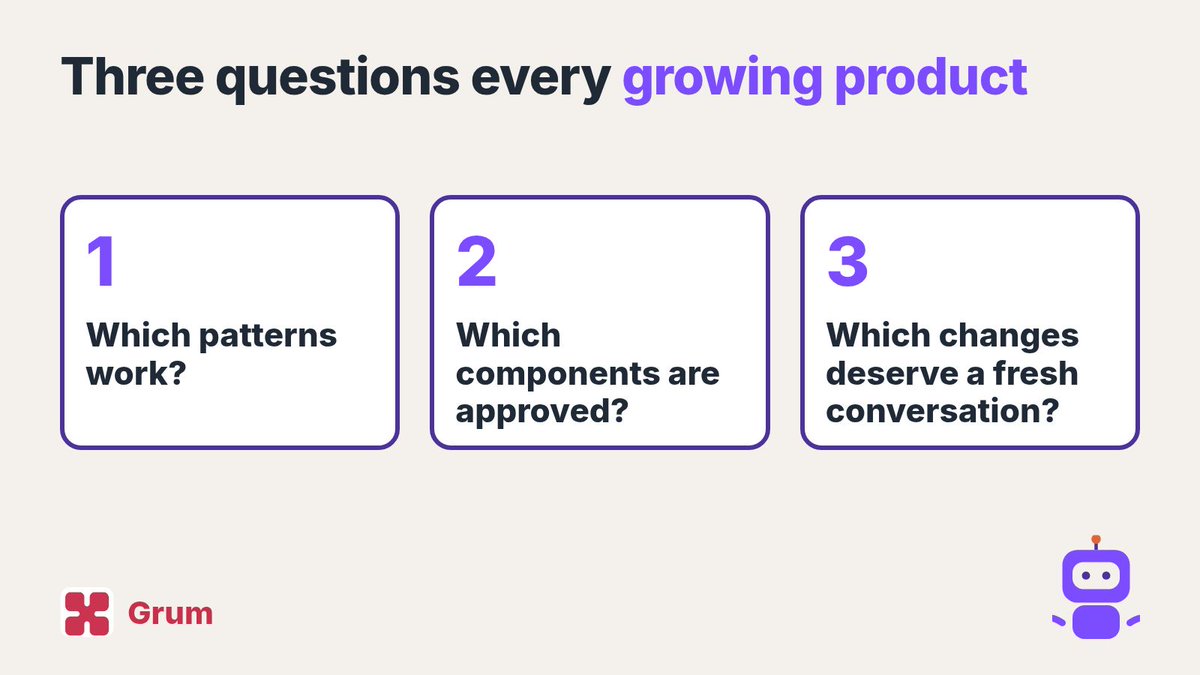
As your product grows, three questions matter:
Which patterns work?
Which components are approved?
Which changes deserve a fresh conversation?
The next prompt should build on those answers.
https://t.co/Orh8rtdBEO
Usage rules aren't new. The https://t.co/D3VTn8fjbm Design System asks teams to preserve the meaning of colors and the styling of buttons and inputs.
What's new: those agreements need to reach the agent too.
https://t.co/Orh8rtdBEO
That hasn't changed now that you hire agents, no matter how advanced they get. Even if the world is taken over by AGI, the leader of the AGI will want first right of refusal of what is created. That isn't a coding problem.
The billing page gets a newly styled button. Someone copies it into a fourth screen.
A local choice starts becoming a pattern before anyone has agreed it should be one.
https://t.co/Orh8rtdBEO
The mockup showed the default state.
The disabled state was left open to interpretation. So the agent interpreted it. Four different ways.
https://t.co/Orh8rtdBEO
AI coding agents are already pretty good at writing frontend code. Getting them to build a consistent UI across an entire project is still tricky.
Meta's open-source design system, Astryx, takes an interesting approach to this.
It lets agents like Claude Code and Codex access component docs, templates, and design guidelines through its CLI.
Instead of making UI decisions from scratch every time, agents can build around an existing design system.
https://t.co/031iMlQDUD
@nkohari What comes next that people don't expect: As context fades the agent treats the DS as a suggestion, and conflicts in CSS and styles slips (without and clear decision or cleanups). A lot of tokens to rescan implementation every run. Rules need validation against what gets built.
Designers make approved choices explicit. Engineers give agents a reusable reference. QA uses the shared agreement alongside functional, visual, and accessibility checks.
Less time rediscovering old decisions. More room for design judgment.
https://t.co/Orh8rtdBEO
hot take: you don't need a software factory, and i don't love the term. it's just marketing
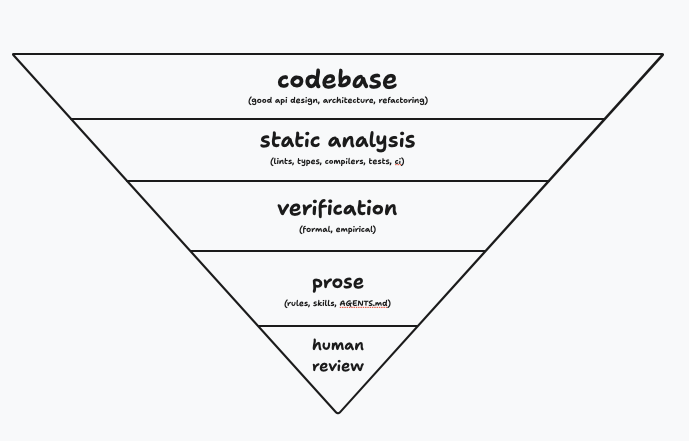
all you need is good software engineering and investing your tokens in the right places. the more deterministic the better (and token efficient)
@edo_lunardi In a perfect world this solution is the right direction. But when you take into account iterations, progress, new design and cruft and time/tokens to review it becomes more unruly again over time .
Not every new design is drift.
A new pattern can be a good decision. The point is to adopt it on purpose, through review, and keep that separate from accidental drift.
https://t.co/Orh8rtdBEO
We asked for a storyboard with each new version of our logo animation. It let us point to the exact moment we wanted to change. The agent produced the motion; we still had to decide what felt like Grum.
https://t.co/qym2uGr3iZ
AI agents are changing what design systems need to cover. Governance matters too: what can agents change, and what needs review?
A useful conversation from Hatch Conference on design systems in the age of agents: https://t.co/eOp795F8IT
When the new screen doesn't match, is it an accident, an accepted exception, or a new requirement worth discussing?
Engineers need to know which. Designers need a way to point to the established decision.
https://t.co/Orh8rtdBEO
Your whole team ships with agents. That means endless new UI. Every change looks fine, but the product still drifts (10-20% that compounds each release).
Design systems were built for humans. Now agents need one too.
Get early access: https://t.co/tlRGRnSZZW
@TechsOneAi@sshadmand I love that people are speaking out on this. The x bubble makes everything sound like "we built this over the weekend with no issues!" and people buy it.
Judgment and taste matter more as agents take on more of the building. In this DevGuild talk, @wesmckinn revisits The Mythical Man-Month for the age of agent factories. https://t.co/l4H23yMhTY
@heavybit@wesmckinn Agents are opinionated and treat md and code as suggestions more than operators realize. Especially with cruft or contradictions in a repo. They slip by micrometers each PR, and re-reviewing every screen is whack-a-mole. Judgment needs a contract the build is checked against.