Toivon mukaan toteuttamalla yliopistojen alkuperäistä tehtävää, eli opettamalla nuoria ihmisiä ajattelemaan kriittisesti, jotta mahdollisimman harva haksahtaisi pölhö-populistiseen öyhötykseen tai uskoisi eri ihmisryhmistä levitettäviä salaliittoteorioita. Tässä maailman...
Some white-collar Turks move to Europe, then quietly move back. Europe makes them ordinary, and nobody wants to be ordinary.
A new Kültürkampf guest post by @Nick_Ashdown, on class, status, and the strange cost of equality.
Early in my career, I did some work in a supermax prison. My mentor was a Holocaust survivor & psychiatrist.
Here are 5 lessons I’ll never forget, and hope you don’t either...
Autistic people are often hyperaware of social inconsistency and inauthenticity. A lot of what neurotypical culture treats as “normal” social behavior performative politeness, indirectness, fake enthusiasm, status games, saying things you don’t mean can feel deeply uncomfortable or even irrational to them.
There's an interesting story about how Victorian mansions, and particularly the Second Empire style, became synonymous with haunted houses.
They were extremely popular in the US from the 1870s through the 1890s, but were hard to maintain because of their large size and opulent style. Many of the families that constructed these homes lost much of their fortunes in the Panic of 1893 and the crash of 1929. Others remained wealthy but didn't have the means or desire to maintain large staffs of maids and servants to keep them running.
So, one by one, Second Empire homes across the US were sold off and continued to change hands rapidly until, by the time the 30s rolled around, thousands of them were left vacant because no one could afford to maintain them.
And not just maintain, but preserve them. The typical Second Empire house was around 50 or 60 years old by the 1930s. They needed upkeep just as much as a house built in 1970 would need repairs today if no one had lived in it for 10 years.
As a result, many of them were bulldozed or burned down to make way for newer homes in the 40s and 50s after World War II. And the entire point of Second Empire style was for them to be grouped together like a bunch of trophies, so tearing down a whole bunch of abandoned and decaying mansions but keeping the ones that were in relatively better condition only made them stand out more.
By the time the late 40s and early 50s rolled around, they had almost universally gone from being considered the crowning architectural achievement of the Gilded Age to being synonymous with urban decay.
The artists and writers of the 60s were growing up as kids in the 40s and 50s, thinking to themselves, "that old house down the lane that has been sitting empty since I was born." So when they got jobs in Hollywood writing scripts for TV shows, they carried those memories with them, and the Second Empire style entered the collective consciousness of pop culture as the default "haunted house" for the next 60 years.
The sad thing is, these homes are priceless. You can see it when you find a rare one that has been well-preserved or restored. But we've degraded ourselves so much that it would be nearly unthinkable to construct a home like this today.
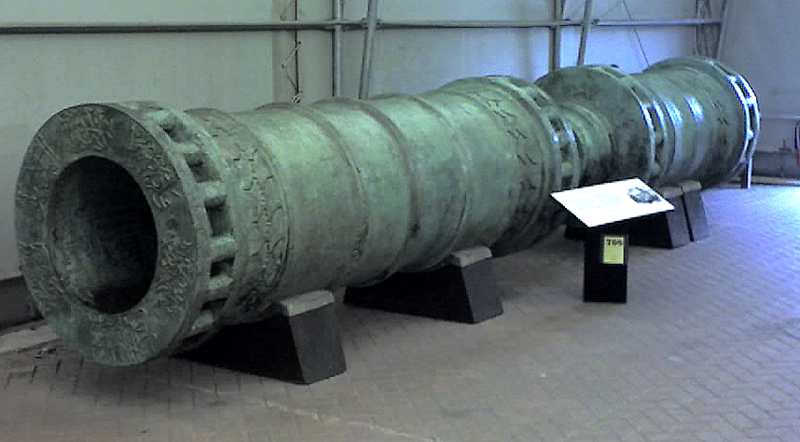
Crazy that Constantinople fell almost entirely because the Emperor didn't want to pay for a Hungarian's autism project (building a 19 ton cannon with a 30" bore inspired by much smaller models introduced by the Mongols) so the autist in question asked the Ottomans if they would like to fund his superweapon instead.
Being tired of repeatedly losing, they said yes and threw money at him to make the damn thing, which destroyed the previously unassailable walls of the city using 1200lb cannon balls with a range of up to a mile.
Dude wasn't concerned with politics, religion, or the civilizational consequences of his actions. He just really wanted to make an enormous cannon, and by god did he succeed.
One thing about adulthood that way too many people learn way too late (and have no choice but to learn the hard way): you have to be deliberate/proactive about everything. For the first time in your life, you can't be passive participant in anything.
I was reminded recently of an article by David Brooks in The Atlantic, titled "You Might Be a Late Bloomer." Two paragraphs that have stuck with me:
"We have a notion that the happiest people are those who have aimed their life toward some goal and then attained it, like winning a championship trophy or achieving renown. But the best moments of life can be found within the lifelong learning or quest itself. It's doing something so fulfilling that the work is its own reward. 'Effort is the one thing that gives meaning to life,' the Stanford psychologist Carol Dweck once wrote. 'Effort means you care about something.'
'The secret of life is to have a task, something you devote your entire life to, something you bring everything to, every minute of the day for the rest of your life,' the sculptor Henry Moore once told the poet Donald Hall. 'And the most important thing is—it must be something you cannot possibly do.'"
The West offers the “ideal environment” for an organization like the Muslim Brotherhood to carry out its operations “because we are extremely tolerant,” says Lorenzo Vidino, an expert on the Islamist organization.
The Muslim Brotherhood has inspired or spawned some of the world's most dangerous terrorist organizations. Yet its goals, strategy, structure, and financing remain poorly understood – even by many of the world's leading national security and intelligence agencies.
The Brotherhood’s long-term goal is the Islamification of society. The West’s tolerance offers fertile grounds for its activities to remain unchecked – creating a national security blind spot within Western democracies.
One of the world’s leading experts on the Brotherhood, Vidino is director of the Program on Extremism at The George Washington University @gwupoe. He joins Inside Policy Talks to share his research conducted over the past 25 years.
“In the West, they could operate freely,” says Vidino. “They can fundraise, they can open mosques, they can disseminate the propaganda, they can carry out all the social, religious, and political activities and fundraising activities.”
On the podcast, he explains in detail to MLI’s @DrCaseyBabb how the Brotherhood carries out activities like raising revenues.
He says this involves a combination of receiving money from the Middle East, conducting ventures like real estate businesses in the West, and obtaining funds directly from unsuspecting Western governments.
Watch the full episode: https://t.co/WadwmtcJQz
Time for my regular reminder that my Syrian mate couldn’t believe the hate preaching that was tolerated in mosques in Paris and suggested the imams be thrown in jail or shot like they were back in (then) Syria. And no Assad fan he.
“A recurring theme in these accounts is the encounter with a version of Islam experienced as punitive, intellectually brittle, and spiritually empty.
Prominent scholars including Hamza Yusuf, Abdal Hakim Murad, and Sherman Jackson have been saying as much for years, observing that a tradition once characterised by intellectual richness, aesthetic grandeur, and spiritual depth had been reduced to a checklist of superficial prohibitions.”
Vazifesi uğruna can veren isimsiz kahramanlardan..
100 yıl önce,iletişim hatlarını ayakta tutmak için soğukla mücadele eden bir görev adamının son durağı..
Mustafa Efendi’nin hüzünlü hikayesi, günümüz ve geçmişin imkanlarını,hangi zorluklarla hizmet edildiğini bize hatırlatıyor.
They used to write about the sociology of Jihadism and what prompted people to get into it, but soon enough they’ll discover a new form of it across nations, disciplines, religions, and tendencies.
Bu, iki dünya arasında sıkışmış bir kimlik hâlinin göstergesi. Dış görünüş ile iç aidiyet arasındaki mesafe, Türkiye’de modernleşmenin ürettiği kültürel gerilimin tipik yansımalarından biri. Mesele aile, çevre ve şehir hayatının birlikte ürettiği melez fakat yaralı bilinçtir.
Lisans tezimi yazarken bir köyde tarihi bir mesciti arıyordum, tescil kaydındaki yerine gittim ama karşımda 1-2 yıl önce yapılmış bir mescit var. İmamı buldum, nedir ne değildir diye sordum. İmam, mescit cok eskiydi köyümüze yakışmıyordu, yeni mescit istedik yapmadılar biz de +