Ayer respondía a un par de mis lectores que un factor clave para entender los márgenes de maniobra existentes en la transición era meramente biológico: todo el generalato de 1975 era franquista a rabiar, y no por casualidad, sino por puro efecto del calendario.
Haga la cuenta. Un teniente general entre 1975 y 1980 tenía normalmente algo más de 60 años, así que había nacido entre 1908 y 1920, y la Guerra Civil lo pilló con veintipocos, como cadete, alférez o teniente. Esa guerra fue el acontecimiento fundacional de su vida y de su carrera: llegar a general alrededor de 1975 exigía haber sido oficial joven vencedor en el 39. No había otra vía. El sesgo es de cohorte.
El ejemplo perfecto es Jaime Milans del Bosch y Ussía (1915). Ingresa en la Academia de Toledo en 1934 y la guerra lo sorprende allí: defiende el Alcázar durante el asedio de 1936, en el que cae herido. Luego, la Legión. Y en el 41, voluntario a la División Azul, a pelear contra la URSS a las órdenes de la Wehrmacht.
De 1974 a 1977 mandó la División Acorazada Brunete, la unidad más potente del Ejército, y, a su frente, desfiló en el entierro de Franco. Y por si alguien duda de hasta qué punto seguían siendo franquistas a rabiar ya en democracia, ahí está el 23-F, del que Milans fue el cabecilla militar. El detalle que lo resume todo: empezó su guerra defendiendo el Alcázar en el 36 y, sin arrepentirse de nada de lo que hizo en 1981, pidió que lo enterraran allí.
No es muy distinto el caso de Alfonso Armada (del 20, se alista en el 36), Fernando de Santiago (del 10, oficial joven en el 36) o José Gabeiras (del 16, le pilla la guerra recién graduado de la Academia de Segovia).
Y en la Armada es casi peor. Ahí tienes a Gabriel Pita da Veiga (1909) y todos sus compañeros que se acuerdan de las matanzas de oficiales en el 36. Cuando Pita da Veiga dimite tras la legalización del PCE, Suárez tiene que traer a Pascual Pery de la reserva porque ni un solo almirante en activo quería sustituirle.
Alguien objetará: ¿y Gutiérrez Mellado, el militar que pilotó la reforma democrática? Era de la misma quinta (1912) y del mismo bando: durante la guerra fue quintacolumnista del SIM en el Madrid republicano, una misión de la que siempre se sintió orgulloso. No había otro vivero. El reformista que Suárez pudo encontrar salía, por fuerza, del mismo pozo de oficiales vencedores del 39. Y lo que le ocurrió mide justamente lo estrecho del margen: el búnker lo trató de traidor, lo insultó e incluso lo agredió en público. Quien rompía la norma de la cohorte lo pagaba.
A mis estudiantes les repito que todo el problema militar de España en 1975 cabe en un dato: la unidad más potente del Ejército tiene su cuartel en El Goloso, esto es, para controlar Madrid, no para defender fronteras.
El propio Milans se lo dejó claro al Rey en una demostración en la Brunete (de la que queda la foto que empleo en este post): “Majestad, con este tanque puedo alcanzar la Puerta del Sol.” Un carro apuntando a la capital, no a ninguna frontera.
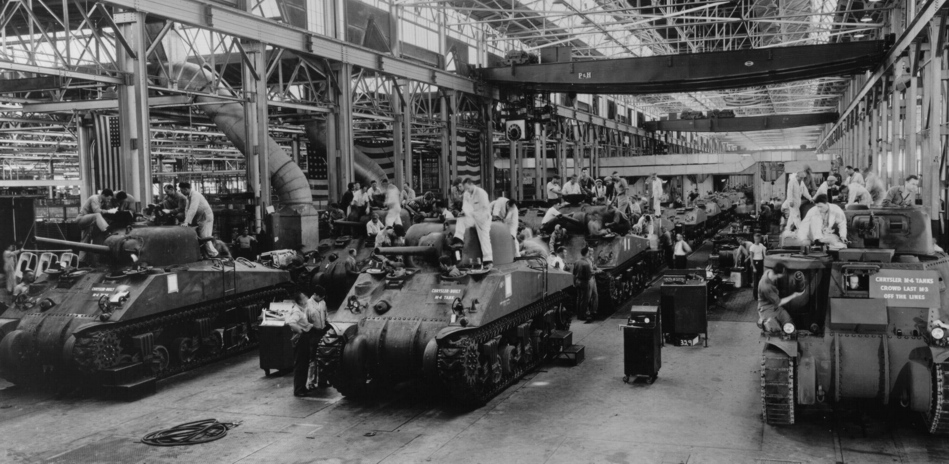
Then the Army handed Chrysler several hundred pounds of tank blueprints. But the Army's plans turned out to be junk. Chrysler's engineers, who had never seen a tank before, quietly redesigned the whole tank, over the army's objections. Their design is the one that worked.
Rent Control: The Ceiling Trap!
A fabulous new website reviewing the history, economics and empirics of rent control from Friedman and Stigler through Diamond, McQuade & Qian.
https://t.co/p47rkmVCrH
@JaimeObregon Jaime, te sigo desde hace tiempo, te admiro y te respeto. Desde ese cariño te pediría que valorases consultar a un profesional de la salud mental, contarle tu experiencia. Los hechos que relatas, y hasta el lenguaje, pueden ser signo de brote psicótico o una fase prodrómica.
A position paper from Subbarao Kambhampati's group at Arizona State is circulating again — Yann LeCun reposted it this week — and its claim is worth sitting with: the step-by-step "reasoning" you watch a model emit is largely a performance, not a window into how it actually reached the answer. The ICML 2026 paper wears the argument in its title: "Stop Anthropomorphizing Intermediate Tokens as Reasoning/Thinking Traces."
The evidence is what makes it hard to wave away. The authors point to cases where models land on correct answers through chain-of-thought steps that are incoherent, flawed, or outright fabricated — and the mirror case, where every intermediate step looks clean and logical but the final answer is wrong. If the visible trace can be garbage while the answer is right, and pristine while the answer is wrong, then the trace isn't doing the causal work we attribute to it. It reads more like a forced mimicry of human-style output, shaped by what the format rewards, than a faithful log of the computation.
This matters most for the people building on top of these models. A whole layer of tooling — agent debuggers, eval harnesses, "show your work" guardrails — quietly assumes the reasoning trace is a trustworthy artifact you can inspect. If trace and answer are only loosely coupled, that assumption leaks: you can ship a model that narrates a safe-looking rationale while the actual decision came from somewhere else.
We've been here before. Saliency maps and attention weights were once treated as explanations of vision and NLP models, until a run of papers showed they could be perturbed without changing predictions. Interpretability that feels legible is seductive precisely because it's legible. The field eventually had to separate "plausible-looking explanation" from "faithful explanation," and relearn the difference the hard way.
The bottleneck Kambhampati names is faithfulness, and the direction he points to — reasoning that happens in latent space rather than in emitted tokens — would make the visible trace even less of a literal record. For anyone shipping agents, the practical takeaway is uncomfortable but useful: treat the chain-of-thought as a UX surface, not as evidence. Verify outcomes, not narration.
https://t.co/JV3HDWuzRk
@skdh Mostly because they sense that Europeans regard them as barbarians, and they worry that they're right. So they are excited by any evidence of European inferiority.
This is the Weinersmith Fallacy. It works like this:
1. Problems are easier to explain than solutions.
2. So let's explain a bunch of problems, rapid fire, while ignoring the solutions.
3. That way, we can make anything sound impossible.
4. Better yet, anyone who wants argue will have to use more words than we do, and expend more time and effort.
Like so:
Look, I've torn down plenty of complex mechanical devices, and this "gun" idea is fundamentally flawed.
First, you're trying to contain and direct a controlled explosion inside a tiny metal tube. On paper that sounds cool, but in reality the pressures spike to tens of thousands of PSI in microseconds. The barrel will deform or rupture instantly — we've all seen what happens when you overpressure a cheap pipe bomb.
Second, the projectile has to be perfectly centered and spin-stabilized while accelerating from 0 to supersonic in a fraction of a second. Any tiny imperfection in machining, propellant burn rate, or alignment and the thing will tumble or keyhole immediately. Good luck maintaining that precision after the first few shots heat the barrel up and wear the rifling.
Third, the whole system relies on a series of moving parts (hammer, sear, extractor, ejector) that have to function flawlessly while being slammed by recoil and fouling from combustion byproducts. In the field, dirt, water, or carbon buildup will jam it in seconds. This is why mechanical watches already struggle with reliability — and those don't involve explosions.
Finally, you're asking a human to control something that produces massive muzzle blast, flash, and recoil, all while trying to aim accurately under stress. Human reaction times and hand tremors make consistent hits beyond 50 yards basically impossible at scale.
Engineers have been promising "practical firearms" for centuries and it never quite works out. The challenges are insurmountable with real materials and physics. Nice concept for video games though.
It sounds plausible, but we know it's total nonsense because guns visibly do work. They're all over the place, they're quite reliable, and you can easily learn to hit stuff at half a mile.
Same thing for computers in space. We know they work because we already have them.
What do these people think satellites are? Containers for little spacemen with zero-gravity abacuses?
And who is the all-time known-universe champion of putting satellites in space?
SpaceX, that's who.
The problem of putting data centers in space isn't the problem of putting computers in space. It's just the problem of putting more computers in space. And while scaling up often has its own technical hurdles, those hurdles are by definition already solved and understood.
The remaining challenge is not solving the technical problems in the first place, it's keeping costs down.
The worst thing about this is that Jerry isn't this dumb.
He's just hoping that you are.
He doesn't really think that SpaceX is going to launch a giant crate of rack-mount servers, sourced from Dell, into orbit, then shake their fists at the sky screaming
"Curse you, Jean-Bapiste Fourier! If only we had read a thermodynamics textbook, ever, in our lives!"
No. He knows better. He's just playing the Puddlefish because he has Musk Derangement Syndrome.
And as for data-center satellites, well, probably the reason that everyone wants to put them in space instead of Antarctica is that the power problem, which space solves, looks a lot harder than the cooling problem, which Antarctica solves.
MONEYBALL, LA FORMULA MATEMÁTICA QUE PROFETIZÓ EL ÉXITO DE GINOBILI
En el verano de 1999, la NBA operaba bajo el imperio absoluto del ojo humano. Los ojeadores (scouts) recorrían gimnasios universitarios con libretas de anotación y medían el talento basándose en la altura...
Está siendo lo más leído de la Causas y Azares de hoy, así que lo dejo por aquí: la cronología para seguir el asunto "La Bola / Mar de Marchis / Jotdown".
Por dónde empezar: el artículo de Alfredo Pascual en el Confi de 2017 con muchos datos biográficos
https://t.co/GGcdva3oyp
@natalia_velilla La clave esto en cómo llegó esa persona a ese puesto de poder. El militante de base de un partido, cómo llega a cabeza de lista, cómo gana elecciones, cómo asciende en el poder. Es un sistema que selecciona corruptos, o se auto seleccionan.
@diego_gon Tribalismo, sectarismo, llámalo como quieras. Es el ellos y el nosotros, los buenos y los malos. Ganar o perder. Toda la política está infectado con esto.
@CJFerguson1111 I dont know anything about FT or the topic, but some of Dobut criticism makes no sense. You cant transform a d into a r, an then r2 to claim about % of change. That is aberrant. d=.40 would be huge & very concerning if true. In fact, that is one if the major problems if the paper
Cuando doy un paso atrás me alucina que en España se hayan formado 1,2 millones de nuevos hogares, construido menos de medio millón de viviendas para ellos... y tengamos el debate supuestamente progresista entregado a qué pasa con 12.000 licencias turísticas casi todas en Barcelona centro, o en si hay más o menos propietarios con 2, 3 o 4 pisos.
La MAGNITUD del problema no se calibra desde Arganzuela o Gràcia. Se calibra en las periferias de nuestras ciudades en las que la nueva demanda tiene que subdividirse un espacio disponible que es casi fijo porque la oferta es incapaz de responder. Yo de verdad sabéis que veo la vivienda como un problema complejl que necesita de soluciones ajustadas a cada problema, a cada zona. Me gustan ideas como impuestos bien diseñados para vivienda turística en zonas saturadas o agresivos a la vivienda vacía o de bajo uso.
Pero todo eso debería ser totalmente secundario ante la enormidad del déficit, y sobre todo a quienes más está afectando, que no somos ni tú ni yo.
Primero y ante todo, construir. Eso es lo progresista para mí.